

The Authority in Global Agricultural Chemistry & Bio-Resources
Orchard mist sprayers and drift control in high-density planting
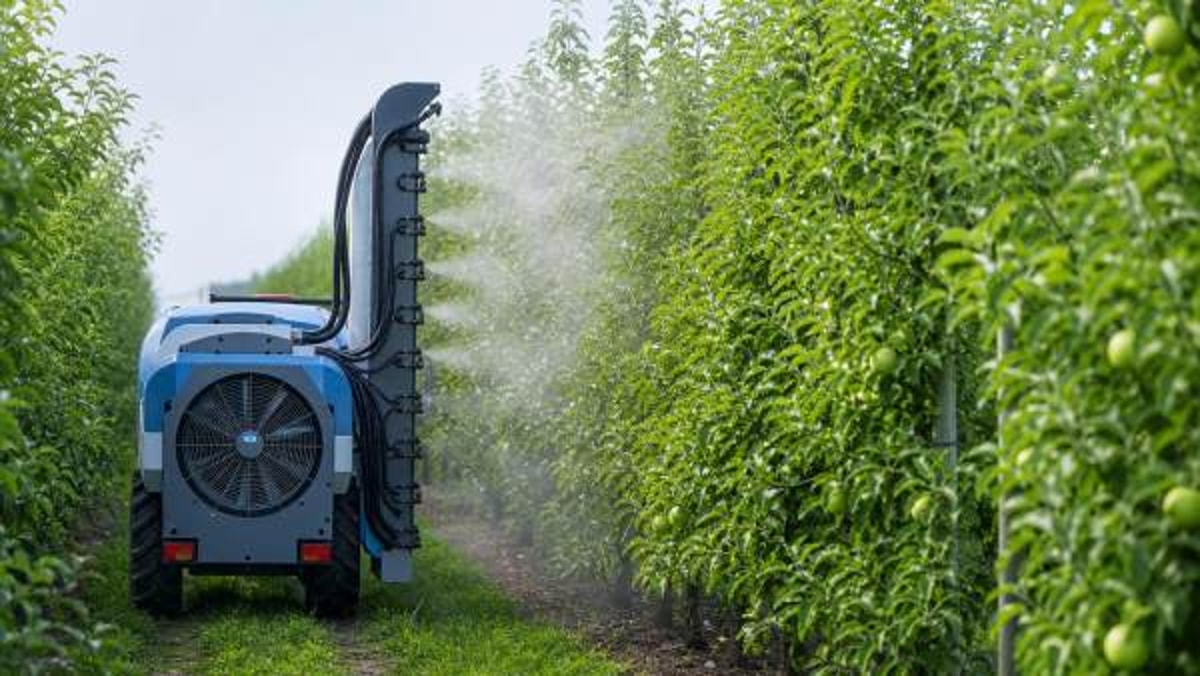
In high-density orchards, orchard mist sprayers play a critical role in achieving precise canopy coverage while reducing off-target drift that can compromise worker safety, regulatory compliance, and crop quality. For quality control and safety managers, understanding how sprayer design, droplet spectrum, and operating parameters influence drift control is essential to maintaining consistent application standards in modern planting systems.
Why drift control has become a more urgent issue in modern orchards
A clear shift is taking place across commercial fruit production. High-density planting systems, narrower row spacing, taller and more uniform canopies, and greater pressure to document safe pesticide use are changing how orchard mist sprayers are evaluated. In the past, many operators focused mainly on output volume and visible canopy penetration. Today, the conversation is broader. Quality teams are being asked to verify deposition consistency, while safety managers must limit worker exposure, environmental losses, and residue variability linked to spray drift.
This change matters because dense orchard architecture can either improve spray efficiency or amplify risk, depending on setup. A compact canopy can help capture droplets when air direction and droplet size are correctly matched. However, excessive air velocity, poor nozzle selection, or spraying during unstable weather can push fine droplets above the canopy or beyond the target row. That means orchard mist sprayers are no longer judged only by whether they spray well, but by whether they spray predictably under tighter operational and compliance expectations.
For quality control personnel, the key trend is standardization. For safety leaders, the key trend is prevention. Both are now linked through drift control, because off-target movement affects efficacy, residue profiles, neighbor relations, audit readiness, and operator protection at the same time.
The strongest market and regulatory signals behind this shift
Several signals explain why orchard mist sprayers are receiving more technical scrutiny in high-density planting. First, there is rising sensitivity around environmental stewardship. Regulators and buyers increasingly expect evidence that crop protection products are applied only where needed. Drift incidents can trigger complaints, re-entry concerns, and questions about whether the orchard follows label instructions and local environmental controls.
Second, orchards themselves are changing. Modern trellised and high-density systems seek uniformity, faster picking, and more efficient land use. That uniformity creates an opportunity for precision spraying, but only when equipment settings match canopy volume. Older airblast assumptions often do not transfer directly to newer planting formats. As a result, orchard mist sprayers with adjustable airflow, targeted nozzles, and better canopy matching are becoming more relevant than one-size-fits-all spray practices.
Third, labor and safety pressures are increasing. Operators must work within tighter spray windows, and safety teams must manage entry intervals, personal protective equipment, and exposure risks. Poor drift control complicates all of these tasks. Finally, buyer expectations are changing. Export programs, processor requirements, and internal quality systems increasingly favor application records that demonstrate disciplined control rather than simple task completion.
Technology direction: orchard mist sprayers are moving from volume to control
One of the most important industry changes is that orchard mist sprayers are increasingly selected for controllability rather than raw output alone. In high-density planting, too much air can be just as problematic as too little. Excessive fan force may strip droplets through the canopy and increase drift, while poor nozzle arrangement may leave upper or inner zones under-treated. Newer equipment designs therefore emphasize airflow modulation, directional air assistance, tower configurations, sensor integration, and zone shutoff options.
Droplet management is also central to this shift. Finer droplets can improve surface coverage under certain conditions, yet they are more vulnerable to drift. Coarser droplets are generally more stable in the air but may reduce coverage on difficult targets if pressure and travel speed are not optimized. The trend is not toward one universal droplet category, but toward matching droplet size to canopy density, product label requirements, weather conditions, and target surface.
For quality and safety teams, this means equipment capability alone is not enough. The real value of orchard mist sprayers lies in how repeatably they can hold a stable spray pattern across blocks, varieties, and seasonal canopy stages. That is why calibration discipline is becoming a stronger competitive signal than machine horsepower.
What is driving drift risk upward in high-density systems
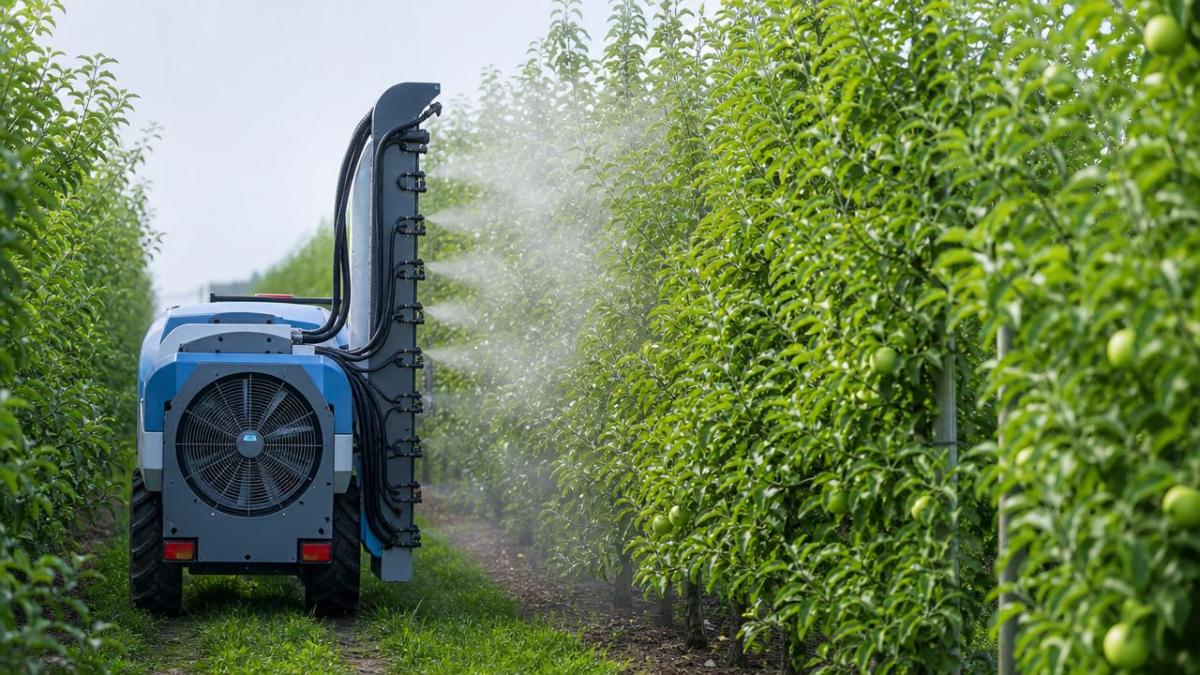
The rise in drift concern is not caused by a single factor. It results from interaction between orchard design, machine settings, chemistry, and operating behavior. High-density rows can create efficient targets, but they also narrow decision tolerances. If operators use the same pressure, fan speed, or nozzle setup across all blocks regardless of canopy stage, drift risk increases quickly.
Weather remains a decisive variable. Temperature, humidity, inversion conditions, and wind speed all influence how droplets behave after leaving orchard mist sprayers. In many orchards, the problem is not simply spraying in strong wind. It is spraying during marginal conditions that appear acceptable at ground level but are unstable above the canopy. Safety managers should therefore treat weather monitoring as a process control measure, not a routine checkbox.
Another driver is the wider use of complex spray programs. Different products have different label constraints, deposition needs, and compatibility behaviors. That means nozzle choice and spray volume cannot be separated from product strategy. Where tank mixes, biological inputs, or sensitive neighboring crops are involved, drift control becomes even more important to preserve both treatment performance and operational trust.
How the impact is spreading across quality, safety, and procurement functions
The effects of drift control decisions are now felt far beyond the spray operator. Quality control teams are affected because uneven deposition can produce inconsistent pest suppression and irregular residue distribution. Safety managers are affected because off-target movement raises exposure concerns for workers, adjacent crews, and nearby land users. Procurement teams are affected because orchard mist sprayers are being compared not only on price and durability, but on their ability to support documented, lower-drift operating protocols.
This broader impact is changing internal evaluation criteria. A sprayer that appears efficient on paper may create hidden costs if it requires frequent corrective spraying, generates complaints, or fails to adapt to variable canopy conditions. Conversely, a machine with better adjustment features may create long-term value through more stable deposition, lower chemical waste, and easier compliance verification.
What quality and safety managers should monitor more closely now
In this environment, the most useful signals are operational rather than promotional. Start with calibration frequency and whether settings are adjusted by block, canopy stage, and product program. If orchard mist sprayers are calibrated only at the beginning of the season, that is a warning sign. High-density systems change quickly, and spray performance should be rechecked as canopy volume develops.
Next, monitor airflow suitability. In many orchards, drift problems come from over-airing rather than under-spraying. Fan settings should support droplet placement into the canopy, not force spray past it. Teams should also review nozzle wear, pressure stability, and travel speed variance, because each of these can alter droplet distribution and increase off-target movement.
Record quality is another critical indicator. Strong application records should show weather conditions, nozzle setup, pressure, speed, block characteristics, and any operational deviations. These records do more than support audits. They help identify repeat drift patterns and improve future decisions. In a trend-driven market, traceability is becoming part of spray quality itself.
A practical decision framework for the next phase of equipment and process upgrades
As drift control expectations rise, companies should avoid treating orchard mist sprayers as a standalone purchase decision. The better approach is to assess equipment, operating protocol, and staff competence together. A technically advanced sprayer will not solve risk if the orchard lacks weather rules, calibration procedures, and canopy-specific application plans.
A sensible near-term framework includes five checks. First, verify whether current sprayer airflow and nozzle layouts match the orchard’s present planting geometry. Second, review which drift scenarios are most likely in your operation, such as edge rows, uneven terrain, or seasonal wind shifts. Third, test whether operators can make and document setting adjustments consistently. Fourth, compare actual deposition results across representative blocks rather than relying only on manufacturer claims. Fifth, define escalation rules for stopping or delaying spraying when conditions become unstable.
This framework supports both safety performance and quality assurance. It also improves procurement judgment because buyers can compare orchard mist sprayers against real operational needs instead of generic specifications.
The direction ahead: more precise, more documented, more accountable
The forward direction is becoming clear. Orchard mist sprayers in high-density planting will be expected to deliver three things at once: reliable canopy coverage, lower drift potential, and better decision traceability. Equipment makers are likely to continue emphasizing controllable airflow, smarter targeting, and easier calibration support. Orchard operators will increasingly be judged on whether those capabilities are translated into disciplined field practice.
For quality control and safety managers, the most important judgment is not whether drift can be eliminated entirely, but whether it can be consistently reduced through a repeatable system. That system should connect sprayer configuration, weather thresholds, operator training, maintenance, and post-application review. Where those links are strong, orchard mist sprayers become not only application tools but also risk-control assets.
If your organization wants to better understand how these trends affect current operations, focus on a few practical questions: Are your orchard mist sprayers matched to high-density canopy structure? Are drift control settings documented and repeatable across crews? Do quality and safety teams share the same application performance criteria? And can your records prove that spray decisions were made with both efficacy and exposure control in mind? Those answers will shape how well the business adapts to the next stage of orchard spraying requirements.
Related Intelligence
- AgrochemicalsAgricultural fogging machines: where coverage and safety conflictAgricultural fogging machines improve field coverage fast, but can they meet safety, residue, and compliance demands? Explore the hidden trade-offs before you buy.
- AgrochemicalsOrchard mist sprayers and drift control in high-density plantingOrchard mist sprayers for high-density planting: learn how drift control, airflow, droplet management, and calibration improve coverage, safety, compliance, and crop quality.
- AgrochemicalsBoom sprayers for tractors: what affects spray uniformity most?Boom sprayers for tractors: discover what really affects spray uniformity most, from boom height and pressure stability to speed control and field conditions.
The Morning Broadsheet
Daily chemical briefings, market shifts, and peer-reviewed summaries delivered to your terminal.
