
The Authority in Global Agricultural Chemistry & Bio-Resources
Agricultural fogging machines: where coverage and safety conflict
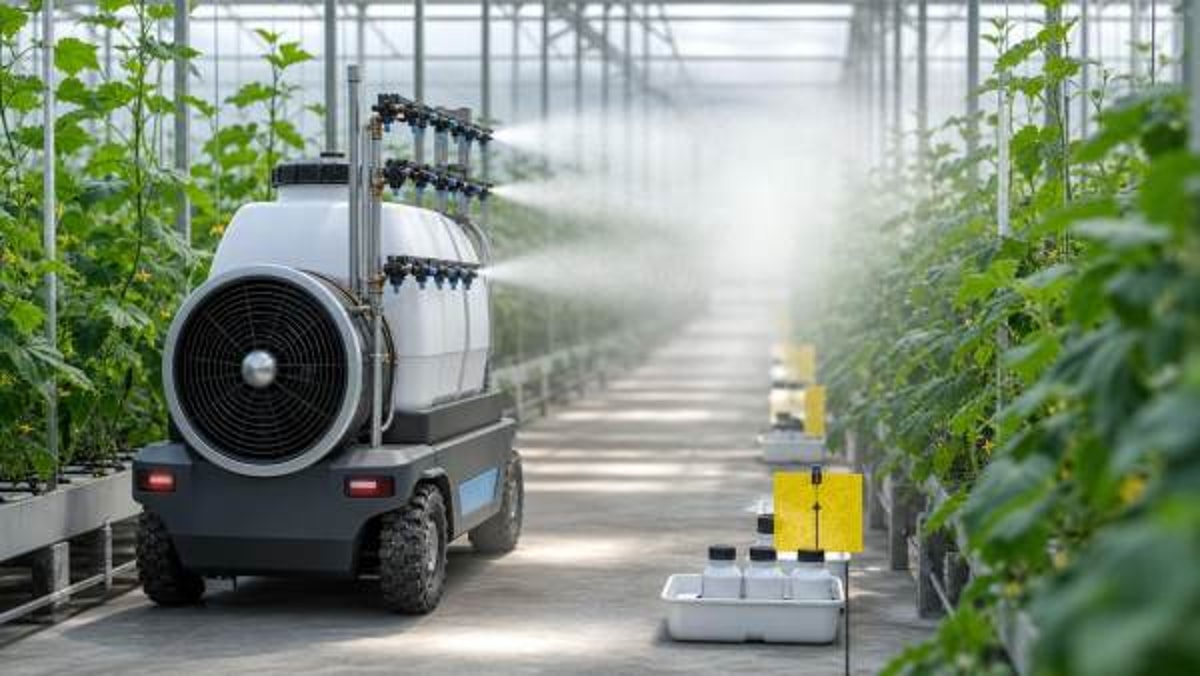
Agricultural fogging machines promise fast, uniform application across large fields, yet they also raise difficult questions for quality control and safety teams. When coverage efficiency begins to compete with operator exposure limits, residue control, drift management, and regulatory compliance, the equipment can no longer be judged by output alone. This article examines where performance and protection diverge, helping decision-makers assess whether agricultural fogging machines truly meet modern industrial standards.
For quality control and safety managers, the central question is not whether fogging can cover an area quickly. It is whether that coverage can be controlled, documented, and repeated without creating unacceptable exposure, off-target drift, inconsistent deposition, or downstream compliance risk. In many operations, agricultural fogging machines can deliver real efficiency advantages, but only when application conditions, droplet behavior, chemical compatibility, and operator safeguards are tightly managed.
The short answer is clear: coverage and safety do conflict in fogging systems more often than many procurement teams assume. The finer the droplet spectrum and the larger the treatment zone, the greater the risk that efficacy gains will be offset by inhalation hazards, uneven residue profiles, environmental losses, and audit concerns. That does not make fogging unsuitable. It means the machine should be evaluated as a controlled-risk application system rather than a simple productivity tool.
Why quality and safety teams view agricultural fogging machines differently from operations teams
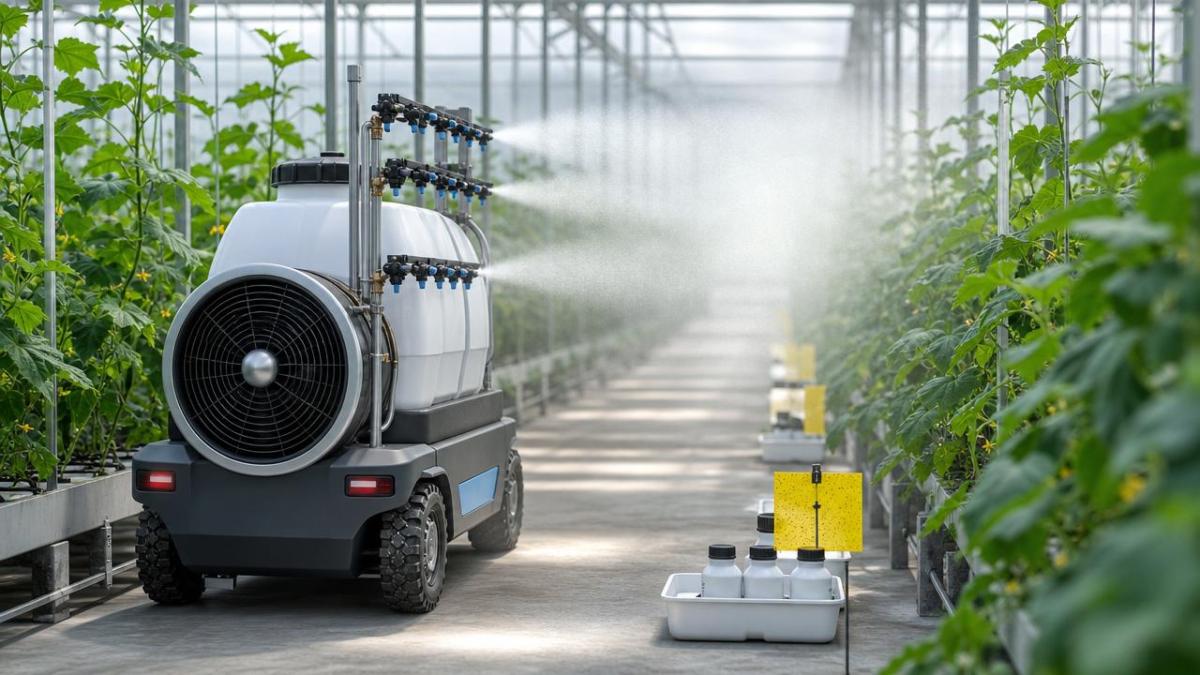
Field operators and production managers often focus on throughput, labor reduction, and rapid area treatment. Those are valid priorities, especially in large-scale agriculture, greenhouse operations, post-harvest sanitation, and vector or pest control programs. Fogging is attractive because it can disperse active ingredients into spaces and crop zones that are hard to reach with conventional spraying.
Quality control and safety personnel, however, are judged on a different set of outcomes. They must verify whether the delivered dose was consistent, whether exposure controls were adequate, whether residues stayed within specification, and whether the application process can withstand regulatory review. A machine that performs well in acreage-per-hour may still fail in a quality system if deposition is unstable or if exposure data are missing.
This difference in perspective explains why agricultural fogging machines often move quickly through operations discussions but slow down in cross-functional approval. Safety managers see airborne concentration. QC teams see repeatability and traceability. Environmental teams see drift and non-target contamination. Procurement sees lifecycle cost and vendor claims. The right decision only emerges when these views are brought into one evaluation framework.
Where coverage efficiency starts to undermine safety performance
The practical strength of fogging lies in atomizing liquid into very small droplets that remain suspended long enough to spread widely. That same feature is also the source of its primary safety concerns. Small droplets are easier to inhale, easier to move beyond the intended zone, and more sensitive to humidity, temperature, airflow, and equipment settings than many buyers expect.
When agricultural fogging machines are tuned for maximum spread, they may generate a droplet profile that improves visual coverage but weakens control over actual deposition. In other words, the field may appear uniformly treated while the chemical mass landing on crop surfaces varies significantly. For a safety or QC team, that inconsistency matters more than the apparent completeness of the fog cloud.
There is also a false sense of precision associated with visible fog. Operators may assume that if they can see the plume reaching all target areas, treatment quality is adequate. In reality, visible dispersion does not confirm uniform active ingredient loading, surface retention, or penetration into the relevant biological target zone. Coverage by sight is not the same as verified application quality.
At the same time, increasing output volume or extending fogging duration to compensate for uncertain deposition may raise airborne concentrations around workers, nearby facilities, or adjacent fields. This is where the conflict becomes operationally serious: the attempt to secure efficacy may directly increase the exposure burden and regulatory risk profile.
What safety managers should assess before approving a fogging system
For safety teams, equipment approval should begin with exposure pathways, not marketing claims. The most important questions include: What is the expected droplet size distribution? How long will droplets remain airborne under real site conditions? What respiratory exposure potential exists for operators, nearby workers, and re-entry personnel? What engineering controls and PPE are required to keep risk within acceptable limits?
It is also important to examine the intended application environment. Agricultural fogging machines used in enclosed or semi-enclosed settings such as greenhouses, storage buildings, hatcheries, or livestock-adjacent structures create a different hazard profile from open-field use. In confined spaces, airborne persistence may improve treatment reach, but it can also increase inhalation risk and complicate re-entry intervals.
Another critical factor is chemical formulation compatibility. Not every product labeled for spraying performs predictably in fogging equipment. Volatility, solvent system, concentration, thermal stability, and particle formation all influence both efficacy and safety. A formulation that breaks down, separates, or drifts excessively under fogging conditions can create both treatment failure and exposure escalation.
Safety managers should also ask for application-specific validation, not only equipment specifications. Vendor brochures often highlight output rates, tank capacity, or machine mobility. What matters more is documented evidence under comparable operating conditions: droplet characterization, airborne concentration data, drift control performance, decontamination procedures, and operator training requirements.
What quality control teams should measure instead of assuming
For QC personnel, the key issue is repeatability. If agricultural fogging machines are introduced into a controlled agricultural or processing environment, the system should be capable of producing stable and auditable results. That means validating not only the machine, but the entire application process: chemical mix preparation, calibration, environmental conditions, nozzle or atomizer performance, application time, and post-application verification.
Deposition testing is essential. Quality teams should not rely only on nominal flow rate or area coverage calculations. They should use practical verification methods such as water-sensitive cards, tracer studies, residue sampling, and mapped deposition points across the target area. This helps reveal whether the fog reaches all required zones and whether deposition levels remain within acceptable variation.
Another concern is residue control. In food-adjacent agriculture, seed treatment environments, greenhouse crop systems, and post-harvest applications, excessive or uneven residue may create downstream quality issues. Fogging can produce subtle over-treatment on some surfaces and under-treatment on others, especially where airflow patterns are irregular. These inconsistencies may not be visible during application but can appear later during sampling or customer audits.
QC teams should also assess cleaning validation and cross-contamination potential. If one agricultural fogging machine is used across multiple chemicals, crop stages, or facilities, residue carryover in tanks, lines, atomizers, filters, or seals becomes a quality risk. Without a documented cleaning protocol and verification method, the machine may compromise both product integrity and compliance readiness.
The compliance issue: fogging efficiency does not replace regulatory defensibility
One of the most common procurement mistakes is assuming that faster application with lower labor automatically represents a better controlled process. Regulators and auditors do not assess systems this way. They look for label adherence, worker protection, environmental safeguards, training records, maintenance logs, and evidence that the application method is suitable for the substance and the site.
Depending on jurisdiction and use case, agricultural fogging machines may trigger closer scrutiny because of their aerosol generation, potential drift, and operator exposure characteristics. Safety data sheets, local pesticide application rules, re-entry restrictions, buffer requirements, and equipment certification obligations can all affect whether a fogging system is acceptable in practice.
From a compliance standpoint, the most defensible operations are those that can demonstrate control over three variables: where the material went, how much reached the target, and who may have been exposed. If a site cannot answer those three questions with records, procedures, and validation data, the speed advantage of fogging loses much of its value.
This is especially important for larger industrial growers and integrated agricultural businesses that supply regulated food chains or export markets. In such environments, the burden of proof extends beyond basic application success. Buyers, insurers, and certification bodies may all expect evidence that the method did not compromise worker safety, environmental stewardship, or product conformity.
How to evaluate whether fogging is appropriate for your operation
The best approach is not to ask whether agricultural fogging machines are good or bad in general. The right question is whether fogging is appropriate for a specific chemical, target, facility, crop system, and risk tolerance. In some scenarios, fogging offers measurable value. In others, it introduces unnecessary uncertainty compared with conventional spraying, electrostatic methods, or more localized treatment systems.
A practical evaluation should begin with six decision points. First, define the treatment objective clearly: pest suppression, disease control, sanitation, humidity-linked application, or space treatment. Second, determine whether the active ingredient is validated for fogging. Third, assess environmental conditions that influence droplet stability and drift. Fourth, model worker exposure during application and re-entry. Fifth, verify deposition and residue performance. Sixth, compare the total control burden against alternative technologies.
If a site lacks the resources to monitor environment, train operators thoroughly, maintain calibration discipline, and document verification data, fogging may be a poor fit even if the machine itself is technically capable. This is a crucial insight for management teams. A sophisticated machine does not reduce the need for process control; in many cases it increases it.
Conversely, where there is strong procedural discipline, defined treatment zones, compatible chemistry, and robust ventilation or exclusion controls, agricultural fogging machines can be integrated successfully. Their value is highest when the application challenge truly benefits from suspended droplets and when the business has the systems needed to manage the associated risks.
Key procurement questions for buyers, QC leads, and safety officers
Before purchase or deployment, cross-functional teams should ask vendors and internal stakeholders a focused set of questions. What droplet range is produced under normal operating conditions? How does output change with viscosity, temperature, or formulation type? What field data support deposition uniformity? What drift mitigation features are built in? What maintenance tasks are required to preserve performance?
They should also ask whether the machine supports documented calibration, whether spare parts and seals are chemically resistant to planned formulations, and whether cleaning instructions are validated for multi-product use. For safety, teams should request recommendations on ventilation, exclusion zones, respiratory protection, and re-entry timing based on realistic use patterns rather than idealized lab conditions.
It is equally important to examine the vendor’s transparency. Suppliers that can provide test data, operating envelopes, training material, and realistic limitations are generally more trustworthy than those that only emphasize speed and blanket coverage claims. In regulated or quality-sensitive environments, credibility is part of machine performance.
Bottom line: performance only matters if it remains controllable
Agricultural fogging machines can be effective tools, but they are not neutral technologies. Their core advantage wide, rapid dispersion is inseparable from the main concerns that keep quality control and safety managers cautious. The same airborne behavior that improves access to difficult treatment zones can also increase exposure, drift, residue uncertainty, and documentation pressure.
For decision-makers, the strongest conclusion is this: do not evaluate fogging as a simple output upgrade. Evaluate it as a controlled application strategy with a narrow margin between operational benefit and preventable risk. If the process can be validated, exposure can be contained, residues can be monitored, and compliance can be documented, fogging may be a sound choice. If not, apparent coverage efficiency may conceal a weaker overall system.
In modern industrial agriculture, the winning equipment is not the machine that creates the biggest cloud. It is the one that delivers verifiable treatment quality while protecting workers, surrounding environments, and regulatory standing. That is the standard agricultural fogging machines must meet before they deserve a place in serious operations.
Related Intelligence
- AgrochemicalsAgricultural fogging machines: where coverage and safety conflictAgricultural fogging machines improve field coverage fast, but can they meet safety, residue, and compliance demands? Explore the hidden trade-offs before you buy.
- AgrochemicalsOrchard mist sprayers and drift control in high-density plantingOrchard mist sprayers for high-density planting: learn how drift control, airflow, droplet management, and calibration improve coverage, safety, compliance, and crop quality.
- AgrochemicalsBoom sprayers for tractors: what affects spray uniformity most?Boom sprayers for tractors: discover what really affects spray uniformity most, from boom height and pressure stability to speed control and field conditions.
The Morning Broadsheet
Daily chemical briefings, market shifts, and peer-reviewed summaries delivered to your terminal.
