

The Authority in Global Agricultural Chemistry & Bio-Resources
Boom sprayers for tractors: what affects spray uniformity most?
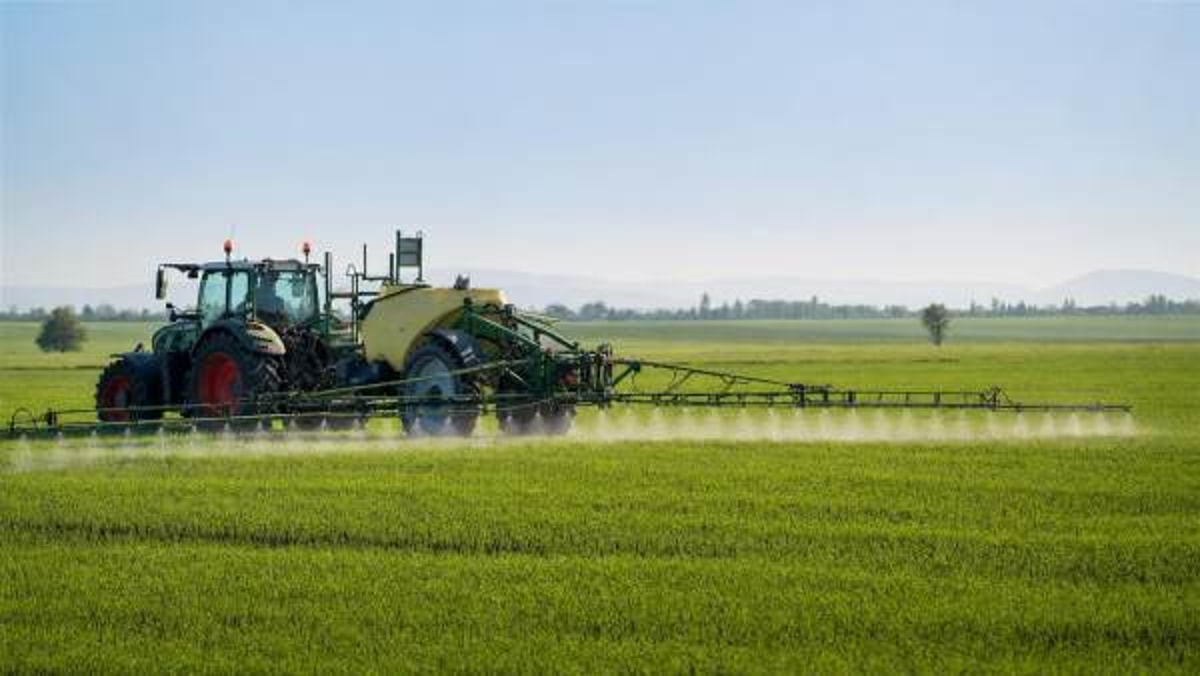
For technical evaluators comparing boom sprayers for tractors, spray uniformity is rarely determined by nozzle choice alone. Pressure stability, boom height control, travel speed, nozzle spacing, and droplet behavior all interact to shape field performance, chemical efficiency, and regulatory compliance. This article examines which variables matter most and how to assess them with practical, equipment-focused precision.
Why spray uniformity must be judged by application scenario
When buyers assess boom sprayers for tractors, the central question is not simply whether a machine can spray, but whether it can maintain repeatable distribution under the exact field conditions where it will operate. A sprayer used on broad, flat cereal land faces a different uniformity challenge from one working in rolling ground, vegetable blocks, or mixed-size plots. In every case, non-uniform coverage translates into missed targets, overdosed zones, drift loss, wasted chemistry, and higher compliance risk.
For technical evaluators, this means spray uniformity should be treated as a system outcome. The same nozzle set can perform very differently depending on boom stability, hydraulic responsiveness, pressure regulation, tractor speed variation, and operator settings. That is why evaluating boom sprayers for tractors through application scenarios is more useful than relying on brochure specifications alone. It reveals which variables dominate in real use and which design features are worth paying for.
The core variables that affect uniformity most
Across most applications, five variables repeatedly have the greatest effect on spray uniformity. First is boom height consistency. Even with correct nozzle spacing, a boom running too high or too low alters overlap patterns and creates streaking. Second is pressure stability, especially during speed changes, section switching, and headland turns. Third is travel speed control, because abrupt acceleration or wheel slip disrupts target application rate. Fourth is boom motion, including yaw, roll, and vertical bounce. Fifth is droplet behavior, influenced by nozzle type, pressure, wind, humidity, and canopy interaction.
In practice, boom height and boom stability often have a bigger effect than buyers initially expect. A perfectly selected nozzle cannot compensate for a wing that oscillates above the target or for uneven overlap caused by poor suspension geometry. Likewise, sophisticated rate control is less valuable if pressure response lags and produces temporary under-application at speed transitions.
Scenario comparison: where the main uniformity risks actually come from
Different field situations shift the ranking of risk factors. The comparison below helps technical teams identify what to prioritize when reviewing boom sprayers for tractors.
Scenario 1: broadacre operations where speed control drives uniformity
In large row-crop or cereal operations, the biggest uniformity threat is often not terrain but speed variation across long passes. Operators push productivity, and tractor speed changes during acceleration, trafficability shifts, or slope transitions can quickly expose weak control systems. For these users, boom sprayers for tractors should be evaluated for control loop speed, pressure stability under demand changes, and the relationship between pump output and nozzle flow range.
A useful test is to examine how fast the sprayer returns to target rate after a deliberate speed change. If pressure overshoots or lags, pattern quality may degrade even if average field rate appears acceptable. Technical evaluators should also check whether the plumbing layout minimizes dead volume and whether section valves open and close consistently across the boom. On broadacre machines, small response errors repeated thousands of times become measurable chemical waste.
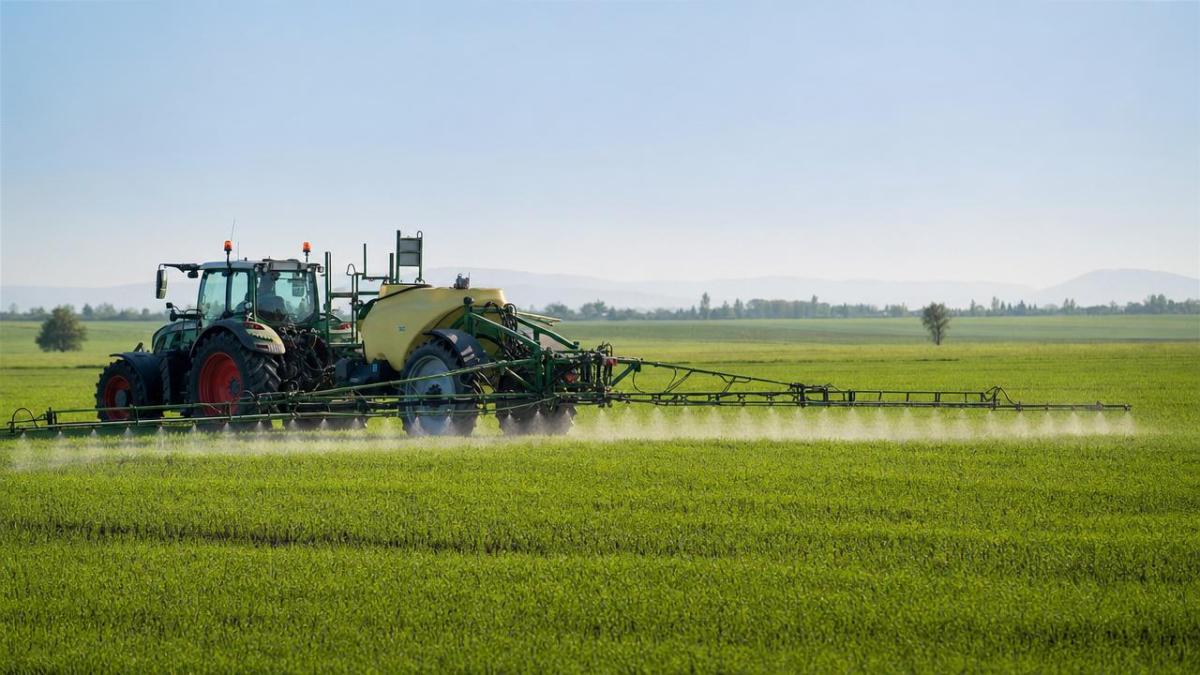
Scenario 2: uneven terrain where boom height control matters more than nozzle catalog data
On undulating fields, boom height consistency is usually the dominant factor affecting spray uniformity. The farther the nozzle deviates from its intended operating height, the more the overlap pattern distorts. This can create alternating strips of under- and over-application even when pressure and flow are nominal. For such terrain, technical evaluators should prioritize active boom leveling, sensor reliability, damping characteristics, and the mechanical stiffness of the boom itself.
Many purchasing teams focus on boom width because it boosts field capacity, but wider is not always better if structural movement cannot be controlled. In rolling terrain, a narrower boom with superior suspension and height control can produce more uniform deposition than a wider boom with aggressive oscillation. When comparing boom sprayers for tractors in this scenario, review field videos, not just spec sheets. Wing tip motion under realistic speeds is one of the clearest indicators of actual uniformity performance.
Scenario 3: specialty crops where droplet behavior and canopy interaction dominate
Vegetables, seed crops, and other high-value applications often require a different judgment standard. Here, spray uniformity is not only a matter of even pattern on a test bench but also of how droplets interact with a dense or irregular canopy. Fine droplets may improve coverage but raise drift risk; coarse droplets reduce drift but may limit penetration or contact on complex leaf surfaces. In these cases, the most important variables are the pressure-nozzle combination, target geometry, and achievable boom height over the crop without disturbing the canopy.
Evaluators should confirm whether the sprayer supports the intended operating pressure range without creating unstable pattern edges. They should also assess whether the machine can hold a consistent standoff distance as crop height changes over the season. For specialty users, “uniformity” means biologically effective distribution, not just equal liquid volume along the boom.
Scenario 4: small or fragmented fields where transition performance is the hidden weak point
In fragmented farming areas, orchards adjacent to arable blocks, or mixed contracting work, headlands and short passes dominate the operating cycle. Under these conditions, the hidden factor affecting spray uniformity is transition behavior: turning, section activation, restarting after pauses, and compensating during curved travel. A machine that performs well on a long straight test run may still produce uneven field results if its control system reacts poorly during frequent transitions.
For this scenario, technical evaluators should inspect section-by-section shutoff timing, GPS guidance integration, and whether the spray system compensates for inner-versus-outer boom speed in turns. Many conventional boom sprayers for tractors still show overlap errors in irregular fields because they were optimized around straight-line operation. If field geometry is complex, transition precision deserves equal weight to steady-state flow accuracy.
What technical evaluators should measure during comparison trials
A robust comparison should include both static and dynamic checks. Static checks confirm nozzle spacing, pressure gauge accuracy, flow balance, and boom alignment. Dynamic checks reveal what matters more: whether the system stays uniform while moving. During field trials, evaluators should record boom height variance, pressure fluctuation over time, travel speed consistency, and visible pattern distortion at different operating speeds.
If available, water-sensitive paper, spray scanner results, or georeferenced application logs can make the evaluation more objective. However, even without advanced instrumentation, buyers can still compare boom sprayers for tractors effectively by testing the same plot conditions, travel speeds, and nozzle sets across machines. The key is to reproduce realistic operating stress, not ideal laboratory stability.
Practical checklist for field evaluation
- Does the boom maintain target height across dips, ridges, and turns?
- How quickly does pressure stabilize after a speed change?
- Are left and right wings equally stable at operating speed?
- Does section control minimize overlap at field boundaries?
- Can the system hold pattern quality at the droplet size required for the chemistry used?
Common misjudgments when selecting boom sprayers for tractors
One frequent error is overvaluing nozzle type while undervaluing boom dynamics. Nozzles matter, but poor boom control can erase their advantage. Another mistake is assuming a higher-capacity pump automatically improves uniformity. Excess capacity helps only if the regulation system uses it smoothly. A third misjudgment is evaluating the machine at one ideal speed and one ideal field condition, then generalizing that result to all operations.
A further issue is ignoring operator variability. Some boom sprayers for tractors are forgiving and maintain acceptable uniformity despite moderate driving inconsistency, while others require stricter discipline to perform well. For fleets, contractors, or seasonal crews, ease of maintaining consistent settings can be as important as peak technical performance.
How to match the right sprayer architecture to your use case
The best purchase decision comes from matching design priorities to the operating environment. If the workload is high-speed broadacre spraying, focus on control response, section automation, and pressure stability. If the farm includes irregular or sloped terrain, allocate more budget to boom suspension, active height control, and structural rigidity. If the crop is high-value and sensitive to deposition quality, verify the sprayer can maintain the required droplet spectrum and standoff distance over the full season.
For evaluators writing comparison reports, it helps to rank machines not by one universal score but by scenario fit. A model that is strongest for flat grain acreage may not be the right choice for fragmented specialty production. This approach produces better procurement logic and clearer justification for stakeholders concerned with chemical efficiency, operator productivity, and compliance outcomes.
FAQ for technical buyers assessing spray uniformity
Is boom height more important than nozzle selection?
In many real-world conditions, yes. Incorrect or unstable boom height can damage overlap uniformity so severely that the benefits of a well-chosen nozzle are reduced. The two should be evaluated together, but height stability often deserves priority in uneven terrain.
Do wider boom sprayers for tractors always reduce application quality?
Not necessarily. Wider booms can perform very well if suspension, damping, and height control are engineered correctly. The issue is not width alone but how effectively boom motion is controlled under actual field speeds.
What is the fastest way to detect poor uniformity in a trial?
Observe pattern consistency during speed changes and on uneven ground. These moments reveal weak regulation, unstable wings, and overlap distortion more clearly than steady straight-line travel on flat land.
Final assessment for procurement and technical review
For most evaluators, the factor affecting spray uniformity most is not a single component but the interaction between boom height stability, pressure response, and speed control under the intended field scenario. That is the practical lens through which boom sprayers for tractors should be judged. Start with the fields, crops, and operating patterns you actually have, then test whether the machine preserves uniform distribution under those conditions.
If your team is comparing suppliers or preparing a technical shortlist, build the review around scenario-based trials, not isolated specifications. That approach will identify which sprayer architecture best supports your agronomic targets, input efficiency, and operational reliability.
Related Intelligence
- AgrochemicalsAgricultural fogging machines: where coverage and safety conflictAgricultural fogging machines improve field coverage fast, but can they meet safety, residue, and compliance demands? Explore the hidden trade-offs before you buy.
- AgrochemicalsOrchard mist sprayers and drift control in high-density plantingOrchard mist sprayers for high-density planting: learn how drift control, airflow, droplet management, and calibration improve coverage, safety, compliance, and crop quality.
- AgrochemicalsBoom sprayers for tractors: what affects spray uniformity most?Boom sprayers for tractors: discover what really affects spray uniformity most, from boom height and pressure stability to speed control and field conditions.
The Morning Broadsheet
Daily chemical briefings, market shifts, and peer-reviewed summaries delivered to your terminal.
