
The Authority in Global Agricultural Chemistry & Bio-Resources
Cassava harvesting machines that reduce root damage in wet fields
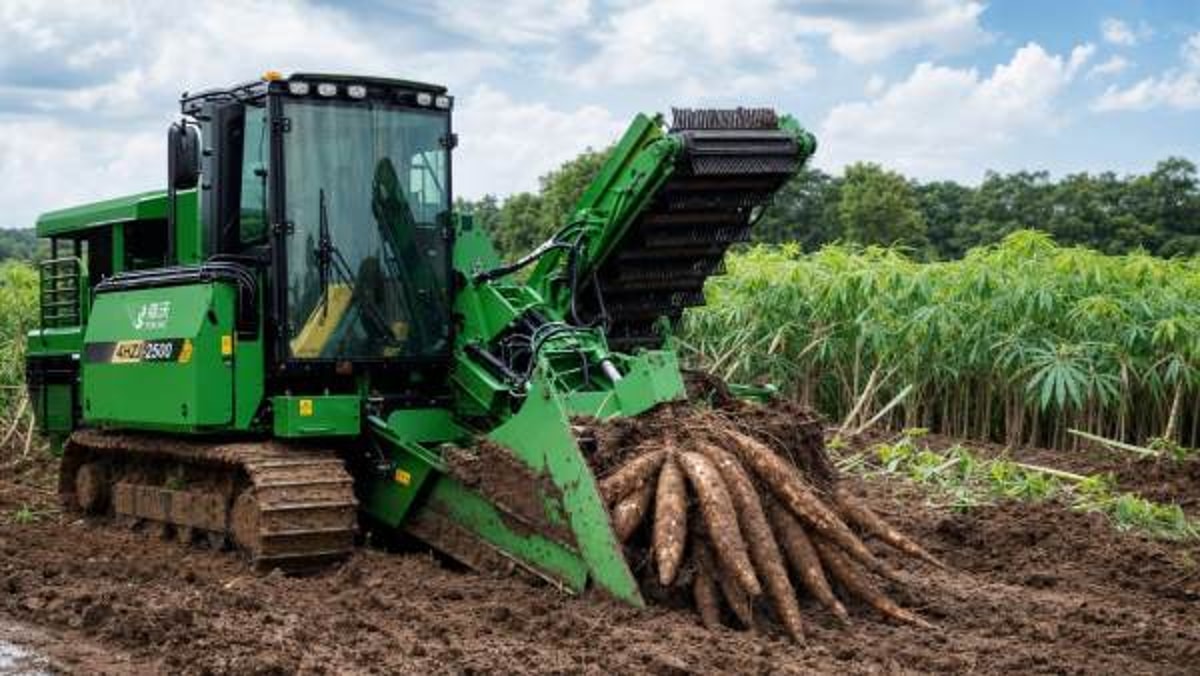
In wet-field conditions, harvesting cassava without bruising, cutting, or losing roots remains a major challenge for operators. Modern cassava harvesting machines are designed to improve lifting accuracy, reduce soil resistance, and protect root quality even in waterlogged ground. For users seeking better field efficiency and lower post-hvest losses, understanding which machine features truly reduce root damage is essential before making the next equipment decision.
Why do cassava roots suffer more damage in wet fields?
Wet fields change the way cassava behaves during lifting. Soil becomes heavy, sticky, and compact around the root cluster, so the machine must pull harder to extract the plant. When traction is uneven or the digging depth is wrong, roots can snap, split, or remain buried. For operators, this means lower marketable yield, more cleaning time, and greater loss during transport and storage.
Another problem is reduced visibility of row lines and root position. In drier conditions, machine guidance is simpler and root crowns are easier to track. In wet conditions, wheel slip, mud build-up, and poor balance can cause the harvesting unit to drift off-center. Even a small deviation may let blades cut into the tubers rather than loosen the soil around them. This is why cassava harvesting machines built for wet fields focus not only on pulling power, but also on stability, depth control, and low-impact root handling.
For users and machine operators, the key takeaway is practical: root damage in wet ground is usually a systems issue. It is rarely caused by one part alone. The interaction between digging blade shape, lifting angle, conveyor speed, tire or track design, and operator settings determines whether the machine protects or harms the roots.
What features in cassava harvesting machines actually reduce root damage?
Not every harvester marketed for cassava will perform well in waterlogged soils. Operators should look beyond engine power and ask which design details directly reduce breakage. The most valuable cassava harvesting machines usually share several damage-reduction features.
- Adjustable digging depth that follows root development and field unevenness.
- Wide or specially angled lifting blades that loosen soil before pulling the plant.
- Low-vibration lifting mechanisms to avoid sudden shocks to the root cluster.
- Mud-shedding conveyors or cleaning webs that separate soil gently without striking the roots.
- Track systems or low-ground-pressure running gear that improve traction and reduce sinkage.
- Row-centering guides and stable chassis geometry for straighter harvesting paths.
Among these, digging geometry is often the most important. A blade that enters too steeply can cut roots; a blade that rides too high can leave part of the cluster underground. Good cassava harvesting machines lift from below the root mass, gradually reducing soil resistance before the extraction force increases. That sequence matters more in wet fields, where roots are easily twisted under load.
Conveyor speed also deserves close attention. Faster is not always better. If the transfer system moves too aggressively, freshly lifted cassava can hit metal surfaces or other roots. Gentler conveying, supported by shock-reducing contact points, is often a better strategy for preserving quality, especially when roots are destined for fresh markets or processing lines that penalize bruising.
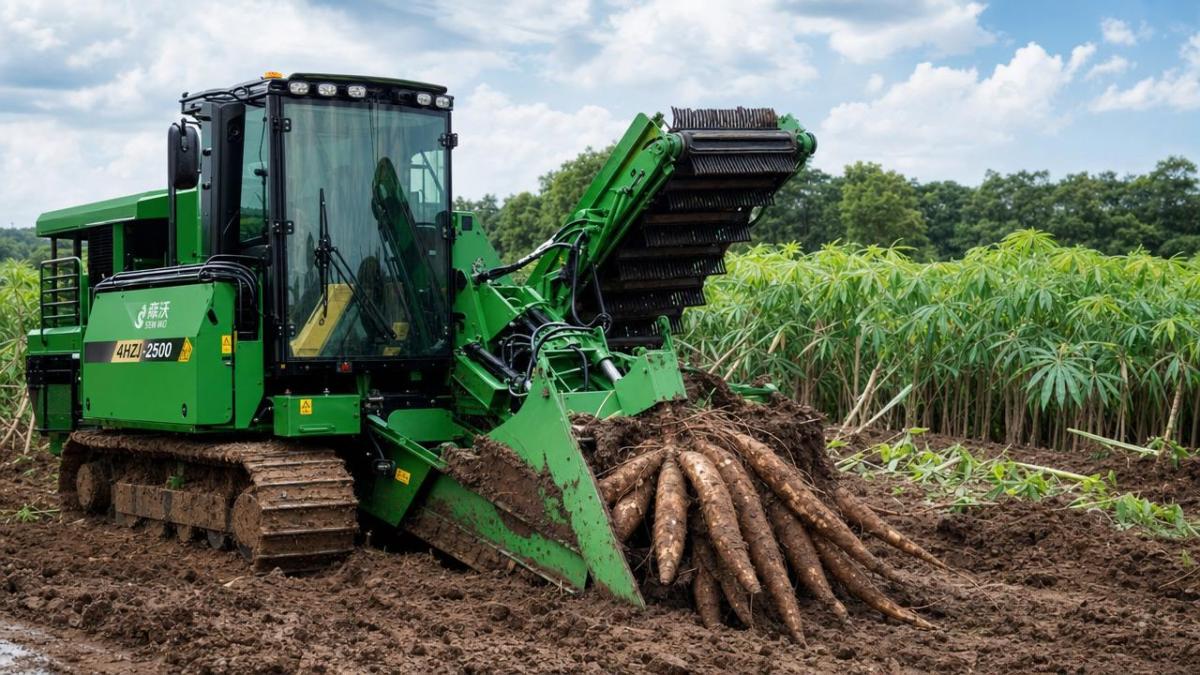
How can operators tell whether a machine is suitable for wet-field harvesting before buying?
The best evaluation starts with field-specific questions, not brochure claims. Buyers should ask whether the machine has been tested in sticky clay, silty lowlands, or recently irrigated plots similar to their own conditions. A machine that performs well in light soils may struggle badly in saturated ground. The decision should be based on local crop spacing, typical root size, field drainage, and how often harvesting is done after rain.
Operators should also review the extraction path from blade entry to final discharge. If any stage appears abrupt, narrow, or difficult to clean, it may become a damage point in muddy conditions. Maintenance access matters too. Wet-field work causes faster build-up of mud and plant residue, and a machine that is hard to clean or adjust will gradually lose performance through the day.
A practical inspection should include demonstration results under load. Instead of only watching the machine move, assess the harvested roots afterward. Count broken roots, inspect skin abrasion, check whether crowns are torn, and note how much cassava remains in the soil. These observations reveal more than horsepower figures or travel speed.
Quick evaluation table for users
The table below summarizes what operators should verify when comparing cassava harvesting machines for wet conditions.
Are tracked machines always better than wheeled cassava harvesting machines in muddy ground?
Not always, but tracked systems often offer a clear advantage where fields stay soft for long periods. Tracks usually spread machine weight better, reduce rutting, and provide more stable pulling force during lifting. This helps the digging unit stay aligned with the row, which is a major factor in reducing root cutting. In severe wet-field conditions, this stability can translate into cleaner extraction and fewer missed roots.
However, wheeled cassava harvesting machines can still perform well if the design includes suitable tires, balanced load distribution, and dependable depth control. In some farms, wheeled units are preferred because they are simpler to transport, easier to maintain, and less expensive to acquire. If the field is only moderately wet rather than deeply waterlogged, a well-matched wheeled harvester may be the more economical choice.
The real question is not tracks versus wheels in isolation. It is whether the undercarriage supports a steady, low-disturbance harvesting path. A poorly designed tracked machine can still damage roots, while a well-configured wheeled machine can deliver excellent results. Operators should compare traction behavior, turning impact, rut depth, and extraction consistency rather than relying on a single feature.
What operating mistakes cause unnecessary cassava root damage even with a good machine?
Many users assume that once they invest in modern cassava harvesting machines, root damage will automatically fall. In reality, poor operation can cancel out the benefits of a strong machine design. One common mistake is running too fast in wet ground. High travel speed increases vibration, reduces control over digging depth, and forces abrupt root transfer. The machine may appear productive, but hidden losses rise sharply.
Another frequent issue is incorrect depth setting. Operators sometimes raise the blade to avoid heavy drag, especially in sticky soil, but that often leaves part of the root mass unlifted or partially cut. The opposite error—setting the blade too deep—adds unnecessary load, increases soil intake, and can disturb root orientation during extraction.
Poor maintenance is also a direct cause of damage. Worn blades tear rather than lift. Loose chains or conveyors create impacts at transfer points. Mud build-up changes the geometry of moving parts and reduces visibility for adjustments. In wet conditions, operators should inspect wear points more often and clean the machine at shorter intervals, especially around digging and separation sections.
Finally, harvesting timing matters. Even the best cassava harvesting machines have limits when fields are extremely saturated after heavy rain. If the soil structure collapses under the machine and the harvester cannot maintain a consistent path, root protection drops. When possible, operators should target a harvest window where the field is still workable, not simply accessible.
How should users compare damage reduction against cost, productivity, and maintenance?
A lower purchase price does not necessarily mean a lower harvesting cost. If a cheaper machine causes more bruising, leaves more roots behind, or requires repeated manual recovery in wet fields, total cost quickly rises. For commercial growers and field operators, the correct comparison is cost per marketable ton, not cost per machine alone.
Damage reduction has real economic value in several ways. First, intact roots usually sell better and process more efficiently. Second, lower field loss reduces the need for labor-intensive follow-up collection. Third, stable harvesting in difficult weather shortens the time crop remains exposed in the ground, which helps maintain quality and schedule reliability. These benefits should be weighed against fuel use, wear-part replacement, cleaning time, and operator training needs.
Users should ask suppliers for realistic maintenance intervals in muddy work, not ideal numbers from dry-field conditions. A durable machine with easier access to service points may outperform a faster but more fragile alternative over a full season. For many operations, the best cassava harvesting machines are those that maintain acceptable speed while consistently protecting root quality under variable field moisture.
What are the most common buying misconceptions about cassava harvesting machines?
One misconception is that more power automatically means less damage. Extra power helps only when it is matched with controlled digging and smooth handling. Without that balance, a stronger machine may simply pull harder and break more roots. Another misconception is that a machine proven on one farm will perform the same everywhere. Cassava variety, root depth, row spacing, and soil type all influence harvesting behavior.
Some buyers also overlook operator learning requirements. Advanced cassava harvesting machines may offer excellent adjustment options, but those options are useful only if the operator understands how to set them for wet fields. Training and setup support should be part of the purchasing decision, especially for farms transitioning from manual or semi-mechanical harvest methods.
A final misconception is that post-harvest damage begins only after roots leave the field. In fact, much of the quality loss starts at the moment of lifting. Cracks, bruises, and torn skin created during extraction can later lead to faster deterioration, contamination risk, and poorer processing results. That is why machine selection should be linked directly to downstream quality goals.
What questions should you raise before requesting a quote or field demo?
Before moving toward procurement, users should prepare a short list of practical questions. Ask what soil moisture range the machine is designed to handle, how digging depth is adjusted during operation, and what percentage of root damage is typical in comparable wet-field demonstrations. Confirm whether the supplier can provide references from farms with similar row spacing, soil conditions, and harvest volumes.
It is also wise to ask about wear parts, cleaning requirements, setup time, and operator training. If the machine is expected to work in mixed conditions across the season, clarify how easily it can be adapted between wetter and drier blocks. For institutional buyers or larger operators, request clear data on field loss, root breakage, daily throughput, and service response time.
For anyone comparing cassava harvesting machines, the right next step is not just asking for price. It is asking for proof of low-damage performance in the specific conditions that matter most to your operation. If you need to confirm a suitable solution, start by discussing field moisture profile, root size variability, target throughput, maintenance support, and expected quality outcomes before finalizing specifications or commercial terms.
Related Intelligence
- Heavy Agri MachineryRotary tillers wholesale quality checks before placing a large orderRotary tillers wholesale quality checks: verify welds, gearboxes, blades, CE compliance, and batch consistency before large orders to reduce risk and choose suppliers with confidence.
- Heavy Agri MachineryWholesale lawn mowers or ride-ons? Matching mower type to terrainWholesale lawn mowers or ride-ons? Learn how to match mower type to terrain, acreage, labor, and obstacles to stock smarter, reduce service issues, and win more commercial buyers.
- Heavy Agri MachineryManure spreaders wholesale: the maintenance issues worth checking firstManure spreaders wholesale maintenance starts with the right first checks. Discover how to inspect chains, PTO, hydraulics, and corrosion points to reduce downtime and improve spread performance.
The Morning Broadsheet
Daily chemical briefings, market shifts, and peer-reviewed summaries delivered to your terminal.
