

The Authority in Global Agricultural Chemistry & Bio-Resources
What to compare before buying a commercial fruit grading machine
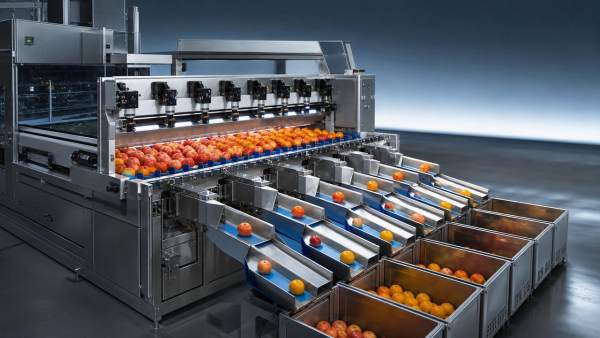
Buying a commercial fruit grading machine is not just about speed or price—it is a strategic procurement decision that affects product consistency, labor efficiency, compliance, and long-term ROI. Before selecting a system, buyers should compare grading accuracy, capacity, fruit compatibility, automation level, maintenance demands, and supplier support to ensure the equipment fits both operational goals and supply chain standards.
For procurement teams, the real question is not simply which machine is “best,” but which system can deliver reliable grading performance under your fruit type, packhouse workflow, labor conditions, and customer specifications. A machine that looks efficient in a brochure may underperform if it bruises delicate fruit, struggles with size variation, or creates downtime during peak harvest.
The strongest buying decisions usually come from comparing equipment across commercial outcomes: saleable yield, grade consistency, reject accuracy, line integration, operating cost, and vendor accountability. If those factors are evaluated carefully, a commercial fruit grading machine becomes more than a sorting device—it becomes a tool for margin protection and supply chain control.
Start with the procurement question that matters most: what problem should the machine solve?
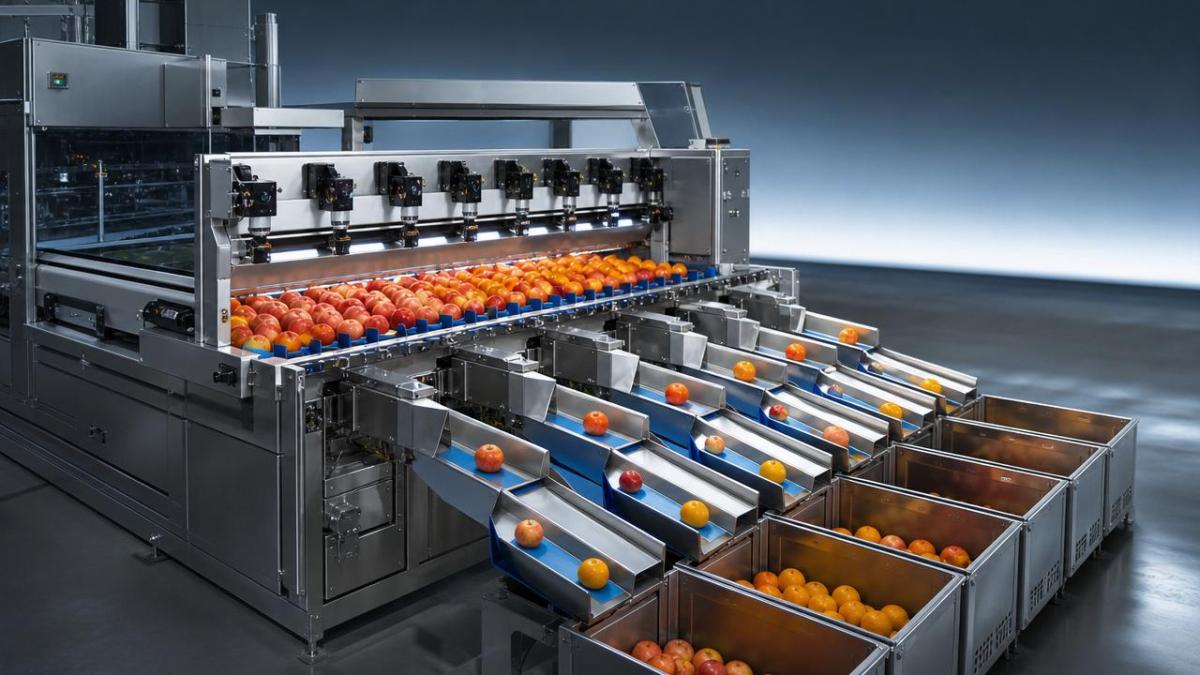
Before comparing models, buyers should define the operational gap they are trying to close. In some facilities, the main issue is labor dependency. In others, it is inconsistent grading between shifts, high rejection rates from retail buyers, or insufficient throughput during harvest peaks. The right comparison framework starts with that bottleneck.
If your operation serves supermarkets, exporters, or branded fruit programs, grading consistency is often more important than raw speed. If labor shortages are severe, automation level may be the priority. If margins are tight, total cost per graded ton may matter more than headline machine price. Procurement teams should align machine selection with business objectives before evaluating specifications.
A practical first step is to document current pain points using measurable indicators: tons per hour, labor per shift, customer claim rates, packout percentage, downtime frequency, and annual maintenance cost. These baseline figures help buyers compare vendors in commercial rather than purely technical terms.
Compare grading accuracy before comparing throughput
Many buyers initially focus on speed, but grading accuracy usually has a greater long-term financial impact. A fast machine that misclassifies fruit can reduce saleable value, create customer disputes, and weaken brand reputation. For export and premium channels, small grading errors can translate into large contract losses.
Accuracy should be evaluated across the actual grading criteria your buyers use. That may include size, weight, color, shape, external defects, internal quality, density, or ripeness indicators. Not every commercial fruit grading machine can measure all of these at the same level, so procurement teams should compare the machine’s sensing technology against their market requirements.
For example, a line intended for apples or citrus may need strong size and color grading performance, while avocados, stone fruit, or mangoes may require more advanced defect detection or gentle handling. If your buyers pay premiums for appearance uniformity, image-processing quality matters. If your customers prioritize standardized pack weights, weighing precision becomes critical.
Ask suppliers for repeatability data, grading tolerance ranges, and case examples from similar fruit categories. It is also wise to request on-site demonstrations or sample runs using your own fruit, because machine accuracy can vary significantly depending on fruit condition, surface texture, moisture, and seasonal variation.
Make sure the machine matches your fruit type, size range, and handling sensitivity
One of the most common procurement mistakes is buying a machine optimized for a different fruit profile. Fruit grading systems are not universally interchangeable. Apples, oranges, peaches, blueberries, kiwifruit, tomatoes, and avocados all present different challenges in feeding, singulation, inspection, transport, and discharge.
Buyers should compare the supported fruit size range, weight range, skin sensitivity, and acceptable shape irregularity. A machine that handles hard-skinned fruit well may cause bruising or pressure damage on softer produce. Even if the vendor lists compatibility, the true question is whether the line can preserve marketable quality at your target throughput.
Pay close attention to handling points where damage may occur: infeed transfer, cup design, roller pressure, drop height, discharge lanes, and accumulation areas. For high-value fruit, gentle handling is not a secondary feature—it is part of the return on investment. Reduced bruising often yields more financial benefit than a modest increase in sorting speed.
It also helps to compare sanitation and cleanout design if your operation processes multiple fruit types or changes varieties seasonally. A flexible machine can improve line utilization, but only if switching products does not cause excessive recalibration or downtime.
Capacity should be measured against peak season reality, not brochure numbers
Throughput claims can be misleading if they are based on ideal fruit conditions, full labor availability, or narrow grading criteria. Procurement teams should compare actual operating capacity under commercial conditions: mixed sizes, variable quality lots, peak harvest volumes, and real packhouse staffing.
Ask vendors how the stated tons per hour or pieces per minute changes when additional grading parameters are activated. A commercial fruit grading machine may run quickly when sorting only by size, but capacity can decline when color cameras, defect detection, or multiple discharge categories are used simultaneously.
Peak season performance is especially important. If your receiving volume spikes sharply over a short harvest window, insufficient grading capacity can create fruit backlog, quality deterioration, overtime costs, and shipment delays. In that context, the right machine is not just the fastest unit, but the one that sustains stable output without compromising quality.
Compare buffer capacity, feeding consistency, line balancing, and the ability to add lanes or modular expansions later. Scalability is valuable for buyers expecting production growth or changes in customer grade segmentation.
Evaluate automation level in terms of labor savings and process control
Automation should be assessed beyond the marketing label. Some systems automate grading only, while others integrate feeding, singulation, defect imaging, weighing, data capture, routing, and packing line communication. Buyers should compare how much manual intervention remains in normal operation.
For labor-constrained facilities, higher automation can reduce staffing pressure and improve grading consistency between shifts. However, full automation is not always the most economical choice if production volume is moderate or technical support is limited. The better procurement question is whether the automation level fits your labor market, operator skill base, and payback expectations.
Review the control interface, recipe management, parameter adjustment, alarm system, and reporting functions. A user-friendly machine can reduce operator error and training time. If your operation runs multiple fruit grades, customer specifications, or pack formats, digital recipe storage can save significant setup time.
Data visibility is increasingly important. Some buyers now prioritize machines that provide grading statistics, defect trends, throughput reports, and remote diagnostics. These functions support traceability, quality audits, and continuous improvement, particularly in larger integrated operations.
Look beyond purchase price and compare total cost of ownership
Price comparison alone rarely leads to the best decision. A lower-cost machine can become more expensive over time if it causes product loss, frequent downtime, high wear-part consumption, or dependence on expensive service visits. Procurement teams should model total cost of ownership across several years.
Key cost areas include installation, utilities, spare parts, software licensing, calibration, maintenance labor, consumables, training, and service response. It is also important to estimate the cost of downtime during harvest, because a stalled grading line can affect the entire packing schedule.
Ask vendors for expected wear-part replacement intervals, recommended preventive maintenance schedules, and the average service life of critical components such as cameras, load cells, belts, cups, rollers, or ejector systems. If the supplier cannot provide realistic maintenance assumptions, the cost forecast is incomplete.
ROI should be based on quantifiable gains: lower labor cost, higher packout accuracy, reduced fruit damage, fewer buyer claims, better premium-grade recovery, and greater throughput stability. Procurement teams should test whether the projected payback still makes sense under conservative assumptions, not only best-case scenarios.
Supplier support and parts access can matter as much as machine design
Even a technically strong commercial fruit grading machine becomes a procurement risk if supplier support is weak. For seasonal operations, delayed parts delivery or slow remote troubleshooting can cause severe commercial disruption. Buyers should assess the vendor’s service infrastructure before signing.
Important questions include: Is there local or regional technical support? What is the guaranteed response time? Which spare parts are stocked locally? Can diagnostics be performed remotely? How long does commissioning take? Is operator training included? Who handles software updates and calibration support?
Reference checks are especially useful here. Speak with existing users processing similar fruit at comparable scale. Ask about uptime, post-installation support, parts lead times, and whether the machine met the original sales claims after the first peak season. Real operating feedback often reveals more than a specification sheet.
Vendor stability also matters. Procurement teams should consider whether the supplier has a credible installed base, documented engineering capability, and long-term commitment to the category. A machine is a multi-year asset, so after-sales reliability is part of the investment decision.
Check integration, compliance, and site-fit before final approval
A grading machine may perform well in isolation yet still be a poor fit if it does not integrate smoothly with your existing facility. Buyers should compare infeed and outfeed compatibility, conveyor heights, electrical requirements, compressed air demand, water exposure protection, software communication, and available floor space.
Installation constraints are often underestimated. Ceiling height, drainage, washdown conditions, access for maintenance, and crate or bin flow can all affect final layout efficiency. If the machine requires major building modification, the real project cost may be much higher than expected.
Compliance should also be reviewed carefully. Depending on the market, buyers may need to consider food-contact materials, hygiene design, electrical safety standards, export market expectations, and traceability requirements. If the fruit is destined for regulated retail or export programs, documentation quality from the vendor becomes part of procurement due diligence.
For larger organizations, it is helpful to involve operations, maintenance, quality assurance, and finance in the final review. The best purchasing decisions are cross-functional, because grading performance affects multiple departments long after commissioning is complete.
A practical comparison checklist for procurement teams
To compare suppliers consistently, buyers should build a weighted scorecard rather than relying on sales presentations. The criteria can be adjusted by operation, but most procurement teams should evaluate the following categories:
First, grading performance: accuracy, repeatability, sensor capability, number of grading outputs, and performance on your actual fruit samples. Second, product suitability: supported fruit types, size range, gentle handling design, and ease of changeover between varieties.
Third, operating capacity: sustained throughput, performance during peak loads, line balancing, and future expansion potential. Fourth, automation and controls: software usability, reporting, recipe management, diagnostics, and labor reduction impact.
Fifth, ownership cost: installation, utilities, maintenance, spare parts, expected downtime, and payback period. Sixth, supplier strength: service network, references, warranty terms, commissioning quality, and parts availability. Seventh, integration and compliance: site fit, utility demand, sanitation design, safety standards, and documentation quality.
Using a structured matrix reduces bias and helps procurement teams justify their decision internally. It also makes vendor negotiations more effective, because gaps can be discussed with evidence rather than impressions.
Conclusion: the best machine is the one that protects margin and performance over time
When buying a commercial fruit grading machine, the smartest comparison is not machine versus machine in abstract terms. It is machine versus your operational needs, customer specifications, seasonal pressure, labor constraints, and quality targets. Procurement teams that focus only on speed or purchase price often overlook the factors that drive long-term value.
In most cases, the best choice is the system that delivers dependable grading accuracy, handles your fruit gently, sustains realistic throughput, fits your facility, and comes with responsive supplier support. That combination reduces risk more effectively than impressive headline specifications alone.
If buyers approach the decision with a clear baseline, sample testing, total-cost analysis, and a weighted comparison framework, they are far more likely to select equipment that improves consistency, lowers operating friction, and produces measurable return over multiple harvest cycles.
Related Intelligence
- Heavy Agri MachineryHow to shortlist Agri & Forestry machinery manufacturersAgri & Forestry machinery manufacturers: learn how to shortlist reliable suppliers by comparing capability, compliance, service, and delivery strength for smarter, lower-risk sourcing.
- Heavy Agri MachineryWhy onion grading machine accuracy changes during peak seasonOnion grading machine accuracy can shift during peak season due to higher throughput, dust, crop variability, and sensor drift. Learn the causes and smart fixes to protect quality.
- Heavy Agri MachineryHow to read Agri & Forestry machinery specifications betterAgri & Forestry machinery specifications explained clearly: learn how to compare power, hydraulics, weight, safety, and compliance to choose equipment smarter and avoid costly mistakes.
The Morning Broadsheet
Daily chemical briefings, market shifts, and peer-reviewed summaries delivered to your terminal.
