

The Authority in Global Agricultural Chemistry & Bio-Resources
What sets a reliable agricultural gearbox manufacturer apart?
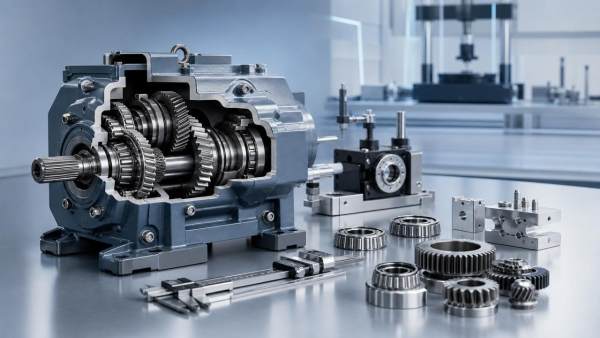
Choosing the right agricultural gearbox manufacturer is not simply a matter of price or delivery speed. For technical evaluators, the real differentiators lie in engineering consistency, material traceability, load performance, certification compliance, and after-sales support. This article examines the practical standards that separate dependable manufacturers from high-risk suppliers in modern agricultural machinery procurement.
In modern farm equipment, the gearbox is rarely an isolated component. It directly affects torque transfer, implement stability, maintenance intervals, and lifecycle cost across tractors, harvesters, tillage tools, feed handling systems, and forestry attachments. When a gearbox fails during a narrow planting or harvesting window, a delay of even 24 to 72 hours can disrupt field operations, labor scheduling, and downstream logistics.
For that reason, a reliable agricultural gearbox manufacturer should be assessed through measurable engineering and supply criteria rather than sales claims. Technical buyers need evidence of machining control, heat treatment repeatability, seal quality, testing protocols, documentation discipline, and spare-parts responsiveness. In B2B procurement, reliability is not a slogan; it is the result of systems, process control, and transparent technical communication.
Core Manufacturing Signals That Indicate Reliability
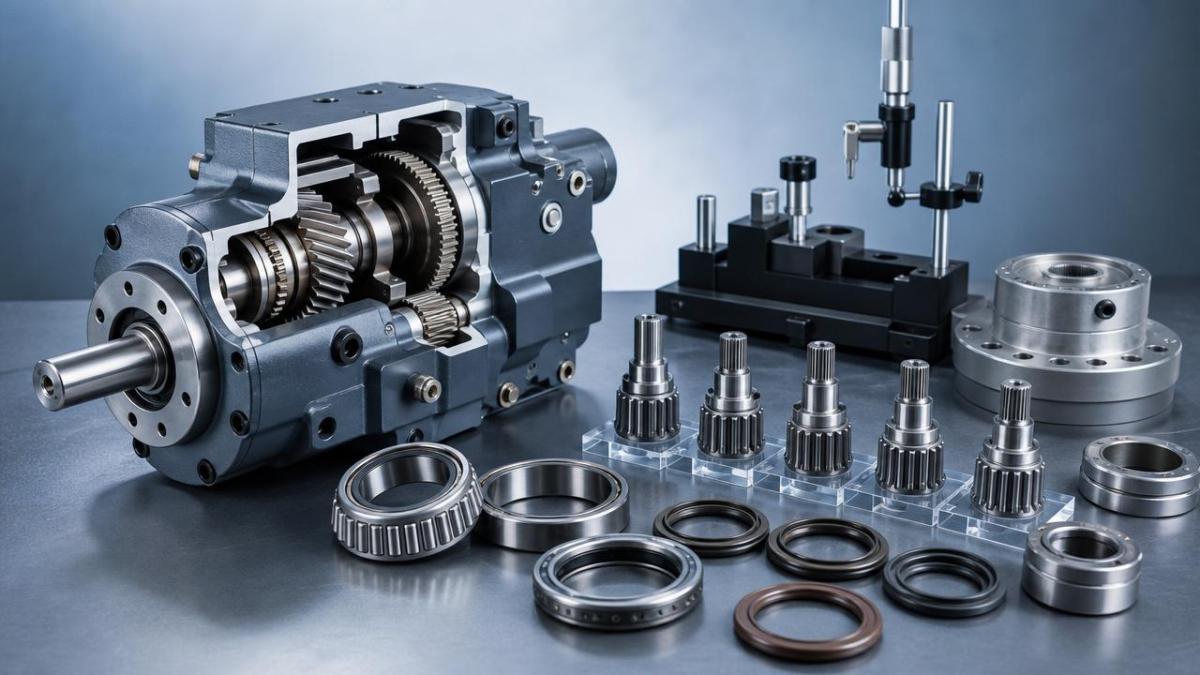
The first question for any technical evaluator is whether the agricultural gearbox manufacturer can produce repeatable quality across batches, not merely a few acceptable samples. In agricultural machinery, components often operate under dust exposure, shock loading, moisture, and seasonal duty cycles that may exceed 8 to 12 hours per day. Under these conditions, small deviations in gear geometry or housing alignment quickly become field failures.
Machining Accuracy and Gear Geometry Control
A dependable supplier should be able to explain how it controls concentricity, backlash, tooth profile consistency, and shaft alignment. Even when exact tolerances vary by gearbox type, evaluators should expect documented inspection routines at several stages: incoming material verification, in-process dimensional checks, and final assembly validation. A manufacturer that cannot describe these checkpoints in a structured way usually lacks process maturity.
For example, agricultural applications involving rotary cutters, seed drills, augers, and spreaders may subject the gearbox to variable torque peaks rather than constant laboratory loads. That means dimensional errors that seem minor in static measurement can translate into vibration, seal wear, and tooth pitting in real operation. Reliable manufacturers typically connect geometry control to actual use conditions, not only to workshop inspection language.
Material Traceability and Heat Treatment Discipline
Material traceability is another major separator. A serious agricultural gearbox manufacturer should be able to identify the source batch for gears, shafts, housings, bearings, and seals. This is especially important in export procurement, where a technical dispute may arise 6 to 18 months after delivery. Without batch traceability, root-cause analysis becomes slow, expensive, and sometimes impossible.
Heat treatment deserves equal scrutiny. Surface hardness, core toughness, and case depth influence fatigue resistance under repeated load cycles. Evaluators do not need proprietary recipes, but they should expect basic evidence that the manufacturer follows controlled and repeatable heat treatment procedures, with records linked to production lots. In field equipment exposed to high-load starts and shock reversals, inconsistent heat treatment is one of the fastest ways to create premature wear.
What Technical Teams Should Verify Early
- Whether raw material certificates can be matched to production lots
- Whether gears and shafts undergo documented hardness verification
- Whether bearing and seal suppliers are stable across production batches
- Whether dimensional inspection records are retained for at least one traceable period
- Whether the supplier can explain failure-analysis workflow within 48 to 72 hours
The table below summarizes common indicators that help technical evaluators distinguish robust process control from superficial manufacturing capability during supplier screening.
The practical takeaway is simple: true reliability is visible in records, process checkpoints, and technical dialogue. When an agricultural gearbox manufacturer can only discuss output volume or lead time, evaluators should assume that hidden quality variation may surface later in the field.
Performance Validation Under Real Agricultural Loads
A gearbox that performs well in a catalog description may still fail in real agricultural service if the testing regime is weak. This is why performance validation is one of the strongest indicators of a reliable agricultural gearbox manufacturer. Technical teams should ask not just whether tests are conducted, but what is tested, how long, and under which load assumptions.
Torque, Duty Cycle, and Environmental Exposure
Agricultural gearbox applications often involve fluctuating torque, sudden starts, debris ingress risk, and temperature swings. A gearbox for a mower, for instance, may see repeated shock loads from dense vegetation and hidden obstacles. A feed-processing drive may run for 10 to 16 hours per shift with a different thermal profile. The manufacturer should be able to relate design margins to these operating realities.
In technical review, ask whether the supplier distinguishes between rated load, peak load, and overload duration. If a gearbox is rated for one condition but routinely used in another, service life can decline sharply. Reliable manufacturers usually define acceptable operating windows and lubrication expectations rather than assuming all users will infer them correctly.
Seal Integrity, Lubrication, and Bearing Life
Field reliability often comes down to less visible details such as seal design, lubrication retention, and bearing arrangement. Dust, slurry, fertilizer residue, and washdown exposure can reduce seal life faster than many buyers expect. A manufacturer that has worked extensively with agricultural and forestry machinery should be able to discuss sealing strategy for dirty environments and expected service intervals under different use intensities.
Technical evaluators should also confirm whether the gearbox can support standard maintenance practices in the destination market. If oil grade, seal dimensions, or bearing replacements are difficult to source locally, the total cost of ownership rises. A reliable agricultural gearbox manufacturer typically designs with serviceability in mind, especially for OEMs and fleet operators who need predictable maintenance planning across multiple regions.
Typical Performance Review Questions
- What is the rated torque range, and what peak-load allowance is assumed?
- How many hours or cycles are included in endurance testing?
- What sealing approach is used for dust-heavy or moisture-prone environments?
- Which lubrication intervals are recommended under normal and severe duty?
- How is vibration, noise, or abnormal heat monitored during testing?
The following comparison helps evaluators interpret how test discipline affects procurement confidence when selecting an agricultural gearbox manufacturer for critical machinery programs.
For technical buyers, the strongest suppliers are those who can connect testing logic to field conditions. Performance validation should reduce uncertainty, not simply decorate a brochure.
Documentation, Compliance, and Cross-Border Procurement Readiness
In international sourcing, documentation quality often predicts supplier reliability as clearly as product quality does. A capable agricultural gearbox manufacturer should provide consistent drawings, bills of materials, inspection reports, packing details, and export documentation without repeated correction cycles. If document errors appear during quotation or pre-production, they often reappear during shipment and claims handling.
Controlled Drawings and Revision Management
Technical evaluators should confirm whether the supplier uses revision-controlled drawings and whether changes are approved formally. In agricultural equipment programs, a seemingly small shaft or flange modification can affect mounting, PTO compatibility, and downstream assembly. A reliable manufacturer should be able to distinguish current revision from obsolete revision and communicate changes before production release.
This matters especially for OEM and contract manufacturing arrangements, where 1 incorrect interface dimension can interrupt assembly lines or trigger field retrofits. A disciplined document system reduces that risk and supports faster root-cause analysis if a mismatch occurs.
Compliance Expectations and Quality System Maturity
Compliance should be evaluated realistically. Not every supplier needs the same certification package, but every serious agricultural gearbox manufacturer should show evidence of a structured quality system, incoming inspection discipline, nonconformance handling, and corrective action tracking. Technical buyers should look for process maturity rather than decorative claims.
For exported agricultural machinery, compliance may also extend to coating requirements, packaging specifications, marking standards, and regional customs documentation. A supplier that understands these details can prevent delays of 7 to 21 days that often occur when paperwork, labels, or shipping marks do not align with buyer instructions.
Documentation Checklist for Evaluators
- Controlled drawing with revision history
- Material and inspection records linked to shipment lots
- Packing list aligned with part numbers and quantities
- Clear installation and lubrication guidance
- Defined nonconformance and corrective action workflow
When these documents are available before mass production, technical teams can reduce approval cycles, avoid interface confusion, and build a more reliable supplier qualification record.
After-Sales Support, Spare Parts, and Long-Term Supply Stability
Even a well-designed gearbox becomes a procurement risk if after-sales support is weak. A reliable agricultural gearbox manufacturer should support the full lifecycle: pre-sale application review, pilot batch alignment, installation guidance, warranty handling, and spare-parts continuity. For technical evaluators, this is where supplier claims become operationally measurable.
Response Time and Failure Handling
Ask how quickly the supplier responds to a field issue. In serious B2B practice, an initial technical response within 24 to 48 hours is a strong signal, especially when the supplier requests photos, operating data, lubrication status, and serial or batch information. Slow and generic replies usually indicate that the supplier lacks either engineering support or internal traceability.
Good support does not mean promising zero failures. It means having a repeatable method for issue containment, root-cause review, and corrective action. In seasonal agriculture, rapid containment can be more valuable than broad warranty language because equipment downtime during a 2 to 3 week operational window may cost more than the component itself.
Spare Parts Strategy and Supply Continuity
A dependable agricultural gearbox manufacturer should define which parts are field-replaceable, which assemblies are stocked, and what replenishment cycle is typical. For imported equipment, a 6 to 10 week replenishment window may be manageable for strategic stock items, but not for emergency repairs. Technical buyers should therefore assess the supplier’s spare-parts logic before approving mass purchase orders.
Supply continuity also matters. If the manufacturer frequently changes bearing brands, seal sources, or housing subcontractors without change notification, performance variation becomes likely. Stable sourcing does not require rigidity, but substitutions should be documented and technically approved rather than introduced silently.
Practical Signs of Strong Lifecycle Support
- Dedicated technical contact for application and failure questions
- Spare-parts list available at quotation or sample stage
- Installation and maintenance guidance for operators and service teams
- Clear warranty boundaries tied to operating conditions
- Structured corrective action feedback after claims or recurring issues
These support elements reduce lifecycle uncertainty and help technical teams compare suppliers on total operating value rather than unit price alone.
How Technical Evaluators Can Build a Strong Supplier Qualification Process
A strong evaluation process combines engineering review, document review, and service review. Instead of relying on a single sample approval, technical teams should assess the agricultural gearbox manufacturer in 3 stages: pre-qualification, pilot validation, and controlled volume release. This approach reveals whether the supplier can scale quality consistently from initial contact to batch production.
Recommended 3-Stage Assessment Model
During pre-qualification, verify manufacturing capability, traceability discipline, and technical communication quality. In pilot validation, focus on fit, load behavior, sealing, and installation compatibility. During controlled volume release, monitor defect rate, response speed, and delivery consistency over at least 2 to 3 shipments. This staged method provides more practical insight than a one-time factory presentation.
Common Procurement Mistakes to Avoid
- Approving a supplier based only on sample appearance or low quote
- Ignoring spare-parts support until after the first field issue
- Assuming all agricultural duty cycles are comparable
- Failing to review revision control and document accuracy
- Overlooking how quickly the supplier can investigate a claim
For institutional buyers, OEM sourcing teams, and technical evaluators in primary industries, the best agricultural gearbox manufacturer is the one that reduces uncertainty at every step: design, production, shipment, installation, operation, and service. That kind of supplier creates value not by broad marketing language, but by consistent evidence, transparent process control, and dependable long-term support.
If your team is comparing suppliers for agricultural and forestry machinery, feed processing equipment, or other heavy-duty primary industry applications, use the criteria above to build a more resilient shortlist. To explore validated sourcing insights, compare supplier readiness factors, or discuss gearbox evaluation priorities in greater detail, contact us today to get a tailored solution and deeper technical guidance.
Related Intelligence
- Heavy Agri MachineryHow to shortlist Agri & Forestry machinery manufacturersAgri & Forestry machinery manufacturers: learn how to shortlist reliable suppliers by comparing capability, compliance, service, and delivery strength for smarter, lower-risk sourcing.
- Heavy Agri MachineryWhy onion grading machine accuracy changes during peak seasonOnion grading machine accuracy can shift during peak season due to higher throughput, dust, crop variability, and sensor drift. Learn the causes and smart fixes to protect quality.
- Heavy Agri MachineryHow to read Agri & Forestry machinery specifications betterAgri & Forestry machinery specifications explained clearly: learn how to compare power, hydraulics, weight, safety, and compliance to choose equipment smarter and avoid costly mistakes.
The Morning Broadsheet
Daily chemical briefings, market shifts, and peer-reviewed summaries delivered to your terminal.
