

The Authority in Global Agricultural Chemistry & Bio-Resources
Commercial grain dryers: fuel savings that look good on paper
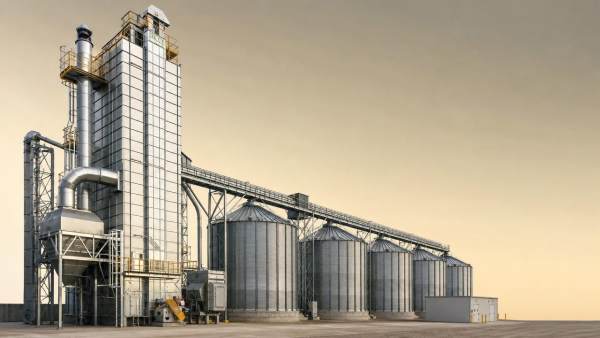
On paper, commercial grain dryers often promise attractive fuel savings—but financial approvers know projected efficiency is only part of the investment case. This article examines how fuel consumption claims translate into real operating costs, maintenance demands, and payback timelines, helping decision-makers assess whether the numbers behind commercial grain dryers truly support long-term capital approval.
Why scenario differences matter more than headline fuel claims
For finance leaders, operations directors, and capital committees, the phrase “fuel-efficient commercial grain dryers” can sound straightforward. In reality, fuel savings vary sharply by throughput pattern, crop type, moisture level, labor quality, climate, and maintenance discipline. A dryer that delivers impressive gas or diesel savings in a high-volume corn facility may underperform in a mixed-grain operation with irregular harvest peaks. That is why approval decisions should not begin with the brochure percentage. They should begin with the operating scenario.
In practical terms, commercial grain dryers are purchased for different business purposes: protecting grain quality during a short harvest window, reducing storage loss, expanding intake capacity, lowering per-ton drying cost, or replacing aging equipment that creates bottlenecks. Each use case changes what “good economics” means. For one buyer, the winning system is the one with the lowest fuel consumption per point removed. For another, it is the one that prevents truck queues, moisture discounts, and overtime labor.
This matters especially in integrated primary industries, where procurement teams often review equipment not as isolated machinery but as part of a broader processing chain. Fuel efficiency claims for commercial grain dryers must therefore be tested against actual utilization, maintenance exposure, serviceability, and the cost of quality variation downstream.
The business contexts where commercial grain dryers are typically evaluated
Most investment reviews for commercial grain dryers fall into several recurring scenarios. Understanding which one matches your operation is the fastest way to filter unrealistic savings assumptions.
- A grain elevator or collection point handling heavy seasonal surges.
- A large farm or farming group seeking to reduce reliance on third-party drying.
- A feed mill or grain processor requiring tighter moisture consistency.
- A replacement project where the current dryer is outdated, hard to service, or energy-intensive.
- A capacity expansion where drying is limiting storage turnover or procurement timing.
These scenarios may sound similar, yet their economics differ. A high-throughput elevator can recover investment quickly through throughput and shrink control even if fuel savings are moderate. A medium-volume farm, by contrast, may need stronger fuel and labor savings to justify ownership. The correct approval lens is not “Are commercial grain dryers efficient?” but “Efficient for which duty cycle, and compared with what alternative?”
Scenario comparison: where fuel savings are real, and where they are overstated
Before approving capital, financial stakeholders should compare application conditions rather than machine labels. The table below outlines how commercial grain dryers perform under typical operating scenarios.
Scenario 1: elevators and aggregators under harvest pressure
This is the classic environment where commercial grain dryers appear strongest on paper and often in practice. During harvest, the cost of delay can exceed the cost of fuel inefficiency. If trucks wait, intake slows, producers divert loads elsewhere, or wet grain sits too long, the site loses margin in multiple ways. In this scenario, the best commercial grain dryers are not simply the lowest-fuel models; they are the units that maintain reliable output at target moisture under fluctuating incoming conditions.
Financial approvers should ask four questions. First, what moisture range was used to produce the vendor’s fuel claim? Second, does the stated efficiency hold at peak throughput, or only at optimized settings? Third, what happens to fuel consumption when ambient temperature drops or incoming grain moisture rises sharply? Fourth, does the dryer require more recirculation time, extra labor, or frequent cleaning to preserve that efficiency?
In high-volume elevator operations, savings are often real when the equipment is correctly sized and well integrated. However, the economic case usually depends as much on avoided congestion, lower spoilage risk, and better commercial flexibility as on fuel alone.
Scenario 2: large farms replacing outsourced drying
For large farms or producer groups, commercial grain dryers are often considered to regain scheduling control and reduce dependency on external drying services. The pitch is attractive: lower per-ton cost, less waiting, and more flexibility in harvest timing. Yet this is also where spreadsheet savings can become fragile.
Unlike elevators, many farms do not run dryers at full capacity for long enough to capture idealized fuel efficiency. Some seasons are dry. Some crops come in at lower moisture. Some sites lack trained operators who can keep burners, airflow, and moisture targets optimized. If annual utilization is inconsistent, even efficient commercial grain dryers may deliver a weaker payback than expected.
For this scenario, approval teams should model at least three harvest cases: average year, wet year, and low-use year. They should also include fuel logistics, operator availability, downtime impact during short harvest windows, and the cost of carrying additional maintenance inventory. A dryer that looks efficient in the vendor proposal may still be financially sound, but only if utilization assumptions are realistic.
Scenario 3: feed mills and processors where consistency matters more than the fuel headline
In processing-oriented environments, the value of commercial grain dryers often comes from consistency rather than maximum thermal efficiency. Feed mills, grain ingredient suppliers, and related processors care about predictable moisture because it affects grinding, mixing, storage stability, and final product performance. In these cases, a dryer that reduces variability may outperform a nominally more fuel-efficient option.
Financial decision-makers should therefore quantify indirect benefits. Does improved moisture control reduce shrink, fines, rejected lots, or blending losses? Does more stable grain condition support smoother downstream throughput? Can the operation lower quality claims or storage management costs? If yes, the total business case for commercial grain dryers becomes broader and often stronger than a simple fuel comparison suggests.
This scenario is frequently under-modeled because some procurement reviews isolate dryer cost from plant performance. For processors, that is a mistake. The better question is how the dryer contributes to the cost and quality profile of the entire chain.
Scenario 4: replacement projects where hidden costs dominate
When companies replace aging commercial grain dryers, fuel savings are often used as the headline justification. But in many replacement projects, the larger gains come from reduced unplanned downtime, easier controls, lower maintenance intensity, and improved safety or compliance. Old systems can consume labor through manual adjustment, recurring burner issues, inconsistent moisture output, and hard-to-source parts.
Approvers should resist the temptation to compare only old fuel bills versus new fuel projections. Instead, they should include maintenance labor, emergency repair spend, product loss from poor performance, installation downtime, and service response time from the OEM or distributor. Commercial grain dryers that are slightly more expensive upfront may still be the stronger investment if support quality is better and operational interruptions are materially lower.
What finance teams should verify before approving projected fuel savings
To move from marketing claim to investable model, finance teams need disciplined verification. The most useful review points are practical and scenario-based.
- Fuel consumption per ton should be linked to actual incoming moisture and target final moisture.
- Efficiency claims should be tested at expected site throughput, not laboratory or ideal conditions.
- Maintenance intervals, cleanout frequency, and wear-part replacement should be built into operating cost.
- Control systems and automation should be evaluated for operator dependence.
- Local service capability and spare parts lead time should be considered part of the economic risk profile.
- Energy source volatility, including gas, LPG, biomass, or diesel pricing, should be stress-tested.
These checks help separate commercial grain dryers that are genuinely suitable for the site from those that simply present attractive efficiency numbers in a generic proposal.
Common misjudgments that make fuel savings “look good on paper” only
Several recurring errors weaken investment cases for commercial grain dryers. One is using average annual moisture instead of peak harvest moisture. Another is assuming constant utilization across seasons. A third is excluding startup inefficiency, partial-load operation, or downtime from the model. Some buyers also underestimate cleaning requirements and overestimate the consistency of operator performance.
There is also a strategic error: treating the dryer as a standalone energy asset rather than a system node. If wet holding capacity, conveying, screening, storage ventilation, or emissions handling are inadequate, the expected gains may never materialize. In that case, the issue is not the commercial grain dryers themselves, but an incomplete site-level design assumption.
How to build a more credible approval model by scenario
A stronger capital model for commercial grain dryers should include three layers. First, direct economics: fuel, power, labor, maintenance, and depreciation. Second, operational economics: throughput, harvest timing, downtime risk, shrink, and quality consistency. Third, strategic economics: procurement flexibility, serviceability, compliance alignment, and resilience under volatile crop conditions.
For decision-makers, scenario planning is essential. Build separate cases for normal crop conditions, high-moisture harvests, and low-utilization years. If the project remains acceptable across these cases, the approval is likely robust. If the return only works in an idealized wet year with full utilization and perfect operation, the proposal is not yet reliable enough for confident capital allocation.
FAQ for financial approvers reviewing commercial grain dryers
Do the most fuel-efficient commercial grain dryers always provide the fastest payback?
No. Payback can depend more on annual utilization, throughput constraints, maintenance needs, and grain quality outcomes than on fuel efficiency alone.
Which scenario tends to justify investment most easily?
High-volume operations facing harvest congestion often see the clearest return because time, intake capacity, and spoilage risk have measurable financial value.
When should buyers be cautious?
Caution is warranted when utilization is uncertain, labor is limited, service coverage is weak, or fuel savings are based on conditions that do not resemble the actual site.
Final decision guidance
Commercial grain dryers can absolutely produce meaningful fuel savings, but financial approvers should treat those savings as scenario-dependent, not universal. The right purchase is the one that fits the site’s crop mix, moisture profile, throughput demands, service environment, and operational discipline. In some settings, fuel savings are the main story. In others, the real value lies in uptime, quality control, and harvest flexibility.
If your organization is evaluating commercial grain dryers, the most effective next step is to request a scenario-based proposal rather than a generic efficiency promise. Ask suppliers to model your actual operating profile, include maintenance and support assumptions, and show how performance changes under wet, average, and low-use conditions. That approach gives capital reviewers a more defensible basis for approval—and a far better chance that the numbers will look as good in operation as they do on paper.
Related Intelligence
- Grain Silos & StorageFirst Commercial Grain Silos & Storage Digital Twin Platform LaunchesFirst commercial Grain Silos & Storage digital twin platform launched—API-certified for EU GRIS, real-time monitoring & EN 15234-2:2024 compliance. Discover how it transforms grain storage operations.
- Grain Silos & StorageIs a mobile grain dryer machine worth it for seasonal harvests?Mobile grain dryer machine ROI explained for seasonal harvests. Compare costs, flexibility, quality protection, and payback to see if it’s the right investment.
- Grain Silos & StorageCommercial grain dryers: fuel savings that look good on paperCommercial grain dryers may promise fuel savings, but do the numbers hold up? Explore real-world costs, payback, maintenance, and scenario-based ROI before approval.
The Morning Broadsheet
Daily chemical briefings, market shifts, and peer-reviewed summaries delivered to your terminal.
