

The Authority in Global Agricultural Chemistry & Bio-Resources
Is a mobile grain dryer machine worth it for seasonal harvests?
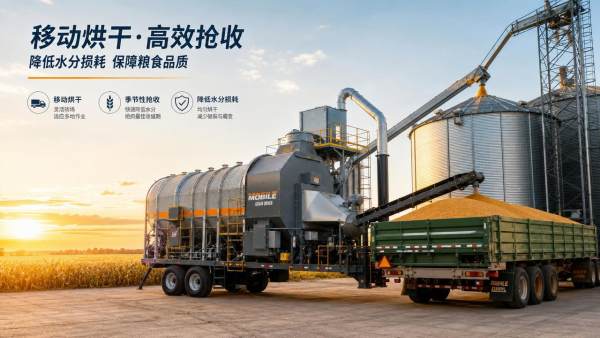
For seasonal harvest operations, investing in a mobile grain dryer machine can mean the difference between protected margins and preventable post-harvest losses. As weather volatility, labor constraints, and storage risks intensify, decision-makers need more than basic equipment comparisons—they need a clear view of cost, throughput, compliance, and return on investment. This article examines whether a mobile grain dryer machine delivers measurable value for modern agricultural enterprises.
What is a mobile grain dryer machine, and why is it getting more attention?
A mobile grain dryer machine is a transportable drying system designed to reduce grain moisture near the harvest site rather than relying entirely on permanent drying infrastructure. In practical terms, it gives operators the ability to process wet grain quickly when harvest windows are short and weather conditions are unstable. For seasonal businesses, that mobility can be more important than absolute capacity, especially when fields, temporary storage points, or contract operations are spread across multiple locations.
Interest in this equipment has grown for several reasons. First, climate variability increases the likelihood of harvesting grain above safe storage moisture. Second, enterprises are under pressure to reduce spoilage, fungal risk, and quality downgrades. Third, many operators want to avoid truck queues and congestion at centralized facilities during peak intake periods. A mobile grain dryer machine addresses these issues by shortening the time between harvest and moisture stabilization.
For enterprise decision-makers, the real appeal is not simply convenience. It is operational resilience. A transportable dryer can support continuity when central dryers are overloaded, when remote fields are too far from fixed infrastructure, or when contract harvesting schedules leave little room for delays. In that sense, the machine is less a seasonal luxury and more a risk-management asset.
Is a mobile grain dryer machine actually worth it for seasonal harvests?
The short answer is: it depends on how expensive delay, moisture, and quality loss are in your operation. A mobile grain dryer machine is usually worth it when the cost of post-harvest loss, price discounts, delayed hauling, or rejected loads exceeds the annual ownership or rental cost of the unit. Seasonal harvests create concentrated pressure. If grain comes in wet for just two or three weeks, the financial impact during that window can still justify the investment.
Enterprises often underestimate how quickly losses accumulate. Wet grain held too long before drying can heat, cake, or develop mold. Even if grain remains saleable, moisture penalties and lower grading can erode margins. In some markets, preserving even a small percentage of quality premium across large tonnage pays for a substantial share of the equipment cost.
That said, “worth it” should not be judged by purchase price alone. The better test is whether the machine improves harvest speed, protects specification compliance, reduces logistics bottlenecks, and increases marketing flexibility. If those gains are real and repeatable, the return on investment can be stronger than many operators first assume.
Which businesses benefit most from a mobile grain dryer machine?
A mobile grain dryer machine is most attractive to operators whose harvest pattern is intense, time-sensitive, and geographically dispersed. This includes medium-to-large farms, grain aggregators, cooperatives, custom harvest contractors, feed and grain processors with satellite intake points, and integrated agribusinesses trying to stabilize raw material quality before storage or processing.
It is also highly relevant where permanent infrastructure is either underbuilt or economically hard to justify. A seasonal operator may need strong drying performance for only a few weeks each year. In such cases, a mobile unit can provide targeted capacity without the capital commitment of constructing a new fixed facility. For organizations expanding into new growing areas, it can serve as a bridge solution before long-term site investment decisions are finalized.
From a procurement perspective, the strongest fit is often found where mobility creates strategic optionality. If one machine can support different crops, different sites, and different business units across the season, utilization improves significantly. That flexibility matters to financial decision-makers who need assets to perform across more than one use case.
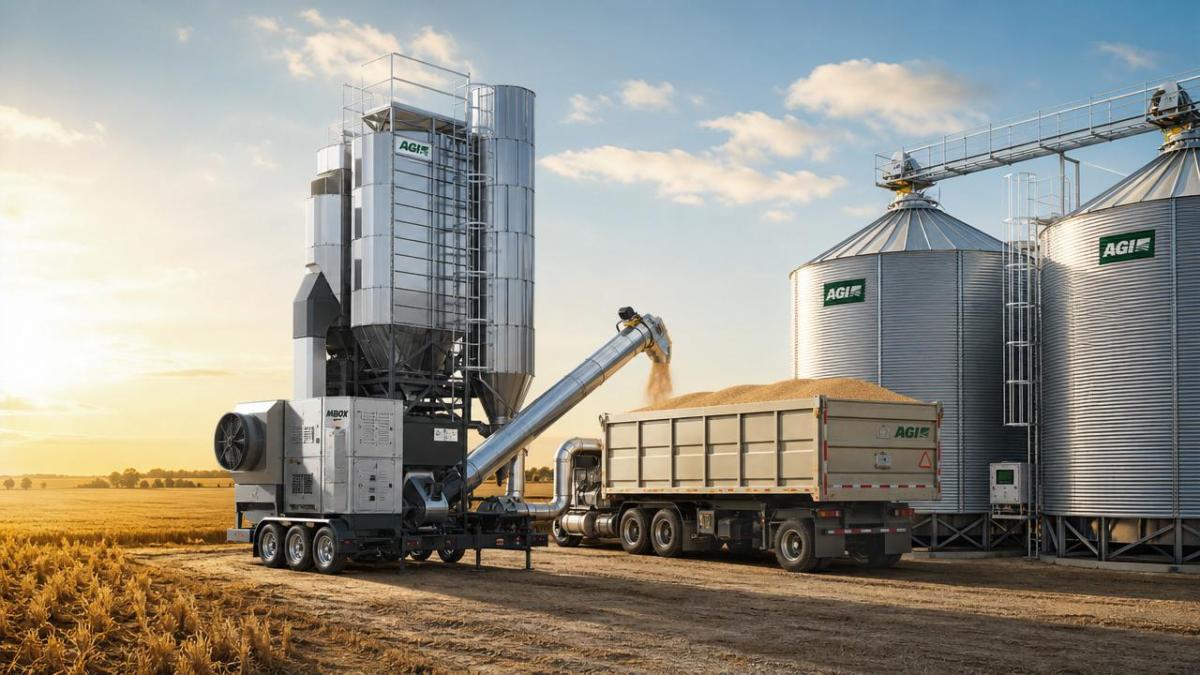
What should decision-makers compare before choosing a mobile grain dryer machine?
The most common mistake is comparing equipment by headline capacity only. Capacity figures can be misleading if they are based on ideal moisture reduction, specific grain types, or favorable ambient conditions. A better comparison starts with the actual harvest profile: crop type, initial moisture, target moisture, daily tonnage, fuel availability, and how many hours per day the machine can realistically run.
Key technical and commercial checkpoints include:
- Moisture removal rate under real field conditions, not brochure assumptions.
- Fuel efficiency and compatible energy sources, especially where diesel, gas, or biomass economics differ.
- Uniformity of drying, because uneven output creates storage and grading risk.
- Setup, transport, and relocation time between sites.
- Operator skill requirements, safety systems, and automation level.
- Parts access, service response, and seasonal maintenance support.
- Emission, dust, and local regulatory compliance where applicable.
For a senior buyer, vendor credibility matters nearly as much as machine specification. In agricultural machinery procurement, downtime during harvest is disproportionately expensive. Therefore, service footprint, commissioning support, spare-parts availability, and documented performance history should be treated as core selection criteria rather than secondary considerations.
How does a mobile grain dryer machine compare with a fixed drying system?
This is one of the most important questions because the answer shapes capital planning. A fixed dryer often offers higher continuous throughput, stronger integration with storage infrastructure, and lower per-unit operating cost once large volume is guaranteed. It is typically the better choice for centralized, high-volume facilities with predictable intake patterns and long-term site stability.
A mobile grain dryer machine, by contrast, trades some scale efficiency for flexibility. It is designed to go where the grain is needed most. That reduces transport delays, supports remote or temporary operations, and offers a faster response to seasonal bottlenecks. In operations where harvest timing changes year by year, that agility may outweigh the lower economies of scale associated with a permanent installation.
The strategic distinction is this: fixed systems optimize stable throughput; mobile systems optimize uncertainty management. Companies with both central facilities and volatile seasonal peaks may find the best answer is not either-or, but a hybrid model in which a mobile grain dryer machine supplements permanent infrastructure during high-pressure periods.
Quick comparison table
What costs and ROI factors should be included in the evaluation?
A proper ROI model for a mobile grain dryer machine should combine direct and indirect economics. Direct costs include purchase price or lease rate, transport, installation, fuel, maintenance, labor, spare parts, and depreciation. Indirect economics are often even more important: avoided spoilage, reduced moisture penalties, fewer downgraded loads, lower emergency hauling costs, and smoother harvest scheduling.
Decision-makers should also estimate opportunity value. If the machine lets harvest continue during narrow weather windows, it may prevent field losses or preserve crop quality that would otherwise deteriorate. For processors and commercial grain handlers, early moisture stabilization can also improve storage turnover and sales timing. In volatile markets, having grain preserved and market-ready sooner creates commercial flexibility.
A realistic model asks four questions: how many tonnes are at risk each season, what is the expected moisture reduction requirement, what is the financial penalty of delayed drying, and how many seasons of use are planned? Once those numbers are grounded in actual historical harvest data, the business case becomes much clearer than any generic payback claim from a vendor brochure.
What risks, compliance issues, or common mistakes should buyers watch for?
The first risk is overestimating utilization. Some buyers assume a mobile grain dryer machine will run at rated capacity throughout the season, but actual output depends on weather, crop moisture, operator skill, and site logistics. If intake handling, loading, or discharge flow is poor, dryer performance on paper will not translate into real throughput.
The second risk is ignoring grain quality dynamics. Excessive heat or uneven drying can damage kernels, reduce germination value, or create storage instability. This is especially relevant where downstream customers impose strict quality standards. The machine should be assessed not just for speed, but for gentle and consistent moisture reduction.
The third risk involves regulation and safety. Depending on the market, mobile drying equipment may need to comply with rules related to emissions, fire prevention, dust management, road transport, and workplace safety. For enterprises operating internationally or supplying tightly regulated sectors, procurement teams should request technical documentation, operating manuals, and conformity records before purchase.
A final mistake is neglecting service planning. During seasonal harvests, every lost day matters. Buyers should verify lead times for critical components, local technician availability, and whether the supplier can support emergency troubleshooting. In many cases, the most economical machine upfront is not the most profitable machine over several harvest cycles.
If you are close to procurement, what questions should you clarify first?
Before moving forward, enterprises should define the operating case with precision. Start by confirming the crop mix, average and peak moisture levels, expected seasonal tonnage, target drying window, and whether the machine will support one site or several. Then assess fuel supply, labor availability, maintenance capability, and the consequences of downtime during the most critical harvest days.
It is equally important to ask suppliers for performance references in conditions similar to your own. A mobile grain dryer machine that performs well in one geography or crop may not behave identically in another. Request actual throughput examples, energy consumption ranges, recommended service intervals, and details on after-sales support. If possible, compare purchase, lease, and seasonal rental pathways to match capital strategy with operational risk.
For many seasonal harvest operations, the answer is not whether the technology works, but whether it fits the economics and logistics of the business. If a mobile grain dryer machine reduces quality loss, increases harvest agility, and protects delivery specifications, it can be a sound strategic investment. If you need to confirm a specific solution, parameters, implementation timeline, quotation range, or supplier cooperation model, the best next step is to discuss expected throughput, moisture conditions, energy costs, compliance requirements, and service guarantees before making a final procurement decision.
Related Intelligence
- Grain Silos & StorageFirst Commercial Grain Silos & Storage Digital Twin Platform LaunchesFirst commercial Grain Silos & Storage digital twin platform launched—API-certified for EU GRIS, real-time monitoring & EN 15234-2:2024 compliance. Discover how it transforms grain storage operations.
- Grain Silos & StorageIs a mobile grain dryer machine worth it for seasonal harvests?Mobile grain dryer machine ROI explained for seasonal harvests. Compare costs, flexibility, quality protection, and payback to see if it’s the right investment.
- Grain Silos & StorageCommercial grain dryers: fuel savings that look good on paperCommercial grain dryers may promise fuel savings, but do the numbers hold up? Explore real-world costs, payback, maintenance, and scenario-based ROI before approval.
The Morning Broadsheet
Daily chemical briefings, market shifts, and peer-reviewed summaries delivered to your terminal.
