
What Causes Oil Loss in a Palm Oil Extraction Machine Line
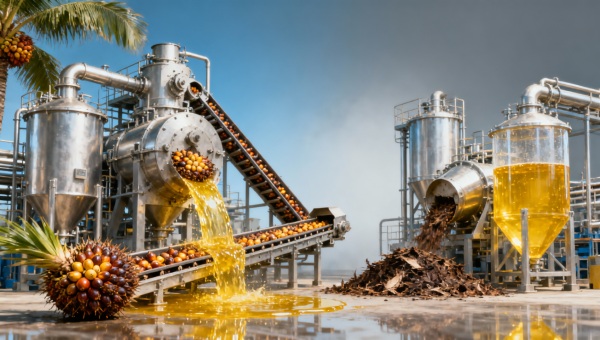
Oil loss in a palm oil extraction machine line can significantly reduce yield, profit, and process stability. For operators, engineers, and buyers comparing systems such as a palm oil extraction machine, sunflower oil press machine, or cold press oil machine commercial setup, understanding where oil is lost is essential. This introduction outlines the main technical, operational, and material-related causes behind oil loss and why they matter for equipment selection, maintenance, and production efficiency.
In commercial palm oil processing, even a 1% to 3% increase in residual oil can materially change plant economics, especially in lines running 1 ton, 5 tons, or 30 tons of fresh fruit bunches per hour. Oil loss is rarely caused by a single failure point. It usually emerges from the interaction between raw material quality, sterilization, digestion, pressing, clarification, and operator control.
For technical evaluators and procurement teams, this topic is not only about troubleshooting. It also affects machine selection, maintenance planning, wastewater load, labor requirements, and final return on investment. A line that appears economical at purchase can become expensive if empty fruit bunches, press cake, sludge, or condensate carry too much recoverable oil out of the process.
Where Oil Loss Usually Happens in a Palm Oil Extraction Machine Line
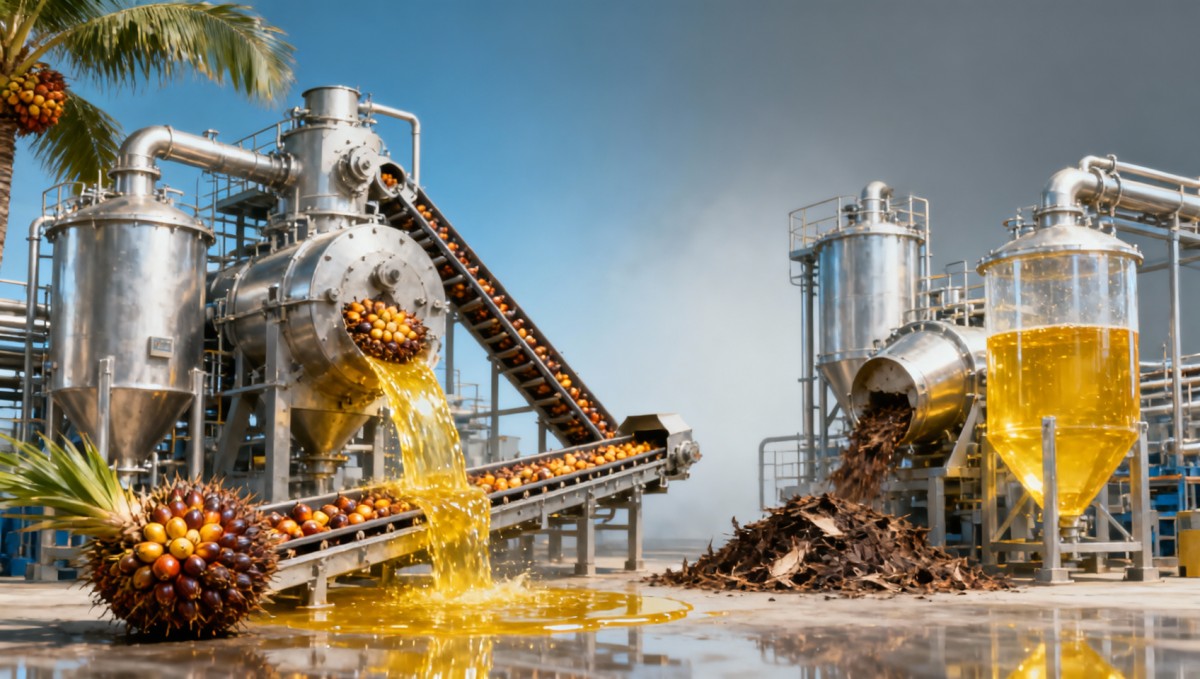
A palm oil extraction machine line typically loses oil at 4 major points: in sterilizer condensate, in digested mash that is not properly ruptured, in press cake discharged from the screw press, and in clarification sludge. Each stage can contribute a small fraction, but together they may reduce total extraction efficiency by 2% to 8% under weak process control.
In well-managed operations, press cake residual oil is often kept within a practical control range, while sludge and wastewater are monitored to avoid excessive carryover. When equipment is undersized, overloaded, or poorly synchronized, the losses accumulate fast. This is especially common in lines where upstream feeding is irregular and the digester-to-press ratio is not balanced.
Key loss points by process section
The table below shows the main sections where oil is commonly lost and what plant teams should monitor during technical assessment or daily operation.
For project managers and quality teams, the practical lesson is simple: oil loss should be measured as a line-wide performance issue, not as an isolated machine fault. If one stage is tuned while the preceding stage remains unstable, the overall extraction line will still underperform.
Why this matters during equipment selection
- A press with high nominal throughput but weak pressure stability may leave more oil in cake at 70% to 90% loading.
- A digester that cannot maintain consistent mash conditioning for 20 to 30 minutes may reduce oil release before pressing.
- A clarification section without effective sludge recovery can turn a minor separation issue into a recurring yield loss.
This process view also helps buyers comparing a palm oil extraction machine line with other edible oil systems. While sunflower oil press machine and cold press oil machine commercial lines have different feed materials, the same logic applies: preparation, pressure control, separation, and residue management decide whether theoretical yield becomes real saleable oil.
Raw Material and Pre-Treatment Factors That Increase Oil Loss
The condition of fresh fruit bunches is one of the earliest and most underestimated causes of oil loss. Overripe fruit, underripe fruit, bruised fruitlets, and delayed processing all affect oil release. In many mills, a delay of 24 to 48 hours after harvesting already increases free fatty acid risk and reduces stable extraction performance.
Moisture and fruit maturity influence how well the fruit responds to sterilization and digestion. If fruit is too dry, pressing may trap oil in fibrous residue. If fruit is too wet or degraded, clarification becomes more difficult and more oil may report to sludge. This is why raw material acceptance standards should be tied to actual processing capacity, not only to supply availability.
How pre-treatment quality affects downstream yield
A practical pre-treatment review should include harvest age, transport time, contamination level, bunch uniformity, and sterilizer loading pattern. In industrial settings, a line handling mixed fruit conditions without segregation often sees more unstable oil recovery than a line with modest capacity but tighter intake discipline.
The following table summarizes common raw material and pre-treatment issues that influence oil loss in a palm oil extraction machine line.
For commercial buyers, this means yield guarantees should always be discussed alongside feedstock assumptions. A supplier can size the machine correctly, but if the mill feeds inconsistent fruit and lacks pre-sorting discipline, actual oil loss will still remain high.
Common pre-treatment mistakes
- Overloading the sterilizer to increase hourly throughput, which reduces even steam penetration.
- Skipping intake inspection during peak supply periods, causing mixed-quality batches to enter the line.
- Using a fixed operating recipe for all fruit conditions, even when seasonal variation changes material behavior.
The most effective plants typically combine 3 controls: intake grading, batch scheduling, and parameter adjustment. That approach is more reliable than expecting the press alone to compensate for weak upstream preparation.
Mechanical and Process Control Problems Inside the Extraction Line
Mechanical design and process tuning directly determine how much oil remains in fiber, nuts, sludge, and wastewater. A screw press that is worn, improperly adjusted, or operated outside its recommended load will often produce cake with visible oil sheen or elevated residual oil. In medium-scale plants, this single issue can be responsible for a meaningful share of daily yield loss.
Temperature is another decisive variable. If digestion temperature drops below the practical working range for effective mash conditioning, oil release becomes incomplete. If the clarification temperature falls too low, separation slows; if it rises too high, emulsion behavior may become unstable depending on water balance and solids content. Stable operation matters more than chasing extreme settings.
Critical machine-related causes of oil loss
- Worn screw worms, press cages, or cone components that reduce compression effectiveness over time.
- Improper choke gap adjustment, causing either insufficient pressure or excessive nut breakage and unstable discharge.
- Irregular feeder speed that creates surges instead of uniform mash flow into the press.
- Insufficient digester residence time, often below 20 minutes in overloaded operations.
- Clarifier or settling tank under-capacity, shortening separation time below practical needs.
A useful engineering approach is to review the line as a matched system rather than a list of machines. For example, a press rated at one throughput level may still underperform if the upstream digester cannot condition material at the same rate, or if the downstream clarification tank cannot manage solids and water balance generated at that speed.
Operational indicators to monitor weekly
Process teams usually get better control when they log 5 to 7 core indicators every shift: feed rate, mash temperature, press motor load, cake appearance, clarification temperature, sludge oil carryover, and downtime events. Trend review over 7 days or 30 days often reveals recurring losses that are invisible in single-shift observations.
For technical assessment teams comparing suppliers, it is valuable to ask not only for installed power and nominal capacity, but also for wear-part replacement cycles, control points, spare-part availability, and recommended inspection intervals such as every 250 hours, 500 hours, or 1,000 hours. Those details influence long-term recovery more than headline capacity alone.
How to Reduce Oil Loss Through Maintenance, Sampling, and Operator Practice
Reducing oil loss requires a combination of preventive maintenance, routine sampling, and disciplined operator response. Plants that depend only on visual checks often react too late. By the time oil sheen is obvious in press cake or sludge, the line may already have lost several hours or days of recoverable output.
A practical maintenance program should define inspection frequency for each section of the palm oil extraction machine line. Screw press wear parts, steam valves, agitators, pumps, screens, and sludge handling equipment all affect recovery. In many plants, a short 15-minute checkpoint at the start of each shift prevents much larger yield losses later in the day.
Recommended control actions by plant role
Different stakeholders should own different parts of the loss-control process. The matrix below helps align operators, maintenance staff, quality personnel, and managers around measurable tasks.
The key takeaway is that oil loss reduction is operationally manageable when the line has a routine. Without data and accountability, teams tend to attribute loss to “raw material quality” alone, even when maintenance drift or poor parameter control is the true cause.
A simple 5-step loss-control routine
- Inspect incoming fruit condition and separate visibly poor batches.
- Verify sterilization pressure, retention time, and condensate condition before full production.
- Check digester temperature and residence time against the planned throughput.
- Sample press cake and clarification sludge on a fixed schedule.
- Review wear status and process logs every week, not only after a breakdown.
For distributors and project consultants, this maintenance dimension also matters commercially. Buyers increasingly prefer complete solutions that include commissioning guidance, spare-part planning for the first 6 to 12 months, and operator training rather than machine supply alone.
Procurement and Technical Evaluation: What Buyers Should Ask Before Choosing a Line
When evaluating a palm oil extraction machine line, buyers should assess yield stability, not just advertised throughput. A line that promises high hourly output but lacks process balance, wear-part support, or clear commissioning guidance may produce higher oil loss over the first 12 months of operation. This affects payback period, labor efficiency, and maintenance cost.
The most effective procurement reviews combine commercial and technical questions. Business decision-makers may focus on capex, delivery cycle, and service scope, while engineers focus on sterilization method, digester design, screw press adjustment range, sludge recovery layout, and spare-part interchangeability. Both views are necessary because oil loss is a lifecycle cost issue.
Core evaluation points before purchase
- Ask for the recommended raw material condition and throughput range, not only the maximum capacity figure.
- Request maintenance intervals and a list of critical wear components for the first year.
- Confirm whether operator training, commissioning, and process tuning are included or billed separately.
- Review sludge, wastewater, and residual oil management design, especially for sites with environmental controls.
- Check how the supplier supports troubleshooting within 24 hours, 72 hours, or a defined service window.
FAQ for buyers and plant teams
How much oil loss is considered a warning sign?
There is no single universal threshold because fruit quality, plant scale, and process design differ. However, if press cake, sludge, or wastewater visibly show rising oil carryover over several shifts, or if extraction performance declines by 1% to 2% compared with normal operation, the line should be reviewed immediately.
Is a larger press always better for reducing loss?
Not necessarily. Oversized equipment running under irregular feed conditions can be as problematic as undersized equipment running overloaded. The better choice is a balanced line where sterilization, digestion, pressing, and clarification capacities are matched within a realistic operating window.
Can lessons from sunflower or cold press systems help here?
Yes. Although feed materials differ, the same engineering principle applies across a sunflower oil press machine, a cold press oil machine commercial system, and a palm oil extraction machine line: stable preparation, correct pressure, controlled temperature, and residue monitoring are essential to preserve yield.
For institutional buyers, distributors, and plant owners seeking long-term performance, oil loss should be treated as a measurable procurement criterion from the start. The right line is not only one that runs, but one that keeps residual oil under control across changing raw material conditions, scheduled maintenance cycles, and real production workloads. If you are comparing solutions or planning a new project, contact us to discuss equipment details, process matching, and a more customized extraction strategy.
Related Intelligence
- Heavy Agri MachinerySilage Bale Wrapper Machine Issues in Hot WeatherSilage bale wrapper machine issues in hot weather: compare round baler machine and square baler machine setups, reduce film failure, and improve forage quality with smarter buying decisions.
- Heavy Agri MachinerySilage Bale Wrapper Machine Film Waste Comes from SetupSilage bale wrapper machine film waste often starts with setup, not film. Compare round baler machine and square baler machine risks, calibration, and agricultural plastic mulch film compatibility.
- Heavy Agri MachineryHay Balers Wholesale Pricing Is Not the Full PictureHay balers wholesale pricing is only the start. Compare square baler machine and round baler machine value, lifecycle cost, system fit, and service support before you buy.
The Morning Broadsheet
Daily chemical briefings, market shifts, and peer-reviewed summaries delivered to your terminal.
