
Palm Oil Extraction Machine Capacity Looks High, but Is It Real?
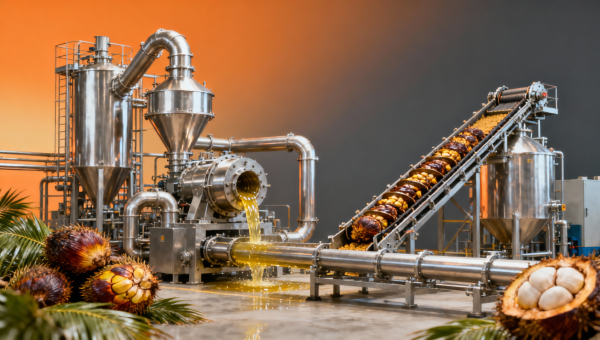
A palm oil extraction machine may be marketed with impressive capacity figures, but do those numbers reflect real-world performance, oil yield, and operating stability? For buyers comparing systems alongside a sunflower oil press machine or a cold press oil machine commercial setup, understanding actual throughput, energy use, labor demand, and maintenance needs is essential before making a high-value investment.
In industrial procurement, nameplate capacity is only the starting point. A machine promoted at 1 ton per hour may perform very differently once fruit quality, sterilization consistency, screw wear, operator skill, and downstream clarification are factored in. For technical evaluators, plant operators, distributors, and capital approvers, the real question is not whether the capacity looks high on paper, but whether the line can sustain commercial output for 8, 12, or 16 operating hours without unstable oil recovery or excessive downtime.
This matters even more in primary processing environments where feedstock varies by season and logistics are tight. A palm oil extraction machine must be assessed as part of a system: reception, digestion, pressing, oil clarification, kernel recovery, wastewater handling, and maintenance support. When these linked stages are ignored, advertised throughput often becomes a misleading purchasing shortcut rather than a reliable production benchmark.
Why Advertised Capacity Often Differs from Real Production
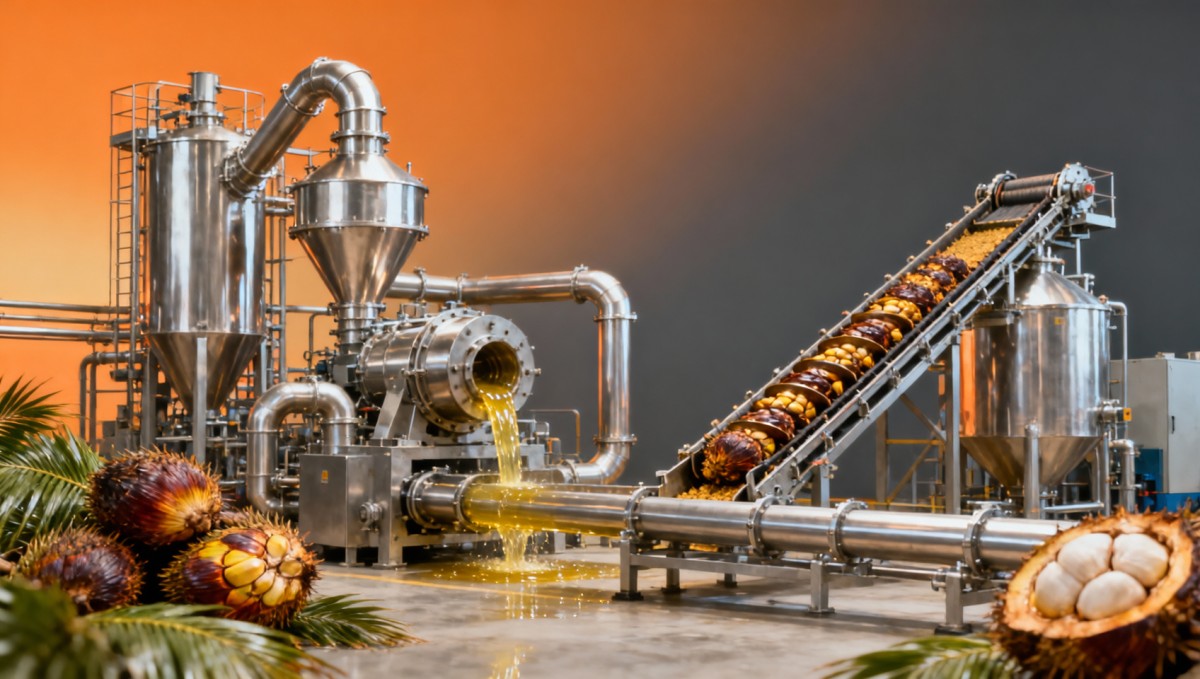
Manufacturers usually present capacity under controlled conditions. In practice, a palm oil extraction machine depends on fruit ripeness, moisture level, sterilization dwell time, and feeding uniformity. If fresh fruit bunches are overripe or under-sterilized, the press may still run, but hourly oil output and extraction efficiency can fall by 10% to 25% compared with rated conditions.
Another common issue is confusion between input capacity and oil output. A line rated for 2 tons per hour may refer to fruit handling volume, not finished crude palm oil. For procurement teams, this distinction is critical because a 2 TPH feed rate does not mean 2 tons of oil. Actual oil recovery depends on fruit oil content, which may vary from 18% to 24% in typical commercial conditions.
Downtime also changes the reality of capacity. A machine that theoretically processes 16 tons in an 8-hour shift may only deliver 11 to 13 tons once start-up, cleaning, screw adjustment, clogging, and clarification delays are included. This is why plant managers increasingly request not just rated throughput, but stable throughput over continuous runs of 6 to 12 hours.
For mixed-equipment buyers comparing a palm oil extraction machine with a sunflower oil press machine or a cold press oil machine commercial line, process differences matter. Palm oil extraction typically involves thermal pre-treatment and heavier-duty handling, while sunflower or cold-press systems may prioritize seed cleanliness, lower processing temperatures, or reduced oxidation. A direct comparison using only “tons per hour” can therefore distort cost and return expectations.
The 4 most common capacity misunderstandings
- Rated feed volume is mistaken for net oil output, creating unrealistic financial projections.
- Short test-run results are treated as full-shift performance, although 30-minute tests rarely reflect 8-hour stability.
- Upstream and downstream bottlenecks are ignored, especially sterilization, clarification, and sludge separation.
- Wear parts are overlooked, even though screw presses can lose efficiency after several hundred operating hours if maintenance is delayed.
The table below shows how nominal capacity and real operating capacity can diverge in a practical processing context.
The key takeaway is simple: a high number is not false by itself, but it may describe only one point in the process. A serious buyer should ask what exactly is being measured, over what duration, and under what feedstock conditions.
What Buyers Should Measure Beyond Tons per Hour
For industrial users, actual purchasing value comes from a broader operating profile. A palm oil extraction machine should be evaluated across at least 6 dimensions: feed handling capacity, oil recovery rate, energy consumption, labor intensity, spare-part cycle, and sanitation or maintenance burden. Looking at only one metric can result in low purchase price but high total operating cost within 12 to 24 months.
Energy use is especially important. Depending on line configuration, small and mid-scale systems may range from roughly 18 kW to 90 kW across digesting, pressing, pumping, and clarification stages. If electricity supply is unstable or diesel generation is expensive, a machine with slightly lower nameplate capacity but better energy discipline may produce better economics over time.
Oil losses in fiber, nuts, sludge, or wastewater should also be examined. A press system that runs fast but leaves excessive residual oil in press cake can erode profitability every shift. Quality teams often monitor residual oil levels, moisture, and impurity content because even a 1% to 2% difference in loss can become material across monthly volumes.
Maintenance intervals are another hidden variable. If worm screws, cage bars, bearings, or seals require frequent replacement, scheduled uptime drops and spare-part budgets rise. For project managers and financial approvers, the better question is not “How big is the machine?” but “What output can it sustain at predictable maintenance intervals over 6 months?”
Core indicators to request during supplier evaluation
- Average hourly throughput over a full shift, not only a trial peak.
- Residual oil level in cake or fiber after pressing.
- Power demand at idle, average load, and peak load.
- Operator requirement per shift and cleaning time per cycle.
- Recommended spare-parts replacement interval in hours or months.
The following comparison can help technical and commercial teams align on what actually matters in machine assessment.
When procurement documents include these questions, suppliers are more likely to provide operationally useful answers rather than headline figures. This improves supplier comparability and reduces investment risk.
How Palm Oil Systems Compare with Sunflower and Commercial Cold Press Lines
Many buyers operate across multiple oilseed or bio-extract processing categories, so comparison shopping is common. However, a palm oil extraction machine is not evaluated in the same way as a sunflower oil press machine or a cold press oil machine commercial system. Palm fruit handling is wetter, heavier, and more thermally dependent, while sunflower and cold-press operations often focus more on seed conditioning, filtration, and lower oxidation exposure.
This difference affects apparent capacity. A sunflower line may show smooth and continuous feed because cleaned seeds behave more uniformly than palm fruit mash. A cold press oil machine commercial setup may intentionally run at lower temperature and moderate throughput to preserve product positioning, flavor, or ingredient quality. Therefore, “faster” does not automatically mean “better” across categories.
Commercial decision-makers should also note that infrastructure requirements vary. Palm lines often need sterilization, digestion, sludge management, and more robust wastewater planning. Cold-press lines may require tighter quality control around seed cleanliness and filtration precision. Distributors and project engineers should build comparisons around process fit, not only production speed.
The best approach is to compare systems by end-use objective: bulk edible oil, ingredient-grade output, decentralized farm processing, or integrated mill operation. Once the business model is clear, capacity claims become easier to interpret in context.
Application-driven comparison
The matrix below helps clarify where each equipment category tends to fit in industrial practice.
This comparison shows why cross-category capacity claims should never be read as directly equivalent. Each system has a different process burden, quality target, and operating logic.
Who should pay extra attention to this comparison?
- Technical assessment teams reviewing process compatibility before plant expansion.
- Commercial managers estimating return on investment across different oil product lines.
- Distributors building a portfolio that serves both commodity and specialty oil users.
A Practical Due Diligence Framework for Procurement and Project Teams
A strong procurement process reduces the risk of overpaying for unusable capacity. For a palm oil extraction machine, due diligence should combine technical review, commercial validation, and site-level operating assumptions. In most B2B projects, a 5-step review process is more effective than relying on brochures and short demonstration videos.
First, define the real production target. Is the plant expected to process 5 tons per day, 20 tons per day, or 50 tons per day? A machine that seems oversized may actually be appropriate if seasonal harvest peaks require 20% to 30% buffer capacity. Conversely, oversizing can waste capital where raw material supply is inconsistent.
Second, map the entire line. A high-capacity press has little value if sterilization tanks, digesters, or settling tanks are undersized. Many performance disputes come from system imbalance rather than poor core machinery. Engineering teams should confirm that upstream and downstream units are sized to the same operational rhythm.
Third, validate support terms. Lead times for fabrication and shipment may range from 4 to 12 weeks depending on scope, while commissioning may add another 3 to 10 days. Finance and project stakeholders should also check spare-part availability, installation guidance, and training scope because these factors materially influence time to stable production.
Recommended 5-step evaluation process
- Define daily feedstock volume, oil quality target, and operating hours per shift.
- Request full line configuration, including power list and consumable parts schedule.
- Verify test conditions behind stated capacity, including feedstock type and test duration.
- Review maintenance access, cleaning time, and operator training requirements.
- Model total cost over 12 months, not only equipment purchase price.
Risk flags that deserve closer scrutiny
If a supplier cannot separate feed capacity from oil output, cannot describe typical wear-part cycles, or cannot explain how the machine behaves under variable feed moisture, procurement teams should slow the decision. The same caution applies when capacity numbers are presented without supporting process assumptions.
For quality and safety personnel, materials of construction, lubrication practices, guarding, and discharge handling should also be reviewed. Even where the application is straightforward primary processing, operational safety and contamination control remain essential to long-term plant reliability.
Maintenance, Operator Reality, and Questions Buyers Frequently Ask
The long-term value of a palm oil extraction machine is determined as much by maintainability as by nominal output. Machines working in warm, wet, fibrous environments face wear, residue buildup, and mechanical stress. In many plants, daily cleaning, weekly inspection, and monthly alignment checks are necessary to protect output consistency and reduce unplanned shutdowns.
Operator skill is another decisive factor. Even well-built machinery can underperform when feed is inconsistent, pressure settings are wrong, or clarification is rushed. Plants introducing new staff often benefit from 1 to 3 days of structured training focused on feeding discipline, abnormal sound detection, lubrication points, and basic troubleshooting.
Distributors and service partners should pay attention to post-installation support because customer satisfaction often depends on the first 30 to 90 days of operation. During this period, practical questions about screw adjustment, cake discharge texture, sludge handling, and spare-part fitment are more important than marketing claims made before purchase.
FAQ: How should buyers interpret a “high capacity” claim?
Is a higher-capacity machine always the better investment?
Not necessarily. If raw material supply only supports 6 to 8 operating hours at moderate load, a larger system may spend much of its life underutilized. The better investment is usually the one that matches feed availability, labor capability, and utility cost while maintaining acceptable oil recovery.
What is the most important proof point to request from a supplier?
Ask for stable throughput over a full production window, preferably 6 to 8 hours or more, together with information on residual oil in cake, power consumption, and maintenance intervals. One number alone is not enough for capital approval.
How often do wear parts typically need attention?
This varies by feedstock abrasiveness, operating pressure, and maintenance practice, but critical components may need inspection every week and replacement planning after several hundred operating hours. Buyers should request a clear spare-parts list before signing.
Can the same evaluation logic be used for sunflower and cold press lines?
The framework is similar, but the technical emphasis changes. A sunflower oil press machine may place greater weight on seed prep and filtration, while a cold press oil machine commercial setup often prioritizes lower-temperature process control and premium output consistency.
A high advertised capacity can be real, but only within clearly defined operating conditions. For serious buyers, the more useful benchmark is sustainable output with acceptable oil recovery, manageable energy demand, realistic labor input, and predictable maintenance. Whether you are assessing a palm oil extraction machine for mill expansion, comparing it with a sunflower oil press machine, or reviewing a cold press oil machine commercial solution, disciplined technical due diligence will protect both production results and capital efficiency.
If your team needs help evaluating process fit, comparing configuration options, or reviewing procurement criteria for oil extraction equipment, now is the right time to obtain a tailored assessment. Contact us to discuss your operating targets, request a customized solution, or learn more about practical equipment selection strategies for primary processing applications.
Related Intelligence
- Heavy Agri MachinerySilage Bale Wrapper Machine Issues in Hot WeatherSilage bale wrapper machine issues in hot weather: compare round baler machine and square baler machine setups, reduce film failure, and improve forage quality with smarter buying decisions.
- Heavy Agri MachinerySilage Bale Wrapper Machine Film Waste Comes from SetupSilage bale wrapper machine film waste often starts with setup, not film. Compare round baler machine and square baler machine risks, calibration, and agricultural plastic mulch film compatibility.
- Heavy Agri MachineryHay Balers Wholesale Pricing Is Not the Full PictureHay balers wholesale pricing is only the start. Compare square baler machine and round baler machine value, lifecycle cost, system fit, and service support before you buy.
The Morning Broadsheet
Daily chemical briefings, market shifts, and peer-reviewed summaries delivered to your terminal.
