
Commercial Cold Press Oil Machine Price vs Operating Cost
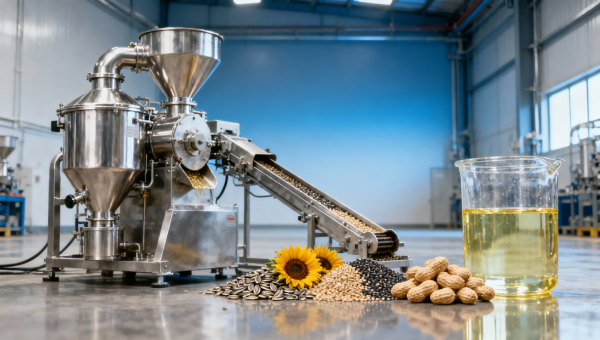
For buyers comparing commercial cold press oil machine price with lifetime operating cost, the real decision goes beyond upfront quotes. From a sunflower oil press machine or cold press oil machine commercial setup to related processing assets like palm oil extraction machine, cassava grating machines, and commercial flour mill machinery, efficiency, maintenance, labor, and compliance all shape ROI. This guide helps technical, financial, and project teams evaluate total cost with greater confidence.
In practical procurement, the quoted machine price is only the visible part of the investment. Energy draw, wear-part replacement, operator skill requirements, sanitation routines, line integration, and downtime risk can shift the total cost of ownership over 3 to 7 years far more than a 10% difference in initial purchase value. That is why commercial buyers increasingly compare capital cost with process stability, output consistency, and after-sales support.
For processors handling sunflower, sesame, peanut, soybean, coconut, or multi-seed applications, cost evaluation must also account for feedstock variability, oil yield targets, ambient temperature, and local regulatory requirements. The same principle applies when a project includes adjacent equipment such as palm oil extraction units, cassava grating machines, seed cleaners, and commercial flour mill machinery. A line that looks cheaper on paper may become more expensive once utilities, labor, and maintenance are fully modeled.
Why Machine Price Alone Can Mislead Commercial Buyers
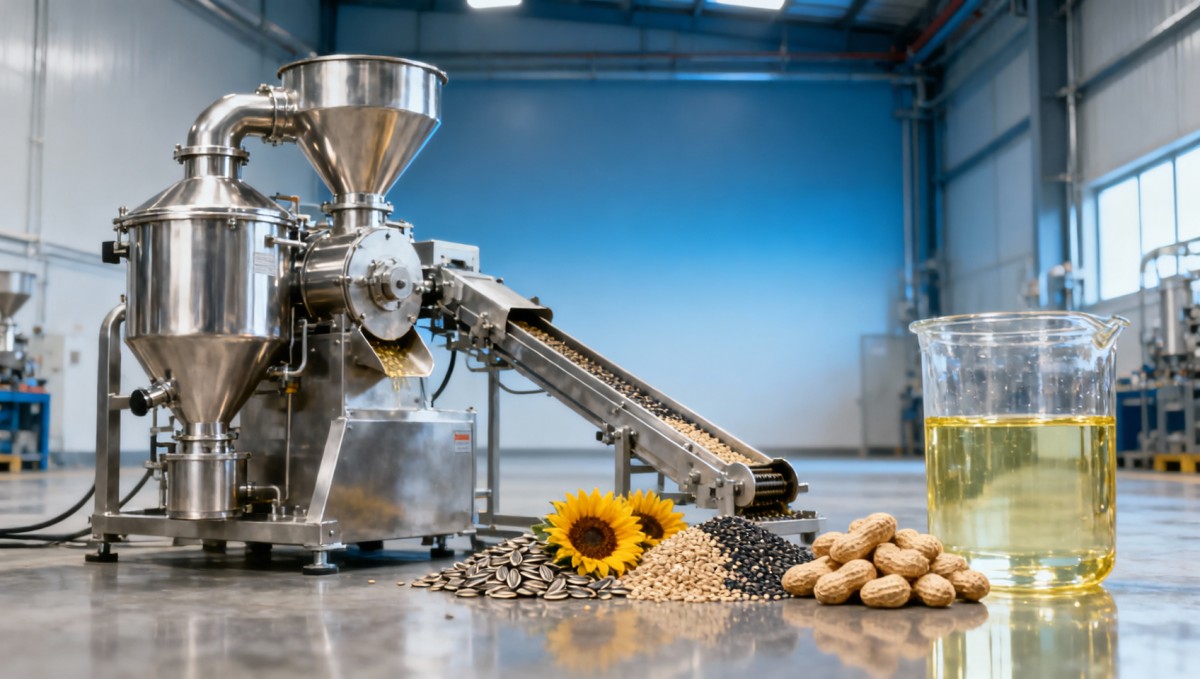
A commercial cold press oil machine price often varies according to capacity, material grade, drive system, automation level, and included accessories. A basic unit in the 80–150 kg/h range may appear attractive for entry-level investment, while a more engineered system in the 300–500 kg/h range can carry a higher purchase price but lower unit processing cost over time. Buyers who compare only quotation totals may miss these operational differences.
The most common procurement error is treating output rating as the sole performance indicator. In reality, two machines listed at the same nominal capacity can differ in energy demand by 15%–30%, labor dependence by 1 to 2 operators per shift, and oil recovery performance by several percentage points depending on seed type and moisture control. Across 250 operating days per year, these differences materially affect payback.
Commercial users should also evaluate whether the quoted package includes filters, heaters, conveyors, control panels, spare seals, wear screws, and commissioning support. A low headline price can hide later spending on missing components, local fabrication, and production interruption during installation. This is especially relevant in integrated agro-processing projects where the oil press must connect with cleaning, drying, grinding, or packaging modules.
Core Cost Categories Beyond Purchase Price
To compare suppliers fairly, technical and finance teams should break costs into capital expenditure and recurring operating expenditure. This approach improves cross-functional decision-making and helps financial approvers assess realistic cash flow rather than relying on incomplete quotations.
- Initial equipment package: press body, motor, gearbox, control system, filtration unit, feeding arrangement, and optional accessories.
- Installation and commissioning: electrical connection, foundation work, pipeline alignment, start-up testing, and operator training over 2–5 days.
- Operating cost: power consumption, labor per shift, lubrication, cleaning media, and routine wear-part replacement.
- Risk cost: unscheduled downtime, spare-part lead time, quality rejection, and sanitation non-conformance.
The table below shows how a lower commercial cold press oil machine price does not always lead to a lower 3-year ownership cost. The values are illustrative planning ranges commonly used in industrial evaluation rather than fixed market offers.
The practical takeaway is simple: procurement teams should compare cost per ton processed, not just equipment price. When output is more stable, labor needs are lower, and spare replacement is less frequent, a higher-spec cold press oil machine commercial package may generate a better return within 12 to 24 months.
How Operating Cost Is Built: Energy, Labor, Maintenance, and Yield
Operating cost is where financial assumptions often fail. In most commercial oil pressing environments, four variables dominate: electricity use, labor deployment, maintenance frequency, and extraction efficiency. Even small deviations in these areas can widen the gap between a competitively priced machine and a genuinely economical one.
Energy cost should be modeled in kWh per ton of seed processed, not just motor nameplate size. A 15 kW system running below optimal feed rate may consume more electricity per ton than an 18.5 kW system operating efficiently at design throughput. For facilities working 8 to 16 hours per day, that difference accumulates quickly over 6 or 12 months.
Labor cost depends on how automated the feeding, discharge, filtration, and cleaning stages are. A manual line may require 2 to 3 people for feeding and cake handling, while a semi-automatic line with conveyors and a filter press can reduce labor to 1 or 2 operators. For processors in regions with high wage inflation or labor shortages, this becomes a major investment criterion.
Yield also has a direct cost effect. If machine setup, screw geometry, and seed conditioning improve recoverable oil by even 1%–2%, the extra saleable oil can outweigh modest differences in machine price. In sunflower and sesame processing, poorly controlled moisture or inconsistent pressing temperature can reduce both output and final oil clarity, creating additional filtration cost and product variability.
Typical Cost Drivers to Benchmark
The table below provides a useful benchmarking structure for technical, commercial, and finance teams reviewing a cold press line or adjacent processing equipment such as cassava grating machines and commercial flour mill machinery.
This comparison framework is useful not only for oil press systems but also for related agro-processing assets. The same discipline should be applied to palm oil extraction machine packages, cassava processing lines, and flour milling setups, where throughput stability and maintenance predictability are more valuable than a superficially low equipment quote.
Maintenance Planning Tips
- Schedule visual and lubrication checks every 1 to 2 weeks in heavy-duty production environments.
- Keep critical spares on-site for screws, rings, seals, bearings, and belts to reduce downtime from 3–10 days to less than 24–48 hours.
- Record throughput, amp load, oil clarity, and cake condition daily to detect wear before quality loss becomes visible.
Choosing the Right Configuration for Different Processing Scenarios
A commercial cold press oil machine should be selected according to plant objective, feedstock behavior, and downstream handling. A startup edible oil processor, a contract manufacturer, and an integrated agricultural project will not have the same configuration priorities. Buyers should avoid overbuying automation they do not need, but also avoid underspecifying a line that will struggle with scale-up after 6 to 18 months.
For single-seed operations such as sunflower or sesame, a dedicated line with optimized pressing geometry may offer better throughput stability and easier operator training. For mixed-feedstock processors, flexibility matters more. In that case, adjustable press settings, quick-clean access, and modular filtration can reduce product changeover time and sanitation burden.
Integrated projects deserve special caution. When the oil press is one part of a broader line including palm oil extraction machinery, cassava grating machines, dryers, or flour mill units, total plant synchronization becomes essential. A bottleneck in feeding or filtration can idle the press, making the actual cost per ton much higher than planned.
Configuration Factors That Influence ROI
- Capacity matching: size the press for average plant load, not only peak target. Running at 50% of rated capacity for long periods often reduces efficiency.
- Material selection: stainless contact parts may cost more initially but support food hygiene and easier cleaning, especially in edible oil applications.
- Automation level: variable-speed feeding, automatic discharge handling, and basic monitoring can lower operator dependence.
- Expansion readiness: reserve electrical capacity and layout space for filters, seed cleaning, or secondary pressing if output is expected to grow by 20%–40%.
A disciplined configuration review should include moisture management, seed cleaning requirements, expected daily run hours, and available utility quality. In facilities with unstable power, motor protection and control reliability are not optional. In remote installations, service simplicity and locally replaceable wear parts may be more valuable than complex automation.
Common Selection Mistakes
One frequent mistake is assuming all seeds behave similarly in a cold press process. Oil-bearing materials differ in hardness, oil content, and conditioning needs. Another is ignoring cleaning and inspection access. A line that takes 90 minutes to clean between batches may cost more in labor and lost uptime than a slightly more expensive line designed for faster washdown and inspection.
Buyers should also test whether local teams can operate and maintain the machine safely. A technically impressive system is still a poor fit if operators need extensive retraining, if documentation is incomplete, or if spare supply takes 6 to 8 weeks. Good configuration is not only about output; it is about sustained and manageable performance.
Procurement, Compliance, and Project Execution Checklist
In B2B equipment purchasing, the winning solution is often the one with the lowest execution risk rather than the lowest quotation. Project leaders and commercial evaluators should confirm scope, acceptance criteria, installation conditions, and documentation before any purchase order is finalized. This is especially important where food-grade production, export packaging, or multi-line integration is involved.
Compliance may include food contact material suitability, electrical safety, guarding, cleaning procedure documentation, and traceable spare-part lists. Where the equipment supports regulated downstream products, quality and safety officers typically require clearer documentation, more controlled installation records, and better preventive maintenance planning. These requirements can influence both cost and supplier choice.
Lead time should also be reviewed carefully. Depending on complexity, a commercial cold press oil machine project can require 3–8 weeks for manufacturing preparation, plus shipping and on-site commissioning time. If the project includes palm oil extraction machine modules, conveyors, filtration, or packaging equipment, total implementation can extend to 8–16 weeks.
Practical Procurement Checklist
The table below helps procurement teams compare offers on execution quality rather than price alone.
When buyers use this framework, they are more likely to avoid last-minute engineering changes, underbudgeted commissioning, and disputes over performance expectations. For enterprise decision-makers and financial approvers, that translates into stronger capex discipline and more predictable ramp-up.
Suggested 5-Step Execution Flow
- Define feedstock, target output, shift pattern, and required oil quality.
- Request a complete technical-commercial offer with utility and spare details.
- Review installation conditions, operator training plan, and acceptance metrics.
- Prepare site utilities and stock essential spares before delivery.
- Run commissioning, trial production, and first 30-day maintenance review.
FAQ for Buyers Comparing Price and Lifetime Cost
How should I compare two cold press oil machine offers fairly?
Use a normalized comparison model based on throughput stability, kWh per ton, operators per shift, wear-part interval, included accessories, and commissioning scope. Ask each supplier to state what is included in the price and to define performance under the same feedstock conditions. A 5% lower quote may be less attractive if service parts are excluded or if labor demand is higher.
What operating period should be used for ROI evaluation?
For most commercial users, a 3-year to 5-year ownership window is practical. It captures energy use, routine maintenance, wear components, probable downtime events, and labor cost changes. If the plant is expected to run more than 4,000 hours per year, a detailed 12-month operating model should be prepared first and then extended into multi-year scenarios.
Are related machines such as cassava graters and flour mills evaluated the same way?
Yes. While the process differs, the evaluation principles are similar: compare actual throughput, power efficiency, maintenance burden, sanitation requirements, operator skill level, and spare-part availability. In integrated plants, the economic performance of one machine depends on the stability of upstream and downstream equipment.
What is the most overlooked cost in commercial oil press projects?
Downtime is often underestimated. A machine that stops unexpectedly for 2 to 4 days due to unavailable parts, weak commissioning, or poor operator training can erase the benefit of a lower purchase price very quickly. That is why buyers should treat service response time, spare planning, and maintenance simplicity as economic variables, not just technical details.
Commercial cold press oil machine price matters, but it is only one part of a sound investment decision. Buyers who evaluate energy use, labor structure, yield impact, maintenance frequency, project readiness, and compliance documentation are better positioned to select equipment that performs reliably over time. The same disciplined approach also improves outcomes when assessing palm oil extraction machine packages, cassava grating machines, and commercial flour mill machinery in broader agro-processing projects.
If your team is comparing options for a new installation, plant expansion, or replacement line, a structured total-cost review will reduce uncertainty and improve purchasing confidence. Contact us to discuss your process requirements, request a tailored evaluation framework, or explore more solutions for commercial oil pressing and integrated primary processing systems.
Related Intelligence
- Milling MachinerySABIC Cuts PP-Homo Price by 12%: Impact on Milling Machinery Export PartsSABIC cuts PP-Homo price by 12% — key impact on milling machinery export parts, feed pellet mill housings & protective covers. Cost relief for Chinese OEMs & suppliers.
- Milling MachineryWhy After Sales Terms Matter in Rice Milling Machines WholesaleRice milling machines wholesale success depends on after-sales terms. Compare support, warranty, and spares for parboiled rice mill plant and commercial flour mill machinery before you buy.
- Milling MachineryRice Milling Machines Wholesale: What Changes at Larger Order VolumesRice milling machines wholesale guide: learn how larger orders affect pricing, QA, lead times, and support across parboiled rice mill plant, commercial flour mill machinery, and more.
The Morning Broadsheet
Daily chemical briefings, market shifts, and peer-reviewed summaries delivered to your terminal.
