
What Limits Output in a Commercial Cold Press Oil Machine?
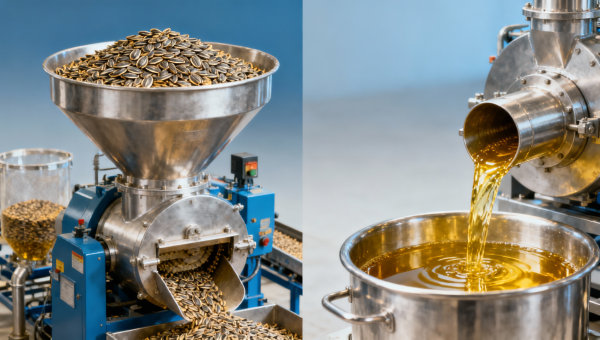
In a cold press oil machine commercial setup, output is shaped by far more than motor size alone. From seed moisture and feeding consistency to press chamber design and maintenance discipline, every variable affects throughput, oil recovery, and product quality. For buyers comparing a sunflower oil press machine or even adjacent processing systems such as a palm oil extraction machine, understanding these limits is essential before scaling production or approving capital investment.
For operators, technical evaluators, procurement teams, and project managers, the practical question is not simply how many kilograms per hour a machine can process on paper. The real issue is what limits sustained output over an 8-hour, 12-hour, or 24-hour production cycle while still meeting temperature, clarity, filtration, and safety requirements.
In commercial oil pressing, rated capacity and usable capacity often differ by 10% to 35% depending on raw material condition, screw wear, pre-cleaning quality, and process control. This gap is where many investment mistakes occur. A machine selected only by brochure capacity may underperform in live production, raising labor cost, energy consumption, and reject rates.
The sections below examine the main bottlenecks that limit output in a commercial cold press oil machine, how those bottlenecks affect yield and quality, and what buyers should verify before approving equipment procurement or plant expansion.
Raw Material Quality Is the First Output Constraint
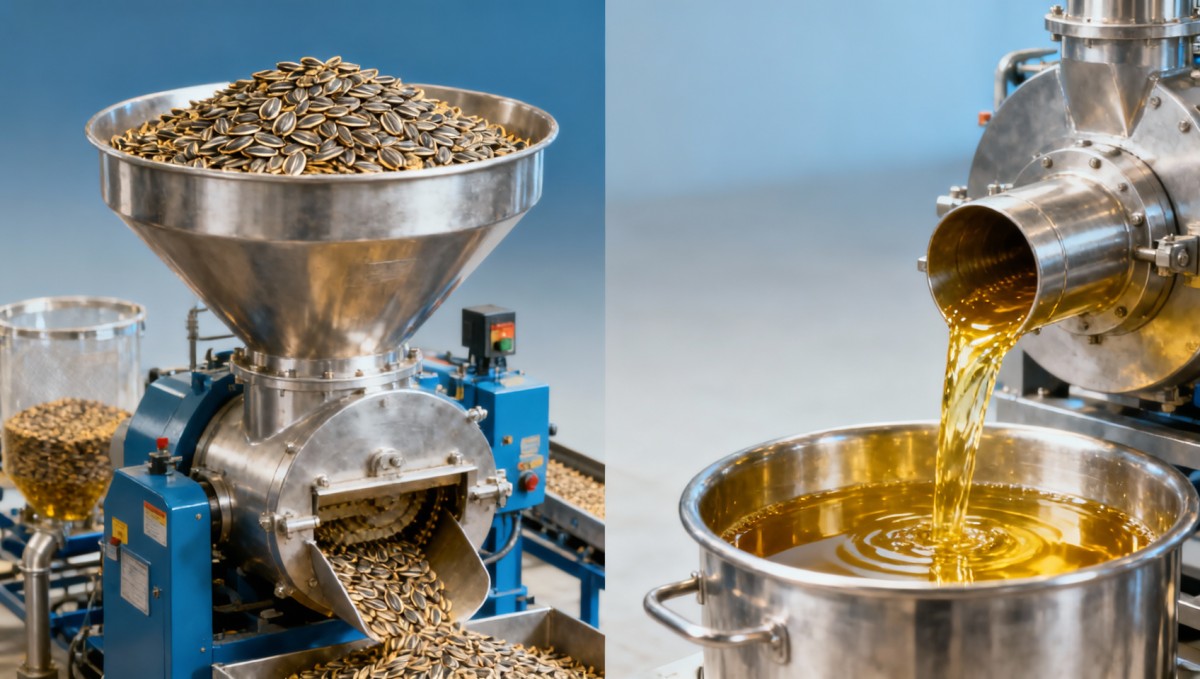
A commercial cold press oil machine can only process raw material as efficiently as the feedstock allows. Seed type, moisture content, impurity level, kernel uniformity, and storage age all influence how smoothly material moves through the press chamber. Even a well-designed line can lose output if the incoming seeds are inconsistent from batch to batch.
Moisture is one of the most critical variables. In many commercial applications, oilseeds perform best within a narrow moisture window, often around 6% to 9%, though the ideal range varies by crop. If moisture is too high, the press cake becomes sticky, throughput drops, and chamber resistance rises. If it is too low, the cake may become powdery, increasing fines and reducing stable oil recovery.
Impurities also reduce usable capacity. Stones, dust, husk fragments, and metal contaminants can disrupt feeding, accelerate screw wear, and increase downtime. A raw material stream with 2% to 3% foreign matter may appear acceptable at intake, yet it can significantly lower actual hourly output over a full production shift.
Storage condition matters just as much. Seeds exposed to humidity swings or stored beyond recommended turnover periods can develop mold risk, oxidation, or uneven hardness. These changes do not just affect food quality; they also alter compression behavior inside the machine and create unstable output patterns.
Typical Raw Material Factors That Reduce Throughput
- Moisture outside the target band, such as below 5% or above 10%, causing unstable pressing resistance.
- Foreign matter above 1%, increasing wear and blocking feed channels.
- Mixed seed size distributions, leading to uneven compression and irregular cake discharge.
- High shell or husk ratio, which lowers effective oil-bearing mass per hour.
- Poor storage rotation over 30 to 90 days, depending on seed type and climate.
Before comparing any sunflower oil press machine or similar system, buyers should request material-specific performance assumptions. Capacity claims based on ideal seed preparation are not directly transferable to variable, field-sourced agricultural inputs.
Raw Material Readiness Checklist
The table below shows how common feedstock variables affect output, oil quality, and operating stability in a commercial cold press oil machine environment.
The key takeaway is straightforward: if raw material preparation is weak, machine output becomes unpredictable. In most commercial settings, investments in cleaning, grading, and moisture control deliver better throughput stability than simply buying a larger motor.
Machine Design and Process Configuration Set the Real Capacity Ceiling
Beyond raw material, the second major limit on output is equipment design. A commercial cold press oil machine is not defined by motor power alone. Screw geometry, press chamber length, nozzle or choke configuration, shaft speed, bearing arrangement, and thermal management all determine whether the machine can maintain output without overheating or excessive wear.
In practical terms, two machines with similar installed power can show very different net throughput. One may hold stable performance for 10 to 12 hours with acceptable oil temperature, while another loses efficiency after 3 to 4 hours because of poor chamber balance or material back-pressure. Buyers should therefore assess continuous-duty behavior rather than relying on nameplate figures.
Feed system design also matters. If the hopper, feeder, or variable-speed inlet does not maintain a consistent material column, the machine experiences surging. Surging reduces compression stability, creates variable cake thickness, and makes oil clarity less predictable. Over time, this lowers both output and product consistency.
Adjacent systems can be just as limiting as the press itself. A line may have a press rated at 150 kg/h, yet if seed cleaning, conveyance, filtration, or cake discharge can support only 110 to 120 kg/h, then actual line output will never exceed that bottleneck. The same principle applies when comparing related equipment categories such as a palm oil extraction machine, where upstream and downstream integration strongly affects total productivity.
Design Elements Buyers Should Review
- Screw and chamber design matched to seed type rather than general-purpose marketing claims.
- Variable feeding control to reduce surging and improve steady-state load.
- Continuous-duty bearing and gearbox arrangement for multi-shift operation.
- Accessible wear parts that can be replaced within 2 to 6 hours rather than long shutdown windows.
- Filtration and oil handling sized to the same hourly flow as the press.
Rated Capacity vs Sustainable Output
The following comparison helps technical and commercial teams distinguish between brochure capacity and sustainable commercial output.
For capital planning, the most useful question is not “What is the maximum capacity?” but “What is the repeatable capacity with our material, labor model, and quality target?” That is the figure finance and operations teams should use for payback calculations.
Operating Discipline, Maintenance, and Wear Determine Long-Run Productivity
Even a properly selected commercial cold press oil machine will lose output if operating discipline is weak. In many plants, the performance decline is gradual rather than dramatic. Output may fall by 5% in the first stage, then another 5% to 10% as wear progresses, until the line is routinely missing shift targets without a single obvious breakdown event.
The most common reason is wear in the screw, cage bars, choke components, and bearings. As tolerances change, compression becomes less efficient and more material bypasses ideal flow patterns. The operator may respond by increasing feed rate, but that often worsens oil losses in cake or raises product temperature. In other words, pushing harder rarely solves a worn press.
Maintenance intervals should be based on production hours, raw material abrasiveness, and observed process drift. For many commercial users, daily cleaning, weekly inspection, and scheduled wear-part review every 250 to 500 operating hours is a practical baseline. High-volume plants running multiple shifts may need tighter intervals.
Operator training is equally important. A skilled operator can detect unstable feed, unusual sound, rising amperage, or changing cake texture early. These signs often appear 1 to 3 days before a serious output loss or stoppage. Plants that formalize operator logs generally maintain more stable throughput than plants that rely only on reactive repair.
Key Signs That Output Is Being Lost to Maintenance Issues
- Motor load rises while net oil output per hour falls.
- Cake discharge becomes inconsistent in thickness or texture.
- Pressing temperature trends upward during the same production recipe.
- Filtration load increases because fines or solids in crude oil are higher.
- Unplanned stoppages exceed 1 to 2 events per shift.
Maintenance Planning by Business Type
Different users should plan maintenance and spare stock differently. The matrix below helps procurement and operations teams align service planning with duty intensity.
For many buyers, this is where lifecycle economics become clearer. A machine with lower purchase price but faster wear can generate higher cost per processed ton within 12 to 18 months. Maintenance accessibility, spare availability, and operator training therefore deserve the same attention as initial capacity figures.
How to Evaluate Output Limits Before Purchase or Expansion
Commercial buyers should assess output limits through a process lens, not a single-machine lens. Whether the project involves a new sunflower oil press machine, a line upgrade, or comparison with adjacent systems such as a palm oil extraction machine, evaluation should cover the full production path from intake to clarified oil storage.
Start with a defined production scenario. That means seed type, expected moisture range, target daily volume, shift pattern, labor availability, and final oil specification. A line designed for 1 ton per day under controlled feed conditions may not meet a 3-ton target when raw materials vary and staffing is limited. This mismatch is common in fast-expansion projects.
Second, request test data or trial criteria that resemble your own operations. A useful acceptance framework should include at least 4 checkpoints: net throughput, oil recovery behavior, temperature control, and ease of cleaning or changeover. If the supplier cannot separate rated output from sustainable output, the buyer is taking on unnecessary performance risk.
Third, calculate output loss scenarios. Many financial approvals assume ideal operation, but real plants face startup losses, cleaning downtime, part replacement, and occasional feedstock inconsistency. A practical model may discount nominal capacity by 15% to 25% when budgeting labor, utility load, and projected payback.
Procurement Questions That Expose Real Bottlenecks
- What throughput can be sustained for 8 to 12 hours on our actual seed type?
- What feed preparation is required to keep output within the quoted range?
- Which parts are consumable, and what is the normal replacement cycle?
- How long does cleaning or product changeover take per batch or per shift?
- Which upstream and downstream systems must be matched to avoid bottlenecks?
Commercial Evaluation Priorities
The table below converts technical output factors into business-level review points for procurement, finance, and project teams.
A disciplined evaluation process helps every stakeholder. Operators gain a more workable line, quality managers reduce process drift, finance teams get more realistic output forecasts, and decision-makers lower the risk of underutilized equipment.
FAQ: Common Questions About Commercial Cold Press Output Limits
How much lower is real output than advertised capacity?
In many commercial settings, sustainable output is around 75% to 90% of ideal test capacity, depending on raw material control, operator skill, cleaning stops, and wear condition. The exact gap varies by seed type and process discipline, but it is rarely wise to budget production using only peak capacity figures.
Does a larger motor always mean higher output?
No. Motor size supports torque availability, but output is constrained by feed quality, press design, compression balance, and downstream handling. A poorly matched machine with higher power can still underperform a better-engineered unit running on the same material.
What should a distributor or reseller check before recommending a machine?
A distributor should confirm 5 core points: target seed type, expected moisture range, required daily output, spare-part supply lead time, and the customer’s maintenance capability. These factors influence whether the machine will deliver reliable field performance and protect channel reputation.
How often should output performance be reviewed after installation?
At minimum, plants should review throughput, oil loss indicators, energy behavior, and downtime weekly during the first 4 to 8 weeks, then monthly once conditions stabilize. Early trending helps detect wear, feed inconsistency, or operator issues before they become costly production problems.
The output of a commercial cold press oil machine is limited by a combination of feedstock quality, machine design, line integration, maintenance discipline, and operator control. For industrial buyers, the most reliable path is to evaluate sustainable throughput under real operating conditions, not just nominal capacity. That approach improves forecasting, protects product quality, and reduces long-run operating cost.
If you are comparing a sunflower oil press machine, reviewing a broader oil processing line, or assessing adjacent technologies such as a palm oil extraction machine, a structured technical-commercial review will reveal the real production ceiling before investment decisions are locked in. To explore tailored evaluation criteria, procurement benchmarks, or application-specific processing solutions, contact us to discuss your project requirements and get a customized recommendation.
Related Intelligence
- Milling MachinerySABIC Cuts PP-Homo Price by 12%: Impact on Milling Machinery Export PartsSABIC cuts PP-Homo price by 12% — key impact on milling machinery export parts, feed pellet mill housings & protective covers. Cost relief for Chinese OEMs & suppliers.
- Milling MachineryWhy After Sales Terms Matter in Rice Milling Machines WholesaleRice milling machines wholesale success depends on after-sales terms. Compare support, warranty, and spares for parboiled rice mill plant and commercial flour mill machinery before you buy.
- Milling MachineryRice Milling Machines Wholesale: What Changes at Larger Order VolumesRice milling machines wholesale guide: learn how larger orders affect pricing, QA, lead times, and support across parboiled rice mill plant, commercial flour mill machinery, and more.
The Morning Broadsheet
Daily chemical briefings, market shifts, and peer-reviewed summaries delivered to your terminal.
