
Why Some Sunflower Oil Press Machines Leave Too Much Oil in Cake
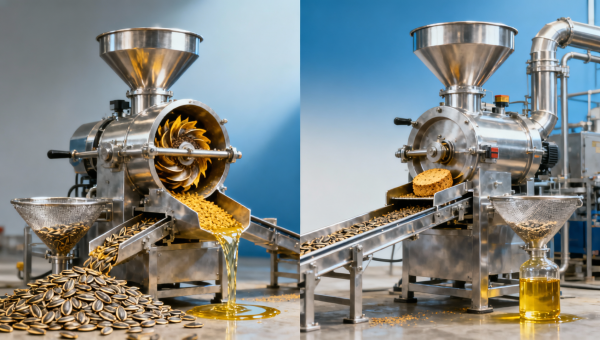
A sunflower oil press machine that leaves excessive oil in the cake is often a sign of mismatched process settings, poor material conditioning, or unsuitable equipment design. For buyers comparing a cold press oil machine commercial setup with broader options such as a palm oil extraction machine, understanding these efficiency gaps is essential for yield, quality, and operating cost control.
For operators, technical evaluators, procurement teams, and business decision-makers, residual oil in cake is not a minor process detail. It directly affects extraction efficiency, energy consumption, throughput stability, and downstream by-product value. In practical terms, even a 2% to 4% increase in residual oil can materially reduce plant profitability over 12 months of continuous production.
In commercial sunflower processing, acceptable residual oil levels depend on seed quality, press type, conditioning method, and whether the line is designed for cold pressing, hot pressing, or pre-pressing before solvent extraction. When the machine consistently leaves too much oil in the cake, the problem usually lies in one of five areas: raw material preparation, moisture balance, temperature control, wear parts, or machine sizing.
Why Residual Oil in Cake Matters More Than Many Buyers Expect
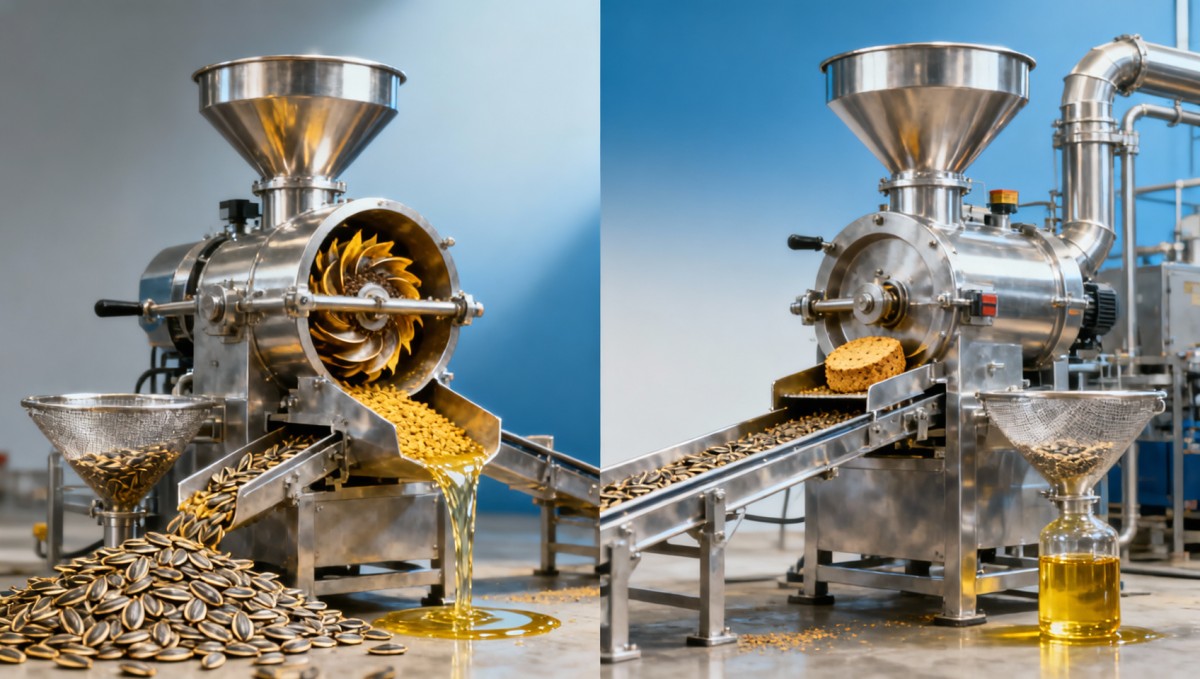
In industrial oilseed processing, cake is never just waste. It is either a by-product with feed value or an intermediate material for further extraction. If a sunflower oil press machine leaves too much oil in cake, the loss appears twice: first in direct oil yield reduction, and second in less predictable cake composition. For finance approvers and plant managers, that means unstable margin calculations and weaker cost control.
In a well-configured mechanical pressing line, residual oil in sunflower cake may often fall within a practical range of 6% to 12%, depending on seed variety, shell content, and process design. If values rise toward 14% to 18% during routine production, operators should treat it as a process deviation rather than a normal fluctuation. That difference can become significant when a line processes 20 to 100 tons per day.
This issue is especially relevant when buyers compare a cold press oil machine commercial system with other extraction platforms. Cold pressing typically protects flavor and nutritional profile, but it also demands tighter control over seed moisture, feed uniformity, and screw pressure. A palm oil extraction machine, by contrast, works with very different fruit structure, heating profiles, and release behavior, so efficiency benchmarks should never be transferred without adjustment.
For quality-control and safety teams, excessive oil in cake can also indicate unstable press operation. That instability may show up as variable discharge temperature, choking, increased motor load, or abnormal vibration. Over a 3- to 6-month operating cycle, these symptoms often lead to higher maintenance cost and shorter replacement intervals for worms, cages, shafts, and bearings.
Typical Impact Areas
- Reduced oil recovery, which lowers revenue per ton of sunflower seed processed.
- Higher specific energy use when operators compensate by tightening the press or slowing output.
- Less consistent cake quality for feed or secondary extraction applications.
- More downtime from wear, overheating, or unplanned adjustments during each shift.
Residual Oil Benchmarks by Processing Mode
The table below provides practical reference ranges rather than universal guarantees. Actual performance depends on raw material condition, equipment geometry, and operator skill.
The main decision point is process intent. If a plant expects final mechanical extraction but operates a pre-press configuration, high residual oil may not be a defect in the machine itself. It may simply reflect a mismatch between production goals and equipment selection.
The Most Common Reasons a Sunflower Oil Press Machine Leaves Too Much Oil
The first and most common cause is poor material conditioning. Sunflower seed enters the press with variable moisture, hull ratio, particle size, and temperature. If moisture is too high, the material becomes pasty and difficult to compress. If it is too low, the cake may become brittle and fail to build enough pressure. In many commercial lines, a workable moisture window is roughly 6% to 9%, though this varies by seed origin and pre-treatment method.
A second factor is insufficient or excessive heating. In hot pressing, conditioning temperatures often fall in the 60°C to 90°C range before feeding into the expeller. Underheating can limit oil release, while overheating may denature proteins, darken the oil, and accelerate component wear. In cold pressing, the opposite problem occurs: operators may chase yield by raising friction and internal heat until the process no longer meets cold-press expectations.
The third issue is press geometry and wear condition. A worn screw, enlarged cage bar gap, or damaged choke ring reduces pressure retention. Even a small increase in clearance across key wear surfaces can change cake density and oil drainage behavior. If throughput remains constant but residual oil suddenly rises after 800 to 1,500 operating hours, wear inspection should be one of the first checks.
The fourth cause is mismatched capacity. A machine rated for 15 tons per day cannot reliably deliver the same cake dryness when pushed to 20 tons per day. Overfeeding reduces residence time and compression stability. Underfeeding can also be problematic because many screw presses rely on stable fill conditions to build pressure along the shaft.
Finally, seed cleanliness and upstream preparation matter more than many buyers expect. Stones, fibers, excessive fines, and uneven dehulling all interfere with consistent pressing. A line without adequate cleaning, magnetic separation, and screening often creates variability that operators misinterpret as poor machine quality.
Diagnostic Priorities for Technical Teams
- Measure residual oil in cake over at least 3 production runs, not just one short batch.
- Record seed moisture, feed temperature, motor load, and hourly throughput at the same time.
- Inspect wear parts and cage gap condition after shutdown.
- Compare actual feed rate to the machine’s stable operating range rather than nominal maximum capacity.
- Review whether the line is intended for cold press, hot press, or pre-press duty.
Key Cause-and-Effect Reference
The following table helps procurement and operations teams separate process issues from equipment-design issues during evaluation.
This comparison is useful because many underperforming lines do not need full replacement. In a meaningful share of cases, better conditioning, wear-part renewal, and feed-rate correction can recover several percentage points of lost oil yield.
How to Improve Yield: Process Settings, Equipment Fit, and Maintenance Control
Improving performance starts with stabilizing the process window. A sunflower oil press machine performs best when feed is consistent across at least four variables: moisture, particle size, temperature, and flow rate. Plants that monitor only output tonnage often miss the root cause of rising residual oil. A simple control sheet per shift can reduce troubleshooting time dramatically, especially on lines running 16 to 24 hours per day.
For operators, the most effective practice is to tune only one variable at a time. If feed temperature, choke pressure, and throughput are changed simultaneously, it becomes difficult to identify cause and effect. In many commercial facilities, a 5% to 10% throughput reduction during optimization is justified if it lowers residual oil by 2% or more and improves system stability.
Maintenance is equally important. Screw presses are highly sensitive to component wear, but many plants replace parts only after visible production failure. A better strategy is planned inspection after fixed operating intervals, such as every 500 to 700 hours for heavily loaded lines, with closer checks when processing abrasive or high-hull seed lots. This approach helps maintain both cake dryness and bearing life.
Equipment fit should also be reassessed. Some plants purchase a cold press oil machine commercial system for premium oil positioning, then expect hot-press-style yield. Others select a machine originally optimized for seeds with different oil release characteristics. The result is a technically functional machine that is commercially misaligned with the plant’s real objectives.
Operational Improvement Checklist
- Verify seed moisture before each major production batch and keep variation within a narrow internal tolerance.
- Use consistent preheating or conditioning rather than reacting after the press begins to underperform.
- Check cage drainage paths and remove buildup that can block oil escape.
- Replace worn worms, rings, and bars before yield loss becomes severe.
- Match machine size to realistic hourly capacity, not peak sales brochure figures.
Recommended Control Points for Daily Operation
A disciplined routine is often more valuable than aggressive adjustment. The table below outlines practical checkpoints that support predictable performance.
These control points are not complex, but they create measurable discipline. For project managers and technical heads, that discipline is often the difference between a press line that performs close to specification and one that operates in continuous correction mode.
What Buyers Should Evaluate Before Purchasing or Upgrading a Press Line
A procurement decision should not focus only on motor power, hourly capacity, or quotation price. When residual oil in cake becomes a recurring problem, the underlying issue often began at the purchasing stage. Buyers should evaluate whether the supplier has aligned machine design with sunflower seed characteristics, production mode, downstream use of cake, and expected oil quality profile.
Technical evaluators should request performance discussion around three operating conditions: standard feedstock, off-spec feedstock, and long-duration operation. A machine may perform well for a 2-hour demonstration but drift under 10-hour continuous loading. This matters for industrial farming operators and distributors who need realistic expectations rather than laboratory-style best-case results.
Commercial teams should also calculate total cost beyond purchase price. A lower-cost press that leaves 3% more oil in cake, needs more frequent shutdowns, and requires wear-part replacement every few months may become more expensive over a one-year period than a better-matched system with a higher initial price. For finance approval, this is a total value question, not just a capex question.
For compliance and quality teams, supplier transparency is equally important. Ask about material-of-construction details, cleaning accessibility, spare-parts availability, and commissioning support. In regulated or export-focused operations, even mechanical equipment selection should support traceable, repeatable production standards.
Core Procurement Criteria
- Clarify whether the target is premium cold-pressed oil, maximum mechanical yield, or pre-press for a larger extraction system.
- Verify realistic operating capacity in tons per day under sunflower seed conditions, not another oilseed.
- Review wear-part lifecycle, spare availability, and service response time.
- Check whether the line includes cleaning, conditioning, filtration, and cake handling as an integrated system.
- Assess operator training needs and how quickly the line can reach stable production after commissioning.
Commercial Evaluation Matrix
The matrix below helps cross-functional teams compare options with both technical and financial discipline.
This framework is especially useful for distributors, engineering teams, and enterprise decision-makers comparing multiple suppliers. It forces the conversation away from headline capacity alone and toward operating reality.
FAQ: Practical Questions About High Oil Residue in Sunflower Cake
How much oil in sunflower cake is considered too high?
There is no single universal threshold because line design matters. For a cold press oil machine commercial setup, 8% to 14% may be workable depending on oil quality goals. For a conditioned hot press, persistent readings above 10% to 12% often justify process review. For a pre-press line feeding solvent extraction, higher values can be normal by design.
Can a cold press line achieve the same yield as a hotter extraction process?
Usually not on a like-for-like basis. Cold pressing prioritizes lower thermal exposure and marketable oil quality characteristics, which often means accepting somewhat higher residual oil in cake. Buyers should define whether their priority is premium oil positioning, maximum oil recovery, or a balance between the two.
Is excessive oil in cake always caused by poor machine quality?
No. In many cases, the machine is only one part of the problem. Seed moisture, preheating consistency, hull content, throughput pressure, and maintenance discipline often have equal or greater impact. A technically sound press can still underperform in a poorly controlled line.
How long does it usually take to identify the root cause?
For a plant with basic monitoring records, a preliminary diagnosis can often be made within 1 to 3 production days. A deeper review involving wear inspection, feed analysis, and process retuning may take 1 to 2 weeks depending on shutdown access and spare-parts availability.
A sunflower oil press machine that leaves too much oil in the cake is rarely a mystery once the process is examined in a structured way. The most common causes are incorrect conditioning, unstable moisture, worn pressing elements, unsuitable throughput, or a mismatch between production objectives and machine design. For technical, commercial, and executive teams alike, the right response is not guesswork but measurable evaluation.
When buyers compare a sunflower line with a cold press oil machine commercial setup or broader alternatives such as a palm oil extraction machine, the key is to judge performance within the correct raw-material and process context. Better yield, more stable cake quality, and lower operating cost come from integrated thinking across feed preparation, press configuration, maintenance, and supplier selection.
If your team is assessing a new press line, troubleshooting high residual oil, or comparing equipment options for a larger industrial project, now is the right time to review the technical details behind real extraction efficiency. Contact us to discuss your operating targets, request a tailored evaluation framework, or learn more about practical solutions for sunflower oil processing.
Related Intelligence
- Milling MachineryWhy After Sales Terms Matter in Rice Milling Machines WholesaleRice milling machines wholesale success depends on after-sales terms. Compare support, warranty, and spares for parboiled rice mill plant and commercial flour mill machinery before you buy.
- Milling MachineryRice Milling Machines Wholesale: What Changes at Larger Order VolumesRice milling machines wholesale guide: learn how larger orders affect pricing, QA, lead times, and support across parboiled rice mill plant, commercial flour mill machinery, and more.
- Milling MachineryHow to Spot Steam and Drying Bottlenecks in a Parboiled Rice Mill PlantParboiled rice mill plant guide: spot steam and drying bottlenecks, improve throughput, and compare rice milling machines wholesale for better quality and lower operating cost.
The Morning Broadsheet
Daily chemical briefings, market shifts, and peer-reviewed summaries delivered to your terminal.
