

The Authority in Global Agricultural Chemistry & Bio-Resources
Tractor implement parts that fail early in rough soil conditions
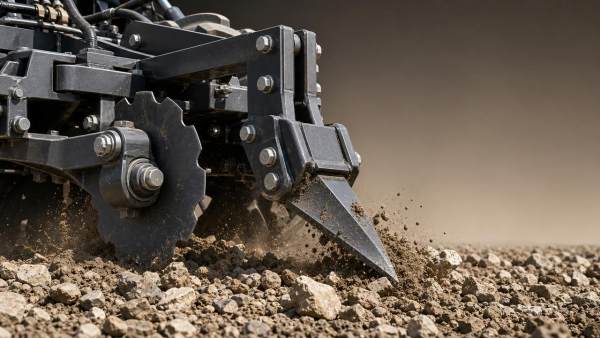
When rough soil, hidden rocks, and uneven ground push machinery to its limits, certain tractor implement parts tend to wear out or break far sooner than expected. For operators, recognizing these early failure points is essential to reducing downtime, avoiding costly repairs, and keeping fieldwork on schedule. This article highlights the parts most at risk and what their premature failure usually reveals.
In most cases, early failure in tractor implement parts is not random. It usually points to a mismatch between the implement and the field, incorrect operating depth or speed, poor adjustment, weak maintenance habits, or components that are not durable enough for abrasive and impact-heavy conditions. For operators working in rough soil, the goal is not only to replace broken parts faster, but to understand why they failed early and how to stop the pattern from repeating.
Which tractor implement parts usually fail first in rough soil?
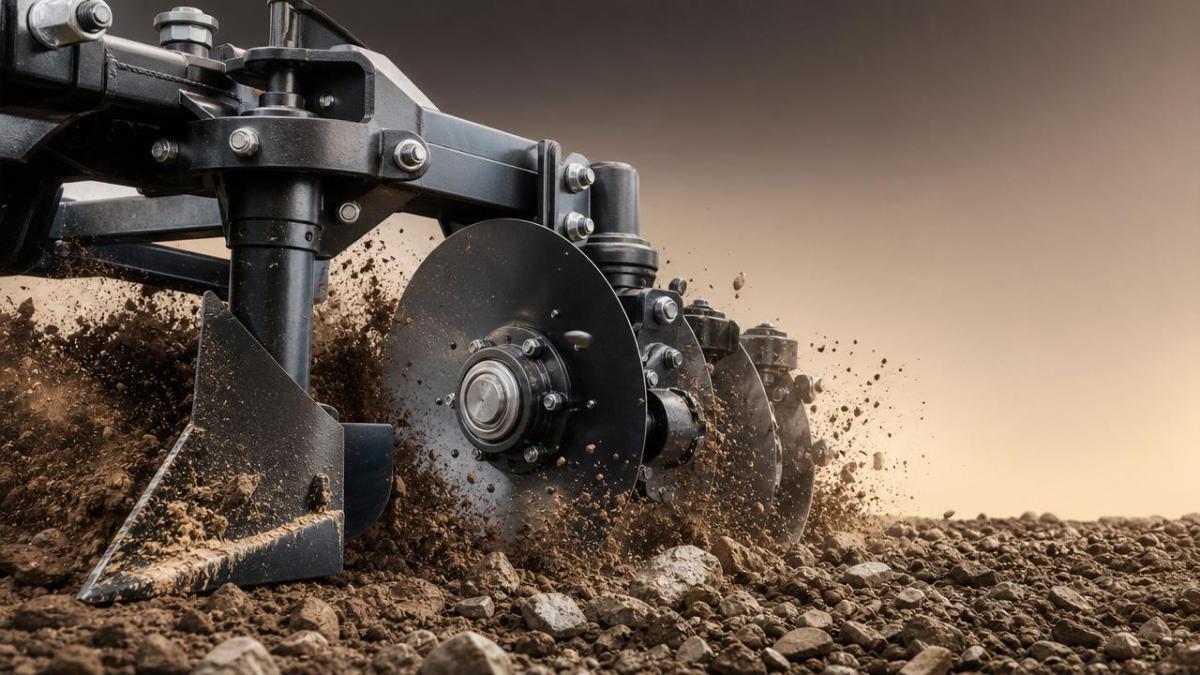
If you work in stony ground, compacted clay, newly cleared land, or fields with buried roots and uneven hardpan, some parts consistently take the first hit. These are the wear points and shock points of the implement. They absorb abrasion, impact, torsion, and vibration long before the main frame shows visible damage.
The most common early-failure items include shanks, tines, sweeps, points, blades, discs, bearings, hubs, bushings, scraper assemblies, mounting bolts, U-bolts, shear bolts, spring assemblies, toolbar clamps, and hydraulic hoses routed too close to moving sections. On rotary equipment, operators also see early wear in blades, blade bolts, rotor bearings, and driveline protection components.
Among these, soil-engaging parts fail first because they are designed to wear, but rough conditions make them wear faster than normal. The more serious concern is when support parts fail early too. If bearings, mounts, fasteners, and frame connections begin failing alongside wear edges, that usually means the implement is experiencing repeated shock loading that it was not set up to handle.
What does early wear on ground-contact parts usually mean?
Fast wear on points, shovels, sweeps, chisels, and discs often tells you more than “the soil is hard.” The wear pattern itself is useful. Operators who inspect parts closely can often identify whether the problem is excessive speed, wrong angle, poor leveling, side draft, or a poor-quality replacement part.
If a point becomes blunt quickly and wear is evenly distributed, the field may simply be highly abrasive, especially in sandy or gravelly conditions. If one side wears much faster, the implement may be running out of level, the shank may be twisted, or the machine may be pulling at an angle. If leading edges chip instead of gradually thinning, hidden rock impact is likely the main cause rather than normal abrasion.
Disc blades that lose diameter too soon can indicate either abrasive soils or too much down-pressure. Concave discs that crack around the center hole often point to impact stress, bearing looseness, or improper torque on gang hardware. On tillage tools, shanks that wear thin near the lower bend are often operating too deep in compacted soil or repeatedly striking obstructions.
For operators, the key lesson is simple: early wear is not only a parts issue. It is field feedback. The part is showing how the implement is entering, carrying, and exiting the soil.
Why do bearings and hubs fail so quickly in rough ground?
Bearings are among the most expensive “small” failures because they often damage surrounding components when ignored. In rough soil, bearing and hub problems usually come from repeated shock, contamination, misalignment, or overloading rather than from age alone.
When a disc harrow, land roller, cultivator, or seeding implement bounces through uneven ground, bearing loads become irregular. Instead of smooth rotational force, the bearing sees impact spikes. If seals are compromised, dust, moisture, and fine abrasive soil enter the assembly. Once contamination mixes with grease, wear accelerates quickly and heat builds up.
Operators should pay close attention to early warning signs: unusual heat after short operation, grease leakage, squealing, vibration, wobble, or visible play in the hub. A bearing that fails early may also be telling you that the shaft is bent, the housing is misaligned, or the implement is being transported too fast over rough tracks with too much weight on one section.
In many cases, replacing the bearing alone is not enough. If the root cause is frame flex, gang misalignment, damaged seals, or improper preload, the new part may fail just as quickly as the old one.
How rough soil damages fasteners, clamps, and frame connection points
Operators often focus on blades and points because they are visible wear parts, but rough-field breakdowns frequently start at the connections. Bolts loosen, clamps slip, holes elongate, welds crack, and spring mounts fatigue under repeated vibration and shock. These failures can bring fieldwork to a stop even when the main wear parts are still usable.
Shear bolts are a special case. They are supposed to fail before more expensive components do. But if shear bolts are breaking too often, that usually means one of three things: field obstruction levels are high, operating speed is excessive for conditions, or the wrong shear specification has been installed. Replacing a correct shear bolt with a harder bolt may seem convenient, but it often transfers damage into the gearbox, shank, or frame.
Loose U-bolts and toolbar clamps are another common cause of repeat trouble. In rough ground, even slight movement becomes destructive over time. A clamp that shifts a few millimeters under load can change working angle, increase side loading, and trigger uneven wear across multiple tractor implement parts. Once mounting holes begin to oval out, failures can cascade.
Routine torque checks matter more in harsh fields than many operators assume. The combination of dust, vibration, impact, and repeated folding or lifting cycles can relax hardware faster than in smoother soils.
Which parts fail early because of setup and operation, not just soil conditions?
Not every rough-soil failure is caused by rough soil alone. Operator decisions and implement setup often determine whether a part lasts a season or fails halfway through it. Depth, speed, ballast, top-link adjustment, hydraulic float settings, and tire pressure on the tractor all influence the loads passed into the implement.
Running too fast is one of the most common reasons for early damage. Higher speed increases impact severity when the tool strikes rock, ridges, or compacted layers. It also increases bouncing, which reduces consistent soil engagement and creates alternating load spikes. Operators may try to recover time this way, but they often lose more time later in repairs.
Incorrect leveling is another major factor. If the implement is nose-down, tail-down, or leaning side to side, certain wear parts carry a disproportionate load. One gang, one row of shanks, or one wing section may wear out much earlier than the rest. This can look like a parts quality issue when it is actually a geometry issue.
Poor residue management also contributes. In heavy trash or root-filled ground, blockages cause sudden loading and release cycles. These repeated jolts can damage springs, brackets, and rolling components. On powered implements, driveline protection systems may activate frequently, signaling that the machine is being asked to process more resistance than it was designed for under current settings.
How can operators tell whether the problem is part quality or field abuse?
This is one of the most practical questions in the field. Operators need to know whether to change suppliers, upgrade specifications, or change how the implement is being used. The answer usually comes from comparing failure patterns, service life consistency, and the location of damage.
If a part fails unusually early but surrounding components look normal, the issue may be material quality, heat treatment inconsistency, poor machining, or a weak aftermarket substitute. This is especially true when failure occurs cleanly at a stress point without obvious signs of overload elsewhere. A brittle fracture on a tine or a bearing that fails despite proper lubrication intervals may justify closer scrutiny of supplier quality.
If multiple different parts are failing across the same machine, however, the problem is more likely operational or structural. For example, if points, shank bolts, and bearings are all failing early, the implement may be running too deep, too fast, or in terrain beyond its intended duty class. If failures are concentrated on one side, misalignment or field contour is often involved.
It helps to keep basic records: field type, soil moisture, depth, speed, hours to failure, and exact part location. Over time, this creates a useful picture. Good records can show whether one brand of wear part consistently outperforms another, or whether breakdowns spike only in certain blocks with stones and uneven subsoil.
What inspection routine prevents expensive failures before they happen?
In rough soil, prevention depends less on long workshop sessions and more on short, disciplined checks performed at the right times. A five- to ten-minute inspection before and after operation can catch many developing issues before they turn into full stoppages.
Before entering the field, operators should inspect wear edges, check visible bolts and clamps, look for cracked welds, confirm hose routing, and spin any accessible rotating assemblies if practical. They should also verify that no row unit, gang, or shank assembly is sitting lower or at a different angle than the others.
After the first pass in rough ground, it is smart to stop and recheck. Fresh shine marks, loosened hardware, unusual vibration, or one hot bearing can show up quickly. This first recheck is especially valuable when the field has hidden rocks or when newly installed tractor implement parts are bedding in.
At day’s end, remove packed soil from critical areas, inspect seals and scrapers, and note any unusual wear direction. If a blade, point, or tine is failing significantly faster than its matching components, do not wait for complete failure. Replace or reposition it before it starts damaging neighboring parts or pulling the implement unevenly.
What replacement strategy works best for operators in consistently harsh fields?
In difficult ground, the cheapest replacement strategy is rarely the lowest-cost part. Operators usually get better results by matching part grade to field severity and replacing in planned sets where wear balance matters. Premium wear materials, reinforced shanks, heavy-duty bearings, sealed hubs, and correct OEM-spec hardware often reduce lifetime cost even if their purchase price is higher.
For wear parts, consistency matters almost as much as hardness. A highly durable point paired with weaker neighboring components can shift wear or stress elsewhere. The goal is a balanced system. On multi-row or multi-gang implements, replacing only one severely worn component may restore operation temporarily but create uneven draft and new stress concentrations.
It is also wise to stock the parts most likely to fail during peak season: points, sweeps, blades, bearings, seals, scraper hardware, correct shear bolts, and mounting fasteners. Downtime in rough-soil windows is expensive because field conditions and labor timing may not wait for parts delivery.
Where possible, operators should review whether a heavier-duty implement configuration is justified. If the same machine repeatedly consumes parts in reclaimed land, rocky blocks, or uneven dry ground, the issue may be that the implement is underspecified for the job. No maintenance routine can fully compensate for that mismatch.
How to reduce repeat failure without sacrificing productivity
The most effective approach is to combine realistic operating speed, correct setup, and better failure analysis. Operators do not need to eliminate all wear; they need to distinguish acceptable wear from warning-sign wear. In rough fields, slowing slightly, reducing depth where agronomically acceptable, and keeping the implement level can greatly extend component life.
It also helps to think in terms of load management. Every bounce, side pull, and hard strike transfers energy somewhere. If the implement has proper protection systems, use them as intended. If a component is designed to wear or shear first, that sacrificial function is protecting more expensive structures.
Finally, treat recurring early failure as information. The same damaged part, in the same location, under the same field conditions, is a pattern. Patterns are actionable. They help operators decide whether the fix is a stronger part, a different adjustment, a different operating style, or a different implement class altogether.
Conclusion
The tractor implement parts that fail early in rough soil are usually the ones absorbing the highest abrasion, impact, and vibration loads: wear points, shanks, discs, bearings, fasteners, clamps, and protective components. But the failure itself is only half the story. Premature wear often reveals deeper issues in setup, speed, alignment, hardware retention, contamination control, or implement suitability.
For operators, the practical takeaway is clear. Watch failure patterns closely, inspect often, do not ignore uneven wear, and avoid treating every broken part as a simple replacement event. In rough ground, the best-performing operation is not the one that never wears parts. It is the one that understands what those parts are saying early enough to prevent bigger downtime, bigger repair bills, and lost field days.
Related Intelligence
- Heavy Agri MachineryHow to shortlist Agri & Forestry machinery manufacturersAgri & Forestry machinery manufacturers: learn how to shortlist reliable suppliers by comparing capability, compliance, service, and delivery strength for smarter, lower-risk sourcing.
- Heavy Agri MachineryWhy onion grading machine accuracy changes during peak seasonOnion grading machine accuracy can shift during peak season due to higher throughput, dust, crop variability, and sensor drift. Learn the causes and smart fixes to protect quality.
- Heavy Agri MachineryHow to read Agri & Forestry machinery specifications betterAgri & Forestry machinery specifications explained clearly: learn how to compare power, hydraulics, weight, safety, and compliance to choose equipment smarter and avoid costly mistakes.
The Morning Broadsheet
Daily chemical briefings, market shifts, and peer-reviewed summaries delivered to your terminal.
