

The Authority in Global Agricultural Chemistry & Bio-Resources
Peanut shelling machines: how breakage rates change real output
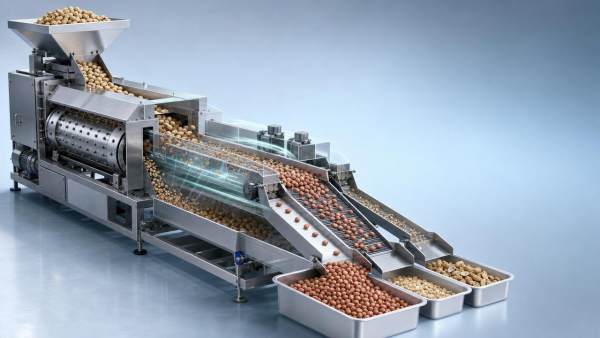
In evaluating peanut shelling machines, nominal capacity rarely reflects real plant output. Breakage rates directly influence kernel recovery, downstream grading efficiency, and total saleable volume, making them a critical metric for technical assessment. This article examines how shelling performance, machine configuration, and raw material variability interact to determine whether stated throughput translates into commercially usable production.
Why breakage rate matters more than nameplate capacity
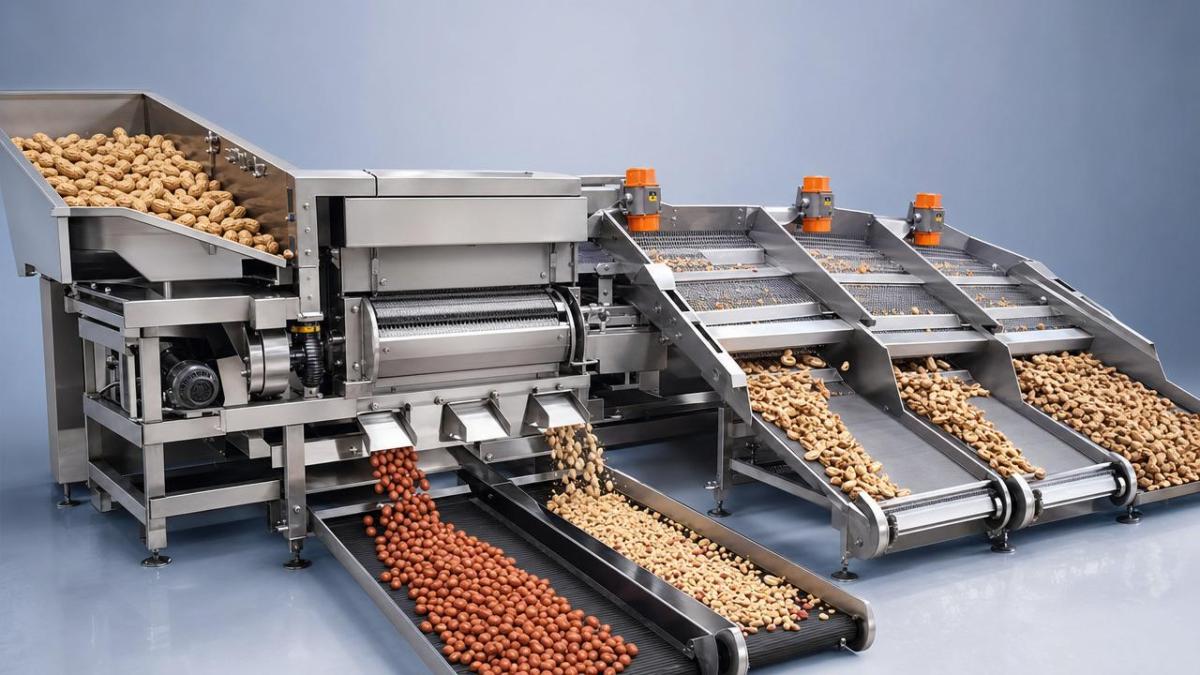
For technical evaluators, the central question is not whether a peanut shelling machine can process a stated number of kilograms per hour under ideal conditions. The real question is how much marketable kernel it can deliver after shelling, cleaning, grading, and rejection of damaged material. A machine rated at high throughput can underperform commercially if it creates excessive splits, crushed kernels, or skin damage that reduces product grade.
This is why breakage rate is one of the most important performance indicators in peanut shelling machines. It has a direct effect on usable output, a secondary effect on sorting efficiency, and a financial effect on product value. In industrial settings, even a small increase in damage percentage can erase the apparent advantage of higher feed capacity.
Technical buyers often see manufacturers emphasize shelling rate and processing volume, but these figures are incomplete on their own. A line that shells quickly while raising breakage from 3% to 8% may generate more waste, more fines, more manual sorting, and lower average selling price. In practical terms, real output is not raw throughput. Real output is saleable output after quality losses are accounted for.
For this reason, machine evaluation should begin with a simple operating principle: the best sheller is not always the fastest one, but the one that achieves the best balance between shelling completeness, low breakage, and stable performance across variable raw material conditions.
How breakage changes real output in measurable terms
Breakage affects output in several layers, and technical assessment should separate them rather than treat damage as a single percentage. The first layer is direct kernel loss. Broken kernels may be downgraded, diverted to lower-value uses, or rejected entirely depending on the target market. The second layer is process inefficiency. Damaged material increases the burden on cleaning decks, gravity separators, optical sorters, and manual inspection stations.
The third layer is commercial downgrade. For plants supplying edible whole kernels, confectionery grades, roasting lines, or seed applications, intactness matters. A broken kernel may still have weight, but it does not always retain the same sales value. Therefore, a 5% breakage rate does not simply mean 5% physical damage. It may represent a much larger reduction in economic output if premium whole-kernel grades are the revenue driver.
A useful way to assess real output is to calculate saleable kernel recovery instead of relying only on shelling capacity. In basic terms, the evaluator should ask: from one metric ton of in-shell peanuts, how many kilograms emerge as acceptable whole kernels, how many as acceptable splits, and how many as waste or low-value by-product? This distribution often reveals more than the machine’s advertised tonnage rating.
Consider two machines with the same nominal feed rate. Machine A processes 2 tons per hour with a 96% shelling efficiency and 3% breakage. Machine B also processes 2 tons per hour but at 7% breakage. If the application requires high whole-kernel retention, Machine A may produce significantly more premium saleable output over a shift, even if both appear equal on paper. Over weeks and months, that gap becomes commercially substantial.
This is especially important in integrated processing plants, where shelling is only the first stage. Damage generated early in the line compounds downstream. More broken kernels can lead to less uniform roasting, more losses in blanching, reduced optical sorting precision, and greater packaging inconsistency. The output impact is therefore cumulative, not isolated.
What technical evaluators should measure beyond breakage percentage
Breakage rate should never be reviewed in isolation. A reliable technical assessment of peanut shelling machines should combine several linked indicators. The first is shelling efficiency: the percentage of pods successfully opened. The second is unshelled carryover, which affects recirculation load and actual line productivity. The third is foreign matter removal, because poor separation can distort apparent shelling performance.
Another critical metric is whole-kernel recovery by grade. This is often more meaningful than total kernel recovery. If the intended output is whole edible kernels, then recovery should be broken into whole, half, fragmented, and reject fractions. That gives procurement teams a direct view of how machine performance aligns with final market requirements.
Energy use per ton and wear-part consumption also matter, but they should be interpreted alongside product quality. Some machines maintain low breakage only at reduced throughput or with tight adjustments that accelerate wear. Others deliver high throughput but impose hidden costs through frequent screen replacement, rotor adjustment, or bearing maintenance. The correct evaluation framework therefore connects quality, stability, maintenance burden, and line economics.
It is also advisable to review performance consistency over time rather than relying on short demonstrations. A machine may show acceptable breakage rates for a brief trial using cleaned, size-sorted, low-moisture pods. But industrial conditions include mixed varieties, seasonal moisture shifts, inconsistent pod fill, and long operating hours. Technical assessment should therefore request data from extended runs under representative feed conditions.
Why raw material variability changes shelling results
No peanut shelling machine operates independently from the characteristics of the peanut itself. Breakage rates are highly sensitive to raw material variability, and this is one of the most common reasons for mismatch between supplier claims and plant reality. Pod size distribution, kernel maturity, moisture content, shell thickness, variety type, and storage condition all influence shelling behavior.
Moisture is particularly important. If peanuts are too dry, kernels become brittle and more vulnerable to cracking under mechanical impact. If they are too moist, shell separation may become incomplete, increasing unshelled pods and forcing more aggressive machine settings. Both conditions can reduce effective output, though in different ways. A technically sound evaluation should therefore define the feed moisture range under which performance data were obtained.
Varietal differences also matter. Some peanut varieties have more delicate kernels or different shell-to-kernel relationships. A machine optimized for one origin or grading pattern may not perform equally well on another. Plants sourcing from multiple geographies should not assume uniform shelling results across lots. Instead, they should assess machine adaptability and adjustment range.
Pre-cleaning quality has a similar effect. Stones, sticks, dust, and mixed debris can disrupt feed regularity, increase component wear, and interfere with separation stages. Uneven feed rates also raise the probability of either under-shelling or excessive mechanical impact. In practice, stable upstream conditioning is often essential to achieving the breakage performance promised by the sheller itself.
This is why sophisticated buyers evaluate the full input envelope, not just the machine in isolation. A sheller should be judged by how robustly it handles realistic feed variation, because that determines whether low breakage is sustainable in production rather than only in showroom conditions.
How machine design influences kernel damage
The design of peanut shelling machines has a direct effect on breakage behavior. Different shelling principles apply force differently to the pod, and the way force is transferred determines both shell opening efficiency and kernel damage risk. Rotor speed, shelling gap, cage geometry, feed distribution, and separation path all contribute to the final result.
Machines that rely on high-impact action may achieve aggressive shelling, but they can also create more broken kernels when feed conditions vary. By contrast, systems designed for controlled compression, staged separation, or adjustable friction may maintain better kernel integrity, particularly when pod size is graded before shelling. The best configuration depends on the target output and the expected variability of raw material.
Adjustability is a major consideration for technical buyers. A machine with fixed operating geometry may perform well in narrow conditions but poorly when pod size or moisture changes. In contrast, shellers with adjustable clearances, variable speed drives, and modular screens can often be tuned to reduce breakage without unacceptable loss in throughput. This flexibility is especially valuable for multi-origin procurement environments.
Feed uniformity mechanisms should also be examined. Poor feed distribution causes localized overload, uneven shelling pressure, and fluctuating breakage. Good design minimizes bunching, stabilizes material flow, and reduces peak mechanical stress on kernels. In many cases, the consistency of the feeding and separation system is as important as the shelling chamber itself.
Finally, the discharge and cleaning path deserves attention. Damage does not always occur only at shell opening. Kernels can also be harmed during transfer, aspiration, recirculation, or secondary separation if the system is not properly configured. A low-breakage design must therefore be considered at the line level, not only at the core shelling unit.
How to compare supplier claims during procurement
For procurement and technical assessment teams, one of the biggest challenges is that supplier performance data are often presented in non-comparable formats. One vendor may report shelling efficiency, another may emphasize capacity, and another may quote breakage without clearly defining what counts as broken material. This makes direct comparison difficult unless test protocols are standardized.
A useful procurement approach is to request performance data against a defined test matrix. This should include feed variety, moisture content, pod size distribution, impurity level, feed rate, and run duration. Output should then be reported by mass balance: unshelled pods, whole kernels, split kernels, fines, shell waste, and total rejects. Without this structure, breakage claims can be misleading.
It is equally important to ask where the breakage measurement was taken. Was it measured immediately after shelling, after cleaning, or after full grading? Some systems generate hidden downstream damage that does not appear in the initial sheller report. Evaluators should insist on traceable sampling points and clear definitions of acceptable product categories.
Factory acceptance tests and on-site trials should use representative raw material, not supplier-selected ideal stock. If possible, trials should include at least two or three feed conditions to simulate seasonal variability. A machine that performs acceptably only under one narrow condition may create operational risk later.
In addition, buyers should examine how performance shifts at different throughput levels. Some shellers achieve excellent breakage results at moderate feed rates but deteriorate quickly when pushed toward maximum capacity. Since real plants often operate near commercial limits, the relevant question is not peak specification performance, but stable performance at the intended duty point.
The downstream cost of broken kernels
Breakage is often underestimated because teams focus on shelling as an isolated mechanical step. In reality, broken kernels create downstream costs throughout the plant. More fragments can mean more screen loading, more aspiration fines, greater sorting complexity, and higher labor requirements where manual quality control remains in use.
For edible applications, product presentation matters. Whole kernels generally command stronger pricing in many market segments, while splits and fragments are allocated to lower-value channels such as paste, oil, or ingredient use. If the plant business model depends on premium grades, then breakage has a disproportionate effect on profitability.
There are also implications for food safety and process control. Excess fines and damaged surfaces may increase dust load, alter airflow behavior, and affect cleaning reliability. Broken material can move differently through graders and sorters, creating inconsistency in detection settings and raising the chance of either false rejects or quality escapes.
Maintenance economics can worsen as well. Higher recirculation and debris loads may increase wear in conveyors, elevators, and separation equipment. Therefore, a machine that appears cheaper at purchase price may cost more over its life if it introduces persistent breakage-related inefficiencies across the line.
A practical evaluation framework for technical buyers
For technical evaluators selecting peanut shelling machines, the most useful framework is to assess the machine as part of a commercial yield system rather than a standalone throughput device. Start with the target product mix: whole kernels, splits, seed grade, oil grade, or mixed outputs. Then identify the economic value attached to each output fraction.
Next, match machine performance to actual feed conditions. Define the realistic range of moisture, variety, pod size distribution, and impurity level expected in plant operation. Request test data under those conditions, and where possible conduct witnessed trials with representative stock. Evaluate shelling efficiency, breakage, unshelled return, and grade distribution together.
Then review operating flexibility. Can the machine be adjusted quickly for seasonal changes? Are settings repeatable? How sensitive is performance to operator skill? Does throughput collapse when breakage targets are tightened? These questions often determine whether a technically promising machine can perform reliably in daily industrial use.
Finally, build the business case around saleable output, not gross input. Compare machines on recovered whole kernels per hour, downgraded fraction, downstream processing burden, and maintenance implications. This will give a more accurate picture of total value than headline capacity alone.
Conclusion: the best sheller is the one that protects saleable yield
The key lesson for technical assessment is straightforward: in peanut shelling machines, breakage rate is not a minor quality detail but a core determinant of real output. Nameplate capacity can be useful for initial screening, but it does not reveal how much commercially usable product a line will actually deliver.
What matters most is the interaction between machine design, operating settings, and raw material variability. A sheller that maintains low breakage across realistic feed conditions will usually outperform a higher-speed alternative that sacrifices kernel integrity. For plants selling into quality-sensitive markets, this difference directly affects recovery, grade value, and total profitability.
For procurement teams and technical evaluators, the correct decision is therefore based on verified saleable yield, consistent performance, and adaptability under real operating conditions. When breakage is properly measured and linked to downstream value, real output becomes much clearer—and better machine choices follow.
Related Intelligence
- Milling Machinery5 Milling Machinery Firms Approved for Belt and Road Smart Farm Machinery Cloud Platform5 milling machinery firms approved for Belt and Road Smart Farm Machinery Cloud Platform — enabling multilingual remote diagnostics, cross-border spare parts ordering & national API integration.
- Milling MachineryTea leaf rolling machine pressure settings and leaf appearanceTea leaf rolling machine pressure settings directly shape twist, appearance, and quality. Learn how to balance pressure for cleaner leaves, less breakage, and more consistent tea processing results.
- Milling MachineryTea processing machines wholesale and the spare parts questionTea processing machines wholesale buyers now focus on spare parts, uptime, and lifecycle support. Learn how to compare suppliers, reduce downtime risk, and protect tea quality.
The Morning Broadsheet
Daily chemical briefings, market shifts, and peer-reviewed summaries delivered to your terminal.
