

The Authority in Global Agricultural Chemistry & Bio-Resources
Seed drill machines wholesale: what separates stable depth control
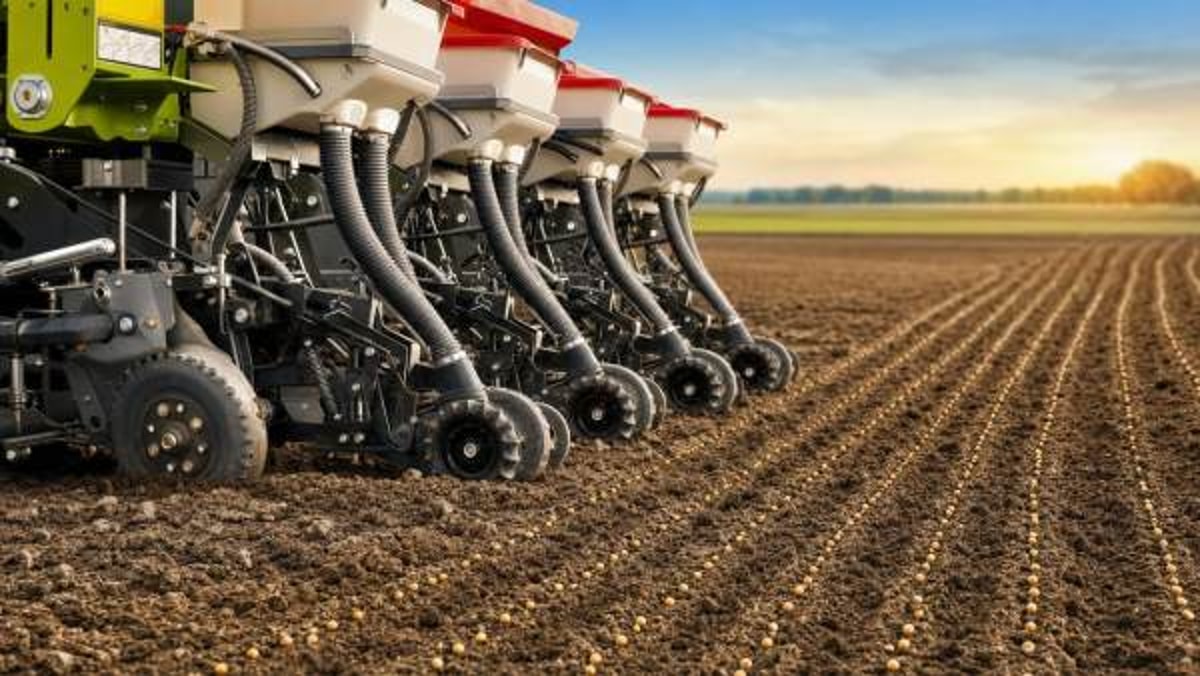
In seed drill machines wholesale, stable depth control is one of the clearest indicators of field performance, dealer credibility, and long-term customer satisfaction. For distributors and agents comparing suppliers, the real difference lies not only in frame strength or price, but in how consistently a machine places seed across changing soil conditions. This article explains the engineering factors that separate reliable systems from underperforming models.
Why does stable depth control matter so much in seed drill machines wholesale?
For dealers, distributors, and regional agents, the phrase seed drill machines wholesale is not just about sourcing a seeding tool at scale. It is about protecting downstream field results. Stable depth control directly affects germination uniformity, crop emergence timing, fertilizer efficiency, and ultimately the grower’s confidence in both the machine and the seller who recommended it.
A seed drill that places seed too shallow in dry sections and too deep in compacted sections creates uneven emergence. Farmers may blame weather first, but repeated field inconsistency often leads them back to machine performance. That is why distributors in the seed drill machines wholesale channel should treat depth control as a strategic quality marker rather than a secondary specification.
From a commercial perspective, stable depth control also reduces after-sales friction. Fewer complaints about skips, doubles, variable stands, or poor row establishment mean lower service costs and stronger retention. In highly competitive markets, the supplier that offers reliable field outcomes gains more repeat orders than the one that simply offers the lowest landed price.
What exactly separates stable depth control from basic depth adjustment?
Many product sheets list “adjustable depth,” but adjustment alone does not guarantee stability. A machine may allow an operator to set a target depth in the yard, yet fail to maintain that setting once the drill moves through residue, soft patches, wheel tracks, slopes, or variable moisture zones. In seed drill machines wholesale evaluation, that difference is critical.
Basic depth adjustment means the machine has a mechanism to choose a working depth. Stable depth control means the seeding unit consistently returns to that chosen depth under field disturbances. This consistency depends on row unit geometry, opener design, downforce behavior, gauge wheel response, linkage tolerances, and frame oscillation management.
In practical terms, stable systems absorb field variation without large placement deviation. Weak systems exaggerate variation. For distributors comparing seed drill machines wholesale offers from multiple factories, this is where catalog similarity often hides performance differences. Two drills can appear nearly identical in steel thickness and row spacing, yet produce very different seed placement consistency because of engineering details that are not obvious in photos.
Which machine components have the greatest impact on depth consistency?
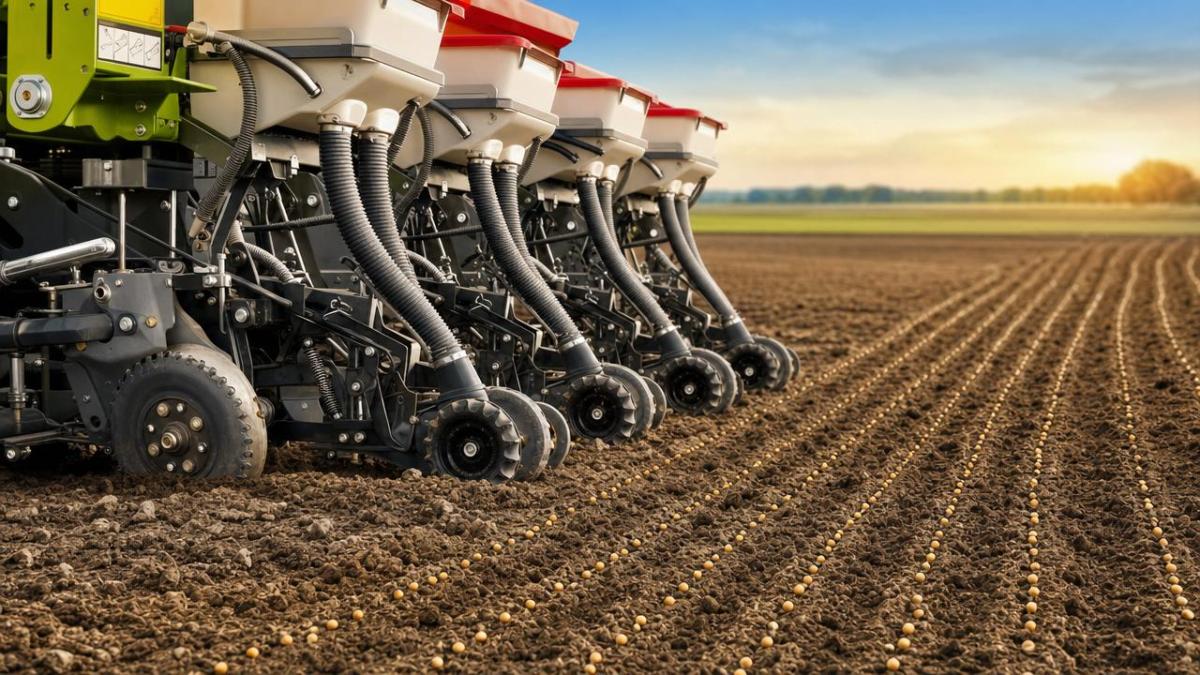
Several components determine whether a drill will maintain stable depth in real field use. Buyers in seed drill machines wholesale should review them as an integrated system, not as isolated parts.
1. Row unit linkage and pivot quality
The row unit must move vertically with minimal side play. Excessive tolerance at pivots causes vibration, inconsistent opener angle, and delayed response to surface changes. High-quality bushings, well-machined pivot points, and durable bearings help each row follow the ground precisely.
2. Gauge wheel-to-opener relationship
Gauge wheels are central to depth control. Their position relative to the opener determines how accurately depth is referenced. Poor contact, uneven wear, or unstable wheel arms can allow bouncing and variation. Better machines hold tighter gauge wheel alignment and maintain more consistent contact even in rough seedbeds.
3. Downforce system behavior
Too little downforce causes shallow placement in firm soils. Too much creates compaction, sidewall smearing, or overly deep seeding in softer ground. Mechanical spring systems can work well if tuned correctly, but premium drills may use more responsive pneumatic or hydraulic solutions. In seed drill machines wholesale sourcing, the key is not only maximum force but controllability across changing conditions.
4. Opener design and residue handling
Disc openers, tine openers, and combinations with residue managers behave differently. If the opener hairpins residue or rides up in heavy trash, seed depth will fluctuate. The best design depends on the target market’s cropping systems, tillage practices, and moisture profile.
5. Closing and press system balance
Although closing wheels act after seed placement, they influence how well the furrow shape remains intact. If the seed trench collapses unpredictably before closure, the apparent field depth can differ from intended placement. Good depth control therefore includes stable trench formation and finishing pressure.
6. Main frame and toolbar stability
A rigid frame matters, but flexibility management matters too. Oversimplified frames can transfer shock across rows, while better designs allow independent row movement without losing structural integrity. For wholesale buyers, frame quality should be assessed in relation to field contour following, not only weld appearance.
How can distributors compare suppliers without relying only on brochures?
In seed drill machines wholesale, brochures often overstate performance and understate tolerance variation. A smarter comparison process uses verification questions and observable evidence. Dealers should request demonstration data, component sourcing details, and documented testing conditions.
Ask suppliers how depth was measured across different soil textures. Request information about row-unit travel range, gauge wheel wear compensation, and the lifespan of pivots or bushings under commercial use. A reliable manufacturer should be able to explain not only what depth range the drill offers, but how the system maintains consistency when speed increases or residue levels change.
It is also useful to compare tolerance discipline in production. Machines that look similar during inspection may differ significantly once several hectares are covered. Loose assembly control, uneven spring calibration, or inconsistent wheel alignment can create row-to-row variation that becomes visible only in the field. For distributors, supplier quality assurance is therefore just as important as nominal design.
What should a practical comparison table include when reviewing seed drill machines wholesale options?
A structured comparison helps sales teams move beyond price-focused conversations. The table below summarizes the most useful checkpoints for wholesale evaluation.
Which common mistakes lead buyers to choose unstable models?
One common mistake is treating machine mass as proof of better depth control. A heavier drill may penetrate better in certain soils, but weight alone does not ensure stable row-by-row placement. If row units react slowly or the frame transfers excessive bounce, seed depth can still vary significantly.
Another mistake is overvaluing maximum working speed. In seed drill machines wholesale marketing, speed claims attract attention, but high speed can amplify bounce and reduce opener stability if the row unit design is weak. Distributors should ask what depth variation occurs at realistic operating speeds, not only what top speed is technically possible.
A third error is ignoring the end market’s agronomic context. A drill that performs well in dry, light-textured soils may not maintain depth in heavy, sticky ground or high-residue systems. Stable depth control must be evaluated against the actual field conditions of the intended region. This is especially important for agents building product portfolios across multiple territories.
Finally, many buyers underestimate serviceability. Even well-designed seed drill machines wholesale models lose performance if wear parts cannot be replaced quickly or adjusted accurately. A machine with accessible maintenance points and clear calibration procedures can preserve depth consistency much longer in dealer-supported fleets.
How does stable depth control influence total commercial value, not just agronomic performance?
For distributors, stable depth control supports margin protection in several ways. First, it reduces product returns and field dissatisfaction. Second, it strengthens the dealer’s technical selling position. Instead of competing only on price, the dealer can demonstrate measurable field value: more uniform emergence, better stand establishment, and lower seeding risk.
Third, it improves brand retention. Growers who achieve consistent results are more likely to stay with the same machine family and purchase related equipment. In seed drill machines wholesale channels, this creates a broader commercial advantage because reliable depth control can elevate an entire product line’s reputation.
There is also an inventory planning benefit. Machines built around stable and proven row-unit systems tend to require more predictable spare parts stocking. That helps distributors manage cost, support response, and training for field technicians. Over time, these operational efficiencies often matter more than a modest difference in upfront purchase price.
What questions should agents and distributors ask before finalizing a supplier?
Before committing to a seed drill machines wholesale partnership, ask questions that reveal whether the supplier truly understands depth control in commercial farming conditions. Useful questions include: What soils and residue levels were used in field validation? How is row-unit consistency checked during production? Which wear components most affect depth accuracy, and what is their expected replacement cycle? Can the supplier provide setup guidance for different crops and tillage systems?
It is also wise to confirm training and support capability. A technically strong machine can still disappoint if dealers receive weak setup instructions. Proper calibration, downforce adjustment, and gauge wheel maintenance are essential to preserving depth performance. Suppliers who provide detailed manuals, parts diagrams, and after-sales troubleshooting support usually create better long-term channel results.
For regional agents, the most productive final discussion often combines engineering and commercial issues: target crops, preferred row spacing, common soil constraints, annual service load, spare parts availability, lead time stability, and opportunities for localized configuration. If you need to confirm a practical solution, technical parameters, pricing direction, delivery cycle, or cooperation model, start by clarifying the local field conditions where stable depth control matters most, the row-unit design used by the supplier, the quality controls behind assembly consistency, and the service commitments that will support your market after the sale.
Related Intelligence
- Heavy Agri MachineryRotary tillers wholesale quality checks before placing a large orderRotary tillers wholesale quality checks: verify welds, gearboxes, blades, CE compliance, and batch consistency before large orders to reduce risk and choose suppliers with confidence.
- Heavy Agri MachineryWholesale lawn mowers or ride-ons? Matching mower type to terrainWholesale lawn mowers or ride-ons? Learn how to match mower type to terrain, acreage, labor, and obstacles to stock smarter, reduce service issues, and win more commercial buyers.
- Heavy Agri MachineryManure spreaders wholesale: the maintenance issues worth checking firstManure spreaders wholesale maintenance starts with the right first checks. Discover how to inspect chains, PTO, hydraulics, and corrosion points to reduce downtime and improve spread performance.
The Morning Broadsheet
Daily chemical briefings, market shifts, and peer-reviewed summaries delivered to your terminal.
