

The Authority in Global Agricultural Chemistry & Bio-Resources
How to shortlist Agri & Forestry machinery manufacturers for new markets
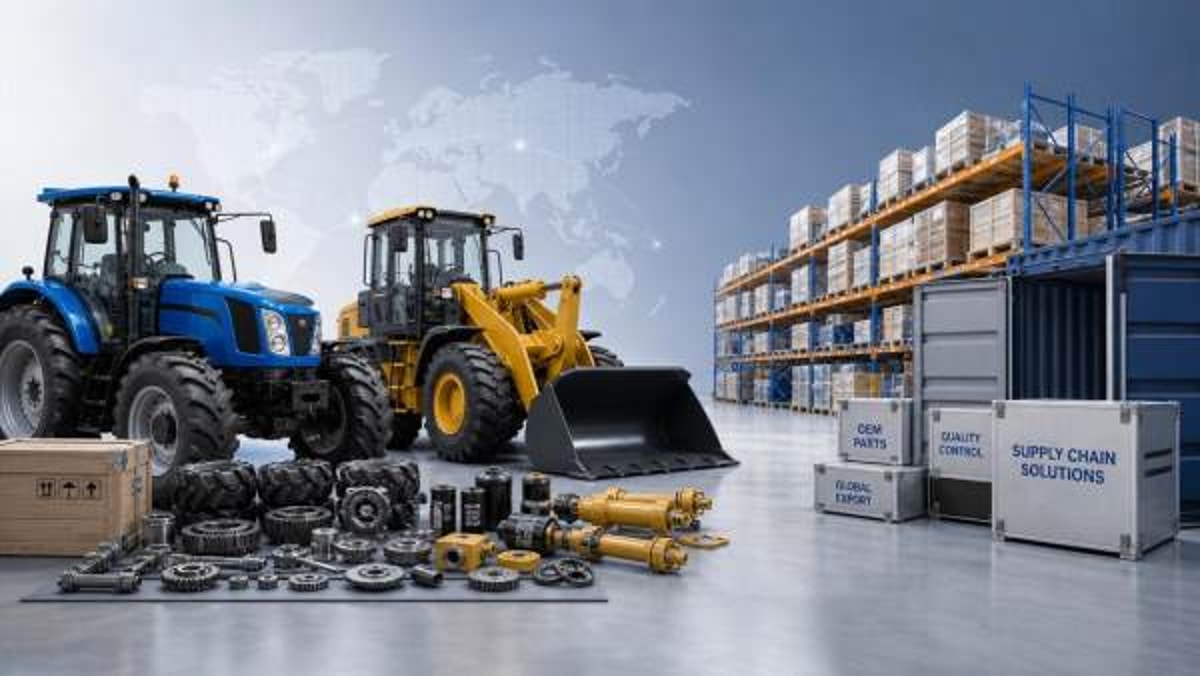
Expanding into new regions can unlock major growth, but choosing the right Agri & Forestry machinery manufacturers requires more than comparing prices or catalogs. For business decision-makers, effective shortlisting depends on production capability, compliance standards, after-sales support, and market adaptability. This guide outlines a practical framework to identify reliable partners, reduce procurement risk, and build a resilient supply chain for long-term market entry success.
In agricultural and forestry equipment procurement, the real risk rarely sits in the quoted unit price alone. It appears later in delayed parts delivery, poor operator training, weak dealer coverage, limited adaptation to local terrain, or documentation gaps that slow customs clearance and commissioning. For companies entering unfamiliar markets, a disciplined shortlist process helps convert a broad field of vendors into 3 to 5 serious candidates that can support long-term growth.
For institutional buyers, distributors, plantation groups, and industrial farming operators, the strongest Agri & Forestry machinery manufacturers are those that can demonstrate repeatable production quality, technical traceability, realistic lead times, and post-sale responsiveness across multiple regions. The sections below provide a practical screening model built for B2B decision-making rather than catalog browsing.
Define the shortlist around market-entry requirements
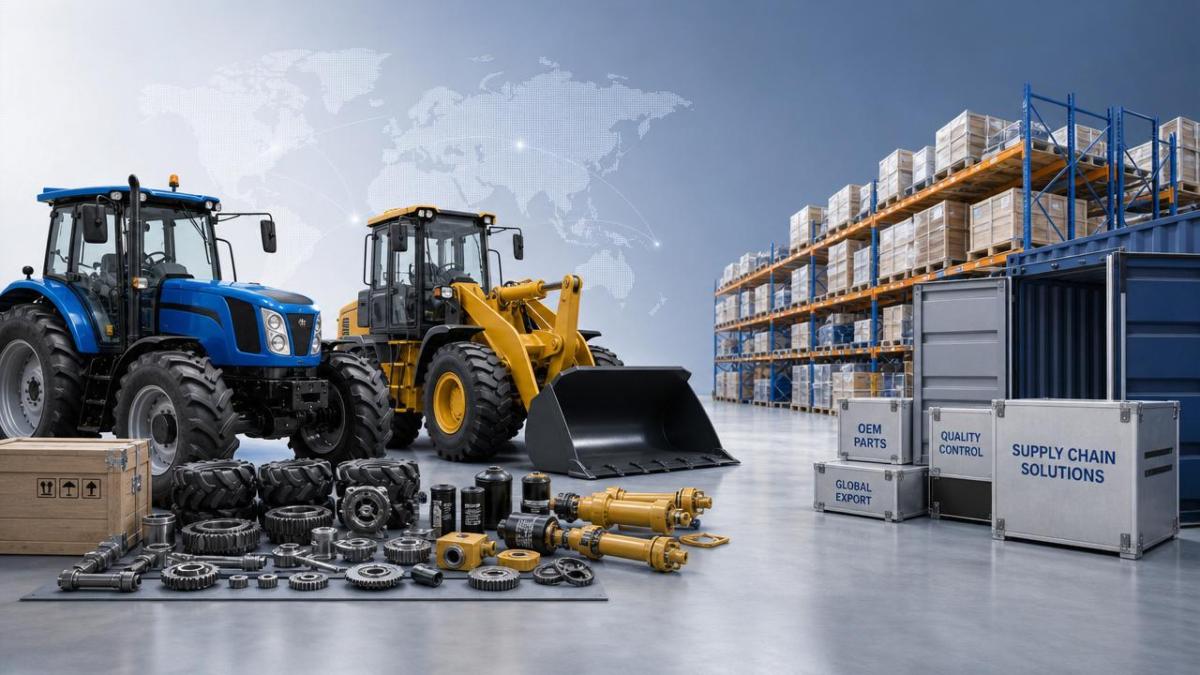
Before reviewing suppliers, define what “fit” means in the target market. A manufacturer suitable for one region may be a poor match in another if field conditions, regulations, farm sizes, fuel quality, labor skills, or service infrastructure differ. This first step typically reduces an initial long list of 20 to 30 suppliers to a more manageable group of 8 to 12.
Map the operating environment
Start with four operational variables: climate, terrain, crop or timber profile, and service accessibility. For example, equipment entering humid tropical zones may require improved corrosion protection, sealed electrical systems, and more frequent filter maintenance intervals. In steep forestry applications, stability, hydraulic reliability, and operator safety systems become more important than raw engine output.
At this stage, decision-makers should identify at least 6 to 8 non-negotiable conditions. These may include power range, implement compatibility, cabin safety requirements, ground clearance, spare parts availability within 48 to 72 hours, and training support during the first 30 to 90 days after deployment.
Segment machinery by use case
Agri & Forestry machinery manufacturers often specialize in different categories. Some are strong in mid-horsepower tractors and harvesting equipment, while others are more competitive in skidders, chippers, loaders, sprayers, or mechanized planting systems. Shortlisting becomes more accurate when each equipment family is evaluated separately instead of assuming one supplier can lead in every segment.
- Row-crop agriculture: tractors, seeders, sprayers, harvest support units
- Large-scale grain operations: combines, grain handling, high-capacity tillage systems
- Forestry operations: loaders, forwarding systems, mulchers, skidders, processing attachments
- Mixed-use estates: compact multi-function units with broad implement compatibility
Set commercial filters before technical deep dives
Many procurement teams spend too much time assessing technical brochures for suppliers that are commercially unworkable. Early-stage filtering should include annual production capacity, export readiness, minimum order expectations, regional distribution policy, and average lead time. A manufacturer with strong machinery specifications but a 26-week delivery cycle may not suit a new market launch scheduled within one planting season.
The table below helps convert strategy into measurable shortlist criteria for new-market evaluation.
A practical shortlist is not built on one attribute. It is built on threshold discipline. If a supplier cannot meet two or three core entry conditions, it should not stay on the list simply because the price looks attractive. That discipline prevents expensive rework later in the procurement cycle.
Assess manufacturing capability beyond the brochure
The next stage is to validate whether shortlisted Agri & Forestry machinery manufacturers can produce at the consistency required for expansion. In new markets, the hidden cost of inconsistent build quality is high: longer commissioning, more warranty claims, and slower dealer confidence. A serious review should focus on process maturity, not just on finished-machine appearance.
Check production depth and supply-chain visibility
Ask what proportion of critical components is manufactured in-house versus sourced externally. Frames, hydraulic subassemblies, driveline systems, control harnesses, and painted structural parts all affect reliability. A manufacturer does not need to produce everything internally, but it should be able to explain where high-risk components come from and how incoming quality control is managed.
A useful review covers 5 checkpoints: supplier qualification, weld consistency, paint and corrosion treatment, assembly line controls, and end-of-line testing. For equipment operating in dust-heavy or wet conditions, sealing quality and harness routing deserve particular attention because early electrical failures often emerge within the first 6 to 12 months.
Questions worth asking during supplier review
- What is the average monthly output for the relevant product family?
- Which components have the highest warranty incidence over the last 12 months?
- How are hydraulic systems pressure-tested before shipment?
- What traceability exists for serial numbers, component batches, and inspection logs?
- Can the factory support pilot orders of 5 to 20 units before scale-up?
Verify documentation and quality routines
The strongest manufacturers provide more than a generic product sheet. They usually offer inspection records, testing procedures, maintenance schedules, parts books, and commissioning checklists. For buyers entering regulated or highly formal procurement environments, document quality is often a proxy for operational discipline. Poor manuals can add weeks to training and deployment.
The table below summarizes what a buyer should examine when comparing production maturity across suppliers.
When two suppliers appear similar on paper, production transparency often becomes the deciding factor. Buyers generally face less long-term risk with manufacturers that can explain their process in detail than with those relying only on sales claims or polished showroom samples.
Screen for compliance, durability, and local market fit
In cross-border equipment sourcing, compliance is both a legal and commercial issue. It affects customs clearance, operator safety, insurability, and distributor reputation. The most suitable Agri & Forestry machinery manufacturers understand that compliance is not limited to one certificate; it extends to emissions, safety labeling, manuals, guarding, and destination-specific documentation.
Review the standards that matter in the destination region
Different markets may require different combinations of emissions conformity, machinery safety measures, electrical compliance, noise limits, or transport packaging standards. Procurement teams should create a compliance matrix with 3 layers: mandatory import requirements, recommended operational standards, and customer-imposed standards from large farms, forestry concessions, or public tenders.
For market-entry planning, assign each requirement a status such as “available now,” “available with modification,” or “not supported.” That simple three-tier model often exposes which suppliers can scale with the market over the next 24 to 36 months and which ones can only support initial low-volume shipments.
Test for environmental and operational durability
New markets frequently challenge equipment in ways not visible in the factory. Dust load, slope angle, ambient temperature, moisture, fuel cleanliness, and operator skill level all influence failure rates. A robust shortlist process should ask how equipment performs under 8- to 12-hour operating days, how often service points require attention, and whether local workshops can complete routine maintenance without specialized tools.
Where possible, request demonstration results, field references by application type, or pre-shipment review of cooling layout, filtration setup, underbody protection, and hydraulic hose shielding. Even a 2-hour technical review can reveal whether a machine was designed for demanding field realities or only for nominal test conditions.
Avoid common shortlist mistakes
- Choosing solely on FOB price without calculating parts logistics and service travel costs
- Assuming agricultural equipment and forestry equipment share the same duty cycle
- Ignoring translation quality of manuals and operator controls
- Accepting vague answers on warranty turnaround times
- Failing to define which modifications are included before production starts
These errors are common because they are easy to overlook during early supplier conversations. Yet each one can delay launch, increase total cost of ownership, or reduce end-user confidence in the first operating season.
Compare after-sales support and scale-up readiness
For new-market success, after-sales capability is often more decisive than initial machine specifications. Even well-built equipment needs spare parts, service guidance, software support where relevant, and clear warranty handling. Buyers should assume that the first 6 months after launch will test the supplier relationship more than the purchase order itself.
Measure service responsiveness in practical terms
Ask for operating metrics rather than broad promises. Useful examples include response time to technical inquiries, dispatch time for critical parts, training hours offered per equipment batch, and escalation contacts for urgent field failures. A credible manufacturer should be able to describe its service process step by step, not just say that support is “available.”
For distributor-led expansion, a good target is a supplier that can support onboarding within 2 to 4 weeks, provide digital parts documentation immediately, and maintain a warranty review cycle that does not extend beyond 10 to 15 business days for standard claims.
Evaluate whether the supplier can grow with your market
A supplier that works for a pilot phase may not be ready for scale. Growth readiness includes production planning, accessory integration, regional stock strategy, dealer training, and communication discipline. If demand rises from 10 units per quarter to 50, the manufacturer must show how output, inspection, and parts provisioning will expand without destabilizing quality.
A simple 4-step scale-up review
- Confirm current output and available production slots for the next 2 quarters.
- Review parts stocking strategy for the 20 most critical maintenance items.
- Verify technical training format for dealers, mechanics, and operators.
- Agree on reporting cadence for quality issues during the first 90 days.
This review creates commercial predictability. It also helps procurement leaders distinguish between manufacturers that are merely willing to export and those truly prepared to support sustainable channel growth in unfamiliar markets.
Build a final decision matrix for procurement teams
Once technical, commercial, and support data are collected, convert findings into a weighted decision matrix. This keeps the final shortlist objective and makes internal approval easier. In many organizations, procurement, operations, finance, and local market teams all view risk differently, so a scoring framework creates alignment.
Suggested weighting model
A common approach is to score each supplier across 5 categories: technical fit, manufacturing reliability, compliance readiness, after-sales support, and landed commercial value. Weightings may vary, but many buyers allocate 20% to 30% for technical fit, 20% for service capability, and the remainder across price, documentation, and scale-up readiness.
Use a 1-to-5 rating or 1-to-10 rating scale, but keep the same definitions across suppliers. If one vendor scores below the minimum threshold in two critical categories, it should not move to the final negotiation stage, regardless of pricing advantage.
Final shortlist outputs to prepare
- A ranked list of 3 to 5 Agri & Forestry machinery manufacturers
- A risk register covering compliance, logistics, service, and configuration gaps
- A pilot-order plan with acceptance criteria and inspection checkpoints
- A 12-month support framework covering parts, training, and reporting
These outputs turn the shortlist into an executable sourcing strategy. They also improve negotiations because buyers can discuss specifics such as training scope, shipment batches, and service obligations instead of debating only list price.
Shortlisting Agri & Forestry machinery manufacturers for new markets is a strategic exercise in risk control, not a simple comparison of brochures. The most resilient supplier choices are those that combine fit-for-market engineering, reliable production controls, compliance readiness, and service depth after delivery. For enterprise buyers, that means using structured filters, validating operational evidence, and ranking suppliers against the realities of the target region.
If your team is evaluating manufacturers for expansion into new agricultural or forestry markets, AgriChem Chronicle can help you interpret supplier capabilities, compare operational risk, and identify stronger sourcing pathways. Contact us today to discuss your shortlist, request a tailored evaluation framework, or explore more market-entry solutions for industrial equipment procurement.
Related Intelligence
- Heavy Agri MachineryRotary tillers wholesale quality checks before placing a large orderRotary tillers wholesale quality checks: verify welds, gearboxes, blades, CE compliance, and batch consistency before large orders to reduce risk and choose suppliers with confidence.
- Heavy Agri MachineryWholesale lawn mowers or ride-ons? Matching mower type to terrainWholesale lawn mowers or ride-ons? Learn how to match mower type to terrain, acreage, labor, and obstacles to stock smarter, reduce service issues, and win more commercial buyers.
- Heavy Agri MachineryManure spreaders wholesale: the maintenance issues worth checking firstManure spreaders wholesale maintenance starts with the right first checks. Discover how to inspect chains, PTO, hydraulics, and corrosion points to reduce downtime and improve spread performance.
The Morning Broadsheet
Daily chemical briefings, market shifts, and peer-reviewed summaries delivered to your terminal.
