

The Authority in Global Agricultural Chemistry & Bio-Resources
Agricultural diesel engines: what shortens service life fastest?
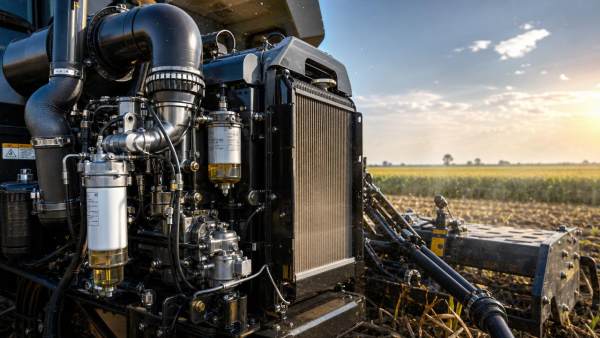
Agricultural diesel engines are built for punishing workloads, yet their service life is often cut short not by age alone, but by preventable maintenance failures, fuel contamination, overheating, and poor operating habits. For after-sales maintenance teams, identifying the fastest wear factors is essential to reducing downtime, controlling repair costs, and helping operators protect engine reliability in demanding field conditions.
In practical service environments, the question is rarely whether an engine can reach a long operating life, but whether daily use and maintenance routines allow it to do so. For tractors, harvesters, irrigation power units, and stationary farm equipment, even a small lapse in filtration, lubrication, or cooling can shorten usable life by hundreds or even thousands of operating hours. This makes agricultural diesel engines a maintenance priority not only for field operators, but also for after-sales teams responsible for warranty control, repair planning, and fleet reliability.
This article examines the failure mechanisms that shorten service life fastest, the field conditions that accelerate wear, and the maintenance controls that produce the highest return in real agricultural operations. The emphasis is on actionable inspection points, service intervals, and communication practices that help maintenance personnel intervene before minor faults turn into liner wear, injector damage, bearing failure, or full overhaul.
The fastest life-shortening factors in agricultural diesel engines
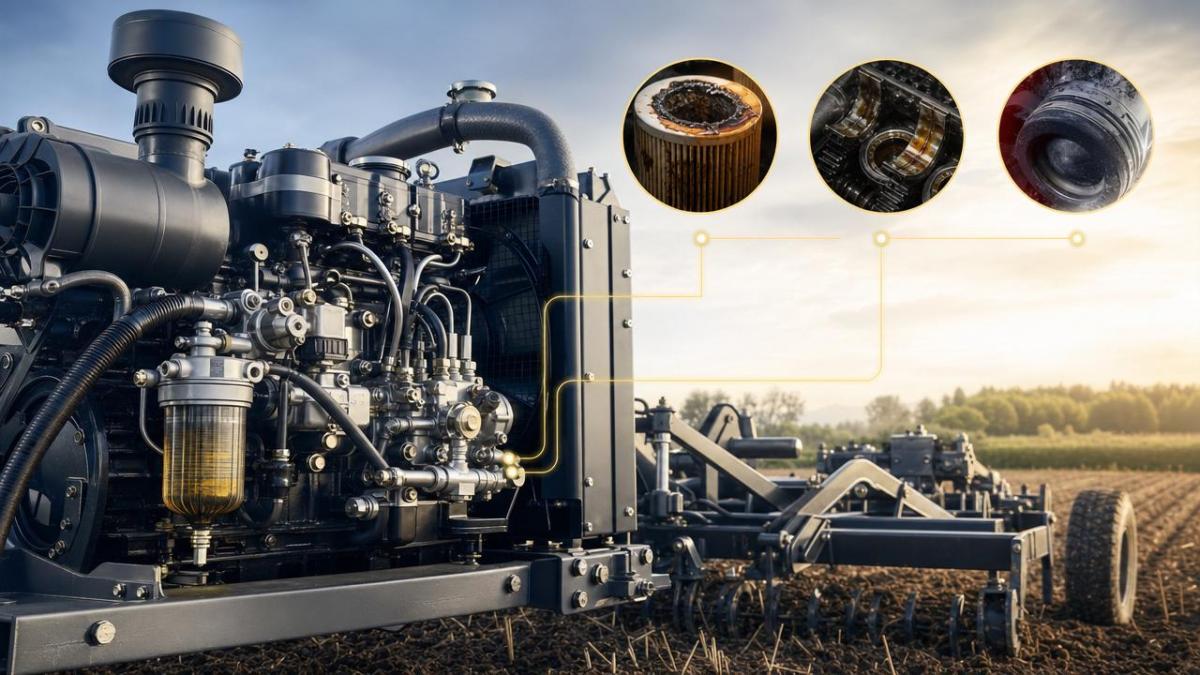
For most agricultural diesel engines, the fastest service-life losses come from five recurring causes: dirty fuel, poor lubrication control, overheating, air intake contamination, and incorrect operating habits. These factors often interact. For example, a partially clogged radiator can raise operating temperature by 8–15°C, which thins oil film strength under load and accelerates ring, piston, and bearing wear at the same time.
After-sales maintenance teams should treat these issues as a ranked risk list rather than isolated faults. In seasonal agricultural use, engines may run 10–14 hours per day during planting or harvest windows. Under that duty cycle, even 2–3 days of neglected warning signs can shift a repair from filter replacement to injector service, turbo damage, or cylinder head work.
1. Fuel contamination damages precision parts quickly
Fuel system contamination is one of the fastest ways to shorten the life of agricultural diesel engines. Water, dust, microbial growth in storage tanks, and degraded diesel can damage injectors, pumps, and nozzles with little visible warning. Modern fuel systems often operate with very tight tolerances, so contamination that appears minor at the tank level can still cause major wear at the injector tip or pump plunger.
In farm settings, contamination risk rises when diesel is stored for 30–90 days, transferred through unsealed containers, or exposed to condensation in partially filled tanks. After-sales teams should inspect storage practices as seriously as engine hardware. A clean engine supplied with dirty fuel will still fail early.
Key warning signs
- Hard starting after overnight parking
- Black or uneven exhaust under normal load
- Loss of power at mid-range RPM
- Frequent primary filter blockage within 50–100 hours
- Visible water separation in bowls or storage samples
The table below shows common contamination sources and how quickly they can escalate into service-life problems in agricultural diesel engines.
For maintenance teams, the main conclusion is simple: fuel cleanliness must be managed upstream. Replacing injectors without correcting tank hygiene, drainage intervals, and transfer procedures usually leads to repeat failures within the next operating cycle.
2. Lubrication failures accelerate internal wear
Oil-related failure is rarely caused by oil alone. More often, it results from overdue service, wrong viscosity selection, contaminated crankcase oil, or low oil level during prolonged load. In agricultural diesel engines, lubrication breakdown first affects parts under constant friction and pressure: bearings, piston rings, cylinder walls, camshafts, and turbocharger bearings where fitted.
A delayed oil and filter service by 100–150 hours may not cause immediate breakdown, but in dusty, high-load field use it can sharply increase wear metals and soot loading. That is especially risky for engines used in tillage, grain handling, or PTO-driven applications where load remains high for long periods.
3. Overheating reduces engine life faster than many operators expect
Overheating is not only a temperature event; it is a wear multiplier. Repeated operation above the normal cooling window can warp head components, harden seals, oxidize oil faster, and reduce piston-to-cylinder protection. In heavy field dust, radiator fins can lose effective airflow long before the operator sees a severe temperature alarm.
After-sales teams should remember that overheating is often gradual. A machine that runs “slightly hot” for 2 weeks during harvest may show no immediate shutdown, yet later present with coolant loss, head gasket distress, or compression imbalance. That delayed failure pattern is why cooling inspections need to be preventive, not reactive.
How field conditions and operator habits speed up engine wear
Not all life-shortening factors originate in parts quality or formal service intervals. Many come from how agricultural diesel engines are actually used in the field. Cold starts under load, extended idling, overloaded implements, and ignored air filtration all create wear patterns that maintenance teams see repeatedly across fleets.
From a service perspective, operator behavior matters because it compounds environmental stress. Dust, mud, crop residue, humidity, and seasonal storage already make agriculture harder on engines than many industrial applications. Poor habits can turn normal wear into accelerated deterioration within one season.
Air intake restriction and dust ingestion
Dirty air is as dangerous as dirty fuel. In plowing, harvesting, and feed processing environments, airborne particulate load can be severe. If the air filter is damaged, incorrectly seated, or overextended beyond its service life, fine particles enter the combustion chamber and act as abrasives. The result is faster ring and liner wear, lower compression, and rising oil consumption.
A restricted filter creates a second problem: reduced airflow causes incomplete combustion and soot formation. That soot then increases contamination in the oil circuit. In other words, one neglected air cleaner can affect both the intake side and the lubrication side within 100–200 hours of dusty work.
Cold starts, short runs, and excessive idling
Agricultural diesel engines last longer when they reach stable operating temperature and work within intended load ranges. Frequent cold starts followed by immediate heavy loading increase piston and bearing stress before oil circulation and clearances stabilize. On the other end, excessive idling can promote wet stacking, incomplete combustion, carbon deposits, and diluted oil condition.
A common field pattern is 20–40 minutes of idling during setup, transport pauses, or operator breaks. Repeated daily over a 60-day season, this adds substantial low-efficiency run time that contributes little productive output while increasing deposit formation and fuel waste.
Habits that most often shorten engine life
- Applying heavy load within the first 3–5 minutes after start-up in cool weather
- Ignoring intake seal integrity after filter replacement
- Running at overloaded PTO demand for extended periods
- Using long idle periods instead of proper shutdown and restart procedure
- Deferring minor coolant or oil leaks until the next season
The following table helps maintenance personnel connect field behavior with likely wear outcomes and recommended interventions.
For after-sales teams, this table highlights an important truth: life extension is not achieved by parts replacement alone. It depends on linking service findings to operator training, site inspection, and seasonal usage planning.
Maintenance controls that deliver the biggest life-extension gains
The most effective strategy for protecting agricultural diesel engines is not to overcomplicate maintenance, but to control a few high-impact variables with discipline. In most fleets, three actions produce the fastest results: cleaner fuel management, tighter cooling system inspections, and service scheduling based on actual duty severity rather than calendar habit alone.
When after-sales teams standardize those controls, they reduce repeat callouts, improve warranty traceability, and create a clearer maintenance history for each machine. That matters in B2B agriculture, where uptime during a 2–6 week harvest window often carries more commercial value than the repair invoice itself.
Build a 5-point inspection routine
A practical inspection routine should be short enough to execute in the field and detailed enough to catch early wear signals. For many agricultural diesel engines, the following 5-point structure works well during scheduled service or emergency diagnosis.
- Check fuel sample clarity, water separation, and filter condition.
- Confirm oil level, service age, and any visible dilution or contamination signs.
- Inspect radiator, coolant level, hose condition, and debris blocking airflow.
- Examine air filter sealing, housing integrity, and intake dust traces downstream.
- Review operator history: idle hours, overload events, hot-running complaints, and recent leaks.
Use interval planning based on severity, not assumptions
Not every machine should follow the same service rhythm. A tractor in light transport duty and a combine working in high dust should not be judged by identical assumptions. Where manufacturer guidance allows adjustment, after-sales teams can classify use into light, normal, and severe conditions, then shorten inspection frequency by 20%–30% for severe-duty equipment.
This is especially useful for agricultural diesel engines that run long shifts, operate in ambient temperatures above 35°C, or draw fuel from on-site storage that is not tightly controlled. In those cases, maintenance frequency should reflect risk exposure, not just elapsed hours on paper.
Recommended control priorities for after-sales teams
- Drain water separators at defined intervals during humid or high-turnover seasons
- Document abnormal temperature trends before alarms become shutdown events
- Replace damaged intake seals immediately rather than at the next full service
- Track repeat fuel filter blockage as a storage-system problem, not only an engine problem
- Separate operator misuse from component defect when planning warranty review
These controls are valuable because they address the fastest wear pathways first. In many agricultural service programs, preventing one overheating incident or one contamination-driven injector repair can save more cost than several routine low-risk adjustments combined.
Common misdiagnoses and how to avoid repeat failures
One reason agricultural diesel engines lose life unnecessarily is that symptoms are often treated without tracing the originating condition. A technician may replace a failed part correctly, yet the engine returns with the same problem 50–200 hours later because the underlying cause was never corrected. Repeat failures raise cost, weaken customer confidence, and complicate warranty responsibility.
For after-sales maintenance personnel, accurate root-cause analysis is therefore a commercial issue as much as a technical one. A short diagnosis at the machine is useful, but a better diagnosis includes the storage tank, service history, ambient environment, and operator pattern.
Typical diagnostic mistakes
A power-loss complaint may be blamed on injectors when the actual trigger is air restriction. Repeated oil consumption may be treated as ring wear without checking whether dust passed a damaged intake seal. Rising temperature may lead to thermostat replacement while the radiator core remains packed with field debris. These errors are common because visible symptoms do not always identify the fastest wear source.
A more reliable troubleshooting sequence
A disciplined sequence improves outcomes. First, confirm the complaint under realistic operating load. Second, inspect fluid quality and contamination pathways. Third, check airflow and cooling performance. Fourth, review duty history over the last 2–4 weeks. Fifth, only then isolate component-level failure. This order reduces guesswork and helps prevent unnecessary parts replacement.
For organizations managing multiple machines, it also supports better parts stocking and service forecasting. If three engines on one site show early injector wear, the maintenance response should include tank inspection and fueling procedure review, not simply three injector orders.
What after-sales teams should communicate to farm operators
The longest-lasting agricultural diesel engines are usually supported by clear operator guidance, not by emergency repair alone. Maintenance teams should translate technical wear risks into simple operating rules that field crews can follow during busy seasons. Good communication reduces avoidable damage and helps customers see service as a productivity tool rather than a cost center.
The most useful messages are practical: keep fuel clean, respect warm-up and cooldown needs, monitor leaks immediately, watch temperature trends, and do not postpone filtration issues. Even 4–6 short rules reinforced at the start of planting or harvest can reduce preventable failures materially.
Operator briefing points that matter most
- Report hard starting, smoke change, or rising temperature within the same day
- Avoid storing diesel in unsealed or poorly cleaned containers
- Do not assume a machine is safe because it still starts and runs
- Reduce unnecessary idle time during long field stops
- Clean cooling surfaces more often during high-residue or dusty operations
For distributors, OEM support teams, and service contractors, this communication step also improves customer retention. When operators understand why agricultural diesel engines fail early, they are more likely to approve preventive work before peak-season downtime becomes unavoidable.
The service life of agricultural diesel engines is shortened fastest by contamination, heat, lubrication breakdown, dust ingestion, and poor daily operating habits. For after-sales maintenance teams, the biggest gains come from early detection, severity-based service planning, and stronger operator guidance tied to real field conditions. If your organization is evaluating maintenance protocols, technical content partnerships, or machinery support strategies for primary industry operations, contact AgriChem Chronicle to explore tailored solutions, request deeper technical coverage, or learn more about sector-specific reliability insights.
Related Intelligence
- Heavy Agri MachineryHow to shortlist Agri & Forestry machinery manufacturersAgri & Forestry machinery manufacturers: learn how to shortlist reliable suppliers by comparing capability, compliance, service, and delivery strength for smarter, lower-risk sourcing.
- Heavy Agri MachineryWhy onion grading machine accuracy changes during peak seasonOnion grading machine accuracy can shift during peak season due to higher throughput, dust, crop variability, and sensor drift. Learn the causes and smart fixes to protect quality.
- Heavy Agri MachineryHow to read Agri & Forestry machinery specifications betterAgri & Forestry machinery specifications explained clearly: learn how to compare power, hydraulics, weight, safety, and compliance to choose equipment smarter and avoid costly mistakes.
The Morning Broadsheet
Daily chemical briefings, market shifts, and peer-reviewed summaries delivered to your terminal.
