

The Authority in Global Agricultural Chemistry & Bio-Resources
Sunflower oil press machine: capacity claims vs daily reality
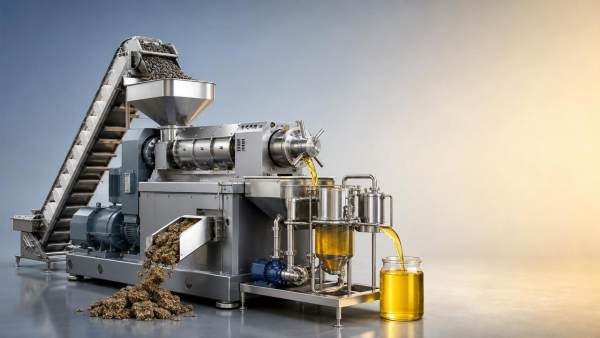
A sunflower oil press machine may be advertised with impressive hourly throughput, but business evaluators know that rated capacity rarely equals stable daily output. From seed moisture and pretreatment quality to downtime, energy load, and operator skill, real-world performance depends on far more than brochure figures. This article examines where capacity claims diverge from operational reality and how to assess true production value with greater accuracy.
Why does a sunflower oil press machine look productive on paper but underperform in practice?
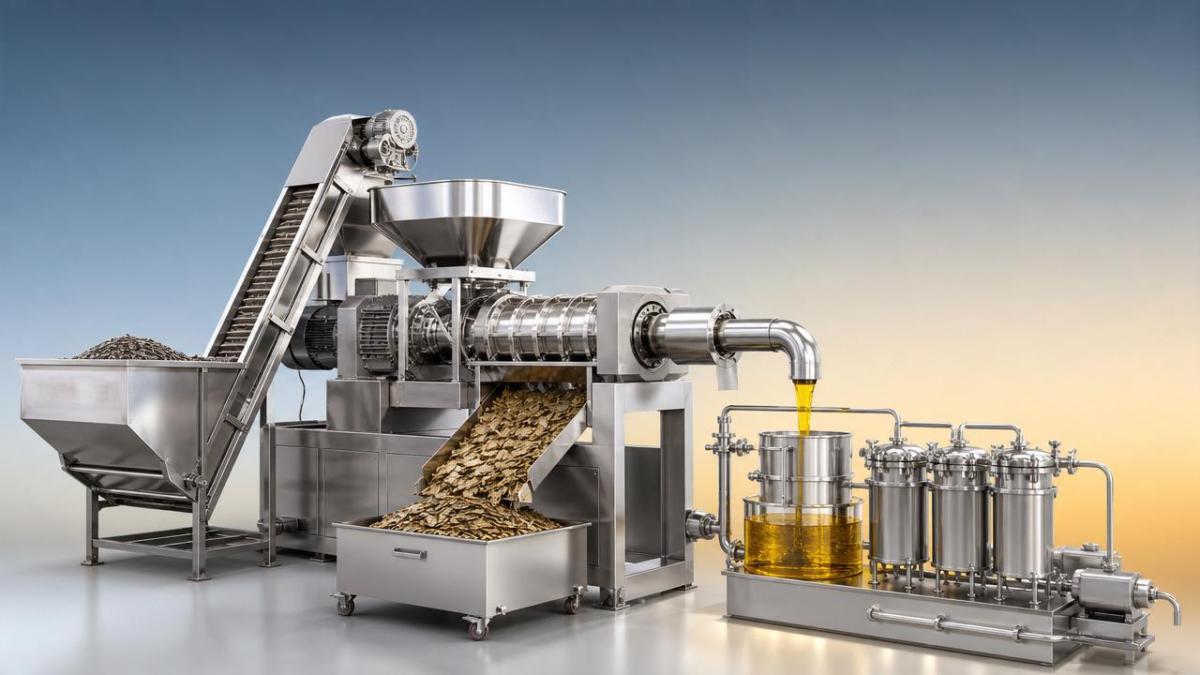
For commercial buyers, the first mistake is to treat nameplate capacity as a direct proxy for plant output. In the oilseed processing chain, a sunflower oil press machine is only one link in a system that includes cleaning, dehulling in some cases, conditioning, feeding, pressing, filtration, cake discharge, and routine maintenance. If one upstream or downstream step slows down, the advertised hourly figure loses practical meaning.
This gap matters especially to business evaluation teams comparing suppliers, planning return on investment, or validating production forecasts for lenders and internal management. In primary processing industries, realistic capacity assumptions affect labor planning, utility sizing, raw material procurement, packaging schedules, and customer delivery commitments. A machine that appears cheaper per ton can become more expensive per usable ton if stoppages and yield losses are ignored.
ACC’s editorial perspective is useful here because machinery procurement does not happen in isolation. Agricultural processing assets increasingly sit inside regulated and data-driven supply chains. Institutional buyers need more than a sales sheet. They need a decision framework that links equipment claims to technical, operational, and compliance realities.
- Rated capacity often assumes uniform seed size, stable moisture, continuous feeding, and ideal operator behavior.
- Daily output is reduced by warm-up time, cleaning cycles, wear-part adjustment, and temporary jams.
- Commercial value depends not only on tons processed, but also on oil recovery, residual oil in cake, power use, and reject rates.
The key distinction: theoretical throughput versus bankable output
A practical evaluation should separate three numbers. First is theoretical hourly throughput, often measured under ideal test conditions. Second is stable operating throughput, which reflects ordinary plant conditions over a full shift. Third is net saleable output, which accounts for oil clarification losses, moisture variability, and product quality deviations. For budgeting and procurement review, the third number is usually the most important.
What factors most often reduce real daily capacity?
When evaluating a sunflower oil press machine, buyers should ask where productive hours are lost and where extraction efficiency drops. The largest deviations usually come from raw material variability rather than from dramatic machine failure. Sunflower seeds differ by origin, harvest season, storage conditions, hull ratio, oil content, and impurity level. These variables directly affect feed consistency and oil release.
The table below summarizes common reasons why a sunflower oil press machine may miss daily production targets even when the machine itself is mechanically sound.
The important lesson is that stable throughput is never only a machine issue. It is a process issue. Business evaluators should therefore compare complete line assumptions rather than single-equipment claims.
Downtime is usually underestimated
Many proposals highlight tons per hour but omit expected downtime per shift or per week. Yet changeovers, screen cleaning, screw adjustment, bearing checks, motor overload protection, and clarification tank cleaning all reduce net operating hours. Even a modest 8% to 15% loss of scheduled time materially changes monthly production economics.
Which metrics matter more than the headline capacity number?
A sunflower oil press machine should be evaluated through a wider scorecard. If the procurement team focuses only on feed rate, it may approve equipment that looks attractive in a quotation comparison but performs poorly after commissioning. For business evaluation personnel, the more reliable approach is to assess technical and commercial indicators together.
The following table can be used as a practical decision framework when comparing suppliers or screening project proposals for sunflower oil pressing lines.
This broader view helps procurement teams detect hidden cost transfer. Some suppliers quote a lower machine price but shift process risk to the buyer by excluding pretreatment, automation, filtration, training, or commissioning support.
A useful formula for internal review
Instead of modeling revenue on rated tons per hour, estimate commercial output as scheduled hours minus expected downtime, multiplied by stable feed rate, multiplied by acceptable oil recovery, then adjusted for product quality losses. This yields a far more defensible number for investment committees.
How should business evaluators compare suppliers of a sunflower oil press machine?
A strong supplier comparison should not begin with price. It should begin with test conditions. If one supplier bases capacity on cleaned, conditioned seed and another quotes raw seed handling, the comparison is distorted from the start. In ACC’s coverage of primary processing sectors, this is a recurring procurement failure: the quotation looks comparable, but the process boundaries are not.
- Request the exact seed specification used to support the sunflower oil press machine capacity claim, including moisture, impurity level, and whether hull reduction was assumed.
- Ask whether the supplier’s figure represents gross feed intake, stable operating throughput, or clarified oil output.
- Confirm the line boundary: does the offer include cleaning, conditioning, filtration, control panels, and installation guidance?
- Review spare-part availability, training scope, documentation quality, and remote troubleshooting capability.
- Check whether local electrical standards, workplace safety expectations, and environmental discharge obligations have been considered.
Look for process transparency, not marketing certainty
A credible supplier usually explains the limits of a sunflower oil press machine rather than promising the same result in every location. Transparent discussion about seed variability, wear-part consumption, and operator training is often a better sign than an aggressive capacity guarantee detached from operating context.
What procurement mistakes create the biggest financial risk?
In commercial reviews, small assumptions can have large budget effects. If the business case uses inflated output or understated maintenance cost, the project may appear viable during approval but disappoint during ramp-up. A sunflower oil press machine is not a generic utility asset. It is a yield-sensitive production unit, and financial models should treat it that way.
- Assuming rated capacity equals monthly production. This often overstates cash flow and understates inventory risk.
- Ignoring pretreatment quality. Poor cleaning and conditioning can erase the apparent benefit of a cheaper press.
- Underbudgeting for consumables and service. Screws, cages, bearings, and seals are not minor details in continuous duty environments.
- Comparing quotations without standardized process boundaries. One offer may exclude filtration, instrumentation, or commissioning.
- Treating operator skill as optional. Training affects feed stability, oil recovery, and equipment life.
These mistakes are common across industrial agriculture and fine processing sectors. That is why institutional buyers increasingly seek cross-functional analysis, combining engineering logic, supply chain review, and compliance awareness before approving capital expenditure.
What role do standards, documentation, and traceability play?
A sunflower oil press machine may not require the same documentation regime as pharmaceutical process equipment, but traceability still matters. Buyers should expect clear technical documentation, material descriptions for product-contact parts where relevant, motor and electrical data, maintenance schedules, safety instructions, and commissioning guidance. If the line will feed a regulated food or feed chain, documentation quality becomes even more important.
For internationally traded projects, evaluators should also confirm that the supplier can support reasonable conformity documentation, packing integrity, spare-part lists, and after-sales records. In regulated supply chains, weak paperwork often becomes a hidden cost during customs clearance, plant acceptance, or customer audits.
Why this matters to ACC readers
ACC serves procurement leaders and technical decision-makers across agriculture, feed, biochemical processing, and industrial equipment sectors. That audience understands that operational trust is built through verifiable details. A supplier able to connect machine performance with realistic documentation, process assumptions, and service support is easier to evaluate and less risky to onboard.
FAQ: practical questions about sunflower oil press machine evaluation
How should I interpret a supplier’s hourly capacity claim?
Treat it as a conditional number, not a guaranteed business result. Ask what seed quality, moisture range, pretreatment condition, and operating hours were assumed. Then convert that claim into expected daily net output after downtime, maintenance, and clarification losses.
Is a larger sunflower oil press machine always the better investment?
Not necessarily. Oversized equipment can increase power demand, idle time, spare-part cost, and uneven utilization if upstream cleaning or downstream filtration cannot keep pace. The correct size is the one that matches raw material supply, shift pattern, and realistic market demand.
What should be included in a serious supplier discussion?
Beyond the sunflower oil press machine itself, discuss seed preparation, control system scope, oil filtration, wear parts, operator training, commissioning support, documentation package, and expected lead time. These items often determine whether a line reaches its forecasted return.
How can I reduce the risk of disappointing output after installation?
Standardize the evaluation sheet before tender review. Require each supplier to state seed assumptions, net throughput basis, energy use, consumables, and exclusions in the same format. If possible, review process data from comparable operating conditions rather than relying only on catalog values.
Why choose us for deeper procurement intelligence and next-step support?
AgriChem Chronicle supports business evaluators who need more than promotional language. Our strength lies in connecting equipment claims to the broader realities of primary industries and process supply chains. Because our editorial scope spans agricultural machinery, feed and grain processing, bio-extracts, and compliance-sensitive industrial sectors, we help readers assess a sunflower oil press machine in the context that matters most: real operating value, documentation quality, and procurement risk.
If you are reviewing a sunflower oil press machine proposal, you can engage with ACC-focused content and publishing support around the questions that usually delay approval or create post-purchase disputes.
- Parameter confirmation: clarify whether quoted capacity is gross feed rate, stable operating rate, or net clarified oil output.
- Product selection: compare line configurations based on seed condition, labor model, target throughput, and available utilities.
- Delivery planning: review lead time assumptions, spare-part readiness, and commissioning dependencies that affect start-up dates.
- Customized evaluation: build a procurement checklist covering pretreatment, filtration, maintenance, and operator training needs.
- Compliance discussion: identify documentation and traceability expectations relevant to your market, customer base, or internal audit process.
- Quote alignment: normalize supplier proposals into a comparable format so decision-makers can see hidden exclusions and lifecycle costs.
For commercial teams, investors, and technical buyers, the central question is simple: can the sunflower oil press machine deliver bankable daily performance, not just brochure capacity? That is the point where disciplined evaluation creates better procurement outcomes.
Related Intelligence
- Milling Machinery5 Milling Machinery Firms Approved for Belt and Road Smart Farm Machinery Cloud Platform5 milling machinery firms approved for Belt and Road Smart Farm Machinery Cloud Platform — enabling multilingual remote diagnostics, cross-border spare parts ordering & national API integration.
- Milling MachineryTea leaf rolling machine pressure settings and leaf appearanceTea leaf rolling machine pressure settings directly shape twist, appearance, and quality. Learn how to balance pressure for cleaner leaves, less breakage, and more consistent tea processing results.
- Milling MachineryTea processing machines wholesale and the spare parts questionTea processing machines wholesale buyers now focus on spare parts, uptime, and lifecycle support. Learn how to compare suppliers, reduce downtime risk, and protect tea quality.
The Morning Broadsheet
Daily chemical briefings, market shifts, and peer-reviewed summaries delivered to your terminal.
