
Wood chipper machines wholesale after-sales gaps to check early
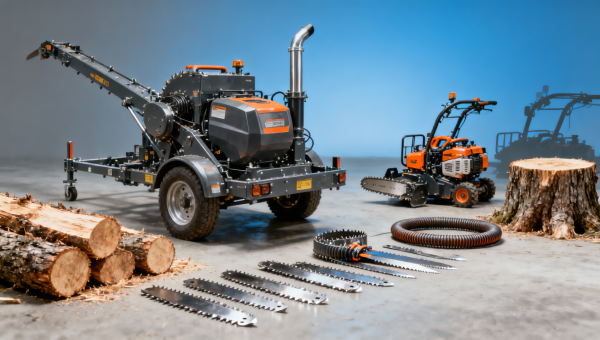
When sourcing wood chipper machines wholesale, early attention to after-sales gaps can prevent costly downtime, safety issues, and weak ROI. For buyers comparing a portable sawmill manufacturer, chainsaw manufacturer, log splitters wholesale, stump grinders commercial, petrol chain saws bulk, brush cutters wholesale, riding ride on mowers, wholesale lawn mowers, and even band sawmills bulk offers, service depth often matters as much as price.
In bulk procurement, the machine specification sheet rarely tells the full story. A 65 hp wood chipper, a hydraulic feed model, or a trailer-mounted unit may look competitive on paper, yet service blind spots often emerge only after installation, operator handover, or the first heavy-duty maintenance cycle. For distributors, forestry contractors, farm operators, and project managers, these blind spots directly affect utilization rates, repair budgets, and contract delivery performance.
This article examines the after-sales gaps buyers should check early when evaluating wood chipper machines wholesale offers. It is designed for technical reviewers, financial approvers, safety teams, equipment users, and channel partners who need a practical framework to compare suppliers beyond price, lead time, and nominal warranty duration.
Why after-sales gaps matter more in wholesale wood chipper procurement
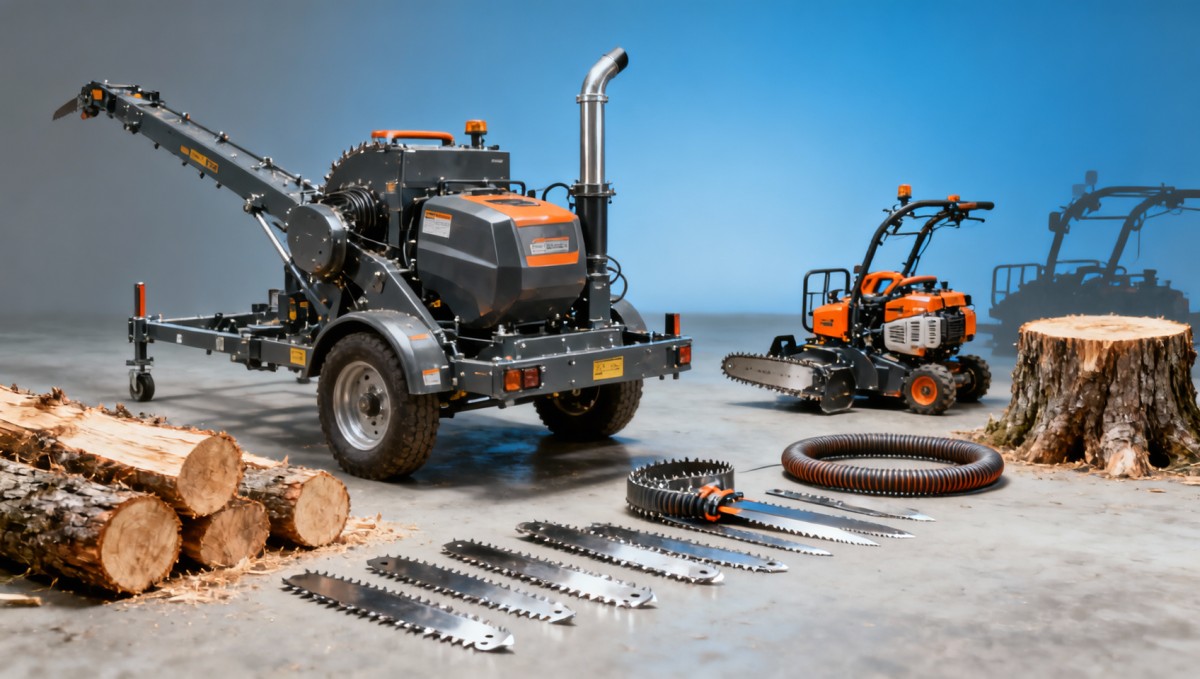
Wood chipper machines operate in demanding environments: forestry residue processing, orchard clearance, biomass feed preparation, municipal landscape waste reduction, and integrated farm maintenance. In these settings, after-sales weakness does not remain a minor inconvenience. A delayed bearing replacement, weak hydraulic troubleshooting support, or poor blade balancing guidance can stop production for 2–7 days and affect multiple crews at once.
Wholesale buyers often focus on unit price, engine power, infeed throat size, and output capacity measured in cubic meters per hour. Those are necessary metrics, but they do not reveal whether the supplier can support 10 machines across 3 sites, supply wear parts within 72 hours, or provide remote diagnostics during peak operating season. For commercial fleets, downtime cost is frequently higher than the savings gained from a lower purchase price.
The risk becomes greater when the procurement basket includes adjacent equipment from a portable sawmill manufacturer or chainsaw manufacturer. Buyers may assume service quality is consistent across categories, yet many vendors outsource support for stump grinders commercial units, log splitters wholesale orders, or band sawmills bulk shipments. That separation creates accountability gaps once field issues appear.
For finance teams, after-sales gaps also affect total cost of ownership over the first 12–36 months. A machine with a 5% lower purchase price may create 15%–25% higher lifecycle expense if the operator training is incomplete, the spare parts package is under-scoped, or service response times are not contractually defined. Procurement decisions should therefore treat after-sales depth as a commercial variable, not a secondary courtesy.
Typical wholesale service failures that appear too late
- Warranty language covers parts only, while labor, travel, and consumables remain excluded.
- Critical wear items such as blades, anvils, belts, feed rollers, and hydraulic seals are not stocked regionally.
- Commissioning support is limited to a manual, with no on-site setup or video guidance for the first 30 days.
- Response time commitments are undefined, leaving dealers or end users waiting 5–10 working days for a technical answer.
- Operator safety retraining is unavailable after staff turnover, increasing misuse risk and accident exposure.
These issues are common across agricultural and forestry machinery. Buyers reviewing wood chipper machines wholesale offers should ask not only “What is the warranty?” but also “What happens in the first breakdown, the first seasonal restart, and the first component failure outside the factory’s time zone?”
The early-check framework: service points to verify before purchase order release
A practical evaluation framework should be used before deposit payment, not after shipment. The goal is to identify whether the supplier’s support model fits your operating environment, machine count, and maintenance capability. In most B2B projects, 6 checkpoints are enough to expose the majority of hidden service risks.
The first checkpoint is technical onboarding. For wood chipper machines, startup errors often arise within the first 20 operating hours. Buyers should verify whether the supplier provides pre-delivery inspection records, installation guidance, and operator training materials in a usable format. PDF manuals alone are rarely sufficient for multi-site fleet deployments.
The second and third checkpoints are spare parts availability and service response timing. Ask which parts are stocked locally, which are factory-only, and what the average dispatch window is for urgent items. A supplier that cannot define dispatch categories for A-parts, B-parts, and consumables is often underprepared for wholesale support.
The fourth through sixth checkpoints cover warranty scope, troubleshooting path, and documentation quality. Many disputes emerge because maintenance boundaries are unclear. For example, blade wear may be classed as consumable, while feed system misalignment may be treated as usage error. That distinction needs to be explicit before contract signing.
A supplier screening table for early comparison
The table below helps procurement and technical teams compare wood chipper after-sales readiness in a structured way. It can also be adapted when reviewing brush cutters wholesale, wholesale lawn mowers, or petrol chain saws bulk offers from the same supplier.
A key conclusion from this comparison is that clarity matters more than broad promises. Buyers should prioritize written procedures, named responsibilities, and measurable timelines. If support language remains vague during negotiation, it usually becomes weaker after delivery.
Six early checks procurement teams should document
- List all consumables and wear parts with expected replacement intervals, such as every 100, 250, or 500 operating hours.
- Require a written fault escalation path from dealer to factory to engineering support.
- Confirm whether remote video diagnosis is available for hydraulic, feed roller, and electrical issues.
- Define warranty claim submission time and evidence requirements, including photos, serial number, and service log.
- Verify language quality of manuals, labels, and safety instructions for local operators.
- Request a recommended spare parts kit for the first 6–12 months of operation.
Service gaps by equipment category and operating scenario
Not all after-sales risks are identical across equipment types. A wood chipper used for municipal landscape maintenance faces different service priorities than a heavy-duty chipper integrated into a biomass preparation line. Similarly, a dealer carrying products from a portable sawmill manufacturer, riding ride on mowers supplier, and chainsaw manufacturer may need different parts stocking logic for each category.
For wood chipper machines wholesale, the most common service-sensitive components include the feed system, blade set, anvil adjustment, belt transmission, rotor balancing, hydraulic hoses, and engine-related service parts. In field conditions with dust, moisture, and variable feedstock, consumable turnover can accelerate by 20%–40% compared with light-duty demonstration conditions.
Multi-category buyers should therefore compare not only machine performance but also the maturity of support for adjacent products. A supplier may be strong in petrol chain saws bulk fulfillment yet weak in large rotor chipper troubleshooting. Another may handle wholesale lawn mowers well but rely on third parties for band sawmills bulk installation support. These inconsistencies matter when you want one vendor relationship to support multiple asset classes.
The table below shows how service priorities shift by product type and use case. It is especially useful for distributors and project managers building mixed equipment portfolios for forestry, farm maintenance, or biomass contracting businesses.
The comparison shows why buyers should not copy one service checklist across all categories. Each machine type has a different failure profile, different operator skill threshold, and different minimum spare parts strategy. A good wholesale program reflects those differences instead of offering one generic support statement for every product line.
Scenario-based service planning
For farm operators using 1–3 wood chippers seasonally, the priority is usually a fast-moving wear kit, video troubleshooting, and simple maintenance intervals. For industrial biomass processors running daily shifts, the requirement expands to preventive maintenance schedules, secondary blade sets, and access to field technicians within defined response windows.
Distributors and agents need another layer: technical documents for resale, claim handling authority, and parts forecasting support. If these tools are absent, the dealer becomes a message relay rather than a value-adding channel partner, weakening both customer experience and repeat business potential.
How to write stronger after-sales terms into contracts and purchase workflows
The best time to close after-sales gaps is during RFQ evaluation, commercial negotiation, and purchase order drafting. Once the machine is shipped, leverage drops sharply. Buyers should translate service expectations into written commercial clauses with measurable triggers, not informal chat history or sales assurances.
A strong contract for wood chipper machines wholesale should define at least 5 core items: warranty duration, exclusions, spare parts lead time, first response time, and commissioning responsibility. If the order volume exceeds 5 units, it is also reasonable to ask for a recommended site-specific spare parts list and a training matrix for operators, mechanics, and supervisors.
For project managers and engineering leads, acceptance criteria should be separated into factory acceptance, delivery inspection, and site performance confirmation. This 3-stage approach reduces disputes caused by transit damage, setup errors, or fuel and feedstock variability. It also helps finance teams release payments against objective milestones rather than subjective satisfaction.
Service language should also align with risk ownership. If the supplier requires maintenance logs every 50 or 100 operating hours to preserve warranty validity, that condition must be realistic for the buyer’s actual staffing model. Otherwise the warranty becomes nominal rather than useful.
Commercial clauses worth adding
- First technical response within 8, 12, or 24 working hours depending on issue severity.
- Dispatch commitment for critical parts within 48–72 hours if stock is available.
- A mandatory startup checklist signed by both supplier and site operator.
- A defined list of consumables versus defect-related components.
- Remote support availability during the first 30–60 days after installation.
A simple 5-step procurement workflow
- Shortlist 3–4 suppliers based on technical fit and service transparency.
- Request service documents, parts lists, warranty wording, and response commitments.
- Score each vendor with procurement, maintenance, and safety teams together.
- Write service clauses into PO, contract, or distributor agreement before deposit release.
- Prepare receiving inspection, training attendance, and maintenance log templates before delivery.
This process is particularly useful when one sourcing round includes wood chippers, brush cutters wholesale products, and riding ride on mowers. Standardized review reduces the risk of overlooking service asymmetry between product lines.
FAQ for buyers, users, and distributors reviewing wood chipper machines wholesale offers
The questions below reflect recurring concerns from procurement teams, field operators, and dealer networks. They can help refine RFQs and internal approval discussions before final supplier selection.
How long should spare parts support remain available?
For commercial equipment, buyers should expect visibility on wear parts for immediate use and support continuity for key service components over several years. In practical terms, ask for a 6–12 month recommended consumables package at purchase and written confirmation that major service parts can be supplied through the model’s active lifecycle. Even if no fixed long-term term is promised, the supplier should clearly state which parts are standard, optional, or made to order.
What is the most overlooked after-sales document?
The startup and handover checklist is often overlooked. This document should record fluid checks, bolt torque confirmation, blade setup, emergency stop testing, guard verification, and operator instruction completion. Without it, it becomes difficult to distinguish factory defect, transit issue, and setup-related failure during the first 50 operating hours.
Is a longer warranty always better?
Not necessarily. A 24-month warranty with broad exclusions may be less valuable than a 12-month warranty with clear labor support, rapid response, and good parts availability. Buyers should compare not just duration but claim conditions, excluded items, evidence requirements, and local support capacity.
Which teams should be involved in supplier evaluation?
At minimum, include procurement, operations, maintenance, and safety. For larger orders, also involve finance and regional distribution stakeholders. A 4–6 person review group is usually enough to capture commercial, technical, and compliance concerns without slowing the decision process excessively.
For serious buyers, the central lesson is straightforward: wood chipper machines wholesale decisions should be based on service readiness as much as machine output and price. Early checks on response time, parts stocking, training depth, warranty boundaries, and escalation procedures can reduce downtime, improve operator safety, and protect ROI across the first 12–36 months of use.
Whether you are comparing a wood chipper supplier with a portable sawmill manufacturer, evaluating mixed fleets that include stump grinders commercial models and log splitters wholesale units, or building a dealer portfolio around multiple outdoor power categories, disciplined after-sales due diligence creates stronger procurement outcomes. To assess supplier fit more accurately, contact us to discuss your sourcing criteria, request a tailored evaluation checklist, or explore more solution-focused procurement insights for agricultural and forestry machinery.
Related Intelligence
- Forestry EquipmentWhat to Check Before Buying Used Forestry EquipmentForestry equipment buyers: learn what to check before buying used units, from engine hours and hydraulics to safety, parts support, and Supply Chain Transparency.
- Forestry EquipmentWhy log splitters wholesale pricing can mislead on total costLog splitters wholesale prices can hide freight, compliance, parts, and downtime costs. Compare band sawmills bulk, wood chipper machines wholesale, and wholesale lawn mowers smarter.
- Forestry EquipmentCommercial stump grinders: the spec mismatch that slows jobsStump grinders commercial buyers: avoid costly spec mismatches that slow jobs. Compare fleet fit with a portable sawmill manufacturer, chainsaw manufacturer, log splitters wholesale, and more.
The Morning Broadsheet
Daily chemical briefings, market shifts, and peer-reviewed summaries delivered to your terminal.
