
Commercial stump grinders: the spec mismatch that slows jobs
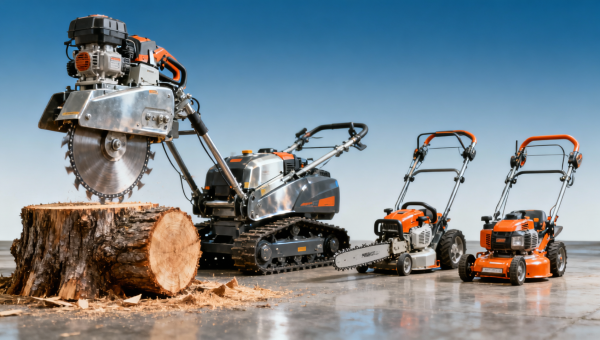
Choosing stump grinders commercial fleets should be straightforward, yet spec mismatches often undermine productivity, safety, and ROI. For buyers comparing a portable sawmill manufacturer, chainsaw manufacturer, or suppliers offering log splitters wholesale, wood chipper machines wholesale, petrol chain saws bulk, brush cutters wholesale, riding ride on mowers, wholesale lawn mowers, and even band sawmills bulk, the real challenge is matching machine capability to site demands, operator skill, and total lifecycle cost.
In commercial forestry, land clearing, municipal grounds maintenance, and estate management, stump grinders are rarely purchased in isolation. They are part of a broader equipment ecosystem where throughput, transportability, labor availability, and maintenance discipline all affect daily output. A machine that looks competitive on paper can quickly become a bottleneck if cutter head geometry, engine power, hydraulic flow, or access width do not match actual site conditions.
For technical evaluators, project managers, operators, and financial approvers, the most expensive mistake is not always buying too little machine or too much machine. It is buying the wrong specification for the job mix. When that happens, cycle times stretch, fuel burn rises, wear parts disappear faster, and crews either work below capacity or take avoidable safety risks.
This article examines where commercial stump grinder specification mismatches occur, how they affect productivity across mixed machinery fleets, and what procurement teams should verify before committing capital. It also connects stump grinder selection with adjacent purchasing decisions often made by distributors, contractors, and industrial land operators sourcing multiple outdoor power and wood-processing machines together.
Why commercial stump grinder spec mismatch is a recurring fleet problem
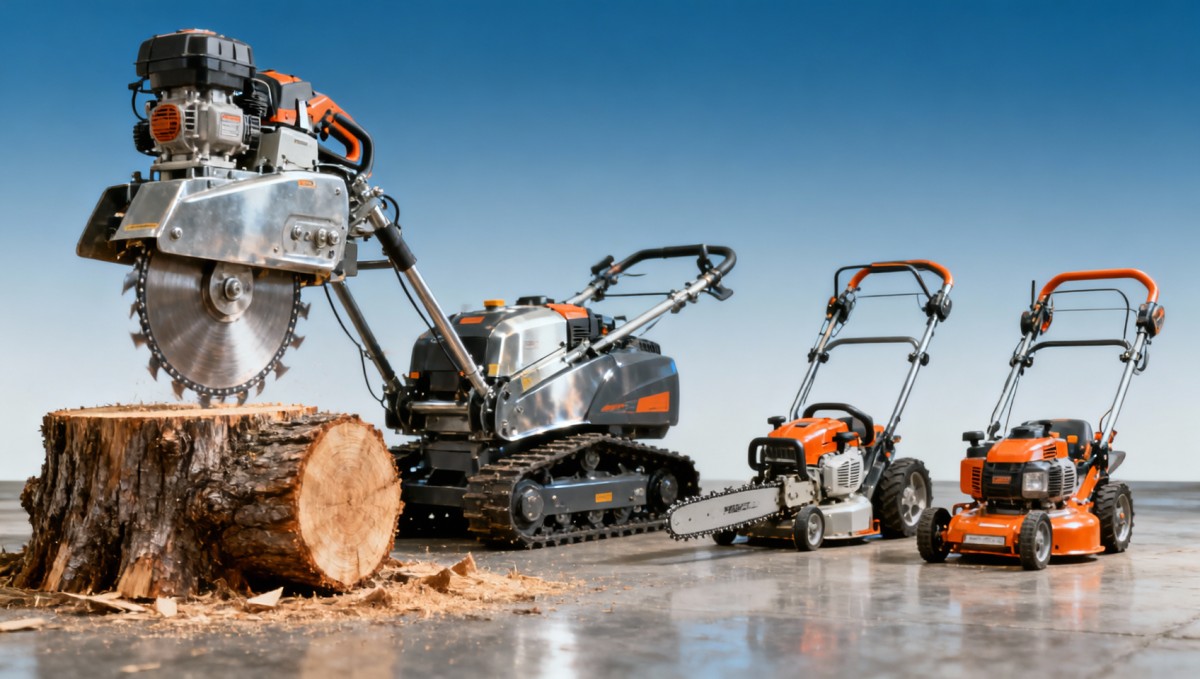
A specification mismatch usually starts with an oversimplified buying question: “How large a stump can this machine handle?” In practice, commercial performance depends on at least 6 variables at once: stump diameter, wood species density, root flare spread, ground gradient, access width, and required daily volume. A grinder that clears 20 medium stumps in soft ground may struggle to finish 8 dense hardwood stumps on compacted roadside edges within the same shift.
The mismatch is especially common when buyers source from a broad outdoor equipment catalog. A dealer comparing commercial stump grinders with brush cutters wholesale, wood chipper machines wholesale, and wholesale lawn mowers may focus on list price, engine size, or transport convenience, while overlooking torque delivery, tooth system, or sweep pattern efficiency. That creates a gap between advertised capability and real production output.
Commercial users also face labor variability. A unit that performs well with a highly experienced operator may lose 15% to 30% of expected throughput when assigned to a newer crew member. Controls, visibility, machine balance, and cutter wheel response matter more in field conditions than a headline horsepower figure alone. For fleet managers, this means specification should be matched not only to terrain and stump volume, but also to operator skill bands.
Another issue is duty cycle. Many organizations buy for peak demand, but operate mainly in mixed, intermittent service. Others buy lighter machines expecting them to cover heavy weekly workloads. In both cases, utilization becomes distorted. Under-spec machines generate excessive wear and longer job times, while over-spec machines inflate acquisition cost, trailer requirements, and idle capital burden.
Common mismatch patterns seen in commercial procurement
- Selecting based on engine power only, without checking cutter wheel diameter, tooth count, and hydraulic response.
- Buying a narrow-access unit for frequent large-diameter hardwood removal above 500 mm.
- Choosing a high-capacity self-propelled grinder for sites where transport frequency is high but on-site grinding volume is low.
- Ignoring tooth replacement intervals, leading to maintenance downtime every 20 to 40 operating hours in abrasive conditions.
- Deploying one universal machine across municipal, orchard, forestry, and utility line clearance work with very different access and depth requirements.
How mismatch shows up operationally
On the job, mismatch appears as repeated repositioning, slow lateral sweep, shallow effective cut depth, unstable handling on side slopes, and a high ratio of tooth wear to stump volume processed. Over a 4- to 6-week project window, these issues can turn a machine with an attractive purchase price into a poor-cost asset.
The specifications that actually determine productivity, safety, and cost
Commercial buyers should assess stump grinders through a multi-factor lens. Engine output remains important, but usable grinding performance depends on how power reaches the cutter wheel, how efficiently the machine maintains momentum under load, and whether the platform remains stable across uneven ground. In many cases, a balanced 35 hp to 60 hp machine outperforms a nominally stronger unit if the drivetrain and cutter geometry are better optimized for the site mix.
Access width is another decisive factor. Contractors serving residential estates, golf facilities, orchards, and municipal rights-of-way often encounter gates, paths, and verge constraints between 800 mm and 1,200 mm. A grinder that cannot enter the work area creates immediate productivity loss because the crew must either add manual cutting steps or deploy secondary equipment. That is why transport dimensions should be reviewed alongside grinding depth and swing range.
Cutting depth below grade matters because many commercial contracts require finish levels suitable for replanting, paving, or turf restoration. Typical below-grade requirements range from 150 mm to 300 mm, but utility or redevelopment projects may need more. If the machine only reaches the target depth slowly, the practical output per hour falls sharply even when advertised stump diameter capacity appears adequate.
Maintenance design also shapes total cost. Tooth systems that can be indexed or replaced quickly may reduce service stoppage by 20 to 30 minutes per event. Over a fleet running 5 days per week, that difference becomes significant. Financial approvers should therefore compare not only capital price, but also consumable cost, service interval predictability, and parts availability through dealers or distributors.
Key parameters to verify before purchase
The table below summarizes the practical specification areas that most strongly influence job speed, operator confidence, and lifecycle cost in a commercial setting.
The key lesson is that no single number defines a good commercial stump grinder. Buyers should score at least 4 areas together: output, access, maintainability, and operator fit. If one of those is weak, the machine may still sell well but underperform in contract execution.
Practical benchmark questions for evaluators
- How many stumps per shift must the unit process at 250 mm, 400 mm, and 600 mm diameter categories?
- What percentage of jobs require passage through sub-1,000 mm access points?
- How often will the machine be trailered in a typical week: 1 to 2 times or 5 to 8 times?
- What is the expected tooth inspection or replacement interval under local soil contamination levels?
Matching stump grinder classes to real site conditions and adjacent equipment fleets
Commercial procurement decisions become more accurate when stump grinders are evaluated as part of a site workflow rather than as stand-alone assets. A contractor clearing shelterbelts, orchard rows, or storm-felled timber may also be sourcing petrol chain saws bulk, log splitters wholesale, and wood chipper machines wholesale. In that environment, the grinder should fit the material handling sequence, truck or trailer capacity, and crew size already in use.
For example, a two-person crew handling light arboricultural work in urban areas often benefits from compact tracked or wheeled units that can move quickly and enter restricted spaces. By contrast, industrial land reclamation and utility corridor work may justify heavier self-propelled machines with deeper cutting range and stronger hillside control. The wrong class selection usually reveals itself in support costs: too many truck movements, too much manual pre-cutting, or too much waiting time between machines.
Distributors and dealers should also consider customer segmentation. A machine suited to a municipal grounds department running 10 to 15 hours per week is not automatically right for a contractor operating 35 to 50 hours per week in mixed hardwood conditions. Sales catalogs that group all stump grinders under one commercial label often blur this distinction, which is why application mapping is essential before stocking or recommending units.
The comparison below helps align machine class with use case, crew structure, and broader fleet behavior. It can also support discussions with buyers who are evaluating stump grinders alongside ride on mowers, brush cutters wholesale programs, and sawmill-related equipment for integrated grounds or timber operations.
Application-fit comparison by grinder class
A useful procurement rule is to match the machine to the workload that represents at least 60% to 70% of annual revenue-generating use, not to the rarest extreme task. Special-case jobs can often be subcontracted or assigned to a second-tier rental strategy more efficiently than overbuying the entire fleet.
Site variables that should be recorded before final selection
- Average stump diameter bands and estimated daily stump count.
- Frequency of slopes above 10 degrees and presence of loose or saturated ground.
- Required transport frequency and available towing capacity.
- Interaction with other fleet assets such as chippers, saws, loaders, and mowers.
Procurement, safety, and lifecycle controls that reduce mismatch risk
A reliable commercial procurement process should move through 5 stages: workload definition, technical screening, operator review, support verification, and total-cost approval. Skipping any of these steps increases the chance of spec mismatch. In many buying teams, finance focuses on upfront price, operations focuses on immediate capacity, and safety focuses on guarding and control layout. The best decisions happen when these views are merged before purchase, not after deployment issues appear.
Safety and quality managers should pay particular attention to debris control, emergency stop accessibility, guarding integrity, visibility from the operating position, and vibration exposure over long shifts. A stump grinder that is technically capable but difficult to control in uneven terrain can increase incident risk, especially during repetitive work cycles lasting 6 to 8 hours. Operator fatigue should be treated as a purchasing factor, not merely a training issue.
After-sales support is another decisive variable. Commercial fleets should verify normal lead times for wear parts, response windows for service requests, and dealer capacity to supply replacement teeth, belts, filters, and hydraulic components. A low-price unit becomes expensive quickly if parts lead time extends beyond 7 to 10 working days during the active season. This is particularly relevant for distributors managing multiple product lines from chainsaws to band sawmills bulk programs.
Lifecycle planning should include expected annual hours, tooth consumption, fuel profile, trailer or transport implications, and operator training needs. Even a difference of 0.5 to 1.0 labor hours per day due to a poor machine fit can erase any initial savings within one operating season. That is why professional buyers increasingly use a cost-per-stump or cost-per-operating-hour model rather than relying on purchase price comparisons alone.
A practical commercial procurement checklist
The following checklist can help buyers, dealers, and project leads screen machines more consistently before issuing purchase orders or stocking decisions.
Used correctly, this checklist reduces the likelihood of buying a unit that looks aligned in a quotation sheet but fails under real production conditions. It also helps cross-functional teams agree on measurable selection criteria instead of relying on assumptions or sales language.
FAQ for buyers and technical reviewers
How many machine categories should a mixed contractor fleet consider?
For many regional contractors, 2 categories are enough: a compact access-focused grinder and a mid- to high-output production unit. A single-machine strategy can work only when job profiles are tightly concentrated and access conditions are predictable.
Is the biggest machine always the cheapest per stump?
No. Cost per stump improves only when the machine is utilized at a level that justifies its transport, fuel, maintenance, and financing burden. If heavy units spend long periods idle or cannot access a high share of sites, the economics weaken quickly.
What should distributors ask before recommending a model?
At minimum, ask about weekly operating hours, common stump diameter, access constraints, soil and debris conditions, and whether the buyer already runs related assets such as chainsaws, chippers, splitters, or sawmills. Those 5 questions often reveal mismatch risk immediately.
Commercial stump grinder performance is defined less by headline specification than by fit: fit to terrain, fit to stump volume, fit to operator capability, and fit to the wider fleet. When that alignment is right, productivity improves, maintenance becomes more predictable, and procurement decisions stand up better under financial and operational review.
For manufacturers, distributors, and industrial buyers evaluating forestry and grounds equipment portfolios, a disciplined specification process can prevent slow jobs, underused assets, and avoidable safety exposure. If you are assessing stump grinders alongside chainsaws, chippers, mowers, splitters, or sawmill equipment, now is the right time to compare workload requirements against actual machine capability.
Contact us to discuss application-specific selection criteria, request a tailored equipment comparison, or explore broader commercial machinery sourcing strategies for forestry, land management, and primary processing operations.
Related Intelligence
- Forestry EquipmentWhat to Check Before Buying Used Forestry EquipmentForestry equipment buyers: learn what to check before buying used units, from engine hours and hydraulics to safety, parts support, and Supply Chain Transparency.
- Forestry EquipmentBand sawmills in bulk: where downtime costs really add upBand sawmills bulk buying reveals how downtime drives real costs. Compare portable sawmill manufacturer support, log splitters wholesale, and wood chipper machines wholesale for better uptime.
- Forestry EquipmentPortable sawmill manufacturer claims that deserve a closer lookPortable sawmill manufacturer insights for buyers comparing band sawmills bulk, log splitters wholesale, stump grinders commercial, and wood chipper machines wholesale.
The Morning Broadsheet
Daily chemical briefings, market shifts, and peer-reviewed summaries delivered to your terminal.
