
Petrol chain saws bulk orders: why bar and chain fit matters
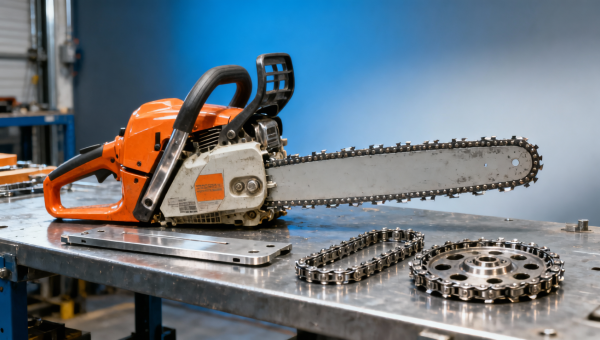
For buyers comparing petrol chain saws bulk options, bar and chain fit is not a minor detail—it directly affects cutting efficiency, operator safety, maintenance cycles, and total cost of ownership. Whether you source from a chainsaw manufacturer, evaluate alongside wood chipper machines wholesale lines, or manage mixed forestry equipment portfolios, understanding fit standards helps procurement, technical, and compliance teams reduce risk and make more reliable purchasing decisions.
In bulk procurement, a chain saw is rarely judged only by engine displacement or unit price. Fleet managers, distributors, and forestry contractors also need to know whether the guide bar, saw chain, drive sprocket, and oiling system work as a matched system under sustained use. A mismatch of even 0.043", 0.050", 0.058", or 0.063" gauge can lead to unstable tracking, abnormal wear, and avoidable downtime.
For technical evaluators and safety managers, fit matters because it influences kickback behavior, chain retention, lubrication consistency, and service intervals. For finance approvers, it matters because poorly matched cutting systems can shorten bar life by 20%–40% in demanding forestry conditions, especially when crews run 6–8 hours per shift. For distributors, correct specification reduces returns, claims, and post-sale troubleshooting costs.
This article explains what bar and chain fit really means in petrol chain saws bulk orders, how to assess compatibility in commercial purchasing, and which checkpoints should appear in RFQs, technical reviews, and incoming inspection workflows.
Why bar and chain fit becomes a commercial risk in bulk orders
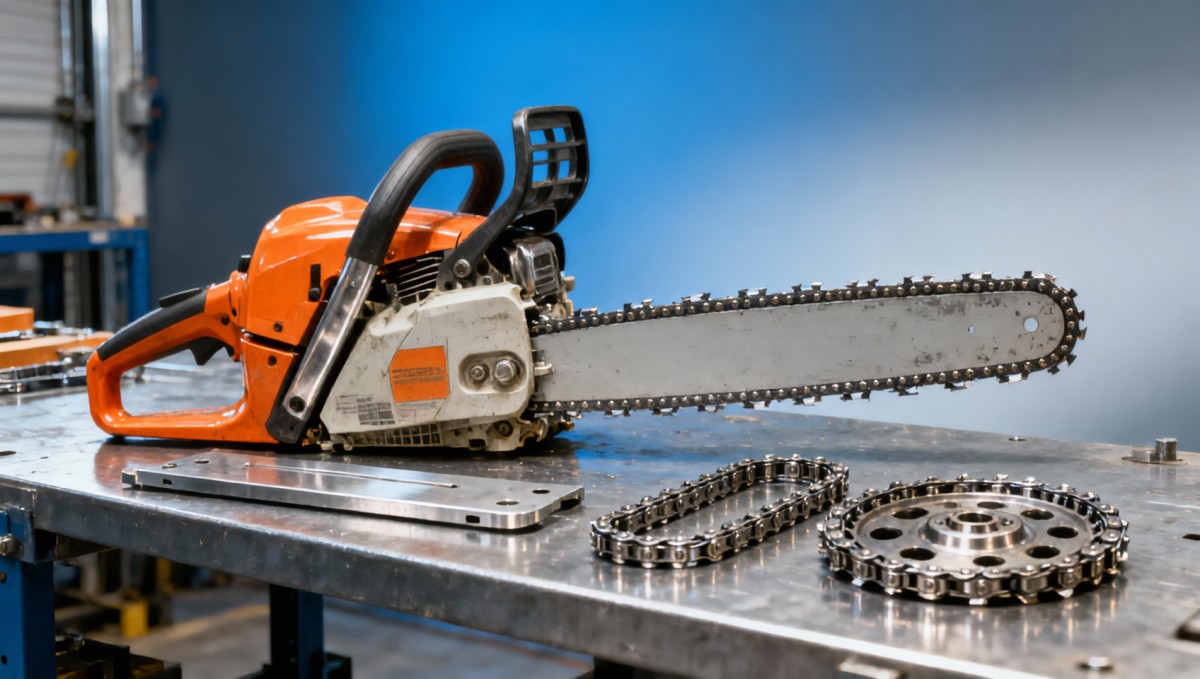
In single-unit retail sales, a buyer may tolerate some trial and error. In bulk orders of 50, 200, or 1,000 petrol chain saws, that approach becomes expensive. A chain saw cutting system depends on four linked dimensions: bar mount pattern, chain pitch, chain gauge, and drive link count. If one variable is wrong, field compatibility can fail even when the engine starts and the unit appears operational during basic inspection.
A typical procurement problem appears when buyers compare products from different chainsaw manufacturers using only engine size, such as 45cc, 52cc, or 58cc. Two saws with the same displacement may require different bar tail mounts, tensioner positions, and sprocket profiles. That means a spare-parts strategy built around “same cc class” can quickly break down across mixed fleets.
Operationally, poor fit increases three immediate risks. First, chain derailment probability rises when gauge and bar groove dimensions do not match tightly enough. Second, uneven chain tension creates unstable cutting, particularly in hardwood, frozen timber, or dirty agricultural shelterbelt work. Third, lubrication can become inconsistent when oil holes and bar slots are not correctly aligned, leading to accelerated heat buildup within 15–30 minutes of heavy cutting.
For B2B buyers, this is not only a maintenance issue. It affects workforce productivity, spare-parts planning, warranty handling, and legal exposure. A distributor serving 5 regional dealers, for example, may need to carry 3 chain gauges, 2 pitches, and 4 bar lengths. Without standardization, inventory complexity can double while parts turnover slows.
The four compatibility dimensions procurement teams should verify
- Bar mount pattern: confirms stud spacing, oil feed position, and chain tensioner interface.
- Chain pitch: common commercial sizes include 0.325", 3/8", and 0.404", each affecting cutting behavior and sprocket compatibility.
- Chain gauge: common ranges include 0.043", 0.050", 0.058", and 0.063"; mismatch with bar groove creates instability or binding.
- Drive link count: determines exact chain loop length for specific bar and saw configurations.
The table below shows how these variables affect bulk purchasing decisions across fleet, dealer, and project-based use cases.
The key takeaway is simple: “bar and chain fit” is not one specification but a system-level requirement. Bulk buyers who document all four factors usually reduce replacement confusion and service calls during the first 90 days after delivery.
How correct fit affects performance, safety, and total cost of ownership
A petrol chain saw that has the right bar and chain fit cuts faster and with more predictable feed pressure. In commercial forestry, orchard clearance, and farm maintenance, that can translate into measurable labor savings. If a crew gains only 5–8 minutes per hour through smoother cuts and fewer tension adjustments, the annual impact across 20 machines and a 180-day season becomes significant.
Safety is equally important. Kickback behavior is influenced by several variables, including chain type, nose radius, operator technique, and depth gauge setting, but improper fit increases instability. A loose gauge-to-groove relationship allows side movement, while wrong pitch-to-sprocket pairing can cause shock loading. Both conditions raise the likelihood of irregular chain motion under hard entry cuts.
Maintenance costs also rise when the cutting system is mismatched. A bar that does not align well with the saw’s oil delivery path may run dry at the rails. In busy contractor use, bars are often flipped every 1–2 sharpening cycles to even out wear. If lubrication is poor from the start, rail mushrooming and nose wear can appear much earlier, reducing expected service life.
For finance teams, total cost of ownership should include more than purchase price. It should account for chain replacement frequency, technician time, lost cutting hours, warranty administration, and emergency spare procurement. In some fleets, a lower-priced saw package becomes more expensive within 6–12 months if accessories are non-standard or bar-chain fit is inconsistent across shipments.
Typical fit-related cost drivers
- Higher chain consumption due to derailment, uneven wear, or tension instability.
- More service labor spent checking mounts, replacing bars, and diagnosing lubrication complaints.
- Increased downtime when field teams cannot share interchangeable bars and loops.
- Greater safety review burden when units show inconsistent cutting behavior across operators.
Where mixed equipment portfolios create hidden costs
The problem is especially visible when chain saws are purchased alongside wood chipper machines wholesale programs or other forestry equipment. Procurement teams often consolidate vendors to simplify logistics, but if chain saw accessories are not standardized, the parts room becomes more complex, not less. One site may end up storing 14", 16", 18", and 20" bars with different mounts that appear similar but are not interchangeable.
That is why technical fit review should happen before contract award, not after goods arrive. Commercial alignment between purchasing, service, and operators can prevent avoidable lifecycle cost inflation.
Key specification checks before placing a petrol chain saw bulk order
Before issuing a purchase order, buyers should require a structured specification sheet rather than a generic product brochure. At minimum, the supplier should state engine class, recommended bar lengths, chain pitch, chain gauge, drive link counts by bar length, sprocket type, and bar mount drawing or cross-reference. Missing any of these points can create ambiguity during receiving and aftermarket support.
Commercial buyers should also ask whether the saw is optimized for light farm work, general forestry, or heavier harvesting conditions. For example, a 45cc to 52cc petrol chain saw commonly pairs with 16"–18" bars, while larger units in the 58cc to 62cc range may support 18"–20" setups more effectively. However, the “supported” range is not enough; the approved chain loops and sprocket combinations must be documented.
Incoming quality teams should verify dimensions physically on a sample basis. Measuring bar groove width, checking bar slot alignment, and confirming chain loop markings can catch packaging or substitution errors before full deployment. In many distribution environments, checking 3%–5% of cartons from each lot is a practical start, with tighter inspection on first orders.
Below is a practical pre-order checklist that helps procurement, engineering, and QA teams align on fit requirements.
The table highlights a broader point: fit should be verified at drawing level, accessory level, and receiving level. A quotation that lists only “guide bar included” is not sufficient for commercial-volume decision making.
Questions distributors and project buyers should ask suppliers
- Are bars and chains from future batches guaranteed to remain interchangeable for at least 12 months?
- Can the supplier provide separate spare bar and spare chain packing labels with pitch, gauge, and drive link count clearly marked?
- Is there one standard fit platform for multiple engine sizes, or does each model require different accessories?
- What inspection records or dimensional checks are performed before shipment?
Implementation, inspection, and fleet standardization strategies
Once the order is placed, the next challenge is making sure specification accuracy survives packaging, shipment, warehousing, and deployment. Bulk buyers should treat the chain saw cutting system as a controlled assembly, not as a loose accessory bundle. A practical rollout usually includes 4 stages: sample validation, pre-shipment review, incoming inspection, and operator release.
Sample validation should test at least 2–3 complete saw assemblies under realistic load conditions. This includes hot-cut performance, chain oil flow, tension retention after 20–30 minutes of work, and re-start behavior. If the intended application includes orchards, eucalyptus, bamboo, or mixed hardwood, sample cutting should reflect those materials rather than only clean softwood.
Incoming inspection should not stop at carton counts. Teams should confirm that the installed bar matches the approved length and mount, that spare loops have the correct drive link count, and that identification labels are readable. In larger projects, a first-batch quarantine of 24–48 hours is often worthwhile to prevent incompatible parts from entering operator circulation.
Standardization delivers the biggest long-term gain. If a buyer can narrow a fleet to 1 or 2 approved bar-chain platforms across multiple petrol chain saw models, spare inventory becomes easier to forecast. That can simplify training, reduce wrong-part issuance, and improve replenishment planning for distributors operating across several service territories.
A practical implementation flow
- Approve one master specification sheet for each petrol chain saw model and bar length combination.
- Lock pitch, gauge, drive links, and mount detail into the purchase order and packing list.
- Inspect first-batch samples against the approved matrix before issuing goods to operators.
- Train service staff and dealers to reorder by full fit code, not by engine size alone.
- Review wear rates after the first 60–90 days and adjust stocking levels accordingly.
Common mistakes to avoid
One common mistake is assuming aftermarket bars from one supplier will fit all saws in the same displacement category. Another is failing to align spare chain labeling with the installed bar length. A third is mixing low-profile and standard chain assumptions without checking the sprocket and intended use profile. These mistakes are small on paper but expensive in warehouse and field operations.
For quality and safety personnel, documenting the fit matrix is also useful during incident review. If a chain retention or lubrication complaint appears, the team can quickly determine whether the issue relates to wear, misuse, or an underlying compatibility error introduced at ordering or receiving stage.
Frequently asked procurement questions about bar and chain fit
Procurement teams, operators, and distributors often raise the same questions when evaluating petrol chain saws bulk orders. The answers below reflect common commercial practice and can help build clearer RFQs, better spare-parts plans, and safer deployment standards.
How do we know whether two chain saw models can share the same bar and chain?
Do not rely on engine size alone. Confirm the bar mount pattern, pitch, gauge, drive link count, and sprocket specification. Two saws may both run 18" bars, but if one uses a different mount slot or tensioner hole position, interchangeability fails. For fleet use, ask suppliers for a compatibility matrix covering at least the next 12 months of spare supply.
What should distributors stock first for after-sales support?
Start with the top 2 or 3 highest-turning bar lengths and their exact matching chain loops. For many general-purpose petrol chain saw programs, that means focusing on 16" and 18" combinations first. Stocking complete fit sets instead of loose mixed parts reduces picking errors and helps dealers support end users faster.
How long is a reasonable inspection and approval cycle for first-time orders?
For a first commercial order, many buyers allow 7–15 days for sample review and technical confirmation, then an additional pre-shipment check before dispatch. If the project includes multiple bar lengths or cross-regional distribution, the review window may extend to 2–4 weeks to complete documentation, packaging checks, and service team alignment.
Does fit matter as much if the units are low-cost farm saws?
Yes. In lower-cost product tiers, dimensional inconsistency can actually be more important to monitor because accessory tolerance control may vary between production batches. Buyers seeking value should not reduce fit verification; they should increase it, especially for initial orders and replacement parts planning.
For institutional buyers, the main lesson is that a petrol chain saw is not just an engine with a bar attached. It is a matched cutting system whose field performance depends heavily on bar and chain fit accuracy. Getting that fit right improves cutting consistency, simplifies spare strategy, supports safer operation, and protects lifecycle cost across bulk orders.
If you are comparing chain saw manufacturers, building a forestry equipment range, or integrating chain saws with broader agricultural and wood-processing procurement, a documented compatibility matrix should be part of every serious evaluation. To discuss bulk-order specifications, accessory standardization, or fit-checking workflows in more detail, contact us to get a tailored solution, review product details, and explore more procurement-focused equipment insights.
Related Intelligence
- Forestry EquipmentWhat to Check Before Buying Used Forestry EquipmentForestry equipment buyers: learn what to check before buying used units, from engine hours and hydraulics to safety, parts support, and Supply Chain Transparency.
- Forestry EquipmentWhy log splitters wholesale pricing can mislead on total costLog splitters wholesale prices can hide freight, compliance, parts, and downtime costs. Compare band sawmills bulk, wood chipper machines wholesale, and wholesale lawn mowers smarter.
- Forestry EquipmentCommercial stump grinders: the spec mismatch that slows jobsStump grinders commercial buyers: avoid costly spec mismatches that slow jobs. Compare fleet fit with a portable sawmill manufacturer, chainsaw manufacturer, log splitters wholesale, and more.
The Morning Broadsheet
Daily chemical briefings, market shifts, and peer-reviewed summaries delivered to your terminal.
