
Chainsaw manufacturer quality control signs that are easy to miss
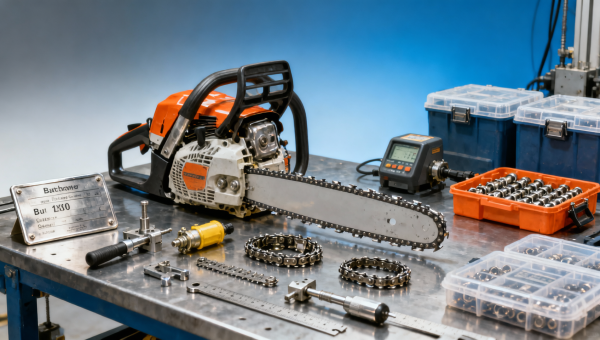
For buyers evaluating a chainsaw manufacturer, the most serious quality risks are often not obvious on the showroom floor or in a product sheet. From hidden inconsistencies in petrol chain saws bulk orders to weak traceability across related lines such as wood chipper machines wholesale and brush cutters wholesale, overlooked control signs can directly affect safety, uptime, warranty costs, and long-term procurement value.
In industrial procurement, a chainsaw is rarely evaluated as an isolated tool. Technical assessors, distributors, forestry operators, project managers, and quality control teams usually review a broader machinery portfolio, supplier discipline, and after-sales responsiveness over a 12–36 month operating cycle. That makes subtle quality control signs more important than cosmetic fit and finish.
For B2B buyers, the challenge is straightforward: many factories can assemble a chainsaw, but far fewer can maintain stable process control across engine lots, guide bar sourcing, chain hardness, vibration performance, emissions consistency, and shipment-level traceability. The easiest signs to miss are often the most expensive when failure rates rise from 1% to 4% across a multi-container order.
This article outlines the overlooked indicators that help buyers assess whether a chainsaw manufacturer is managing quality at the process level, not just at final inspection. It is designed for information researchers, operators, technical reviewers, safety managers, financial approvers, and commercial decision-makers who need sharper procurement criteria before placing volume orders.
Why hidden quality control signs matter more than visible finish
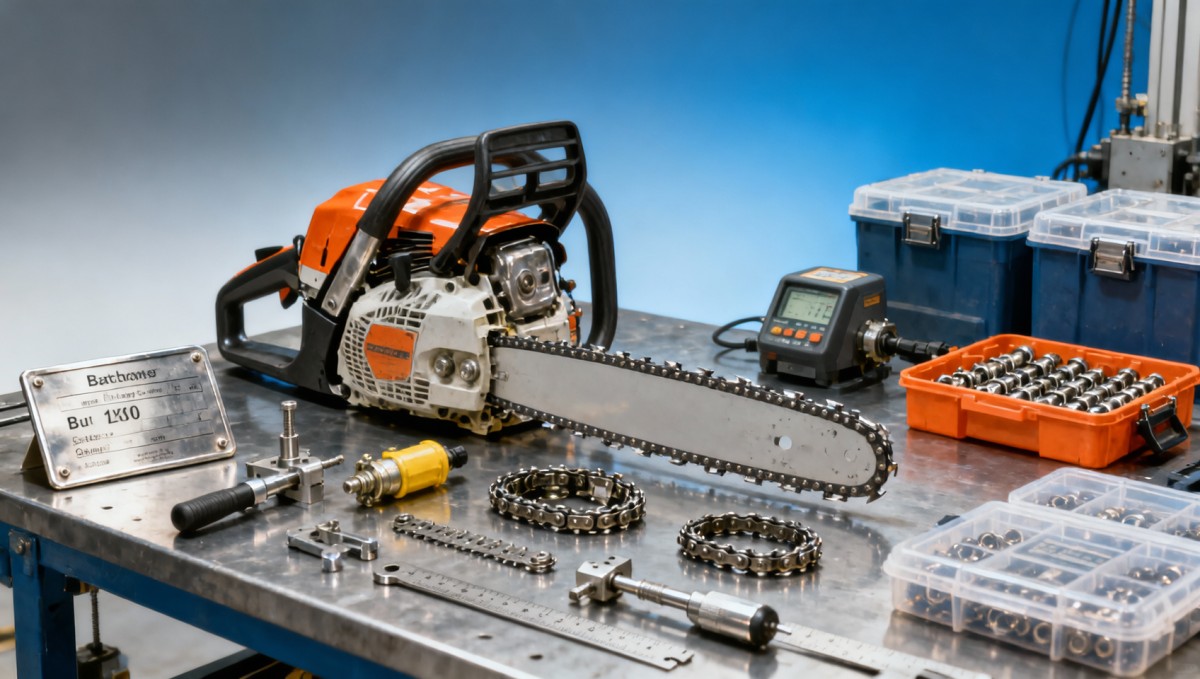
A polished housing, clean paint line, and neat carton print can create a false sense of manufacturing maturity. In chainsaw procurement, however, the higher-risk failures usually come from internal variation: crankcase machining tolerance, carburetor calibration drift, inconsistent ignition coil performance, or poor chain lubrication flow after 20–50 operating hours. These issues often remain invisible during a short demo.
For a chainsaw manufacturer serving forestry, orchard maintenance, municipal clearing, or dealer networks, quality control should be visible in documentation, production discipline, and batch reproducibility. A supplier that cannot explain how it controls torque values, fuel system sealing, idle speed stability, and vibration testing is likely relying too heavily on end-of-line rework.
This risk becomes more serious in mixed-category sourcing. Buyers often review petrol chain saws bulk, wood chipper machines wholesale, and brush cutters wholesale from the same supplier group. If traceability and incoming inspection are weak in one product line, the same management weakness can affect the entire machinery portfolio. That has direct implications for spare parts stocking, warranty forecasting, and distributor reputation.
A practical review should focus on the signals below rather than showroom presentation alone.
Four operational consequences buyers often underestimate
- A 2–3% increase in field failures can erase the price advantage of a lower-cost order once labor, freight, and replacement handling are included.
- Inconsistent starting performance creates immediate usability complaints from operators, even when the unit passes basic factory run testing.
- Poor lot traceability slows containment action, especially when 500–2,000 units are distributed across multiple regions.
- Weak process control in chainsaws often correlates with similar instability in adjacent equipment lines, affecting dealer confidence.
The table below shows how visible product appearance can differ from process-level control indicators that matter more in long-term procurement.
The key conclusion is simple: visible finish may support brand perception, but batch discipline, traceability, and test records are stronger predictors of service cost over the first 6–18 months.
Process control signs that are easy to miss during supplier evaluation
The first overlooked sign is whether the manufacturer controls variation before assembly begins. Many buyers ask about final inspection but skip incoming material control. For a chainsaw manufacturer, critical parts include cylinders, pistons, carburetors, chains, guide bars, oil pumps, recoil starters, and anti-vibration components. If the supplier cannot define acceptance limits for at least 6–8 key parts, final testing becomes a weak safety net rather than a true control system.
The second sign is station-level standardization. A mature production line should have visible work instructions, torque controls for fasteners, calibrated measuring tools, and a clear reaction process for nonconforming units. If assemblies rely heavily on operator experience without documented checkpoints, consistency can drop sharply between shifts, especially when monthly output rises above 3,000–5,000 units.
The third sign is rework dependency. Every factory has some rework, but excessive correction after final test indicates unstable upstream processes. Buyers should ask what percentage of units require adjustment after first pass. A lower figure suggests stronger process capability; a vague answer suggests the factory may not track first-pass yield in a disciplined way.
The fourth sign is whether engineering change control is formal or informal. A chainsaw manufacturer that changes a carburetor source, guide bar hardness treatment, or ignition supplier without controlled documentation can create mixed performance inside the same SKU. That becomes a major issue for distributors handling spare parts, warranty coding, and regional dealer support.
High-value questions for an on-site audit or video factory review
- How many critical components are checked at incoming inspection, and what records are kept per lot?
- What is the typical run-test duration for each assembled chainsaw: 30 seconds, 60 seconds, or longer?
- Can the factory trace one shipment carton back to assembly date, operator station, and engine component batch within 2–4 hours?
- What proportion of units fail the first final test, and what are the top 3 failure modes?
Records worth asking to review
- Calibration logs for torque tools, tachometers, and leak test equipment updated every 6–12 months.
- Incoming inspection sheets tied to supplier lots for chains, bars, carburetors, and oil pumps.
- Final test sheets covering idle speed, chain oiling, brake function, and hot restart checks.
- Corrective action records showing closure time and repeat defect tracking over at least 3 recent months.
For technical evaluation teams, these signs are usually more revealing than a polished plant tour. A factory that can produce records quickly and consistently is often more reliable than one with impressive display samples but fragmented documentation.
The traceability gap across chainsaws, wood chippers, and brush cutters
One of the easiest signs to miss is cross-line inconsistency. Buyers often inspect chainsaws carefully but assume that a supplier offering wood chipper machines wholesale and brush cutters wholesale applies the same quality controls across all product lines. In reality, some manufacturers maintain stronger control in their flagship category and weaker discipline in lower-volume lines.
This matters because multi-product sourcing is common in dealer channels, estate maintenance, municipal contracts, and agricultural operations. If the same supplier uses different coding logic, different inspection depth, or different complaint handling rules across product categories, your purchasing team inherits a hidden systems problem. That can increase spare-part confusion, delay technical response, and weaken warranty accountability across a 3–5 product order mix.
Traceability should connect at least four points: component lot, assembly batch, shipment lot, and after-sales claim. Without this chain, even a simple issue such as abnormal clutch wear or carburetor flooding can expand from a contained 80-unit batch to a distributor-wide review of 800 units. The cost difference between those two scenarios is substantial.
A reliable supplier should also maintain common naming rules and document retention periods across all related machinery categories. If chainsaws are traceable for 24 months but brush cutters are not, that inconsistency should be treated as a management warning sign rather than a paperwork issue.
What cross-line quality maturity looks like
The table below can help procurement and QA teams compare whether a supplier has portfolio-level control or only product-specific control.
If a supplier cannot demonstrate these controls across categories, buyers should plan tighter incoming checks, smaller pilot orders, or product-line-specific contracts instead of assuming uniform reliability.
A practical pilot-order structure
- Start with a 100–300 unit chainsaw batch before moving to multi-container annual commitments.
- If cross-category sourcing is planned, include at least 1 related product line in the same validation phase.
- Track defect categories separately for startup, oiling, chain brake, vibration, and packaging damage.
- Review claim closure speed over the first 30–60 days, not just the delivery date.
This approach gives distributors and project buyers a clearer picture of whether the supplier’s control system is scalable or only convincing during sample approval.
How to verify quality control before committing to volume orders
A smart purchasing process should test both product quality and management capability. For chainsaw procurement, that means combining document review, sample validation, limited pilot shipment, and claim-response measurement. Skipping one of these stages can leave major gaps, especially when annual order values are large or multiple distributors depend on one supply source.
The most effective pre-order verification method is a 4-step qualification path. First, review process documents and traceability logic. Second, test 3–5 samples from more than one batch, not only preselected showroom units. Third, place a controlled pilot order with acceptance criteria. Fourth, assess how the manufacturer responds to nonconformities within a fixed period such as 7 business days.
For financial approvers, this structure also supports better cost forecasting. A slightly higher unit price can still produce lower total ownership cost if first-pass quality is stable, parts compatibility is consistent, and issue containment is faster. The hidden cost drivers are often warranty freight, technician time, retailer credits, and emergency replacement stock rather than the ex-factory price alone.
Below is a practical decision framework that procurement teams can adapt during supplier shortlisting.
Suggested pre-order validation checklist
This type of matrix helps technical teams, QA managers, and finance stakeholders align around measurable control points instead of subjective supplier impressions.
Common mistakes during qualification
- Approving a manufacturer based on one polished sample without checking batch-to-batch repeatability.
- Accepting “we inspect everything” without requesting actual records or defect trend reports.
- Treating chainsaw sourcing separately from other outdoor power equipment lines when the same factory system serves all of them.
- Comparing only unit price while ignoring warranty, service, and claim administration costs over 12 months.
When these verification steps are built into the RFQ and supplier approval process, decision-makers gain a more realistic picture of operating risk before contracts are signed.
FAQ for buyers, distributors, and quality teams
How many samples should be tested before approving a chainsaw manufacturer?
For a first evaluation, 3–5 samples is a practical minimum, but they should come from at least 2 production batches if possible. If the order is large, such as one or more container loads, a pilot run of 100–300 units provides a much better picture of consistency than showroom samples alone.
What quality records are most useful for non-specialist decision-makers?
Even non-engineering reviewers can ask for four simple items: incoming inspection records, final test records, calibration logs, and corrective action reports. These documents show whether the manufacturer controls quality systematically or reacts only when complaints appear.
Why is traceability so important if the defect rate seems low?
Because a low average defect rate can still hide concentrated batch problems. If 1 shipment out of 10 has a component issue and the supplier cannot isolate affected units quickly, the response cost can multiply across warehousing, dealer communication, service labor, and replacement logistics.
Should buyers evaluate related products like brush cutters and wood chippers at the same time?
Yes, especially when the same supplier group is expected to support multiple categories. Cross-line review helps identify whether quality control is embedded in management systems or concentrated only in one flagship product. That distinction matters for distributors and project buyers planning broader equipment portfolios.
The easiest quality control signs to miss are not cosmetic defects but weak process discipline, incomplete traceability, undocumented change control, and inconsistent standards across chainsaws and related machinery lines. For procurement teams, these factors directly influence downtime, field safety, warranty exposure, and long-term supplier reliability.
A capable chainsaw manufacturer should demonstrate stable incoming inspection, station-level control, batch traceability, and structured corrective action before you move into large-volume purchasing. If you are reviewing petrol chain saws bulk supply or expanding sourcing into wood chipper machines wholesale and brush cutters wholesale, a portfolio-level quality review is the most practical safeguard.
To evaluate suppliers with greater confidence, build your next assessment around measurable control points, not just sample appearance. For tailored procurement guidance, technical content placement, or deeper industry intelligence on outdoor power equipment sourcing, contact AgriChem Chronicle to discuss your requirements and explore more solution-focused coverage.
Related Intelligence
- Forestry EquipmentWhat to Check Before Buying Used Forestry EquipmentForestry equipment buyers: learn what to check before buying used units, from engine hours and hydraulics to safety, parts support, and Supply Chain Transparency.
- Forestry EquipmentWood chipper machines wholesale: what affects output consistencyWood chipper machines wholesale guide: learn what affects output consistency, chip quality, fuel use, and uptime. Ideal for distributors, buyers, and portable sawmill manufacturer networks.
- Forestry EquipmentPetrol chain saws in bulk: which failures appear first in usePetrol chain saws bulk: learn which failures appear first, how a chainsaw manufacturer should be evaluated, and what bulk buyers must check to cut downtime, risk, and service costs.
The Morning Broadsheet
Daily chemical briefings, market shifts, and peer-reviewed summaries delivered to your terminal.
