
Petrol chain saws in bulk: which failures appear first in use
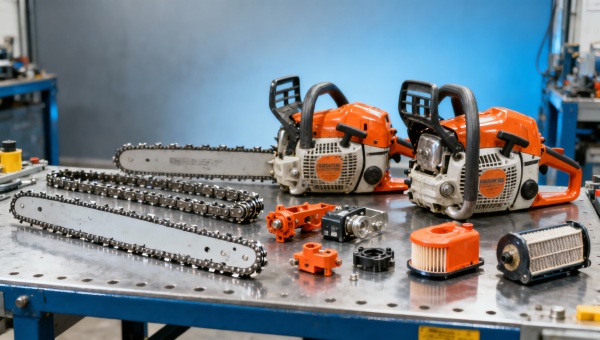
When sourcing petrol chain saws bulk, the first failures in real-world use often reveal more about durability than any brochure. For procurement teams, operators, and technical evaluators comparing a chainsaw manufacturer alongside suppliers of band sawmills bulk, log splitters wholesale, or wood chipper machines wholesale, understanding these early breakdown patterns is essential for safer operation, lower lifecycle cost, and more reliable purchasing decisions.
In bulk procurement, the first 20 to 100 operating hours often tell more than factory specifications alone. Early breakdowns can indicate weak material selection, inconsistent assembly, poor vibration control, or inadequate pre-delivery testing. For dealers, forestry contractors, farm operators, and project managers, identifying which parts fail first helps separate low-entry-price equipment from machines that can survive repeated field use.
This matters beyond maintenance cost. A chain saw that stalls, overheats, or loses chain tension too quickly can delay harvesting, increase operator fatigue, and create avoidable safety incidents. For financial approvers and quality managers, the real question is not simply unit price, but the cost per service hour, the predictability of spare parts demand, and the service burden across a fleet of 10, 50, or 200 units.
Where petrol chain saws typically fail first in bulk-use environments
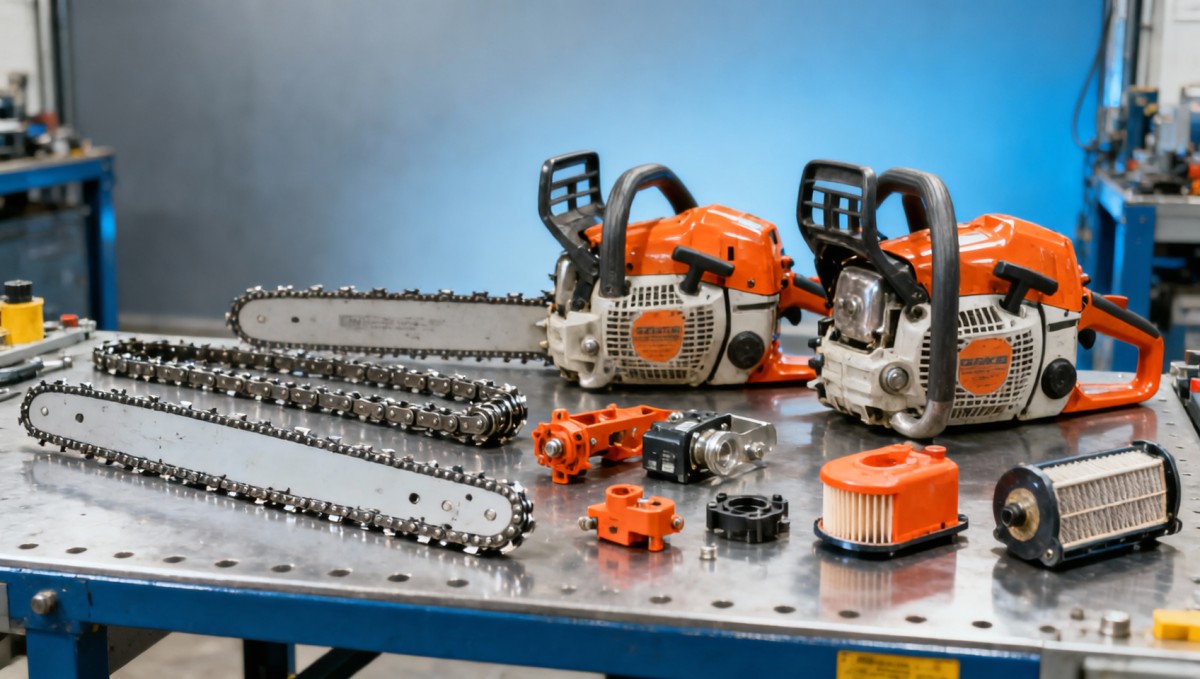
In field service conditions, the first visible failures usually appear in high-wear and high-vibration zones rather than in the engine block itself. Across commercial forestry, orchard clearing, farm maintenance, and timber processing support, the earliest issues often involve the starter assembly, chain tensioning system, fuel delivery components, anti-vibration mounts, and air filtration. These components are stressed from day 1, especially when machines are operated for 2 to 6 hours per shift.
The recoil starter is one of the most frequent early complaint points. In lower-grade production batches, the starter rope frays, the pulley cracks, or the spring loses return force within the first 30 to 60 starts. For distributors handling mixed-skill end users, this failure is costly because it generates immediate dissatisfaction, even if the engine itself remains functional.
Another early weak point is the chain tensioning mechanism. Side-access or front-mounted adjusters that use soft metal threads may loosen after repeated vibration cycles. Once the chain tension becomes unstable, users compensate incorrectly, causing bar wear, overheating, and accelerated chain stretch. In commercial settings, poor chain retention is not just a maintenance issue; it is a safety management concern.
Fuel system defects also surface quickly, particularly on machines stored for 7 to 30 days between uses. Common failures include stiff fuel lines, leaking primer bulbs, carburetor drift, and clogged fuel filters. In warm climates above 28°C, or where fuel quality is inconsistent, these issues appear faster. Bulk buyers should pay close attention to fuel hose material quality and carburetor consistency between units in the same shipment.
Air filtration and cooling are equally important. In dusty logging or farmyard conditions, a weak filter seal can allow fine particles into the intake path within the first week of use. That contamination affects mixture stability, piston wear, and idle behavior. What looks like “engine unreliability” is often a filtration design problem or low filter retention quality.
Early failure points by component group
The table below summarizes the failure areas that most often appear first, their likely operational symptoms, and what procurement or technical teams should verify before signing larger-volume orders.
The key takeaway is that first failures are rarely random. They usually cluster around parts exposed to repeated pull-force, thermal cycling, dust load, fuel contact, and vibration. For anyone buying petrol chain saws in bulk, these are the components that should be sampled first during pre-shipment inspection and acceptance testing.
Why early failures happen: manufacturing, operation, and service factors
Not every early failure means the entire machine platform is poor. In many cases, the root cause sits at the intersection of component quality, assembly consistency, operator handling, and service preparation. A chainsaw batch may use an acceptable 45cc to 62cc engine architecture, yet still underperform because the carburetor is not tuned consistently, the clutch drum is poorly aligned, or the vibration mounts vary in hardness between production runs.
Bulk procurement increases the importance of consistency. A single demonstration unit may run well for 50 hours, but a batch of 100 units can reveal wide tolerance variation. This is where technical evaluators should look beyond headline power output and ask for process discipline indicators such as torque-controlled assembly, leak testing, idle-speed verification, and batch-level parts traceability.
Operator behavior also contributes. During the first 10 operating hours, chain saws are especially vulnerable to misuse: incorrect fuel mix, over-tight chain adjustment, blocked cooling fins, or prolonged full-throttle cutting without cleaning breaks. In contractor fleets with multiple users, these mistakes are common unless onboarding is standardized. The result is that a preventable service issue gets misclassified as a manufacturing defect.
Storage and distribution conditions matter as well. Machines held in humid warehousing for 30 to 90 days before commissioning may show fuel hose hardening, corrosion on exposed fasteners, or degraded rubber components. For distributors and agents, packaging quality, desiccant use, and pre-delivery commissioning procedures can reduce early warranty claims significantly.
The three main causes behind first-use breakdowns
- Production inconsistency: uneven thread quality, weak polymer parts, unstable carburetor calibration, and poor fastener retention create failures that appear within the first 20 to 40 hours.
- Operating error: wrong fuel-oil ratio, infrequent chain lubrication checks, and excessive dust exposure without filter cleaning often trigger hard starting, overheating, or reduced cutting speed.
- Service setup gaps: no pre-delivery inspection, no spare-parts kit, and no operator briefing increase field downtime during the first 2 to 8 weeks.
A practical interpretation for B2B buyers
For enterprise buyers, the objective is not to eliminate every service event. That is unrealistic for a petrol-driven cutting tool. The goal is to reduce avoidable failures and make unavoidable wear predictable. If 80% of first-service incidents come from five replaceable parts, then stocking those parts and training on those checks can protect project timelines and reduce total cost.
This is especially relevant when a buyer is comparing chain saw procurement with adjacent forestry equipment categories such as band sawmills bulk or wood chipper machines wholesale. The same procurement principle applies: early-life reliability depends less on brochure claims and more on production repeatability, wear-part quality, and after-sales readiness.
How to evaluate petrol chain saws before placing a bulk order
A sound evaluation process should combine bench inspection, short-cycle field testing, and serviceability review. In most B2B purchases, testing 3 to 5 samples from one production batch is more useful than relying on a single showroom unit. Buyers should check cold start, hot restart, idle stability, chain oil delivery, vibration feel, fastener retention, and filter access. Even a 60-minute evaluation can expose major design weaknesses.
Technical teams should also define acceptable thresholds before testing begins. For example, a saw should restart reliably after a 15-minute heat soak, maintain stable idle without chain creep, and keep chain tension within safe working range through repeated cuts. If performance varies significantly between sample units, the issue is often process control rather than isolated defects.
For decision-makers and financial approvers, evaluation should include spare-parts logic. A competitively priced saw can become expensive if the service network cannot supply bars, chains, filters, recoil parts, or clutch components within 7 to 14 days. Fleet continuity depends on parts availability as much as initial engine performance.
The procurement checklist below is useful for importers, forestry contractors, industrial farms, and equipment distributors that need to compare multiple suppliers on more than price alone.
Bulk procurement checklist for first-failure risk control
This checklist shows that first-failure risk can be assessed before the purchase order is finalized. A supplier that supports batch sampling, parts planning, and clear service documentation usually presents lower lifecycle risk than one competing only on unit price.
Four buying signals that deserve extra attention
- Whether the same model shows stable starting behavior across multiple units.
- Whether chain tension, oil feed, and idle settings remain stable after repeated cuts.
- Whether wear parts are standardized and easy to source across future batches.
- Whether the supplier can support commissioning, troubleshooting, and parts demand forecasting for 6 to 12 months.
Reducing first-use failures through setup, maintenance, and operator control
Even well-built petrol chain saws can suffer early failures if fleet setup is weak. The most effective reduction strategy begins before the first cut: pre-delivery inspection, fuel preparation control, chain setup verification, and operator briefing. In practical terms, 15 to 20 minutes of preparation per unit can prevent a large share of first-month complaints.
For dealers and project teams, the first service interval should be short. Instead of waiting for a major issue, schedule an inspection after the first 8 to 10 operating hours. At that point, teams can recheck chain tension, bar wear pattern, fastener tightness, filter cleanliness, spark plug condition, and fuel seepage. This early inspection often catches the issues that later develop into downtime events.
Maintenance routines should be adjusted by environment. In clean farm maintenance work, filter checks may be needed once per shift. In dusty forestry cleanup, every 2 to 3 hours may be more appropriate. If the operating environment involves hardwood cutting, high ambient heat, or frequent transport, anti-vibration mounts and fasteners deserve extra attention.
Operator control is equally important. A machine shared by several crews should have a simple inspection card or digital checklist. Without that, chain over-tightening, improper bar rotation, and delayed cleaning become routine. What appears to be poor equipment reliability may actually be inconsistent daily discipline.
A practical first-30-day control plan
- Day 1: inspect chain brake function, bar alignment, chain oil output, and fuel cap sealing before dispatch.
- After 2–4 operating hours: recheck chain tension, guide bar temperature, and visible fastener loosening.
- After 8–10 hours: clean air filter, inspect spark plug color, and review idle stability and restart behavior.
- Weekly in active fleets: inspect anti-vibration mounts, recoil starter condition, clutch area debris buildup, and oil passage cleanliness.
Common mistakes that accelerate early breakdown
Three mistakes are especially common in real use. First, operators tighten a fresh chain too aggressively, creating excess load on the bar, clutch, and crankshaft bearings. Second, users neglect air filter cleaning in dusty conditions, which destabilizes combustion. Third, teams store fuel too long or mix it inconsistently, causing poor starting and carbon buildup. None of these are rare, and all are more likely in distributed fleets.
For procurement and safety managers, the implication is clear: maintenance instructions should be part of the purchasing decision. A technically acceptable product without usable service guidance will produce higher early-life cost than a slightly more expensive unit with better commissioning support and clearer operator controls.
FAQ for buyers, operators, and technical evaluators
The questions below reflect common concerns from importers, forestry equipment dealers, industrial farm managers, and project teams evaluating petrol chain saws in bulk alongside related machinery categories.
How many sample units should be tested before a bulk order?
For most commercial purchases, 3 to 5 units from the same batch is a practical minimum. One sample can hide inconsistency. If the order volume exceeds 100 units, some buyers increase the pre-order sample set to 5 to 8 machines, especially when the supplier is new or the target application is heavy-duty forestry work.
Which failure is most urgent from a safety perspective?
Unstable chain retention, chain brake malfunction, and severe vibration-related loosening deserve the highest priority. A hard-starting saw is inconvenient, but a chain control problem can create immediate operator risk. That is why chain tension hardware, bar fitment, and brake response should be included in every incoming inspection routine.
Are first failures usually caused by operators or by manufacturing quality?
Both are common, and they often interact. If the same defect appears across multiple units within the first 20 to 40 hours, manufacturing consistency is the likely cause. If failures vary by crew or location, operator practice and service setup may be more important. The best way to distinguish them is to track failure type, operating hours, fuel practice, and environment by unit.
What spare parts should a distributor or project team stock first?
A practical starter list includes chains, guide bars, air filters, fuel filters, starter ropes or recoil kits, spark plugs, and chain tensioning parts. For larger fleets, adding clutch-related wear parts and anti-vibration mounts is often justified. Stocking the first 6 to 8 high-turn items can reduce downtime substantially during the first quarter of operation.
What is a reasonable service-support expectation for bulk orders?
A credible supply arrangement should include pre-delivery inspection guidance, parts lists, basic troubleshooting support, and defined replenishment lead times. For many buyers, a 7 to 14 day spare-parts response target is workable. Longer timelines may still be manageable, but only if the initial parts package is sized correctly for fleet volume and duty cycle.
For organizations buying petrol chain saws in bulk, the first failures that appear in use are highly informative. They reveal whether a machine is genuinely suited to repeated field work, whether the supplier can maintain quality across batches, and whether the support model is strong enough for real operating conditions. Early issues most often show up in starter systems, chain tensioners, fuel delivery parts, vibration-sensitive fasteners, and filtration components.
A disciplined buying process can reduce this risk significantly. Sample multiple units, define measurable acceptance checks, plan the first 30 days of maintenance, and secure the right spare parts from the start. For procurement teams, operators, and distributors comparing chain saws with other forestry equipment lines, this approach supports lower lifecycle cost and better uptime. To discuss a tailored evaluation framework, parts planning strategy, or supplier comparison process, contact us to get a customized solution and deeper technical guidance.
Related Intelligence
- Forestry EquipmentWhat to Check Before Buying Used Forestry EquipmentForestry equipment buyers: learn what to check before buying used units, from engine hours and hydraulics to safety, parts support, and Supply Chain Transparency.
- Forestry EquipmentWhy log splitters wholesale pricing can mislead on total costLog splitters wholesale prices can hide freight, compliance, parts, and downtime costs. Compare band sawmills bulk, wood chipper machines wholesale, and wholesale lawn mowers smarter.
- Forestry EquipmentCommercial stump grinders: the spec mismatch that slows jobsStump grinders commercial buyers: avoid costly spec mismatches that slow jobs. Compare fleet fit with a portable sawmill manufacturer, chainsaw manufacturer, log splitters wholesale, and more.
The Morning Broadsheet
Daily chemical briefings, market shifts, and peer-reviewed summaries delivered to your terminal.
