
Brush cutters wholesale in 2026: lighter builds, shorter life?
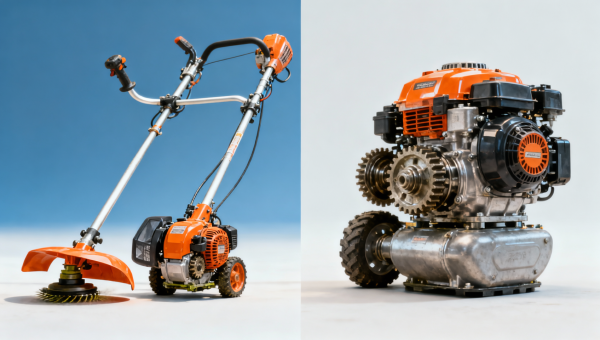
In 2026, buyers comparing brush cutters wholesale offers face a sharper trade-off: lighter builds can improve operator comfort and transport efficiency, but may raise questions about durability, maintenance cycles, and total cost of ownership. For distributors, contractors, and technical evaluators also sourcing wholesale lawn mowers, petrol chain saws bulk, or stump grinders commercial, understanding where weight reduction adds value—and where it cuts service life—is becoming essential.
This is no longer a narrow product question. It affects operator productivity, spare-parts planning, warranty exposure, fleet uptime, and even container loading economics. In commercial vegetation control, a 0.8 kg to 1.5 kg difference per unit can improve daily handling, but if lower mass is achieved by thinning shaft walls, reducing gearbox material, or switching to lower-grade polymers, the downstream cost may outweigh the initial gain.
For procurement teams, dealers, and project managers, the right decision is rarely “lightest is best” or “heaviest lasts longest.” The practical question is which components can be optimized without compromising service life in brush, grass, roadside, orchard, forestry edge, or municipal maintenance applications. In wholesale procurement, that means evaluating build strategy, duty cycle, maintenance frequency, and field repairability together.
Why lighter brush cutters are gaining wholesale attention in 2026
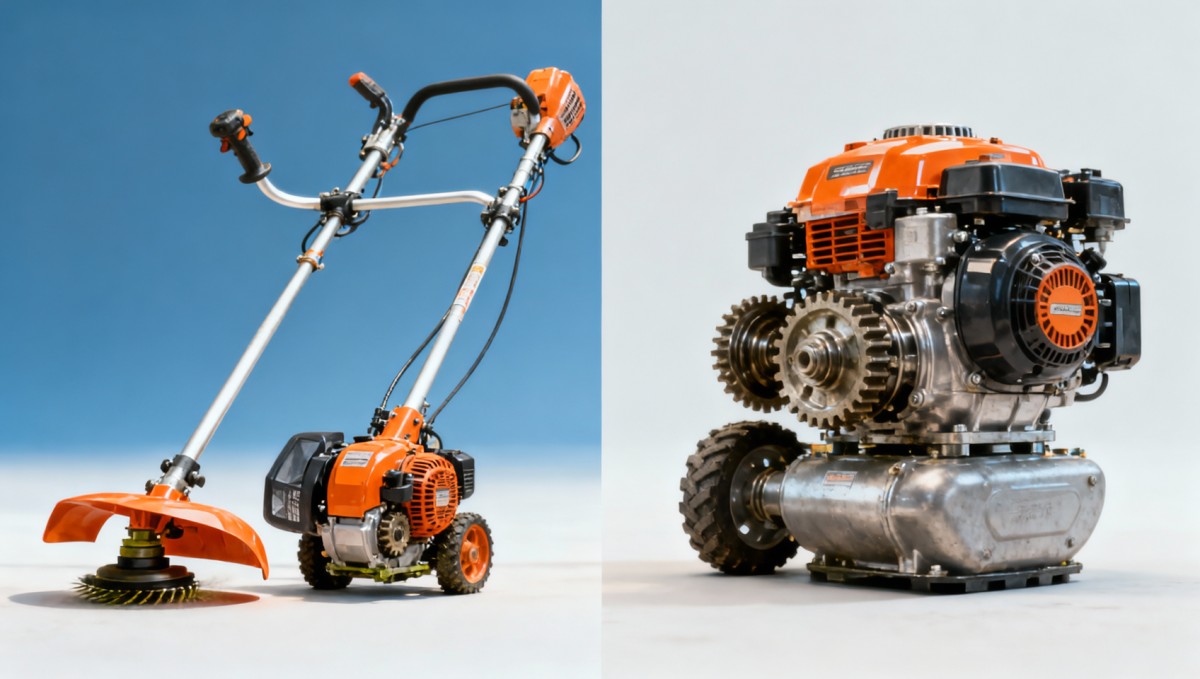
The demand for lighter brush cutters wholesale packages is being driven by three visible pressures: labor fatigue, transport efficiency, and multi-unit fleet handling. In contractor and distributor channels, buyers are comparing not only engine displacement and price, but also operating weight, harness balance, and carton density per pallet. For crews running 4 to 8 hours per day, even modest weight reduction can affect output consistency.
A lighter unit often improves maneuverability on slopes, along fence lines, and around orchard trunks. In municipal and agricultural operations, operators may carry a machine across 200 to 500 meters between cutting zones several times per shift. Reducing shoulder and back strain can lower stoppages, especially in hot-weather use where cumulative fatigue becomes a measurable productivity issue by the third or fourth hour.
At the distribution level, lighter builds also support freight and warehousing efficiency. A difference of 1 kg per carton may seem small, but over 200 to 500 units, container planning, manual handling, and last-mile delivery costs shift noticeably. This matters to wholesalers bundling brush cutters with wholesale lawn mowers, petrol chain saws bulk, and stump grinders commercial in one seasonal machinery program.
The challenge is that “lighter” can come from smart design or simple material reduction. The first may use better alloy selection, optimized anti-vibration geometry, and modular service access. The second may rely on thinner housings, lower bearing capacity, or reduced impact resistance. Wholesale buyers need to distinguish engineering-led weight reduction from cost-led lightening.
Where weight is usually removed
In typical commercial brush cutters, manufacturers reduce mass in five areas: the drive shaft tube, engine casing, clutch housing, protective guards, and handlebar assembly. On some platforms, changes in fuel tank volume also reduce total weight, but that can shorten runtime between refills from around 45–60 minutes to 30–40 minutes under dense grass conditions.
- Aluminum substitution for selected steel components can save 0.3–0.7 kg per unit when properly reinforced.
- Compact engine architecture may reduce front-end mass, improving balance but sometimes increasing heat concentration.
- Smaller gear housings reduce material use, yet may lower resistance to repeated shock loads from blade impacts.
- Polymer guards and covers lower weight, though UV stability and crack resistance must be checked for 2–3 season use.
For technical evaluators, component-level inspection matters more than catalog weight. Two models with the same 7.2 kg dry weight may differ substantially in shaft rigidity, gearbox life, and anti-vibration mounting quality.
When lighter builds shorten service life
Service life declines when lower weight comes from reduced structural margin in high-stress zones. The most common failure points in aggressive commercial use are the gearbox, clutch drum area, shaft support bushings, recoil starter components, and handle mounting interfaces. These parts absorb repeated vibration, sudden load changes, and impact events from stones, brush stems, and uneven ground.
A machine used mainly for grass edging has a very different wear profile from one used with metal blades in dense scrub. In light trimming work, a lighter build may perform adequately for 2 to 3 seasons. In roadside clearing, orchard reclamation, or mixed brush applications, the same unit may show looseness, bearing noise, or gearbox leakage in under 600 operating hours if structural reserves are too low.
This is why wholesale buyers should evaluate duty class instead of relying on a single weight figure. Units below 7 kg may be attractive for operator comfort, but the correct benchmark is whether they maintain acceptable vibration control, shaft alignment, and thermal stability after repeated heavy-load cycles. If not, lower purchase price may be offset by more frequent returns and higher spare-parts demand.
The table below outlines where weight reduction is usually beneficial and where it can create risk in commercial brush cutter procurement.
The key takeaway is not that lighter commercial brush cutters are inherently weaker. It is that the location and method of weight reduction determine whether the machine remains suitable for bulk contractor use, agricultural maintenance, or dealer resale programs.
Red flags during technical review
Technical and QC teams should look for excessive flex, inconsistent welds, low-fastener repeatability, and poor gearbox sealing. If sample units show early vibration increase after 20–30 hours of field simulation, the platform may not hold up in wholesale channels where warranty reputation matters.
Common high-risk shortcuts
- Reducing bearing size without adjusting load path or lubrication interval.
- Using lighter plastic throttle or starter components with limited impact tolerance.
- Lowering fuel tank wall thickness to save grams while increasing leak or deformation risk.
- Minimizing anti-vibration elements, which may increase operator strain over 2–4 week heavy-use periods.
How wholesale buyers should evaluate brush cutter durability beyond catalog weight
In wholesale purchasing, weight should be treated as one factor in a broader technical matrix. A distributor, engineering manager, or financial approver needs a decision framework that links field conditions to cost of ownership. That means comparing operating weight with engine output, shaft diameter, gearbox construction, service intervals, spare-parts availability, and expected user skill level.
For example, a 1.25 kW to 1.8 kW petrol brush cutter intended for mixed grass and light brush work should not be judged by power alone. The machine also needs acceptable thermal behavior after 30–45 minutes of sustained use, stable idle-to-load response, and manageable vibration under both nylon head and blade operation. Without that, a lightweight chassis may amplify wear across the system.
Procurement teams should also consider who will use the machines. Operator crews with strong maintenance discipline can support lighter, more optimized units. In contrast, rental fleets, seasonal labor programs, and decentralized agricultural operations often need more forgiving platforms that tolerate missed greasing, rough loading, and irregular air-filter cleaning.
The checklist below helps buyers compare brush cutters wholesale offers in a way that supports both operational uptime and financial control.
A practical procurement policy is to test at least 2 to 3 sample units across two application profiles before approving a large order. One test should simulate standard trimming; the other should include heavier brush or intermittent impact conditions. This approach reveals whether the lightweight design remains stable under real workload variation.
A four-step B2B review process
- Define duty class: light trimming, mixed grass, brush clearing, or contractor-heavy use.
- Compare weight against structural details, not against price alone.
- Run a 20–50 hour pilot with maintenance logs and operator feedback.
- Review spare-parts lead time, warranty handling process, and failure reporting protocol.
This process is especially useful for distributors managing adjacent categories such as wholesale lawn mowers or petrol chain saws bulk, where the same service network must support multiple product families without excessive inventory strain.
Selecting the right build for different users, terrains, and budgets
Not every buyer should choose the same brush cutter configuration. Lightweight commercial platforms make sense where operator comfort, frequent relocation, and moderate vegetation density define the workload. Heavier-duty builds are better suited to high-impact clearing, lower maintenance discipline, or remote sites where downtime carries a high penalty.
For dealers and resellers, segmentation is critical. A municipality maintaining parks and road verges may value lower hand-arm fatigue and easier daily use. A plantation contractor cutting thick regrowth may accept 1 to 1.5 kg more weight in exchange for gearbox durability and a longer service interval. The right wholesale mix often includes both categories, not just one flagship unit.
Budget holders should also evaluate the full ownership picture over 12 to 36 months. A lower-cost lightweight unit may still be the rational choice if its work profile is mild and replacement parts are fast to obtain. But in high-load usage, one extra gearbox replacement, three service visits, or five lost workdays can erase upfront savings quickly.
The matrix below helps align machine build with user profile and application intensity.
In many cases, the best decision is a tiered procurement plan: lighter units for trimming crews and heavier units for reclaiming overgrown zones. That reduces overspecification on simple work while protecting uptime in demanding applications.
What financial approvers should ask
Five questions before order release
- What is the expected annual operating hour range: under 200, 200–500, or above 500 hours per unit?
- How many wear parts are likely to be replaced per 50 units per season?
- Can the supplier support spare-parts replenishment within 7–21 days?
- Will the machines be used mainly with nylon line, metal blade, or both?
- Is the cost of operator fatigue higher than the cost of somewhat shorter equipment life in this workflow?
Maintenance strategy, warranty control, and common buyer mistakes
A lighter brush cutter can remain commercially viable if maintenance discipline is strong. Many premature failures blamed on lightweight construction actually result from missed service intervals, contaminated fuel, poor air filtration, or incorrect blade use. For wholesale buyers, this means the product decision and the support plan must be developed together.
A practical maintenance baseline for commercial fleets is daily visual inspection, air-filter attention every 8–10 operating hours in dusty conditions, gearbox grease checks every 20–25 hours, and fastener review every 40–50 hours. If a lightweight model requires even tighter intervals, the buyer should confirm whether the end user can realistically follow them.
Warranty exposure is another overlooked factor. Dealers and distributors often focus on acquisition cost, yet frequent minor claims can consume significant admin time. If a lightweight platform has less tolerance for misuse, the supplier should provide clear parts diagrams, consumable lists, operator guidance, and a structured claim-response path. Without that, channel friction rises quickly.
The most common buying mistake is assuming that all lightweight machines fail early or that all heavy machines deliver better value. In reality, the right match depends on duty cycle, service capability, operator behavior, and spare-parts logistics. Good procurement decisions reduce mismatch, not simply mass.
FAQ for wholesale buyers
How light is too light for commercial brush cutter use?
There is no universal threshold, but buyers should be cautious when a unit is unusually light for its engine class and claimed duty level. A machine marketed for heavy brush clearing should demonstrate stable gearbox performance, shaft rigidity, and acceptable vibration after 20–50 hours of mixed-use testing.
Are lighter units suitable for distributors selling to agriculture and municipality clients?
Yes, if the application is mainly grass, verge, park, and orchard maintenance rather than repeated dense brush cutting. Many distributors succeed with a two-tier offering: lighter units for comfort-focused users and reinforced units for contractors and land-clearing crews.
What delivery and support terms matter most in wholesale programs?
Beyond unit price, buyers should review sample availability, normal production lead time, consumable and spare-parts supply within 1–3 weeks, documentation quality, and a defined warranty escalation process. These factors often determine long-term channel profitability more than the initial quotation alone.
How should buyers compare brush cutters with related outdoor power equipment sourcing?
Use the same total-cost logic applied to wholesale lawn mowers, petrol chain saws bulk, or stump grinders commercial: match machine weight and output to task intensity, verify service access, and assess whether the supplier can support a full-season fleet rather than a one-time shipment.
In 2026, the real wholesale question is not whether lighter brush cutters are good or bad. It is whether weight reduction has been engineered in the right places for the intended workload. Buyers who examine durability, maintenance cycles, and field support together are more likely to secure lower downtime and better long-term value.
For distributors, contractors, technical reviewers, and procurement teams evaluating brush cutters wholesale offers alongside broader outdoor equipment portfolios, a structured review process will outperform price-led selection. If you need a more specific sourcing framework, product comparison matrix, or commercial-use shortlist, contact us to discuss your application profile and get a tailored procurement recommendation.
Related Intelligence
- Forestry EquipmentWhat to Check Before Buying Used Forestry EquipmentForestry equipment buyers: learn what to check before buying used units, from engine hours and hydraulics to safety, parts support, and Supply Chain Transparency.
- Forestry EquipmentWood chipper machines wholesale: what affects output consistencyWood chipper machines wholesale guide: learn what affects output consistency, chip quality, fuel use, and uptime. Ideal for distributors, buyers, and portable sawmill manufacturer networks.
- Forestry EquipmentPetrol chain saws in bulk: which failures appear first in usePetrol chain saws bulk: learn which failures appear first, how a chainsaw manufacturer should be evaluated, and what bulk buyers must check to cut downtime, risk, and service costs.
The Morning Broadsheet
Daily chemical briefings, market shifts, and peer-reviewed summaries delivered to your terminal.
