
Riding ride on mowers with tighter turning still miss rough ground

Even as riding ride on mowers deliver tighter turning for faster field coverage, they can still struggle on rough ground where traction, deck stability, and operator safety matter most. For buyers comparing wholesale lawn mowers, brush cutters wholesale options, and related outdoor equipment, understanding real-world performance is essential before committing budget, compliance checks, or fleet upgrades.
In commercial grounds management, orchard maintenance, estate care, and mixed agricultural facilities, maneuverability is only one part of machine value. A riding ride on mower that turns tightly on flat turf may lose cut consistency, operator confidence, and drivetrain efficiency once the surface includes ruts, slopes, loose soil, stubble, or drainage channels. That gap between brochure performance and field performance is where many procurement mistakes begin.
For technical evaluators, operators, distributors, project managers, and budget approvers, the priority is not just whether a mower can turn in a small radius. The better question is whether it can maintain safe, repeatable, economically viable output across 6-hour to 10-hour duty cycles in uneven conditions. This article examines where tighter-turning machines still fall short, what specifications matter on rough ground, and how B2B buyers can build a more reliable selection framework.
Why Tight Turning Does Not Guarantee Rough-Ground Performance
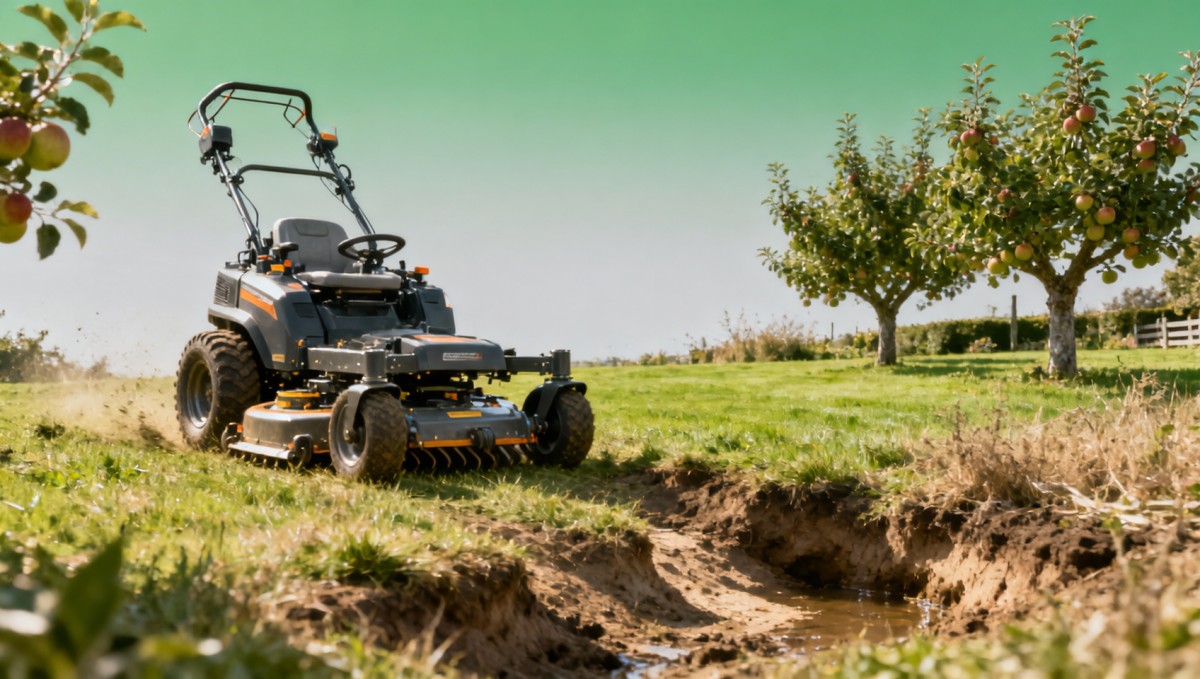
A zero-turn or tight-turn riding ride on mower is designed primarily to reduce uncut overlap and shorten route time around obstacles. On landscaped sites with trees, fence lines, and narrow access points, that can improve productivity by 10% to 20% compared with wider-turn conventional equipment. However, rough terrain introduces a different set of mechanical and operational demands that are not solved by turning geometry alone.
The first limitation is traction. On compacted gravel, damp grass, or broken ground, drive wheels may spin before torque is transferred efficiently. Machines with excellent pivot response can become unstable when one side loses grip, especially on side slopes above 10° to 15°. For operators, that means more corrective steering, slower travel speed, and greater fatigue during long shifts.
The second limitation is deck stability. On rough ground, a mower deck must follow terrain changes without excessive scalping, bouncing, or edge contact. If anti-scalp rollers, suspension linkages, and deck hangers are not robust enough, the cut height may vary by 10 mm to 30 mm across the same pass. This becomes a major issue in municipal, sports, and premium estate contracts where visual consistency affects acceptance.
The third factor is operator safety. A machine that can rotate sharply at speed may feel efficient on flat ground but unpredictable on uneven terrain. Vibration, seat suspension quality, center of gravity, rollover protection, braking response, and foot platform stability all matter when working around embankments, ditches, or field edges. Procurement teams evaluating wholesale lawn mowers should therefore treat tight turning as one metric among at least 6 core performance categories.
Common rough-ground stress points
- Wheel slip on wet turf, loose soil, or compacted dust after 2 to 3 hours of continuous operation.
- Deck bounce that reduces cut uniformity when travel speed exceeds 6 km/h to 9 km/h.
- Blade shock load when hidden stones, woody debris, or crop residue are present.
- Hydrostatic heat buildup in repeated stop-turn-climb cycles on mixed terrain.
- Higher operator fatigue where seat isolation and steering ergonomics are under-specified.
For distributors and procurement specialists, this means a riding ride on mower selected only on turning radius can underperform in operating environments that combine vegetation control, perimeter trimming, and rough-surface mobility. In many mixed-use sites, brush cutters wholesale options or hybrid mower-brush systems may provide better total value than a standard turf-focused unit.
Key Technical Criteria Buyers Should Check Before Purchase
When comparing machines for rough ground, buyers should move beyond sales language and inspect the specification set that affects control, durability, and service life. A practical shortlist usually includes engine output, drive system type, tire profile, deck construction, ground clearance, allowable slope operation, vibration control, and maintenance access. For fleet purchases, even a 5% to 8% reliability difference can materially affect seasonal operating cost.
Engine power alone is not enough. A 18 hp to 25 hp machine may be adequate for general mowing, but if torque delivery is poorly matched to tire grip and hydrostatic capacity, performance drops sharply on broken terrain. Similarly, deck width must fit the terrain. A wider 48-inch to 60-inch deck covers more area per hour, yet it may bridge over hollows poorly and increase scalping risk compared with a narrower, better-floating deck.
Operators and safety managers should also look at suspension and seat travel. On uneven surfaces, a seat with 50 mm to 100 mm of effective suspension travel can significantly reduce fatigue and improve line control. Foot-operated deck lift, intuitive parking brake position, and accessible emergency stop functions also matter, especially when machines are shared across teams with different skill levels.
The table below outlines the most relevant comparison points for wholesale lawn mowers and rough-ground riding ride on mower procurement. It is intended as a practical screening tool during RFQ review, distributor negotiation, or field trial planning.
The most useful takeaway is that buyers should assess machine balance, not single-feature superiority. A mower with moderate turning agility, stronger deck support, and better tire choice often performs more consistently than a highly agile unit built mainly for flat turf. This is especially relevant for contractors maintaining mixed sites where speed, finish quality, and safety must all meet contract terms.
A four-point field test protocol
- Test on at least 3 surfaces: flat turf, uneven grass, and a damp or loose-grip section.
- Run the machine for 45 to 60 minutes, not just a 10-minute demonstration loop.
- Measure cut consistency after turns, cross-slope passes, and bumps above 30 mm.
- Record operator feedback on vibration, steering correction, and restart behavior on inclines.
This type of structured assessment helps financial approvers and project leads connect specification review with actual ownership cost, warranty exposure, and operator acceptance.
Riding Mowers, Brush Cutters, and Hybrid Fleet Choices
A common procurement error is expecting one machine category to handle every vegetation condition. In reality, the right decision often depends on the proportion of maintained turf versus unmanaged growth. If more than 70% of the site is level grass, a commercial riding ride on mower may remain the core asset. If rough grass, saplings, scrub edges, and drainage banks exceed 30% to 40%, brush cutters wholesale options or complementary rough-cut equipment should be evaluated seriously.
Hybrid fleets are increasingly favored by contractors and large agricultural estates because they reduce misuse. Operators stop forcing a finish mower into brush work, and brush tools are no longer overused on large open areas where ride-on equipment is more efficient. This division can improve labor productivity, extend blade life, and reduce unscheduled repair frequency during peak seasons.
Distributors and dealers also benefit from presenting category-based fit rather than a single universal machine. That approach lowers return disputes and aligns with B2B buyers who want application-specific justification before approving capex. The table below compares the practical fit of three common choices.
The comparison shows that machine fit should be linked to vegetation profile, terrain severity, and finish expectation. For example, a grounds contract with weekly visual inspection may justify a dedicated mower plus auxiliary brush cutter package. By contrast, a utility corridor project may gain little from premium turning agility if rough-cut durability is the dominant need.
When a mixed fleet becomes cost-effective
A mixed fleet is often worth evaluating when one or more of the following conditions apply: annual utilization exceeds 500 to 800 hours, more than 25% of the site includes ungraded terrain, or operator downtime from stuck or misapplied machines becomes frequent. In those cases, splitting work between a riding ride on mower and brush cutters wholesale solutions may reduce total disruption even if procurement is staged over 2 budget cycles.
For finance teams, this is not simply an equipment question. It is also a risk allocation question involving labor efficiency, seasonal completion rates, spare parts planning, and site safety exposure.
Procurement Risks, Compliance Checks, and Service Planning
For enterprise buyers, the purchase decision should extend beyond machine specifications into documentation, service coverage, spare parts lead time, and operator training requirements. A mower that appears competitive on purchase price can become expensive if critical wear parts take 3 to 6 weeks to source during the main cutting season. That is especially important for multi-site users managing municipal, industrial, or agricultural land assets.
Quality and safety teams should verify guarding, emergency shutoff, deck discharge control, operator presence systems, and maintenance lockout procedures. Where imported equipment is involved, check that manuals, labeling, and service instructions are complete and aligned with the destination market. In B2B procurement, missing documentation often delays internal approval more than minor price differences.
Another frequent issue is underestimating training. Even experienced operators may need 2 to 4 hours of model-specific familiarization when moving between steering systems, deck lift designs, or traction configurations. On rough ground, that training is directly tied to safe use. A short commissioning session can prevent misuse such as over-speed turning on slopes or incorrect deck height setting over uneven sections.
Checklist for commercial buyers
- Confirm parts availability for blades, belts, filters, tires, and spindle assemblies within 48 to 72 hours where possible.
- Request documented maintenance intervals for 50-hour, 100-hour, and seasonal service points.
- Verify dealer or OEM response time for field service during peak usage months.
- Assess whether the machine requires a dedicated trailer, ramp angle limit, or special storage footprint.
- Review operator guidance for slope use, wet-ground restrictions, and towing or recovery procedure.
Ownership planning by decision role
Technical evaluators should focus on traction, deck follow, and durability under shock load. Operators should emphasize comfort, visibility, and recovery from low-grip conditions. Project managers typically need uptime predictability and implementation timing. Financial approvers often prioritize 3-year to 5-year cost visibility, parts pricing, and replacement cycle logic. A strong procurement file addresses all 4 perspectives instead of relying on a single demo impression.
Where dealer networks are limited, distributors can improve conversion by offering spare-part kits, onboarding support, and maintenance schedules with the initial quotation. That lowers uncertainty for buyers comparing wholesale lawn mowers from multiple channels.
How to Match the Right Machine to Terrain, Budget, and Workload
The most reliable buying method is to classify the site before selecting equipment. Start with terrain condition, vegetation type, finish standard, annual operating hours, and service support radius. A site with smooth weekly-maintained turf, for example, can justify a productivity-led mower specification. A site with drainage swales, ungraded shoulders, and seasonal overgrowth needs a more cautious configuration, even if the turning radius is slightly wider.
Buyers should also define an acceptable compromise level. If appearance is critical, deck stability and cut retention deserve priority. If access is irregular, traction and chassis clearance may rank first. If labor is scarce, operator comfort and maintenance simplicity can deliver more financial value than peak advertised speed. In most B2B use cases, the best decision is the one that keeps performance stable across the full operating week, not just during ideal weather.
A useful internal selection model is to score each candidate from 1 to 5 across 6 categories: maneuverability, rough-ground stability, operator safety, maintenance access, parts support, and fit for actual vegetation. Machines that score well across all 6 areas usually outperform highly specialized alternatives in mixed commercial environments.
Practical selection pathway
- Map the site into maintained turf, rough grass, slopes, and obstacle zones.
- Estimate annual hours, operator count, and weekly cut windows.
- Shortlist 2 to 3 machines with suitable deck width, tire type, and service access.
- Conduct a field trial on at least one rough section, not only showroom turf.
- Compare purchase price against downtime risk, training need, and wear-part supply.
FAQ: common buyer questions
How much rough ground is too much for a standard riding ride on mower? If more than roughly 30% of routine operating area includes deep undulation, loose surfaces, scrub margins, or recurrent wet patches, a standard turf-focused unit may struggle to deliver consistent output. At that point, a rough-cut variant or mixed fleet deserves review.
Should buyers prioritize tighter turning or wider deck width? It depends on site geometry. Tight turning is valuable around obstacles, but on rough ground a slightly narrower deck with better terrain follow may deliver cleaner results and lower rework. For many commercial sites, 42-inch to 54-inch decks offer a better balance than the widest available option.
What service lead time is acceptable for fleet users? For seasonal operations, critical consumables should ideally be available within 48 to 72 hours. Longer delays can affect route completion and contract compliance, especially during rapid growth periods.
Are brush cutters wholesale packages a substitute for ride-on equipment? Usually not as a full substitute. They are better viewed as complementary tools for edges, banks, overgrowth, and inaccessible sections. The right combination often improves total site coverage and reduces misuse of the ride-on fleet.
For organizations evaluating outdoor equipment at scale, the real buying advantage comes from matching the machine to the terrain profile, operator skill level, and service ecosystem. A tight-turning mower can be highly productive, but rough ground quickly exposes limits in traction, deck behavior, and safety margin if the specification is too turf-centric.
Decision-makers who compare wholesale lawn mowers, brush cutters wholesale options, and supporting service packages through a structured field-based framework are more likely to achieve stable operating cost and fewer in-season disruptions. If you are reviewing fleet upgrades, distributor supply options, or application-specific machinery for uneven land, contact us to discuss the right configuration, request a tailored evaluation checklist, or explore more solutions for commercial rough-ground vegetation management.
Related Intelligence
- Heavy Agri MachineryIndia Launches AD Review on Chinese Tractors, Tariff May Rise to 28.5%India's AD review on Chinese tractors may raise tariffs to 28.5% — critical insights for exporters, importers & agri-machinery stakeholders.
- Heavy Agri MachineryIndia Launches Anti-Dumping Review on Chinese TractorsIndia's anti-dumping review on Chinese tractors (≥50HP, smart hydraulic suspension) may raise duties to 22.5–28.5%. Exporters, CKD assemblers & suppliers: act now to assess risk and compliance.
- Heavy Agri MachineryIndia Launches Anti-Dumping Review on Chinese Heavy Agri MachineryIndia's anti-dumping sunset review on Chinese heavy agri machinery — tractors & precision seeders — proposes duty hike to 28.5%. Act now to assess impact & prepare defense.
The Morning Broadsheet
Daily chemical briefings, market shifts, and peer-reviewed summaries delivered to your terminal.
