
Wholesale lawn mowers: battery trends are reshaping stock plans
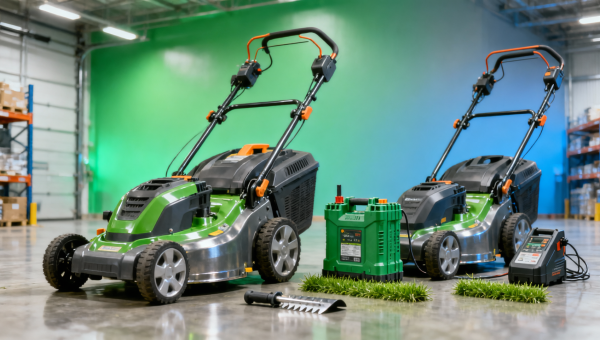
As fleet buyers revisit procurement models, wholesale lawn mowers are moving to the center of equipment strategy, driven by battery advances, uptime demands, and tighter emissions rules. For distributors, operators, and technical evaluators comparing riding ride on mowers, brush cutters wholesale options, and adjacent grounds-care machinery, understanding how battery trends reshape stock planning is now essential for controlling cost, service capacity, and long-term asset value.
In practical B2B purchasing, this shift is not just about replacing petrol engines with lithium packs. It affects SKU depth, charging infrastructure, workshop tooling, technician training, warranty exposure, and the timing of seasonal replenishment. For dealers, contractors, municipalities, estate managers, and industrial grounds teams, battery adoption changes how inventory should be balanced across entry, mid-duty, and commercial-duty platforms.
The most effective stock plans now connect three priorities: operational uptime, compliance pressure, and total lifecycle cost. Buyers who still evaluate wholesale lawn mowers only by unit price often miss the larger question: how many battery platforms, spare packs, chargers, decks, motors, and service parts should be held to support a 12-month sales and maintenance cycle without overstocking slow-moving items?
Why battery platforms are changing the wholesale lawn mower category
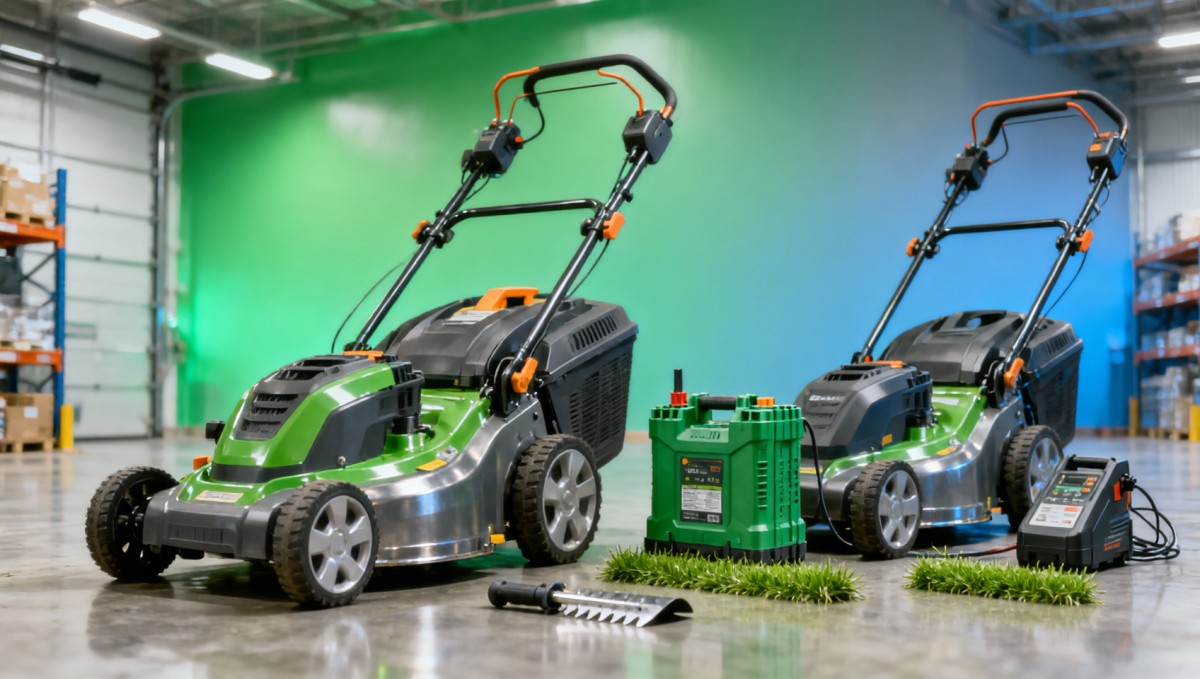
Battery technology has moved from light residential use into serious commercial grounds care because the performance gap has narrowed. In the last few buying cycles, many fleet managers have begun treating battery-powered wholesale lawn mowers as operational assets rather than niche equipment. The decision is increasingly driven by reduced noise, lower routine maintenance, and easier compliance in emissions-sensitive zones.
For stock planners, the biggest change is the move from machine-only purchasing to platform purchasing. A riding ride on mower with a 48V, 56V, or 72V architecture is not just one SKU. It usually requires matching charger types, optional fast-charge modules, extra battery packs, software diagnostics, and compatible handheld tools such as trimmers or brush cutters wholesale packages. That means one product family can expand into 6 to 12 inventory lines very quickly.
Battery systems also alter replacement cycles. Petrol units may stay in service for 5 to 8 years with predictable mechanical wear. Battery fleets can still match that window, but energy storage capacity must be reviewed earlier, often at the 24- to 48-month point depending on duty hours, charging behavior, and climate exposure. This affects both resale assumptions and aftersales planning.
Another reason wholesale lawn mowers are being reevaluated is labor efficiency. Operators in noise-restricted campuses, resorts, municipalities, and mixed-use developments often work across multiple shifts. Battery equipment can reduce start-stop friction, simplify daily checks, and lower fueling logistics. When a crew handles 3 to 5 sites per day, those minutes matter.
Three forces behind the transition
- Regulatory pressure: more buyers must meet local air-quality, noise, or sustainability targets, especially around schools, healthcare facilities, and urban contracts.
- Energy economics: electricity cost variability is often easier to forecast than fuel volatility, helping finance teams model 24- to 36-month operating budgets.
- Platform consolidation: one battery ecosystem can support mowers, hedge tools, and brush cutters wholesale demand, reducing training complexity and parts fragmentation.
How procurement priorities are being reweighted
In the past, buyers typically ranked deck size, engine brand, and upfront discount first. Today, technical evaluators are adding runtime per charge, charge recovery time, battery cycle life, operating temperature tolerance, and connector durability to the shortlist. A commercial buyer comparing 2 to 4 ride-on units may now spend as much time on charging logistics as on cutting width.
This reweighting has a direct inventory consequence. Dealers with strong sell-through in petrol categories may still need to broaden battery accessory stock by 20% to 35% before unit demand fully matures, because early fleet adopters tend to buy spare packs and charging hardware at the first transaction, not six months later.
What distributors should stock first: machines, batteries, or service parts?
A common mistake in wholesale lawn mowers planning is assuming the mower itself should absorb most capital. In battery-led categories, the more resilient stock strategy often gives greater weight to support inventory. If one dealer holds 10 ride-on units but only enough batteries and chargers to support 6 active crews, missed revenue can appear before the showroom looks understocked.
A balanced plan starts with buyer segmentation. Landscape contractors, local authorities, estates, and industrial campuses do not consume the same mix. Contractors may prefer swap-ready packs for continuous use. Municipal fleets may prioritize safety controls, lower noise signatures, and standardized charging. Estate operators often need mixed fleets, where brush cutters wholesale demand sits alongside compact riders and walk-behind units.
The table below shows a practical framework for allocating stock by category. The exact percentages vary by season and region, but the principle remains consistent: battery transition rewards planning around fleet continuity rather than unit count alone.
The key takeaway is that battery-based wholesale lawn mowers should not be stocked as isolated machines. They should be stocked as service ecosystems. That is especially important for distributors supplying both ride on mowers and brush cutters wholesale ranges, because buyers increasingly expect one charging architecture across multiple equipment types.
Recommended stock planning sequence
- Forecast demand across 2 seasons, not just current quarter sell-through, because institutional orders often cluster 4 to 8 weeks before mowing peaks.
- Group inventory by battery platform compatibility rather than by machine type alone.
- Set minimum on-hand thresholds for spare packs, chargers, and safety-critical service parts.
- Review workshop readiness, including insulated tools, diagnostic access, and battery handling SOPs.
- Track attachment and accessory movement monthly to identify underperforming SKUs before overstock accumulates.
Where overstock risk usually appears
Overstock often builds up in highly fragmented voltage systems, slow-moving premium chargers, or specialist decks with low regional fit. If a distributor carries 3 battery platforms serving the same customer tier, working capital can become trapped in low-turn accessories. In many cases, reducing active platforms from 3 to 2 improves fill rate without reducing market coverage.
How to evaluate battery performance for commercial mowing fleets
Technical evaluation should go beyond headline runtime claims. Real-world battery performance in wholesale lawn mowers depends on grass density, terrain, deck load, operator speed, ambient temperature, and charging method. A machine rated for 2 hours in light-duty mowing may deliver noticeably less under wet growth, heavy collection, or continuous slope work.
For this reason, serious buyers should test battery systems against duty profiles, not marketing labels. A good assessment window is 10 to 15 operating days covering morning starts, mid-shift charging, and end-of-day storage. That sample is usually sufficient to reveal whether the platform suits municipal maintenance, contractor rotation, or mixed-estate use.
The table below highlights the most useful commercial evaluation points when comparing riding ride on mowers, walk-behind units, and battery-compatible brush cutters wholesale lines within the same procurement decision.
These figures should be interpreted in context. A high-capacity battery is not automatically better if charge infrastructure is weak or if the added weight reduces maneuverability on fine turf. Likewise, faster charging can improve uptime but may increase thermal stress if site conditions and battery management practices are poor.
Key technical checks before approving a platform
- Confirm whether runtime data is measured at transport speed, average mowing load, or peak blade demand.
- Review pack sealing, connector shielding, and vibration resistance for outdoor commercial use.
- Check whether diagnostic access is dealer-only or available to fleet workshops with approved tools.
- Verify storage recommendations, especially if batteries may remain unused for 30 to 90 days off-season.
- Assess whether one battery platform supports adjacent tools, reducing duplication across crews.
A practical benchmark for uptime planning
For commercial mowing operations, many procurement teams aim for one of two models: either 1 machine with 2 to 3 battery sets for continuous field rotation, or a fleet layout where each machine is supported by one primary pack and shared backup capacity equal to 25%–40% of active daily demand. The right model depends on route density, labor scheduling, and charger availability.
Financial planning, service readiness, and lifecycle cost control
Finance approvers rarely reject battery wholesale lawn mowers because the concept is unfamiliar. More often, approval slows because the cost model is incomplete. A proper comparison must include machine price, battery inventory, charger infrastructure, technician training, software access if required, and expected battery replacement timing. Without these elements, a low initial quote may create a high 36-month operating cost.
Service readiness is equally important. Workshops familiar with petrol engines may need new procedures for isolation, pack inspection, charging safety, and fault tracing. The transition is manageable, but distributors should not assume existing service teams can absorb battery platforms without investment. Even a 1- to 2-day technical onboarding program can materially improve turnaround and reduce unnecessary parts replacement.
The operational benefit is that battery wholesale lawn mowers often reduce routine service events linked to fuel systems, oil changes, vibration-related wear, and cold-start issues. But those savings only become visible when inventory and service processes are aligned from the start. Otherwise, downtime simply shifts from engine repair to waiting for packs, chargers, or trained diagnostics.
Cost areas that should be modeled over 24–36 months
- Acquisition cost for mower units, attachments, and battery packs purchased at launch.
- Expected replacement rate for wearable parts such as blades, tires, bearings, and electrical connectors.
- Battery degradation and reserve capacity planning based on annual operating hours.
- Charging infrastructure spend, including standard and fast-charge options where needed.
- Service labor, training, and diagnostic tool access required to maintain acceptable uptime.
Common approval mistakes
One recurring error is using a direct one-to-one replacement logic, assuming one battery ride-on mower should replace one petrol mower with no change in fleet structure. In reality, site conditions may require additional batteries, staggered charging windows, or a mixed fleet approach during transition. Another mistake is underestimating the revenue value of quiet-hour access in sites with early-morning or late-evening restrictions.
A second mistake is neglecting residual value. Buyers should ask how battery health will be assessed at resale or transfer. A machine in year 4 may still have strong chassis value, but if pack condition is unknown, secondary-market confidence declines. Clear service records and battery management history can protect long-term asset value far better than aggressive upfront discounting.
Minimum service-readiness checklist
- Documented charging and storage procedure for daily and off-season use.
- Technician training covering fault isolation, pack inspection, and safe handling.
- Defined spare-parts list for the first 6 to 12 months of installed fleet growth.
- Clear warranty routing between dealer, distributor, and manufacturer support channels.
Implementation roadmap for dealers, fleet buyers, and project managers
The most successful battery transition programs do not start with a full category replacement. They start with controlled deployment. For distributors and institutional buyers, a phased approach lowers risk while preserving service quality. This is especially useful when wholesale lawn mowers are being evaluated together with ride on mowers, brush cutters wholesale lines, and other battery-compatible grounds-care tools.
Phase 1 typically covers site profiling and equipment mapping. Over 2 to 3 weeks, buyers define acreage, slope, cutting frequency, transport time, charging access, and seasonal labor patterns. Phase 2 is pilot operation, usually involving 1 to 3 units on representative sites. Phase 3 expands inventory only after runtime, operator acceptance, and service events have been reviewed.
This disciplined approach gives technical evaluators and financial approvers a common evidence base. It also helps quality, safety, and project teams confirm that charging zones, storage conditions, and workshop procedures meet internal requirements before larger orders are placed.
Suggested 5-step rollout model
- Define target applications by property type, operating hours, and acceptable noise profile.
- Select 1 or 2 battery platforms that can cover core mowing and adjacent hand-tool demand.
- Run a 30-day field pilot with tracked runtime, charging intervals, and operator feedback.
- Build stock rules for units, spare packs, chargers, and service parts based on pilot consumption.
- Scale procurement with quarterly review of utilization, failure points, and replenishment accuracy.
FAQ for practical purchasing decisions
How many spare batteries should a commercial mower fleet hold?
A common planning range is backup capacity equal to 25%–50% of active daily usage, but the exact number depends on shift length, charger speed, and travel time between sites. Fleets with all-day use and limited charging windows may need 2 to 3 battery sets per machine. Lower-duty municipal fleets may operate effectively with shared reserve packs.
Are battery wholesale lawn mowers suitable for all commercial sites?
Not automatically. They are often strong fits for campuses, hospitality sites, healthcare grounds, schools, urban contracts, and estates where noise and emissions matter. Very large remote sites with poor charging access may still require hybrid fleet planning, at least during transition. Matching the equipment to route density and site infrastructure remains essential.
What is the most overlooked procurement factor?
Cross-platform compatibility. If a dealer can align wholesale lawn mowers, ride on mowers, and brush cutters wholesale packages on one battery ecosystem, inventory complexity drops sharply. That reduces tied-up capital, simplifies training, and makes aftersales support more predictable.
How long should a pilot evaluation last?
For most commercial decisions, 2 to 4 weeks is enough to capture realistic runtime, charging behavior, user acceptance, and early service patterns. Shorter tests can be useful for screening, but they often miss weather variation and workload peaks that shape true fleet performance.
Battery trends are not simply adding another product option to the grounds-care market. They are redefining how wholesale lawn mowers should be stocked, sold, serviced, and financed. Buyers who plan around battery ecosystems, uptime targets, and service readiness are better positioned to control lifecycle cost while meeting operational and regulatory demands.
For distributors, project leaders, technical evaluators, and finance teams, the strongest strategy is a phased, data-led rollout backed by disciplined inventory design. If you are reviewing riding ride on mowers, brush cutters wholesale lines, or a broader battery grounds-care transition, now is the right time to refine your stock plan around real duty cycles and support capacity.
To discuss category planning, procurement logic, or commercial equipment positioning in more detail, contact AgriChem Chronicle for tailored market insight, supplier-facing content support, and decision-ready analysis built for institutional buyers and industrial distribution channels.
Related Intelligence
- Heavy Agri MachineryIndia Launches AD Review on Chinese Tractors, Tariff May Rise to 28.5%India's AD review on Chinese tractors may raise tariffs to 28.5% — critical insights for exporters, importers & agri-machinery stakeholders.
- Heavy Agri MachineryIndia Launches Anti-Dumping Review on Chinese TractorsIndia's anti-dumping review on Chinese tractors (≥50HP, smart hydraulic suspension) may raise duties to 22.5–28.5%. Exporters, CKD assemblers & suppliers: act now to assess risk and compliance.
- Heavy Agri MachineryIndia Launches Anti-Dumping Review on Chinese Heavy Agri MachineryIndia's anti-dumping sunset review on Chinese heavy agri machinery — tractors & precision seeders — proposes duty hike to 28.5%. Act now to assess impact & prepare defense.
The Morning Broadsheet
Daily chemical briefings, market shifts, and peer-reviewed summaries delivered to your terminal.
