
Parboiled rice mill plant layout mistakes that slow daily production
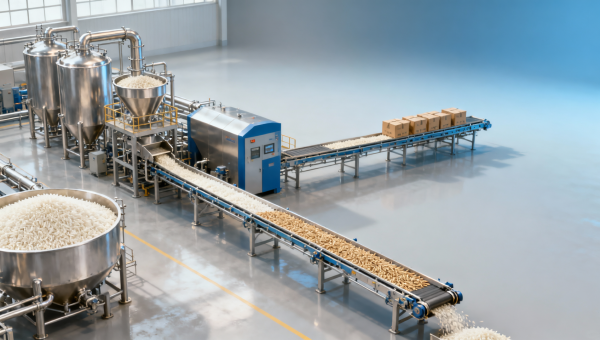
In a parboiled rice mill plant, layout mistakes can quietly reduce throughput, raise labor costs, and create quality risks long before operators notice the root cause. For buyers comparing coffee processing machinery, wheat flour milling plant systems, or commercial flour mill machinery, understanding how workflow design affects daily production is essential. This article examines the most common planning errors, their operational impact, and the practical fixes that improve efficiency, safety, and investment returns.
For technical evaluators, plant operators, procurement teams, and business decision-makers, layout is not a cosmetic issue. It affects how paddy moves through soaking, steaming, drying, husking, polishing, grading, packing, and storage. In medium-capacity facilities handling 2 to 10 tons per hour, even a short backtrack of 8 to 15 meters between process stages can add repeated handling, increase conveyor loads, and create avoidable delays across every shift.
In feed and grain processing, layout planning also shapes sanitation performance, moisture control, maintenance access, and worker safety. A parboiled rice mill plant that appears mechanically sound can still lose 5% to 12% of practical daily output if the line arrangement forces cross-traffic, inconsistent drying flow, or poorly positioned temporary storage. These are the errors that often remain hidden during commissioning but become expensive after 3 to 6 months of operation.
Where daily production slows down first
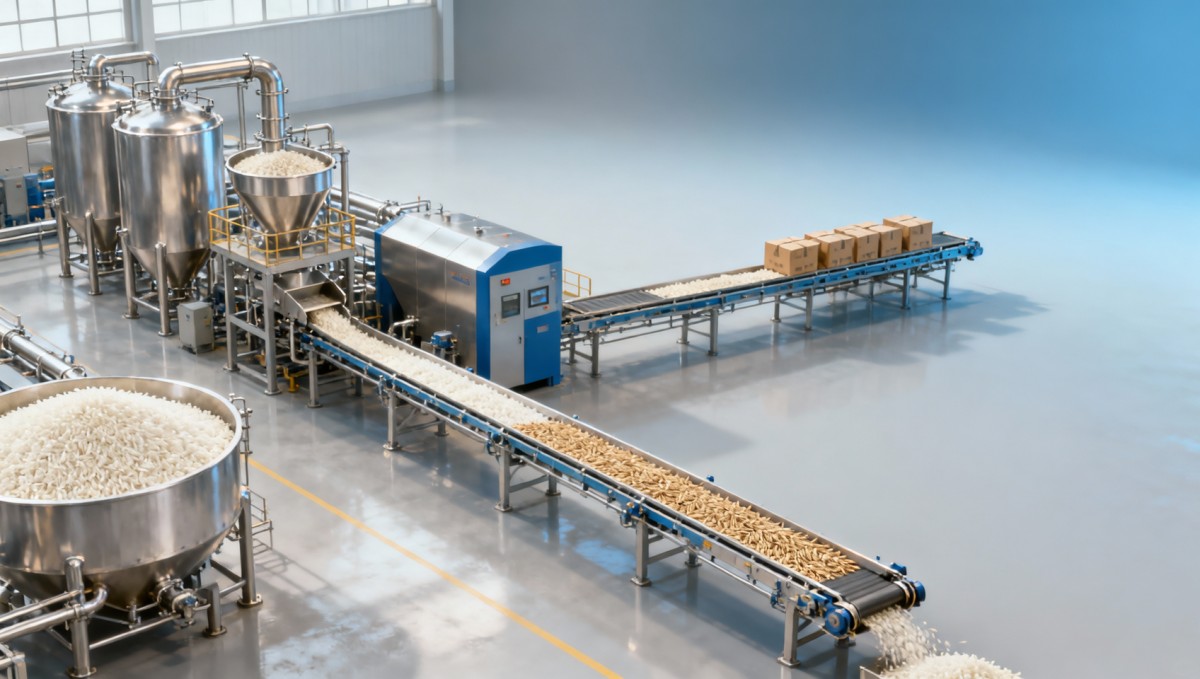
The first slowdown usually appears between thermal treatment and post-drying flow. In a parboiled rice mill plant, paddy passes through soaking, steaming, drying, tempering, and milling in a sequence that must remain continuous. If one area is placed without regard to the next, material accumulates in bins, trolleys, or floor zones instead of moving in a controlled stream. That raises residence time, increases moisture variation, and reduces line balance.
A common mistake is placing soaking tanks and boilers for utility convenience rather than process continuity. This may shorten steam piping by 5 to 8 meters, yet it can lengthen product travel by 20 meters or more. Operators then rely on repeated transfer steps, extra screw conveyors, or manual movement, which raises both labor input and breakage risk. In plants running 16 to 20 hours per day, those extra transfers quickly become a capacity bottleneck.
Another early loss point is inadequate buffer design. Not every stage should feed directly into the next without controlled surge capacity. Dryers, for example, may operate in cycles of 30 to 90 minutes depending on moisture reduction targets. If temporary holding capacity is undersized, upstream equipment is forced to pause. If oversized and poorly ventilated, downstream milling receives unevenly conditioned grain.
Typical bottlenecks seen in plant audits
The following comparison highlights layout-related causes that most often depress daily output in grain processing facilities. These issues are not limited to rice. Similar flow failures also appear in coffee processing machinery lines and commercial flour mill machinery installations where raw material staging and final packing interfere with each other.
The key lesson is that layout losses are cumulative rather than dramatic. A plant may still run every machine, but the line runs below nameplate output because product, people, and utilities do not move in the same logic. When plant owners compare quotations, this is why machine specifications alone are not enough.
Warning signs operators notice too late
- Frequent queueing before the dryer, husker, or grader for more than 10 to 15 minutes per cycle.
- Repeated manual transport of bags, bins, or partially processed paddy between departments.
- Moisture spread after drying wider than the preferred operating range for the downstream mill.
- Maintenance teams needing to stop adjacent equipment just to access one machine.
If two or more of these symptoms are visible during a normal shift, the problem is rarely labor discipline alone. In most cases, the physical arrangement itself is causing recurring friction.
The most costly layout mistakes in parboiled rice mills
Some errors appear in nearly every underperforming project review. The first is designing around available building shape instead of process direction. When a plant is forced into a zigzag flow, conveying distance grows, dust points multiply, and operators spend more time monitoring transfers than controlling process quality. For a 5 TPH line, each additional transfer point introduces another inspection, another motor, and another possible jam.
The second major mistake is ignoring vertical flow opportunities. Many rice mills can reduce horizontal transport by using gravity after drying or tempering, especially when buildings allow 2 or 3 elevation levels. A fully flat arrangement often looks easier during civil planning, yet it usually increases power consumption and handling complexity over the next 5 to 10 years.
The third mistake is placing packing, finished goods staging, and dispatch too close to dusty intake or boiler zones. This creates hygiene problems, complicates quality assurance, and exposes packed rice to unnecessary rehandling. For food-grade operations and buyers focused on audit readiness, separation between inbound raw zones and finished product movement is not optional.
Mistakes that affect quality and compliance together
The table below connects physical layout faults with the quality and control issues they create. This is especially useful for procurement teams comparing new installations, expansions, or retrofit proposals across feed and grain processing environments.
These controls are practical rather than theoretical. Quality managers need a layout that supports inspection points, sample collection, and product segregation without interrupting flow. When layout makes those steps difficult, the plant tends to choose speed over discipline, which eventually costs more.
High-risk planning oversights
- Underestimating forklift turning space, especially around bagging and palletizing zones.
- Leaving less than 0.8 meters of service access near bearings, screens, or aspiration ducts.
- Combining utility lines, operator walkways, and emergency routes in the same narrow corridor.
- Failing to reserve expansion space for a second dryer, sorter, or packing lane within 24 to 36 months.
A plant that is already near its building limits on day one becomes expensive to upgrade later. That is why forward-looking layout planning should consider not only current tonnage, but also likely expansion in product grades, packaging formats, and automation level.
How to design a workflow that protects throughput
A productive parboiled rice mill plant follows a simple principle: material should move forward with minimum reversal, minimum manual intervention, and controlled buffer points. This requires mapping process sequence first, then placing machinery, operator stations, utilities, inspection points, and storage around that sequence. The most efficient projects usually complete layout review in 3 layers: process flow, utility support, and people movement.
For most installations, raw paddy receiving should stay close to cleaning and soaking entry, while finished goods dispatch should sit at the opposite end of the plant. Drying and tempering should connect directly to milling with minimal exposure time. If the product must wait, use defined bins with measured capacity rather than informal floor staging. In many cases, a buffer equivalent to 20 to 45 minutes of line feed is enough to stabilize flow without creating unnecessary inventory.
Good layout also depends on service logic. A machine that runs 18 hours per day will still need belt checks, bearing lubrication, sieve cleaning, and occasional replacement work. If maintenance crews cannot reach parts safely, average downtime increases. Over a month, an extra 20 minutes lost in each maintenance event can remove several hours of productive capacity.
A practical layout planning sequence
- Start with process blocks in order: intake, cleaning, soaking, steaming, drying, tempering, milling, grading, packing, storage.
- Assign target throughputs for each block, such as 3 TPH, 5 TPH, or 8 TPH, and identify the narrowest stage.
- Reserve utility zones for boilers, water treatment, dust collection, and electrical panels outside the main product path.
- Separate pedestrian routes from forklift routes and define emergency access before fixing equipment foundations.
- Keep future expansion space for at least one additional value-adding machine or packing line.
This planning sequence reduces redesign risk during fabrication and installation. It also helps financial approvers see why a slightly larger building footprint can improve returns over the operating life of the plant.
Useful design targets for buyers and engineers
While every project differs, several practical targets are widely useful. Service clearance around key machines often falls in the 0.8 to 1.2 meter range. Temporary surge storage should match realistic cycle differences rather than theoretical peak load. Utility pipelines should avoid crossing product handling areas wherever possible. If dust extraction is required, collection points should be identified during layout design, not added after commissioning.
Plants that apply these targets tend to commission faster, train staff more easily, and reach stable output in fewer weeks. That matters when procurement decisions depend on ramp-up speed and early cash flow.
What procurement and technical teams should evaluate before approval
When buyers assess a parboiled rice mill plant proposal, they should ask for more than a machine list and total power estimate. A workable layout package should include process flow, equipment arrangement, utility routing concept, access logic, and material movement assumptions. Without these, it is hard to verify whether the proposed 4 TPH or 6 TPH capacity is achievable in real operating conditions.
Technical reviewers should also test whether the supplier has accounted for cleaning access, reject handling, moisture stabilization, and packaging flow. These factors directly influence labor planning, quality consistency, and the number of stoppages per week. A plant that looks cheaper at purchase may cost more if it needs structural changes within the first 12 months.
For distributors, agents, and industrial decision-makers, layout quality is also a reputational issue. End users remember whether the line was easy to operate and maintain. A well-arranged mill reduces support claims, shortens operator training time, and improves reference value in future sales conversations.
Pre-approval checklist for layout review
The checklist below can be used during supplier comparison, engineering review, or capital expenditure approval. It helps connect technical fit with operational and financial risk.
If a proposal cannot answer these points clearly, the buyer should request a revised drawing before approval. This is especially important when comparing systems across related sectors such as wheat flour milling plant projects or coffee processing machinery, where plant flow and hygiene zones are just as important as installed horsepower.
Questions decision-makers should ask suppliers
- What is the assumed daily operating window: 8, 16, or 20 hours, and how does the layout support that duty cycle?
- Where are the planned buffer points, and how many minutes of feed do they hold?
- Can maintenance on one machine be performed without stopping two adjacent machines?
- How much reserved space is available for future sorting, color grading, or packing upgrades?
These questions move the procurement conversation from catalog comparison to operating reality. That is where better investment decisions are made.
Retrofit options, implementation steps, and common questions
Not every plant needs a full rebuild to recover production. Many layout issues can be corrected through phased retrofit. Common improvements include repositioning temporary storage, separating raw and finished traffic, adding access platforms, relocating bagging stations, or shortening transfer paths between drying and milling. In active facilities, these changes are often executed in 2 to 4 stages to limit shutdown time.
A practical retrofit begins with one week of flow observation, followed by a layout review and staged implementation plan. Minor works can sometimes be completed during planned maintenance windows. More involved changes, such as adding gravity transfer or moving heavy equipment foundations, require stronger civil and utility coordination. Even then, the objective remains simple: reduce friction per shift and increase usable capacity without compromising safety or quality.
For finance teams, the important question is whether the change removes recurring loss rather than whether it changes nameplate capacity. If a retrofit reduces repeated waiting, extra labor, dust exposure, and breakage, the practical payback can be attractive even without installing more machines.
FAQ: layout decisions that buyers and operators ask about
How much extra space should be reserved for maintenance and future upgrades?
A useful rule is to preserve 0.8 to 1.2 meters of service access around critical machines and leave at least one logical expansion zone for a future machine group. This may support a second dryer, a sorter, or an additional packing lane within 2 to 3 years of growth.
Can a poor layout increase broken rice even if the milling machine is good?
Yes. If drying, tempering, and milling are poorly connected, grain may enter the mill with inconsistent moisture or after excessive handling. That can increase cracking and reduce head rice yield, even when the core milling equipment is properly selected and maintained.
What is the most overlooked area in small and medium plants?
Finished product flow is often overlooked. Plants focus on intake and processing but underestimate the space needed for bagging, weighing, sealing, palletizing, inspection, and dispatch. When this zone is compressed, it can slow the final 10% of the line and create unnecessary queueing.
When should a plant choose retrofit instead of relocation?
If the building still allows clear directional flow and enough access for safety and maintenance, retrofit is often viable. If the structure forces repeated crossing of raw, finished, and utility traffic, or blocks future capacity growth, relocation may be the more durable option.
Layout mistakes in a parboiled rice mill plant rarely announce themselves as one major failure. They appear as slower shifts, more handling, unstable moisture flow, maintenance inconvenience, and quality pressure across multiple departments. The strongest projects align product flow, people movement, utilities, service access, and future expansion from the start.
For buyers, engineers, operators, and approval teams, careful layout review is one of the most practical ways to protect return on investment in feed and grain processing. If you are evaluating a new mill, expansion, or retrofit, now is the right time to review the process path in detail, compare alternatives, and identify hidden bottlenecks before they affect output. Contact us to discuss your plant layout priorities, request a tailored assessment, or explore more processing line solutions.
Related Intelligence
- Milling MachinerySABIC Cuts PP-Homo Price by 12%: Impact on Milling Machinery Export PartsSABIC cuts PP-Homo price by 12% — key impact on milling machinery export parts, feed pellet mill housings & protective covers. Cost relief for Chinese OEMs & suppliers.
- Milling MachineryParboiled rice mill plant layout mistakes that slow daily productionParboiled rice mill plant layout mistakes can cut daily output and raise costs. Learn practical fixes, workflow tips, and insights relevant to coffee processing machinery and wheat flour milling plant planning.
- Milling MachineryWheat flour milling plant planning starts with more than output targetsWheat flour milling plant planning goes beyond output targets. Compare commercial flour mill machinery, coffee processing machinery, and parboiled rice mill plant solutions for smarter layout, cost, and growth.
The Morning Broadsheet
Daily chemical briefings, market shifts, and peer-reviewed summaries delivered to your terminal.
