
Stump grinders commercial models differ more in torque than size
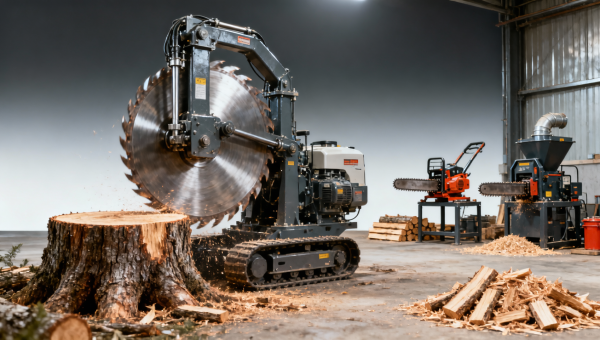
In stump grinders commercial procurement, the biggest performance gap often comes from torque rather than overall machine size. For buyers comparing stump grinders commercial units alongside band sawmills bulk, portable sawmill manufacturer options, log splitters wholesale, wood chipper machines wholesale, and petrol chain saws bulk, understanding torque delivery is critical to productivity, safety, and lifecycle cost. This analysis helps operators, engineers, and procurement teams make more precise equipment decisions.
In forestry maintenance, land clearing, orchard renewal, municipal arboriculture, and primary wood-processing operations, machine dimensions are easy to see, but usable cutting force is what determines output under load. A compact unit with stronger low-speed torque can outperform a physically larger machine when the stump is dense, root flare is irregular, or the operator must maintain grinding speed through wet hardwood fibers.
This matters in B2B procurement because commercial buyers do not purchase stump grinders in isolation. They often evaluate them as part of a broader equipment package that may include sawmilling, splitting, chipping, and chain-cutting assets. In that context, torque is not only a performance metric; it is a planning variable affecting fuel consumption, cycle time, wear rates, crew allocation, and project margin over 12–36 months of operation.
Why torque matters more than machine size in commercial stump grinding
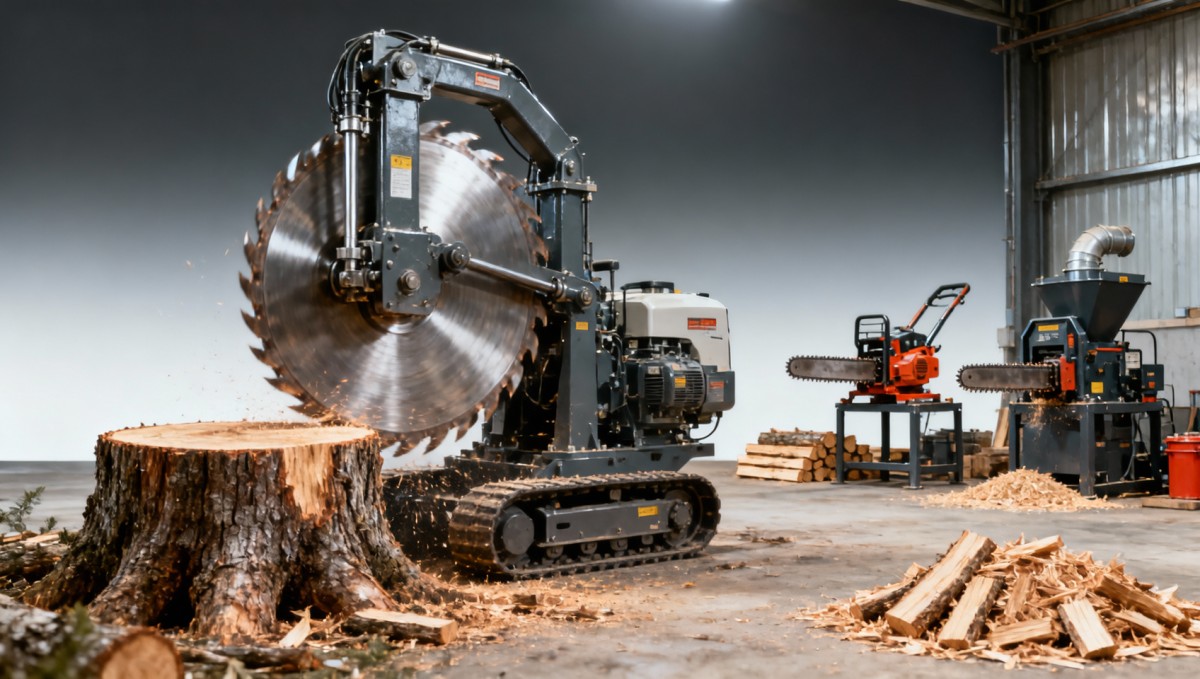
Commercial stump grinding is a resistive cutting process. The cutter wheel meets inconsistent material density, embedded soil, variable moisture, and occasional stone contamination. Under those conditions, machine size alone does not predict work rate. What matters is how much rotational force the drive system can maintain at the wheel when resistance spikes for 2–10 seconds at a time.
A larger chassis may improve stability, transport balance, or fuel capacity, but if the hydraulic system, drive reduction, and engine power curve do not produce strong torque in the working rpm band, the wheel slows too easily. Each drop in wheel speed reduces chip formation efficiency, increases tooth rubbing, and raises heat. Over a full shift of 6–8 hours, those small losses can materially reduce daily stump count.
For operators, torque affects control. High and stable torque lets the wheel recover faster after a hard bite, especially on broad stumps above 500–800 mm diameter. That reduces the temptation to overfeed the cutter head, which is a common cause of tooth breakage and vibration. For safety managers, that translates into smoother cutting behavior and lower exposure to sudden kickback-like responses.
For technical evaluators, torque should be viewed together with three linked variables: available horsepower, hydraulic pressure and flow, and final drive reduction. A machine rated at 35–45 hp can deliver very different field results depending on whether torque is optimized for low-speed cutting or biased toward transport and auxiliary functions. That is why two stump grinders of similar footprint can differ sharply in production value.
Key operating effects of higher usable torque
- Maintains cutter wheel momentum through dense hardwood, buried roots, and mixed-soil contact.
- Reduces repeated passes on stumps in the 300–900 mm range, improving hourly throughput.
- Lowers tooth glazing and friction heat, which can extend consumable intervals by 10%–25% in typical commercial duty.
- Improves operator consistency across varied terrain, particularly on municipal and roadside jobs.
The table below highlights why physical size can be misleading when evaluating stump grinders commercial platforms for mixed-duty industrial use.
The main takeaway is practical: footprint, transport weight, and engine size should never be used as the first screening filters. For commercial buyers, the better question is how torque is produced, transmitted, and sustained during the hardest 20% of the job, because that segment often dictates the real cost of the remaining 80%.
How procurement teams should evaluate torque across commercial equipment lines
A sound procurement method starts by separating brochure metrics from operational metrics. Engine horsepower and overall dimensions are visible and easy to compare, but torque performance often requires deeper review of hydraulic pressure, motor displacement, cutter wheel diameter, tooth count, and gear or belt reduction. A 3-step technical review can prevent under-specification and avoid overspending on unnecessary bulk.
First, define the work profile. If more than 40% of jobs involve old hardwood stumps, roadside municipal removals, or multi-root orchard clearance, torque should receive heavier weighting than transport compactness. If the typical stump diameter is under 250 mm and jobs are short-cycle landscaping tasks, a lighter machine may still be adequate, provided recovery under load remains acceptable.
Second, request field-relevant data instead of only nominal power. Buyers should ask for cutter wheel rpm under load, hydraulic system pressure range, torque behavior during feed spikes, and average consumable replacement intervals. Even without proprietary design disclosure, suppliers should be able to explain whether the machine is tuned for aggressive cutting, balanced duty, or lighter intermittent use.
Third, assess torque in relation to the wider fleet. If the same procurement package includes band sawmills bulk orders, portable sawmill manufacturer contracts, log splitters wholesale units, wood chipper machines wholesale systems, and petrol chain saws bulk supply, then common serviceability matters. A stump grinder with unusual hydraulic architecture or uncommon wear parts can complicate stocking, technician training, and maintenance scheduling across 5–10 pieces of equipment.
A practical 4-factor review model
- Cutting resistance profile: hardwood ratio, average stump diameter, root depth, and soil contamination level.
- Drive efficiency: how engine output translates to usable cutter wheel force.
- Duty cycle: expected operating hours per week, often 15–20 hours for seasonal fleets and 30–50 hours for contractors.
- Support readiness: spare part lead time, technician access, and consumable compatibility.
The following matrix is useful for comparing procurement priorities among different stump grinders commercial candidates.
Procurement teams should note that a lower purchase price can be offset quickly by slower grinding cycles, shorter tooth life, and more operator fatigue. In many B2B scenarios, even a 10% improvement in productive cutting time can outweigh a modest initial price difference within one operating season.
Torque, lifecycle cost, and equipment matching across forestry and wood-processing fleets
When buyers compare stump grinders commercial units with adjacent equipment such as sawmills, splitters, chippers, and petrol chain saws, they should look beyond isolated machine specifications and focus on workflow balance. If stump removal is the first stage in site preparation, underpowered grinding can delay chipping, timber handling, and land restoration. In project-led operations, one slow machine can reduce utilization across the whole equipment chain.
Lifecycle cost is especially sensitive to torque because low-force cutting increases wear intensity. When the wheel cannot hold speed, operators often make more passes, dwell longer in the cut, and consume more fuel per stump. Over 500–1,000 annual operating hours, these patterns can increase maintenance frequency, tooth replacement demand, and unplanned service interventions. The result is not only higher cost, but also less predictable scheduling.
For finance approvers, torque should be translated into operating economics. Useful indicators include estimated stumps per hour, cost per stump category, average fuel use during heavy cutting, and maintenance labor per 100 hours. Even if exact values vary by terrain and species, a disciplined estimate framework is more reliable than choosing by frame size or transport weight alone.
For project managers and distributors, equipment matching also affects sales satisfaction and aftersales burden. A dealer who supplies a visibly large machine that struggles on high-density stumps risks claims, service calls, and reputational damage. By contrast, a correctly matched mid-size unit with stronger torque characteristics tends to perform closer to user expectations in real field conditions.
Where torque changes total cost of ownership
- Fuel efficiency: fewer repeated passes often reduce heavy-load fuel burn per completed stump.
- Consumables: cleaner cutting lowers tooth turnover and reduces holder damage risk.
- Labor planning: improved throughput may reduce overtime or shorten crew deployment windows by 1–2 days on larger clearance projects.
- Fleet synchronization: downstream chipper and sawmill tasks start on time, improving asset utilization.
Typical matching guidance by job type
Light commercial landscaping usually prioritizes access width and transport convenience, but orchard rehabilitation, industrial land clearing, and municipal tree maintenance often require stronger torque reserves. In these heavier settings, it is reasonable to prioritize drive-system robustness even if overall machine dimensions remain moderate.
A useful rule is to review whether the machine can sustain performance for at least 3 consecutive hard cuts without significant bogging. While not a laboratory test, this field-oriented benchmark often reveals more than specification sheets. It also aligns better with the needs of operators who work in variable soils and mixed wood species throughout a normal shift.
Common mistakes when selecting stump grinders commercial models
One common error is equating larger cutter wheel diameter with higher productivity in all conditions. Wheel size matters, but without corresponding torque and stable feed control, the theoretical cutting envelope does not translate into faster completion. Buyers should be cautious of any comparison that highlights dimensions without explaining load response, recovery time, and maintenance implications.
A second mistake is overlooking application variability. A machine that performs well on softwood landscaping work may not be suitable for old hardwood stumps with broad lateral roots. In mixed-duty fleets, underestimating the toughest 25% of jobs can create bottlenecks. This is particularly relevant for contractors and municipal departments that cannot easily reschedule crews once equipment arrives on site.
A third mistake is failing to integrate operator skill level into the buying decision. High-torque machines still require correct feed strategy, tooth inspection discipline, and safe debris management. If the workforce includes new operators, the best procurement outcome often combines stable torque delivery with clear controls, training documentation, and easy access for daily checks.
A fourth mistake is treating stump grinders commercial buying as separate from wider forestry support. Spare parts, cutter teeth, belts, hydraulic hoses, and service intervals should be considered alongside other fleet items. If the business already purchases wood chipper machines wholesale or log splitters wholesale, harmonizing maintenance routines can reduce parts complexity and simplify inventory control over a 12-month cycle.
Risk checklist before final approval
- Confirm the primary stump diameter range and wood hardness profile for at least the next 2 seasons.
- Verify what service parts are stocked locally and what items require factory lead time.
- Check whether the supplier can provide operating guidance for heavy-load use, not just basic startup instruction.
- Review transport, site access, and safety guarding against the real operating environment.
These checks reduce the chance of buying an oversized machine that is inefficient in practice or a compact machine that is overwhelmed in demanding applications. For quality and safety teams, the benefit is better process control. For commercial leaders, the benefit is fewer surprises after commissioning.
Implementation, maintenance planning, and FAQ for commercial buyers
After model selection, commissioning should follow a structured rollout. A 5-step approach is generally effective: delivery inspection, operator handover, first-day field validation, 20-hour maintenance check, and 100-hour performance review. This sequence allows the team to confirm torque behavior, tooth wear pattern, hydraulic response, and safety procedures before the machine enters full production duty.
Maintenance planning should reflect duty intensity rather than calendar time alone. In heavy commercial grinding, daily tooth inspection, weekly belt or coupling review, and scheduled hydraulic checks are standard good practice. For fleets operating 30–50 hours per week, establishing a parts reorder trigger before stock falls below a 2–4 week requirement can prevent downtime during peak land-clearing periods.
Distributors and project owners should also document operator feedback within the first 30 days. Issues such as wheel recovery, vibration, feed smoothness, and fuel behavior often emerge early and can guide setup adjustments. A brief review process protects the investment and helps determine whether the machine’s torque profile is aligned with the intended application mix.
The FAQ below addresses common procurement questions from operators, engineers, and enterprise approvers evaluating stump grinders commercial units in relation to broader forestry and primary processing equipment purchases.
How do I know if a commercial stump grinder has enough torque for my jobs?
Start with the toughest recurring application, not the average one. If many jobs involve dense hardwood or stumps above 500 mm, request field-performance explanation around wheel recovery under heavy bite. Also review tooth wear interval and operator feedback after 20–40 hours of use, because these often reveal whether torque is genuinely usable in real conditions.
Is a bigger machine always better for municipal or contractor use?
No. A bigger machine may offer better stability and fuel capacity, but it can still underperform if torque delivery is weak at the cutter wheel. Access restrictions, trailer limits, and site congestion also matter. Many buyers achieve better results with a mid-size machine that has stronger low-speed force and better recovery behavior.
What service questions should procurement teams ask suppliers?
Ask for routine wear-part availability, expected lead times, maintenance intervals, commissioning support, and recommended operator checks. For commercial fleets, routine parts should ideally be obtainable within 7–15 days. Also confirm whether the supplier supports mixed equipment purchasing if you are sourcing sawmills, chippers, splitters, or chain saws within the same procurement cycle.
When does torque become more important than transport compactness?
Torque becomes the priority when the business case depends on predictable production under difficult cutting conditions. That includes orchard replacement, forestry site preparation, utility corridor clearing, and municipal work where project delays are expensive. In those cases, stable force under load usually has greater financial impact than a modest reduction in transport size.
For commercial buyers, the central insight is clear: stump grinders commercial models often differ more in usable torque than in physical size, and that difference affects output, safety, maintenance burden, and return on investment. A disciplined evaluation of load response, drive efficiency, support readiness, and fleet compatibility will produce better outcomes than simple visual comparison. To discuss application-specific requirements, request a tailored equipment assessment, compare technical configurations, and get a procurement-oriented recommendation for your next forestry or land-clearing project.
Related Intelligence
- Forestry EquipmentWhat to Check Before Buying Used Forestry EquipmentForestry equipment buyers: learn what to check before buying used units, from engine hours and hydraulics to safety, parts support, and Supply Chain Transparency.
- Forestry EquipmentBand sawmills in bulk: where downtime costs really add upBand sawmills bulk buying reveals how downtime drives real costs. Compare portable sawmill manufacturer support, log splitters wholesale, and wood chipper machines wholesale for better uptime.
- Forestry EquipmentPortable sawmill manufacturer claims that deserve a closer lookPortable sawmill manufacturer insights for buyers comparing band sawmills bulk, log splitters wholesale, stump grinders commercial, and wood chipper machines wholesale.
The Morning Broadsheet
Daily chemical briefings, market shifts, and peer-reviewed summaries delivered to your terminal.
