
Log splitters wholesale orders often miss one key safety detail
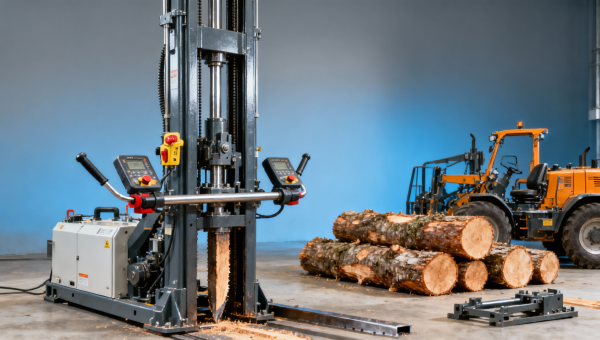
In log splitters wholesale procurement, buyers often compare output, cycle time, and price, yet overlook one critical safety detail that affects operators, compliance teams, and long-term liability. For distributors evaluating portable sawmill manufacturer options, band sawmills bulk packages, stump grinders commercial units, or wood chipper machines wholesale programs, this overlooked factor can shape procurement risk, field performance, and buyer confidence across the entire machinery portfolio.
That detail is not simply a warning label, a painted guard, or a generic emergency stop button. In most commercial and distributor-level buying decisions, the real differentiator is whether the machine incorporates a verifiable two-hand control logic and integrated neutral-safe restart protection that works consistently under field conditions, maintenance cycles, and variable operator skill levels.
For technical evaluators, safety managers, project leads, and distributors, this issue matters because a log splitter is a high-force machine. Even compact hydraulic units can generate 10–25 tons of splitting force, while larger commercial models may exceed 30 tons. At those force levels, a single unsafe activation sequence can create severe injury exposure, downtime, and significant after-sales dispute risk.
In B2B forestry and agricultural machinery sourcing, the safest purchasing decision is usually the one that combines output, serviceability, documentation, and predictable operator protection. Wholesale buyers who understand this early are better positioned to build a machinery portfolio that stands up to dealer scrutiny, end-user expectations, and internal compliance review.
Why the missed safety detail matters more than raw performance specs
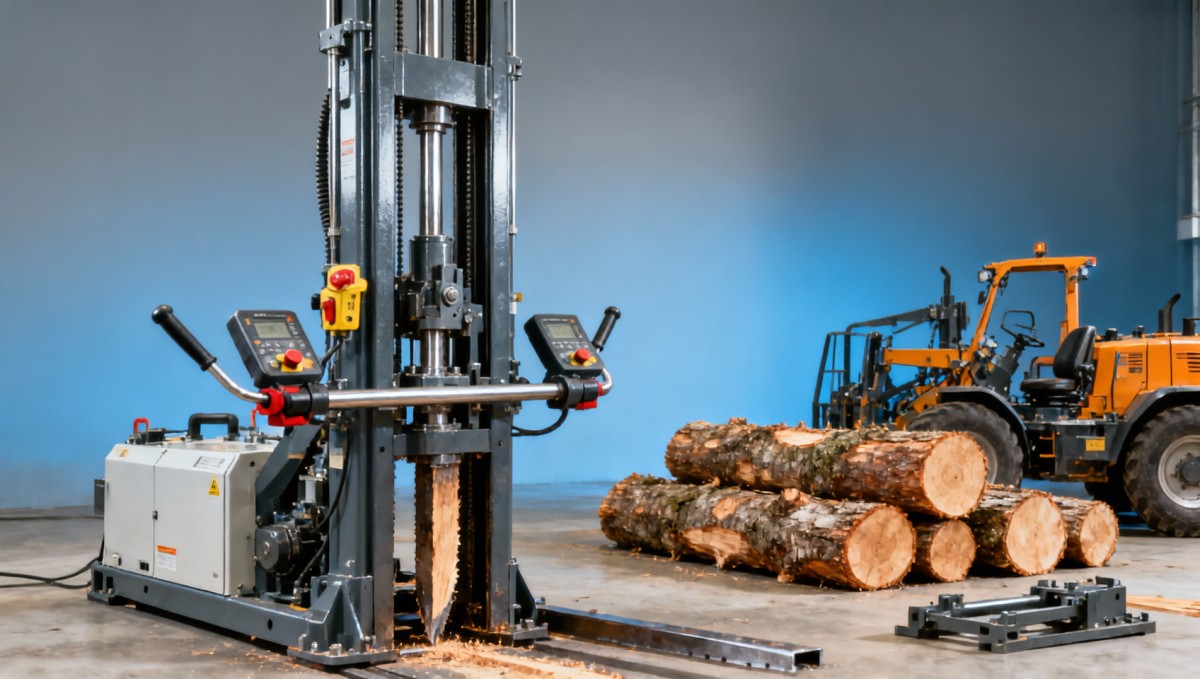
Many wholesale buyers start by filtering machines through engine power, hydraulic pressure, horizontal versus vertical operation, and cycle time. Those are valid commercial criteria, but they do not answer a more operational question: what prevents unintended hand placement, accidental restart, or one-handed activation during repetitive use over an 8–10 hour shift?
In practical use, injuries rarely happen because a brochure listed the wrong tonnage. They happen when control systems are too easy to bypass, when return travel is poorly managed, or when restart behavior after a stall or temporary shutdown is not clearly engineered. For operators processing 3–8 cubic meters of timber per day, repetitive motion and fatigue increase the importance of safe control logic.
A distributor handling multiple equipment lines also faces portfolio spillover risk. If one log splitter model causes operator complaints, near-miss incidents, or warranty disputes, the credibility of related product categories such as stump grinders commercial units or wood chipper machines wholesale offerings can be affected. Buyers do not separate safety reputation as neatly as product catalogs do.
From a financial approval perspective, the missed safety detail can also distort true ownership cost. A machine that is 8% cheaper at purchase may become far more expensive if it creates training burdens, field modifications, higher claim frequency, or dealer reluctance to stock repeat orders. In industrial procurement, the cheapest unit price is rarely the lowest-risk landed cost.
For this reason, log splitters wholesale programs should be evaluated not only as standalone equipment purchases, but as risk-bearing assets inside a broader agricultural and forestry machinery distribution strategy.
What the overlooked feature usually includes
In technical terms, the most important safety detail is often a combination of design elements rather than a single part. Buyers should confirm whether the splitter uses coordinated two-hand operation, guarded actuation spacing, controlled ram return, and restart protection that prevents automatic cycling after interruption or pressure fluctuation.
- Two-hand control that requires both hands to stay in designated positions during the hazardous movement phase.
- Neutral-safe restart behavior so the ram does not resume motion unexpectedly after power restoration.
- Hand-clearance geometry that keeps the operator’s body outside the compression zone.
- Accessible emergency stop or shutdown function that can be reached within 1 movement, not after repositioning.
When these features are present and supported by clear manuals, parts diagrams, and commissioning guidance, the machine is easier to place into commercial fleets, dealer networks, rental channels, or contract forestry operations.
How buyers should assess log splitter safety in a wholesale comparison
A useful procurement review starts by separating visible safety features from functional safety performance. Painted guards, decals, and broad marketing claims are not enough. The purchasing team should request a pre-order checklist covering actuation method, control interlock behavior, emergency stop location, hydraulic hose protection, and operating manual clarity.
This is especially important when evaluating mixed portfolios that include portable sawmill manufacturer proposals, band sawmills bulk orders, and log splitters wholesale packages from the same supplier. A strong OEM may offer competitive frame construction and hydraulic output, yet still provide inconsistent control ergonomics across different machine families.
The table below provides a practical scoring structure that procurement teams, safety officers, and distributors can use during supplier review. It is designed for field-oriented machinery where documentation quality and real operating behavior matter as much as nominal specification values.
The key takeaway is that safety cannot be audited by appearance alone. Functional control design, maintenance access, and supplier documentation should be weighted alongside tonnage and productivity. For many B2B buyers, a balanced 4-factor evaluation model prevents expensive oversights during volume purchasing.
Four questions procurement teams should ask suppliers
- Does the machine require true two-hand engagement during the full hazardous motion, or only during initial activation?
- What happens after engine restart, electrical reset, or hydraulic interruption?
- Can the control layout be easily bypassed by an operator under production pressure?
- What parts and service documentation are delivered with bulk orders of 10, 25, or 50 units?
A note for distributors and resellers
If your business sells across forestry processing lines, the safest sales strategy is to standardize your incoming audit. Use the same baseline review for log splitters wholesale orders, wood chipper machines wholesale programs, and band sawmills bulk inventory planning. A common review method shortens technical comparison time and creates cleaner approval workflows between sales, safety, and finance teams.
Common safety gaps found in bulk machinery orders
Bulk orders create efficiency in pricing and freight, but they also multiply any specification weakness. A single overlooked design issue in a 20-unit shipment can become a network-wide field problem within 30–60 days. That is why high-volume buyers should identify recurring safety gaps before finalizing packaging, labeling, and acceptance terms.
One common gap is inconsistent control layout between batches. The sample unit reviewed by the buyer may feel acceptable, yet the production run may use alternate lever geometry, different spring resistance, or a revised valve housing. Even small changes can affect safe two-hand use, especially in cold-weather operation or when gloves are required.
Another issue is incomplete shipment-level documentation. Machines may arrive with basic startup instructions but no detailed maintenance schedule, no hydraulic diagram, and no parts mapping for frequent wear items. In distributor environments, that can delay field readiness by 3–7 days and increase dependence on informal service interpretation.
A third gap appears in packaging and pre-delivery inspection. If protective components shift during transit, hoses may rub against metal edges, switches may loosen, and control guards may need adjustment before commissioning. These are manageable problems, but only if the supplier and buyer agree on a structured incoming inspection protocol.
Typical gaps and the operational effect
The following comparison can help project managers and quality teams identify which gaps deserve escalation before a wholesale contract is approved.
The pattern is clear: wholesale machinery risk often comes from details that are too small for a sales brochure but too important for field operation. Buyers who build acceptance checks around these gaps can reduce deployment problems across multiple equipment categories, not just log splitters.
Minimum incoming inspection checklist
- Inspect control function on 100% of units, not just 1 sample per container.
- Check hose routing, abrasion points, and visible leaks after first startup.
- Verify emergency stop or shutdown reachability within the normal operator stance.
- Confirm manual, warning labels, and service parts references are included per unit or per pallet lot.
Procurement, compliance, and lifecycle cost: the wider decision framework
For enterprise buyers and financial approvers, the purpose of a safety review is not only to avoid incidents. It is to control lifecycle cost across procurement, commissioning, service, and reputation. A machine that enters the field smoothly can shorten dealer onboarding by 1–2 weeks, reduce avoidable service calls, and simplify internal approval for repeat purchase cycles.
This broader view is particularly relevant for organizations that source across agricultural and forestry machinery categories. The same distributor may need to compare log splitters wholesale terms, portable sawmill manufacturer capability, and wood chipper machines wholesale support packages in a single quarter. Standardizing safety and documentation requirements across those categories improves negotiation leverage and reduces review fragmentation.
Quality control and safety management teams should also consider service intervals and operator training burden. If one model requires more frequent hydraulic inspection, unclear startup procedures, or repeated control explanation, the cost is not limited to spare parts. It appears in labor time, dealer support load, and delayed productivity during seasonal demand peaks.
In many primary processing settings, equipment utilization is uneven. A splitter may run lightly for weeks and then operate intensively during harvest preparation, land-clearing, or storm cleanup periods. Machines with better restart protection, stable controls, and clearer maintenance instructions usually handle those demand swings more reliably than units chosen on price alone.
A practical decision model for enterprise buyers
- Assign 25% of the evaluation score to safety function and control logic.
- Assign 25% to serviceability, spare parts response, and technical documents.
- Assign 25% to performance metrics such as tonnage, cycle time, and duty profile.
- Assign 25% to commercial terms including MOQ, lead time, packaging, and warranty clarity.
This 4-part model is simple enough for distributors and robust enough for cross-functional teams. It also helps prevent a common procurement failure: over-scoring output while under-scoring safe daily use.
Where decision-makers often go wrong
The most common mistake is assuming that a machine suitable for demonstration use is automatically suitable for dealer distribution or fleet deployment. Demo conditions last 15–30 minutes. Real use may involve hundreds of cycles per day, variable timber diameter, multiple operators, and inconsistent maintenance discipline. Procurement teams should buy for actual use conditions, not showroom impressions.
FAQ for distributors, technical evaluators, and end-user operations teams
The questions below reflect common concerns during forestry and agricultural machinery sourcing. They also help buyers connect technical safety review with practical purchasing decisions, especially when multiple machine categories are being assessed at once.
How many units should be tested before approving a wholesale log splitter order?
For small orders of 5–10 units, each machine should ideally be checked at commissioning. For container-scale purchases or larger mixed shipments, buyers commonly inspect 100% of control function and a smaller sample for extended run testing, such as 10% of units or at least 2–3 machines per batch. Control safety is not an area where sampling should be too light.
What lead time details matter beyond the quoted delivery date?
Ask for production lead time, parts support lead time, and document delivery timing separately. A shipment may arrive in 30–45 days, but if parts diagrams or commissioning instructions arrive a week later, field rollout slows immediately. For distributors, documentation readiness can be as important as freight readiness.
Are the same safety concerns relevant to sawmills and wood chippers?
Yes, although the hazard zones differ. Portable sawmill manufacturer selection should focus on guarding, feed handling, and emergency stop accessibility. Wood chipper machines wholesale review should emphasize infeed safety, shutdown access, and maintenance isolation procedures. The shared principle is that control design must resist misuse under real production pressure.
What documents should a serious supplier provide with bulk machinery orders?
At minimum, buyers should request an operating manual, parts list, maintenance interval guide, basic hydraulic or electrical reference where relevant, and a pre-delivery or acceptance checklist. If the order supports dealer resale, quick-start material and service troubleshooting notes are also valuable during the first 90 days after delivery.
For buyers building or refreshing a forestry machinery portfolio, the overlooked safety detail in log splitters wholesale procurement is not a minor accessory issue. It is a core selection criterion that influences operator protection, approval speed, service burden, and long-term commercial confidence. When two-hand control behavior, restart protection, documentation quality, and incoming inspection planning are addressed early, procurement becomes more predictable and defensible.
AgriChem Chronicle supports technical buyers, distributors, and industrial decision-makers with practical intelligence across agricultural and primary processing equipment categories. If you are comparing log splitters, portable sawmills, stump grinders, or wood chipper procurement options, now is the right time to review your specification checklist, request a tailored evaluation framework, and get in touch for deeper product and sourcing guidance.
Related Intelligence
- Forestry EquipmentWhat to Check Before Buying Used Forestry EquipmentForestry equipment buyers: learn what to check before buying used units, from engine hours and hydraulics to safety, parts support, and Supply Chain Transparency.
- Forestry EquipmentBand sawmills in bulk: where downtime costs really add upBand sawmills bulk buying reveals how downtime drives real costs. Compare portable sawmill manufacturer support, log splitters wholesale, and wood chipper machines wholesale for better uptime.
- Forestry EquipmentPortable sawmill manufacturer claims that deserve a closer lookPortable sawmill manufacturer insights for buyers comparing band sawmills bulk, log splitters wholesale, stump grinders commercial, and wood chipper machines wholesale.
The Morning Broadsheet
Daily chemical briefings, market shifts, and peer-reviewed summaries delivered to your terminal.
