
What a portable sawmill manufacturer should prove before shipment
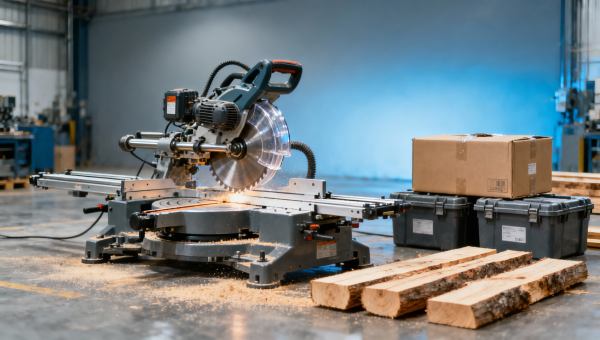
Before any unit leaves the factory, a reliable portable sawmill manufacturer should prove far more than basic assembly quality. For buyers comparing band sawmills bulk supply, log splitters wholesale options, stump grinders commercial models, or wood chipper machines wholesale programs, pre-shipment evidence of performance, safety, compliance, and parts support is critical. This guide outlines the documents, tests, and assurances serious manufacturers must provide to operators, distributors, and procurement teams.
In forestry and primary processing procurement, shipment approval is not a formality. It is the point where technical evaluation, financial control, operator safety, and long-term service risk intersect. A portable sawmill that arrives with incomplete testing records or unclear parts commitments can create downtime within the first 30 to 90 days, especially in remote timber sites where replacement lead times are long.
That is why experienced buyers do not only ask whether a machine runs. They ask what has been measured, documented, verified, and signed off before loading. For distributors, this affects warranty exposure. For project managers, it affects site commissioning schedules. For safety and quality teams, it determines whether the machine can be accepted into standard operating procedures without avoidable corrective actions.
The strongest portable sawmill manufacturer can show evidence across 4 core areas: mechanical performance, safety and compliance, packing and shipment readiness, and after-sales support capability. The sections below break down what should be proven before shipment and how procurement teams can assess that proof efficiently.
Pre-shipment performance proof must go beyond a startup demonstration
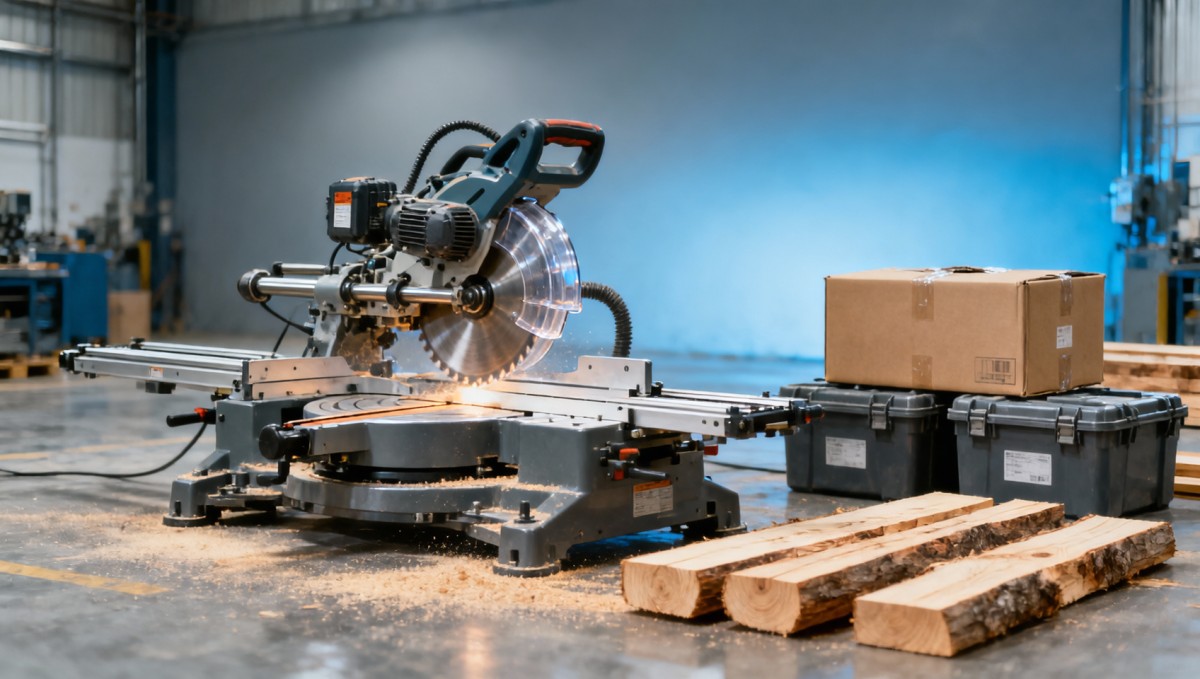
A short factory video of the engine running is not enough. For a portable sawmill manufacturer serving commercial buyers, pre-shipment proof should include functional testing under realistic operating conditions. That means verifying feed system movement, blade tracking, head lift accuracy, carriage travel consistency, lubrication delivery, and emergency stop response before the machine is cleared for dispatch.
For band sawmills bulk supply, the issue is repeatability across units. One sample machine performing well does not guarantee lot consistency. Buyers should request a unit-level inspection record showing critical checkpoints such as blade wheel alignment, rail straightness, fastener torque verification, hydraulic response if equipped, and no-load plus loaded running tests. In many practical procurement programs, 20 to 40 key checkpoints are used for final release.
Technical evaluation teams should also look for dimensional tolerances that directly affect sawing quality. A practical benchmark is whether bed level deviation, head travel deviation, and guide alignment are kept within stated tolerances such as ±0.5 mm to ±1.5 mm over defined reference distances. The exact threshold varies by machine size, but the manufacturer should define it clearly instead of relying on subjective claims like “smooth cutting.”
What factory testing should include
A credible testing sequence usually contains 3 stages: static inspection, no-load running, and simulated cutting or load testing. Static inspection confirms assembly accuracy. No-load running identifies vibration, tracking, or control irregularities. Simulated cutting demonstrates whether the system maintains stable travel speed, blade tension behavior, and acceptable cut consistency over a defined cycle.
- Static checks: frame straightness, belt tension, electrical continuity, guard installation, fluid filling, and labeling completeness.
- No-load checks: 15 to 30 minutes of continuous operation, abnormal noise review, temperature rise observation, and control response testing.
- Load checks: sample timber cutting, feed consistency verification, sawdust evacuation review, and post-test inspection for loosening or leakage.
The table below shows the type of evidence institutional buyers should expect from a portable sawmill manufacturer before shipment approval.
The key takeaway is simple: shipment should depend on measurable records, not verbal assurance. If a manufacturer cannot provide documented results for these basic items, buyers should treat that as a risk signal, especially for multi-unit orders, dealership stocking, or remote deployment projects.
Safety, compliance, and documentation should be validated before loading
For quality controllers and safety managers, mechanical performance is only one part of acceptance. A portable sawmill manufacturer should also prove that the machine has been prepared with the right safety labeling, guarding, manuals, and serial traceability. This matters not only for direct users, but also for importers and distributors who may face local inspection requirements during customs clearance or installation.
At minimum, pre-shipment documentation should cover the machine identification plate, operating manual, maintenance instructions, parts list, electrical or hydraulic schematics when applicable, and a final inspection report linked to the serial number. If engines or motors are sourced from third parties, buyers should confirm that those components are documented consistently across all shipped units in the batch.
Where different markets apply different standards, the supplier should clarify what is included and what remains the importer’s responsibility. Serious manufacturers do not blur this boundary. Instead, they specify the safety scope clearly: which guards are installed, what warning decals are applied, what emergency functions were tested, and which market-specific certifications may require additional handling before local sale or commissioning.
Documents procurement teams should request
The most useful document pack is one that supports 5 downstream needs: receiving inspection, operator training, maintenance planning, spare parts ordering, and warranty processing. If any of those five are missing, post-delivery friction increases quickly. In practice, many disputes begin because the unit arrived without a parts diagram, incomplete torque instructions, or no signed inspection sheet.
- Final inspection checklist tied to serial number and shipment date.
- Operator manual covering startup, blade changes, lubrication, and shutdown steps.
- Preventive maintenance schedule with hour-based intervals such as every 50, 100, or 250 hours.
- Exploded parts list for consumables and wear items.
- Packing list and accessory confirmation for tools, spare blades, or optional attachments.
The following table helps buyers compare what “complete documentation” should look like before a machine is released from the factory.
For enterprise buyers, documentation quality often predicts after-sales quality. A supplier that cannot organize a complete release file for one machine will usually struggle even more when supporting 10, 20, or 50 units across different territories.
Packaging, shipment readiness, and parts support must be proven in practical terms
Many avoidable failures happen after factory testing but before commissioning. Moisture exposure, impact during inland transport, missing fasteners, and poor crate design can all turn a compliant machine into a damaged delivery. That is why a portable sawmill manufacturer should prove not only that the machine passed inspection, but also that it has been prepared for the logistics route it will actually travel.
For export shipments, the packing method should match the expected transit cycle, which may range from 7 to 45 days depending on route, port congestion, and final inland delivery. Machines with exposed guides, pulley areas, or control panels need protective treatment. Loose accessories should be labeled by item count. Corrosion-sensitive metal parts may need oil film, sealed wrapping, or boxed placement rather than open pallet exposure.
Equally important is spare parts readiness. Buyers of band sawmills bulk supply or wood chipper machines wholesale programs should ask whether wear parts are available ex-stock, built to order, or sourced from third parties with uncertain lead times. For field service planning, parts lead time can matter more than purchase price. A low-cost machine with a 6 to 8 week spare parts delay can become a far more expensive asset over its first operating year.
Shipment readiness checklist
Procurement teams should verify shipment readiness with practical questions rather than generic promises. The points below are especially relevant for distributors, remote-site operators, and project-based purchasers managing tight installation windows.
- Has the machine been drained, locked, or stabilized correctly for transit where needed?
- Are crates or steel frames suitable for fork handling and repeated warehouse moves?
- Are accessory boxes matched to the packing list by quantity and label?
- Are recommended spare parts for the first 6 to 12 months quoted separately?
- Is there a service contact path with response timing such as within 24 to 48 hours?
Why parts support should be reviewed before payment release
For financial approvers, pre-shipment review should include supportability, not just equipment value. A complete initial package often includes 1 set of critical wear items, a recommended spare list by 3-month and 12-month horizon, and clear ordering references. That reduces unplanned stoppages and prevents disputes over whether a failed item is consumable, warranty-related, or incorrectly installed.
This is especially relevant when comparing related forestry equipment lines such as log splitters wholesale or stump grinders commercial models. Manufacturers with disciplined shipment control usually show the same discipline in accessory management, spare parts coding, and service communication. Those are strong indicators for long-term partnership quality.
A strong factory release process should align operators, engineers, and decision-makers
The best pre-shipment process is not designed only for the factory. It is designed for everyone who touches the asset afterward. Operators need safe setup guidance. Engineers need tolerances and diagrams. Distributors need parts references. Project managers need predictable delivery and installation milestones. Executives and finance teams need confidence that the asset will not generate avoidable claims within the first operating cycle.
A practical release workflow usually has 4 gates: production completion, internal QA inspection, buyer verification or remote approval, and logistics sign-off. For larger orders, especially 5 units or more, a batch release summary can help decision-makers track unit status, open issues, and packing completion in one view. This reduces back-and-forth and speeds final payment approval without weakening control.
For technical assessment teams, the manufacturer’s willingness to share structured evidence often reveals maturity. Clear photos, test videos linked to serial numbers, signed checklists, and transparent issue logs show process discipline. Vague statements such as “all machines checked carefully” do not. In B2B procurement, process reliability is often a more dependable indicator than sales language.
Questions buyers should ask before approving shipment
The following decision points help procurement teams separate a prepared portable sawmill manufacturer from a supplier that is only ready to invoice.
- Can the supplier provide unit-level test records, not just a generic factory certificate?
- Are operating manuals and parts lists available in the language needed by end users or distributors?
- What wear parts are recommended for the first 500 operating hours?
- What is the average response time for technical support and spare parts quotation?
- What items are checked again after packing to prevent transit-related omissions?
Common buyer mistakes
One common mistake is approving shipment based only on production photos. Another is focusing entirely on the machine headline specification while ignoring the release file. A third is failing to define acceptance criteria before balance payment. Each of these can increase claims risk, especially in mixed procurement portfolios that include sawmills, wood chippers, and other forestry processing equipment.
A better approach is to issue a pre-shipment checklist as part of the purchase order or technical annex. If the supplier knows in advance that 12 to 15 specific documents and tests are required, approval becomes faster and less subjective. That benefits both sides by reducing inspection disputes and late-stage renegotiation.
FAQ for buyers evaluating portable sawmill shipment approval
The questions below reflect common search intent from information researchers, operators, engineering reviewers, and distributors. They also help standardize internal evaluation when multiple departments must approve a purchase.
How much pre-shipment evidence is reasonable to request?
For a single unit, buyers should expect at least 8 to 12 useful records or proofs, including testing confirmation, serial-linked inspection, packing confirmation, manual set, and parts documentation. For orders of several units, request both unit-level records and a batch summary. That gives enough visibility without creating an unrealistic paperwork burden.
Is a remote video inspection enough?
Remote video inspection can be effective if it is structured. It should show serial number identification, key controls, safety functions, start-up, no-load run, and at least one simulated operating sequence. Video alone is not enough if there is no accompanying checklist, measurement record, or packing confirmation.
What spare parts should be considered before shipment?
At minimum, review blades, belts, bearings where applicable, lubrication items, filters, switches, and high-frequency fasteners or wear components. A 6-month spare package is often suitable for regular users, while distributors may prefer a broader 12-month starter stock to improve service response in their local market.
What is a reasonable support commitment after delivery?
A practical support commitment is a first technical response within 24 to 48 hours, plus a defined parts quotation or troubleshooting path. The exact warranty terms may vary, but buyers should ensure that support contacts, escalation channels, and consumable-versus-warranty boundaries are written clearly before shipment.
Portable sawmill procurement becomes far safer when shipment approval is tied to evidence rather than assumption. Manufacturers that can prove testing, documentation completeness, packing readiness, and parts support are better positioned to serve operators, distributors, and industrial buyers over the full equipment lifecycle. If you are evaluating a supplier or preparing a forestry equipment sourcing plan, now is the right time to request a structured pre-shipment checklist, compare support commitments, and get a tailored equipment review. Contact us to discuss your application, request a customized evaluation framework, or learn more about reliable sourcing solutions for sawmills and related wood processing equipment.
Related Intelligence
- Forestry EquipmentWhat to Check Before Buying Used Forestry EquipmentForestry equipment buyers: learn what to check before buying used units, from engine hours and hydraulics to safety, parts support, and Supply Chain Transparency.
- Forestry EquipmentBand sawmills in bulk: where downtime costs really add upBand sawmills bulk buying reveals how downtime drives real costs. Compare portable sawmill manufacturer support, log splitters wholesale, and wood chipper machines wholesale for better uptime.
- Forestry EquipmentPortable sawmill manufacturer claims that deserve a closer lookPortable sawmill manufacturer insights for buyers comparing band sawmills bulk, log splitters wholesale, stump grinders commercial, and wood chipper machines wholesale.
The Morning Broadsheet
Daily chemical briefings, market shifts, and peer-reviewed summaries delivered to your terminal.
