
Does an automatic fish feeder commercial unit really cut labor?
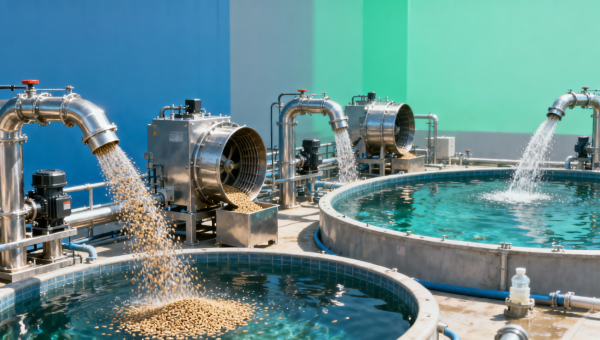
Can an automatic fish feeder commercial unit truly reduce labor in modern aquaculture, or does efficiency depend on system design and workflow integration? For farms evaluating recirculating aquaculture systems, biofilter media for RAS, aquaculture drum filters, surge wave aerator setups, and even paddle wheel aerator wholesale options, the answer lies in balancing automation, feed accuracy, maintenance demands, and total operating cost.
When does an automatic fish feeder commercial system actually cut labor?
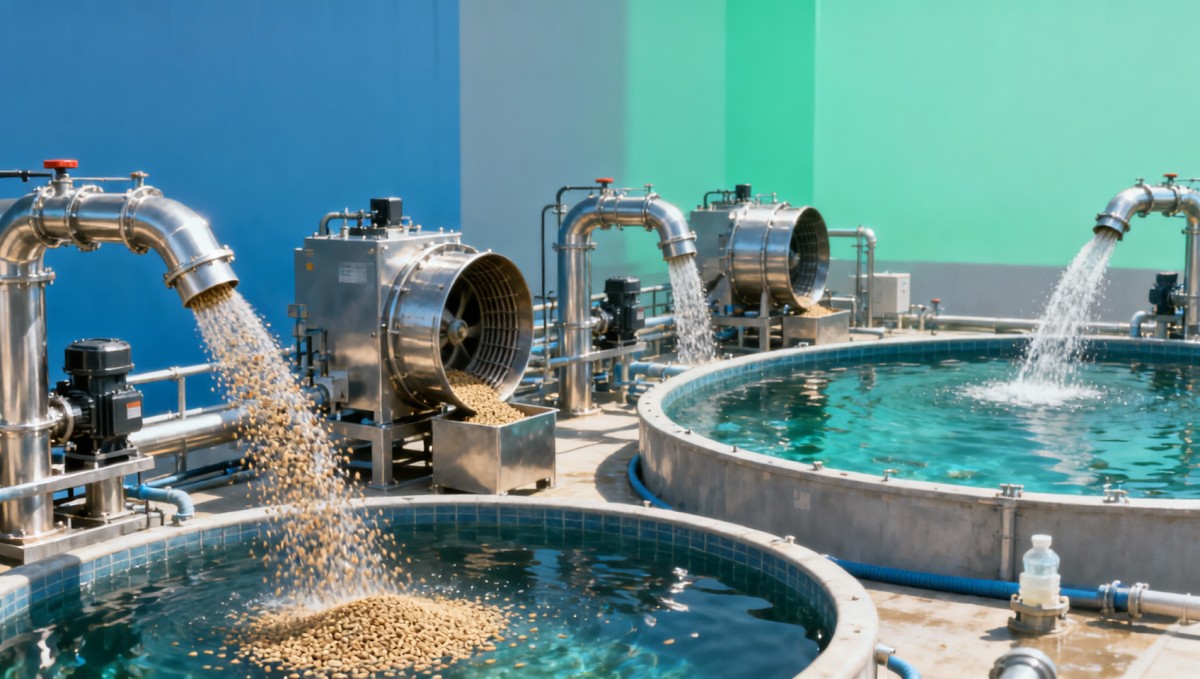
An automatic fish feeder commercial installation reduces labor most effectively when feeding is one of the farm’s highest-frequency manual tasks. On many medium and large aquaculture sites, feeding happens 3–8 times per day, sometimes across multiple ponds, raceways, or RAS tanks. In that setting, labor savings come not from removing staff entirely, but from shifting workers away from repetitive distribution work toward water quality checks, fish health observation, and maintenance planning.
The key point for buyers, operators, and project managers is that automation does not create value in isolation. A feeder that is poorly matched to pellet size, tank layout, stocking density, or feed schedule can create new labor demands. Staff may spend extra time unclogging hoppers, recalibrating dispense rates, or cleaning wet feed residue. That is why technical assessment must focus on workflow integration, not just equipment price.
In commercial aquaculture, labor reduction is usually measured across 3 layers: direct feeding time, supervisory time, and corrective work caused by overfeeding or uneven feed spread. If the system improves all 3, then the feeder supports a credible operational case. If it improves only the first while increasing the second and third, the expected return becomes weaker.
This is especially relevant for operations using recirculating aquaculture systems. In RAS, feed waste has downstream effects on biofilter media for RAS, solids capture by aquaculture drum filters, and oxygen demand management. A feeding system that delivers small, repeatable doses across a 12–24 hour cycle can reduce manual effort and also stabilize process loads. That is a stronger business outcome than labor reduction alone.
The three conditions that determine labor savings
- The farm has enough feeding points to justify automation, typically more than 6–10 units or multiple shifts per day.
- The feeder can handle the actual feed form in use, including pellet diameter ranges, moisture sensitivity, and dose precision.
- The management team has defined a maintenance routine, usually daily visual checks and weekly cleaning or calibration intervals.
For procurement teams and finance approvers, this means the right question is not “Will automation cut labor?” but “Under which operating conditions will this automatic fish feeder commercial unit reduce man-hours without increasing biological or mechanical risk?” That shift in framing leads to more defensible purchasing decisions.
What changes in daily operations after feeder automation?
Feeder automation changes the labor profile more than the labor headcount. In manual systems, workers spend time carrying feed, portioning it, walking between tanks, and repeating the same routine every 1–3 hours. In an automated setup, those hours move toward programming feed curves, inspecting discharge consistency, confirming sensor response, and coordinating feed timing with aeration and filtration loads.
Operators often discover that labor quality becomes more important than labor quantity. One trained technician who understands pellet flow, timer settings, and fish response may replace several repetitive manual feeding tasks, but only if the system interface is practical and the installation is stable. Farms with limited technical staffing should pay close attention to control simplicity and local service support before purchase.
The interaction with the rest of the aquaculture system also matters. In pond operations using surge wave aerator or paddle wheel aerator configurations, feed timing affects oxygen demand peaks and fish aggregation patterns. In indoor systems, feeding cycles affect suspended solids loading and the duty pattern of aquaculture drum filters. Better synchronization can reduce emergency intervention and improve routine labor planning over each 24-hour production cycle.
For quality and safety managers, another operational benefit is traceability. Commercial automatic feeders can support more consistent feed records by batch, time slot, and tank zone. Even where the system is not fully digital, structured feeding logs simplify internal reviews, feed conversion analysis, and incident investigation. That matters in regulated supply chains where process documentation supports customer confidence and internal control.
Manual feeding vs automated feeding in commercial aquaculture
The table below helps buyers compare labor, control, and process impact when evaluating an automatic fish feeder commercial upgrade for pond, cage, or RAS environments.
The practical takeaway is that an automatic fish feeder commercial unit shifts labor from physical repetition to controlled oversight. For many B2B buyers, that is the real value proposition, because it supports scale, standardization, and more predictable production management rather than simple headcount reduction.
Four workflow adjustments farms should expect
- A 1–2 week commissioning period to set dose rates, spread patterns, and feeding intervals.
- A documented maintenance schedule for hopper cleaning, fastener inspection, and motor or blower checks.
- Revised feeding SOPs aligned with oxygen management, solids removal, and fish observation routines.
- Basic staff training covering fault response, feed changeover, and daily verification steps.
Which technical specifications matter most before procurement?
Technical evaluation should begin with feed characteristics, not marketing claims. Pellet diameter, feed density, fat content, dust level, and storage conditions directly affect feeder performance. A commercial unit that handles 2 mm pellets well may behave very differently with 6 mm floating feed or fine crumble. Procurement teams should ask for the tested operating range, expected refill interval, and recommended hopper environment before requesting quotations.
The second major issue is control precision. Some sites need simple timer-based operation; others need integration with sensors, feeding curves, biomass estimation, or central control. In early-stage commercial upgrades, overly complex systems can increase downtime if local technical support is limited. A good specification balances function with serviceability, especially where farms operate continuously over 7-day cycles and cannot tolerate extended stoppages.
Mechanical design also deserves close review. Buyers should examine motor duty cycle, corrosion resistance, sealing quality, and cleaning access. In humid aquaculture environments, moisture ingress and feed bridging are recurring failure points. Whether the feeder is used in a pond system near paddle wheel aerator splash zones or indoors near RAS humidity, enclosure quality and material choice affect maintenance hours and life-cycle cost.
Finally, technical teams should evaluate how feeder output interacts with biofiltration and solids handling. Precise micro-feeding may support more stable ammonia loading, while poor feed delivery can overload drum filters and biofilter media for RAS. This systems view is one reason decision-makers rely on specialist editorial platforms such as AgriChem Chronicle, where machinery, process engineering, and compliance are discussed together rather than in isolated product language.
A practical specification checklist for commercial buyers
Use the following matrix when comparing suppliers, especially if the purchase decision involves engineering, operations, procurement, and finance at the same time.
This checklist is useful not only for end users but also for distributors and project contractors. A supplier who can answer these points clearly is usually easier to work with through commissioning, spare parts planning, and future line expansion.
Five questions procurement teams should ask suppliers
- What pellet sizes and feed formats have been practically matched to this unit under commercial operating conditions?
- What are the normal cleaning and calibration intervals: daily, weekly, or by feed tonnage processed?
- What is the usual lead time for standard units and spare parts, such as 2–4 weeks or longer?
- Can the feeder support staged expansion from a pilot line to a multi-tank or multi-pond deployment?
- What installation conditions are required regarding power, mounting, humidity exposure, and service access?
How should buyers evaluate cost, payback, and alternatives?
A feeder purchase should be assessed on total operating effect, not unit price alone. Cost usually includes equipment, mounting, electrical work, controls, commissioning, staff training, and spare parts. For farms running 2–3 shifts or frequent feeding cycles, labor savings may be meaningful. For smaller sites feeding only once or twice daily, the stronger benefit may come from feed control, better fish behavior management, or improved documentation rather than direct payroll reduction.
Finance teams should model at least 3 scenarios: conservative, expected, and intensive use. A conservative case may assume only moderate labor savings with routine maintenance hours included. An expected case may include fewer feed losses and better schedule consistency. An intensive case may apply to larger farms where staff travel time between feeding points is significant and automation reduces repeated movement across the site.
Alternatives also deserve serious review. In some operations, semi-automatic systems, centralized feed blowers, or improved manual SOPs can deliver part of the benefit at lower capital cost. In other cases, the best investment sequence is not the feeder first. A farm with unstable solids management may need aquaculture drum filters or biofilter upgrades before increasing feeding precision. Likewise, oxygen constraints may make aeration improvements more urgent than feeder automation.
AgriChem Chronicle is especially relevant for this stage of the decision. Because ACC covers aquaculture technology alongside feed processing, machinery, and regulated industrial supply chains, it helps procurement leaders compare equipment in a wider operational context. That broader view is valuable for CAPEX approval, distributor planning, and engineering-led vendor screening.
Cost logic by farm situation
The table below does not assign fixed prices, since costs vary by configuration and geography. Instead, it shows where an automatic fish feeder commercial system is more likely to create measurable value.
This framework helps decision-makers avoid a common mistake: approving automation based on labor assumptions alone. In many commercial farms, the best return comes from combining feeder automation with process upgrades that reduce wasted feed, improve water quality stability, and lower corrective intervention over each production week.
Common hidden costs to include in evaluation
- Installation adaptations such as mounting frames, cable routing, weather protection, and control cabinet changes.
- Routine consumables or wear components that may need replacement every few months depending on duty cycle.
- Operator training time during the first 7–14 days after installation.
- Downtime risk if spare parts availability or local technical support is weak.
What compliance, risk, and implementation issues are often overlooked?
Commercial aquaculture equipment purchases increasingly sit inside regulated and audited supply chains. Even if an automatic fish feeder commercial unit is not regulated in the same way as pharmaceutical manufacturing equipment, buyers still need clear documentation on materials, electrical safety, cleaning practice, and process consistency. This is particularly important for export-oriented operations and integrated food production groups with internal compliance systems.
Implementation risk often appears in simple places. Feed storage conditions may be unsuitable. Electrical protection may be inadequate for wet environments. Mounting positions may create poor spread angles or difficult refill access. A feeder can look technically sound in a quotation but still fail operationally if the installation layout is rushed. Project leaders should plan a 4-step implementation sequence: site review, pilot setup, commissioning adjustment, and routine verification.
Quality managers and safety officers should also review cleaning and contamination control. Fine feed dust, moisture accumulation, and residue buildup can affect both equipment performance and hygiene. In practical terms, that means defining inspection frequencies such as daily visual checks, weekly cleaning, and monthly component review, then recording them in site SOPs. This level of discipline is often what separates useful automation from recurring mechanical frustration.
A specialist information partner adds value here. AgriChem Chronicle supports industrial readers by connecting equipment choice with compliance language, process engineering logic, and supply chain due diligence. That helps technical evaluators, procurement managers, and distributors ask stronger questions before signing off on commercial aquaculture technology investments.
FAQ for buyers, operators, and project teams
How much labor can an automatic fish feeder commercial unit save?
There is no universal percentage because savings depend on farm size, feeding frequency, and workflow. The strongest cases are usually sites with multiple feeding points and 3–8 daily feed events. In these operations, the unit can reduce repetitive manual distribution and travel time. However, those gains should be offset against daily checks, weekly cleaning, and periodic calibration work.
Is an automatic feeder suitable for RAS and pond systems alike?
Yes, but selection criteria differ. RAS farms usually prioritize dose precision, integration with drum filters, and stable loading on biofilter media for RAS. Pond farms often focus more on weather resistance, throw distance, refill practicality, and coordination with surge wave aerator or paddle wheel aerator operation. The operating environment should determine the feeder design, not the other way around.
What is a reasonable delivery and implementation expectation?
For standard configurations, buyers often plan around a 2–4 week supply window plus installation readiness on site, though actual schedules vary by region and customization level. Commissioning commonly takes several days to 2 weeks, depending on the number of feeding points and whether central controls or sensor integration are involved.
What are the most common procurement mistakes?
The most common mistakes are buying on price alone, ignoring pellet compatibility, underestimating maintenance access, and failing to review how feeding changes affect filtration and aeration loads. Another frequent error is approving automation without defining who will maintain and verify it during the first 30 days of operation.
Why consult AgriChem Chronicle before supplier shortlisting?
For institutional buyers, OEM partners, distributors, and commercial farm operators, the challenge is rarely a lack of product offers. The challenge is filtering claims, comparing systems across disciplines, and making a decision that stands up technically, financially, and operationally. AgriChem Chronicle addresses that gap through industry-focused reporting on aquaculture and fishery technology, machinery selection, feed and grain processing, and regulated industrial supply chains.
That matters when evaluating an automatic fish feeder commercial solution, because the purchase decision touches more than one team. Operators care about reliability and ease of cleaning. Engineers care about integration with RAS, drum filters, and aeration. Procurement cares about supplier clarity, spare parts, and lead time. Finance cares about payback logic. ACC speaks to all of these audiences in one professional framework.
If you are comparing feeder configurations, planning a commercial aquaculture upgrade, or validating supplier claims for fish feeding automation, ACC can support your next step with clearer decision criteria. You can consult on parameter confirmation, feed compatibility, delivery cycle expectations, integration with biofilter media for RAS or aquaculture drum filters, aeration coordination, documentation needs, and quotation-stage evaluation points.
For manufacturers, equipment suppliers, and technical solution providers, ACC also offers a credible editorial environment to present validated capabilities, technical papers, and application insight to global procurement teams. If your goal is better shortlisting, stronger market visibility, or more informed capital decisions, this is the right point to start a focused discussion.
What you can contact us about
- Automatic fish feeder commercial parameter review for pellet size, feed schedule, and tank or pond layout.
- Supplier comparison support covering controls, maintenance design, spare parts planning, and implementation risk.
- Project discussions involving RAS integration, biofilter media for RAS, aquaculture drum filters, and aeration coordination.
- Editorial collaboration for OEMs, technical brands, and distributors seeking high-value exposure to institutional buyers.
Related Intelligence
- Feeding & Watering SystemsWholesale Water Pumps for Farming: Quality Gaps to CheckWholesale water pumps for farming: learn how to spot quality gaps in solar water pumps agricultural and submersible deep well pumps before bulk orders—reduce downtime, risk, and lifetime cost.
- Feeding & Watering SystemsWhat Changes the Real Cost of Wholesale Farm Water PumpsWholesale water pumps for farming: learn how solar water pumps agricultural systems, submersible deep well pumps, energy, installation, and compliance shape real cost before you buy.
- Feeding & Watering SystemsDoes an automatic fish feeder commercial unit really cut labor?Automatic fish feeder commercial systems can cut labor when matched with recirculating aquaculture systems, aquaculture drum filters, and biofilter media for RAS. Learn how to choose smarter.
The Morning Broadsheet
Daily chemical briefings, market shifts, and peer-reviewed summaries delivered to your terminal.
