

The Authority in Global Agricultural Chemistry & Bio-Resources
Bulk Ammonium Sulfate and the Moisture Problem Few Plan For
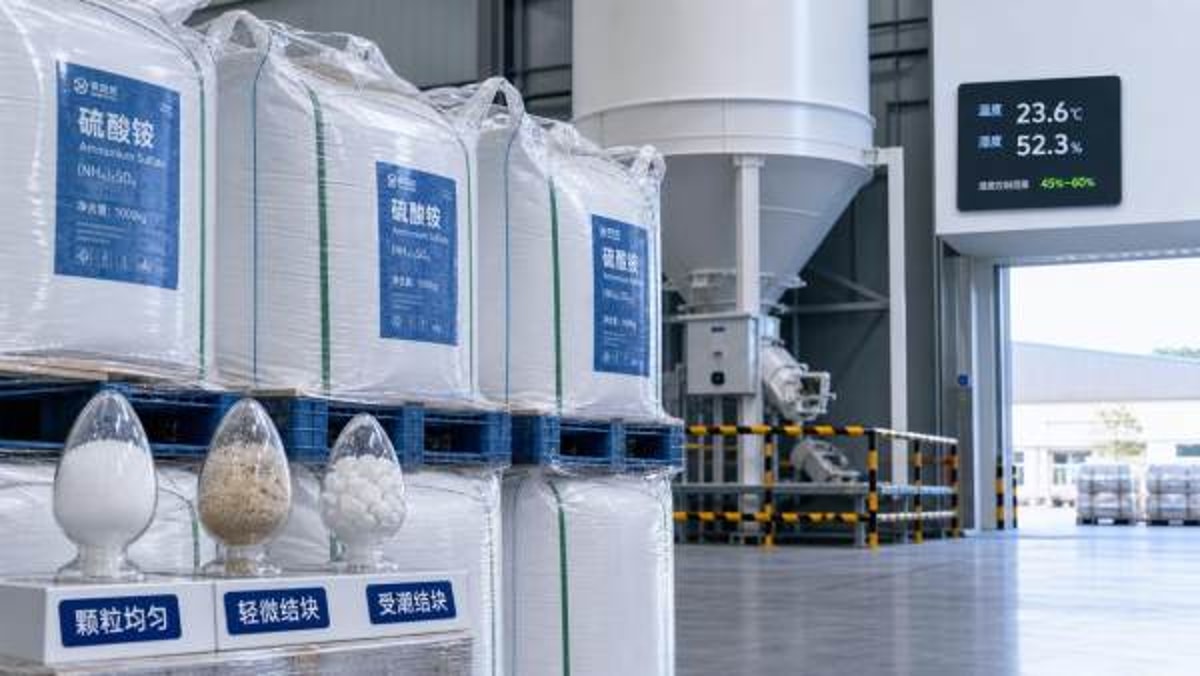
For quality control and safety managers, bulk ammonium sulfate often appears stable on paper—until moisture changes everything. From caking and flow disruption to contamination risks and storage instability, humidity can quietly undermine product integrity and workplace safety. This article examines the moisture problem many operations overlook and why tighter handling, packaging, and environmental control standards matter across industrial supply chains.
A checklist-based approach is the fastest and most reliable way to manage this issue. Moisture problems with bulk ammonium sulfate rarely begin with one dramatic failure. They usually develop through small gaps: a slightly humid warehouse, incomplete liner sealing, long dwell time at port, poor pallet wrapping, or a transfer point exposed to ambient air. For quality control teams, the practical question is not whether moisture can affect ammonium sulfate, but which checkpoints will reveal risk before product flow, purity, safety, and customer acceptance are compromised.
Start Here: The First Questions Quality and Safety Teams Should Ask
Before reviewing certificates or lab data, teams handling bulk ammonium sulfate should confirm the operational basics. Moisture risk is a systems problem, so the first review should cover product form, storage duration, climate exposure, and handling intensity. A free-flowing material at loading can become compacted, lumpy, and difficult to discharge after several days in a humid environment. That directly affects usability, dosing consistency, housekeeping, and worker exposure during mechanical intervention.
- Is the bulk ammonium sulfate stored indoors, under cover, or exposed during transfer?
- What is the expected storage period: hours, days, or multiple weeks?
- Does the product arrive as crystals, granules, or powder, and how sensitive is that form to caking?
- What are the site’s temperature swings and relative humidity ranges across shifts?
- How many handling steps occur between receipt and final use?
- What evidence exists that packaging integrity was maintained across transport and unloading?
If these questions cannot be answered clearly, the risk assessment is already incomplete. In many operations, the product specification sheet receives more attention than the environmental conditions surrounding the product. That imbalance is exactly why moisture-related failures are often discovered too late.
Core Inspection Checklist for Bulk Ammonium Sulfate Moisture Control
The following checklist helps quality control and safety managers prioritize the most important inspection points for bulk ammonium sulfate. These are not abstract best practices; they are the practical checkpoints most likely to determine whether a lot remains usable, compliant, and safe to handle.
1. Verify incoming condition before unloading
Check truck, container, or bulk bag surfaces for visible condensation, liner damage, punctures, softened packaging, water stains, or evidence of prior resealing. If moisture entered during transit, caking may have started even when the outer load still looks acceptable. Document odor, discoloration, clumping, and any crust formation near seams or discharge points. Bulk ammonium sulfate with localized wet spots can create uneven quality in downstream use, especially when only the top layer is sampled.
2. Confirm packaging and barrier performance
For jumbo bags, lined sacks, or covered bulk shipments, inspect liner thickness, seal quality, closure method, and any venting design. Moisture ingress often happens through weak closure points rather than obvious tears. For longer transport chains, teams should confirm whether desiccants, moisture barrier liners, or weather-resistant wraps were specified and whether they were appropriate for route duration and climate. A strong specification without verification is not a control measure.
3. Review storage environment, not just storage location
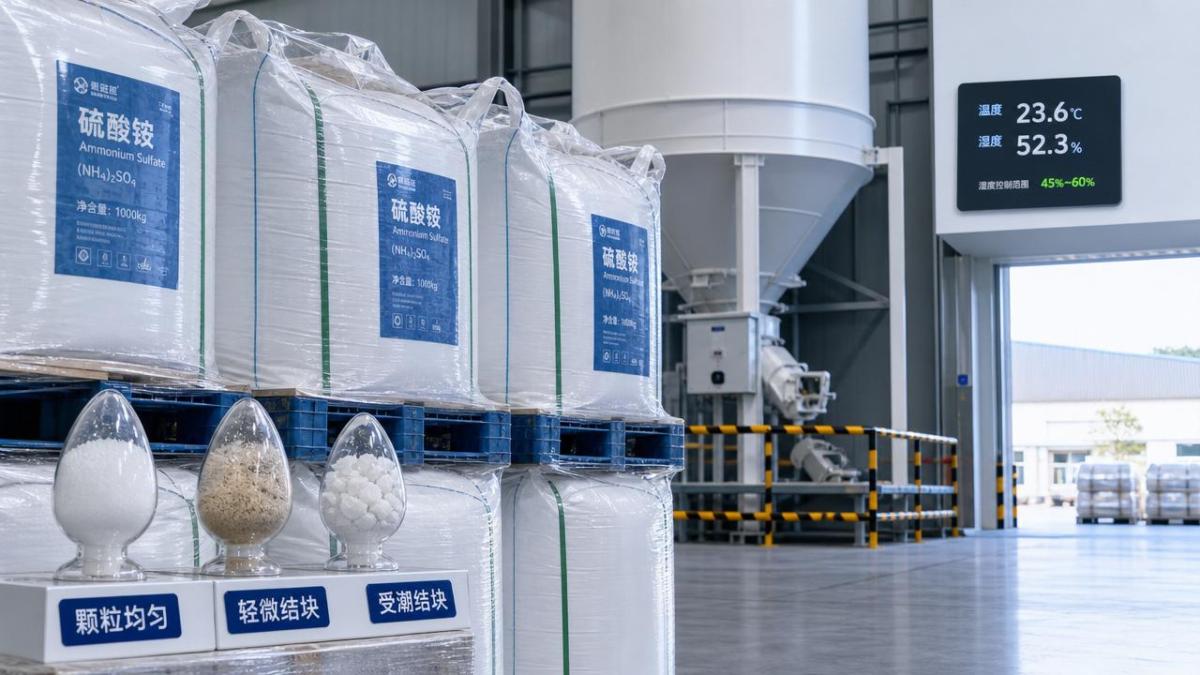
“Stored indoors” is not enough. Bulk ammonium sulfate can still absorb or react to moisture in buildings with poor vapor control, open doors, roof leaks, sweating walls, or inadequate air circulation. Inspect for condensation on steel structures, forklift traffic that keeps doors open, and temperature shifts between day and night. Relative humidity trends matter more than warehouse labels.
4. Evaluate flowability and caking indicators
Do not wait for a blocked hopper to classify a lot as problematic. Early warning signs include increased resistance during bag discharge, irregular feed rates, formation of hard edges, dust increase after breakage of cakes, and mechanical bridging in bins or screw feeders. For safety managers, any requirement for manual poking, impact loosening, or confined-space-style intervention should trigger immediate review. Caked bulk ammonium sulfate is not only a quality issue; it can create a physical handling hazard.
5. Test representative samples correctly
Sampling should cover multiple depths and positions, not only accessible top material. Moisture migration may be uneven, especially in large bulk units exposed to temperature cycling. Quality teams should compare moisture content, particle size condition, visible agglomeration, and any signs of contamination across sample points. If the intended market has strict application requirements, retain split samples and chain-of-custody records for dispute prevention.
A Practical Risk Matrix: What to Check and Why It Matters
A simple review table can help teams align inspection effort with operational risk. For bulk ammonium sulfate, the most useful matrix connects condition, likely cause, and immediate action.
Scenario-Based Checks: What Changes by Storage and Use Environment
Not every operation faces the same moisture profile. Bulk ammonium sulfate used in fertilizer blending, feed and grain processing, chemical manufacturing, or industrial intermediate handling may move through very different exposure points. Quality and safety teams should adapt their checklist to the actual pathway the material follows.
Port, export, and cross-border logistics
Long transit times, container sweating, and weather interruptions raise moisture risk significantly. Confirm loading date, route conditions, transshipment points, and whether the cargo sat in high-humidity zones. Ask for packaging details, not just certificates of analysis. In global trade, the issue may not be formulation quality but transit protection quality.
High-turn warehouses
Frequent dock opening, mixed inventory, and forklift traffic increase ambient exposure. Here, the priority is environmental discipline: rapid unloading, short open-door time, covered staging, and rotation control. Bulk ammonium sulfate should not be left in transition zones longer than necessary.
Long-term storage or seasonal carryover
This is where small moisture issues become large physical problems. Review stacking method, floor isolation, roof condition, wall clearance, and whether old inventory is being repeatedly moved and re-exposed. Aged stock of bulk ammonium sulfate deserves more frequent inspection intervals and tighter release criteria.
Commonly Missed Risks That Cause Expensive Failures
Several overlooked details repeatedly show up in moisture-related complaints and internal deviations. These are worth highlighting because they often fall between departments.
- Assuming intact outer packaging means the product is dry inside.
- Sampling only from the top layer of a bulk unit.
- Treating caking as a nuisance rather than a quality and safety signal.
- Ignoring warehouse humidity because temperature is monitored.
- Using the same acceptance standard for short-haul and long-haul shipments.
- Failing to define who owns moisture control across procurement, logistics, QC, and EHS.
For many facilities, the real root cause is fragmented responsibility. Procurement specifies bulk ammonium sulfate, logistics manages movement, operations uses the material, and quality only sees the issue after symptoms appear. Moisture control improves when accountability is mapped end to end.
Execution Recommendations: Build a Better Control Plan
If your site wants to reduce risk without overcomplicating procedures, start with a layered control plan. The strongest programs combine supplier expectations, receiving checks, storage discipline, and exception handling.
- Define moisture-sensitive handling requirements in purchase specifications for bulk ammonium sulfate, including packaging, sealing, and transport expectations.
- Set receiving inspection criteria that include visual condition, packaging integrity, and representative sampling triggers.
- Monitor both temperature and relative humidity in storage areas, especially near doors and structural cold spots.
- Create escalation rules for caking severity, moisture deviations, and unsafe manual intervention needs.
- Train operators to recognize early flowability changes instead of waiting for full blockage.
- Review supplier and carrier performance when repeat moisture incidents appear in the same route or season.
These actions support both product integrity and workplace safety. They also strengthen audit readiness by showing that the site treats bulk ammonium sulfate as a moisture-sensitive material within a controlled system rather than a commodity that can be left to general warehouse habits.
FAQ for QC and Safety Managers
Does moisture always make bulk ammonium sulfate unusable?
Not always. Minor exposure may only reduce flowability, while severe exposure can affect handling, consistency, and suitability for the intended process. The key is to assess the actual condition of the lot, not rely on assumptions.
What is the earliest warning sign teams usually miss?
Localized clumping near seams, liners, or discharge areas is often the first visible sign. It is easy to dismiss, but it usually indicates that moisture has already entered the system somewhere.
Should storage SOPs differ by season?
Yes. Warm, humid months and cold-to-warm transitions can change condensation behavior significantly. Seasonal controls for bulk ammonium sulfate should cover ventilation, exposure time, and inspection frequency.
What to Prepare Before You Review Suppliers or Internal Controls
If your organization plans to tighten moisture management for bulk ammonium sulfate, gather the information that will make decisions faster and more accurate. Priority inputs include packaging type, route duration, storage time, warehouse humidity records, unloading method, flow problems observed, nonconformance history, and the exact acceptance criteria required by downstream use. Without these details, supplier conversations remain too general to drive improvement.
For teams comparing suppliers, packaging options, or handling procedures, the most useful next questions are practical ones: What moisture barrier is guaranteed? How is packaging validated for humid transit? What evidence supports caking resistance over the expected storage window? What are the response steps if a shipment arrives with soft packaging, condensation, or partial agglomeration? Clear answers to those questions will do more for product protection than another generic specification sheet.
In short, bulk ammonium sulfate does not become a problem only when it gets wet enough to fail dramatically. It becomes a problem when moisture control is treated as an afterthought. For quality control and safety managers, the best defense is a disciplined checklist: inspect early, sample correctly, verify packaging, control the environment, and define escalation before flow disruption or safety exposure forces reactive decisions.
Related Intelligence
- AgrochemicalsChina’s Hazardous Chemicals Safety Law Takes Effect May 2026China’s Hazardous Chemicals Safety Law (2026) mandates GS1 digital labels for agrochemical exports—ensuring traceability, EU CLP compliance & temperature control. Act now to avoid port delays!
- AgrochemicalsWholesale Copper Sulfate: Crystal Form Can Change HandlingWholesale copper sulfate handling depends heavily on crystal form. Learn how size and moisture affect flow, dust, dissolution, safety, and smarter bulk purchasing decisions.
- AgrochemicalsWholesale Potassium Nitrate and the Timing Mistake to AvoidWholesale potassium nitrate buying at the wrong season can raise costs and disrupt supply. Learn the timing mistake to avoid and how smarter planning protects efficiency.
The Morning Broadsheet
Daily chemical briefings, market shifts, and peer-reviewed summaries delivered to your terminal.
