

The Authority in Global Agricultural Chemistry & Bio-Resources
Wholesale Calcium Chloride: Flakes, Powder, or Pellets?
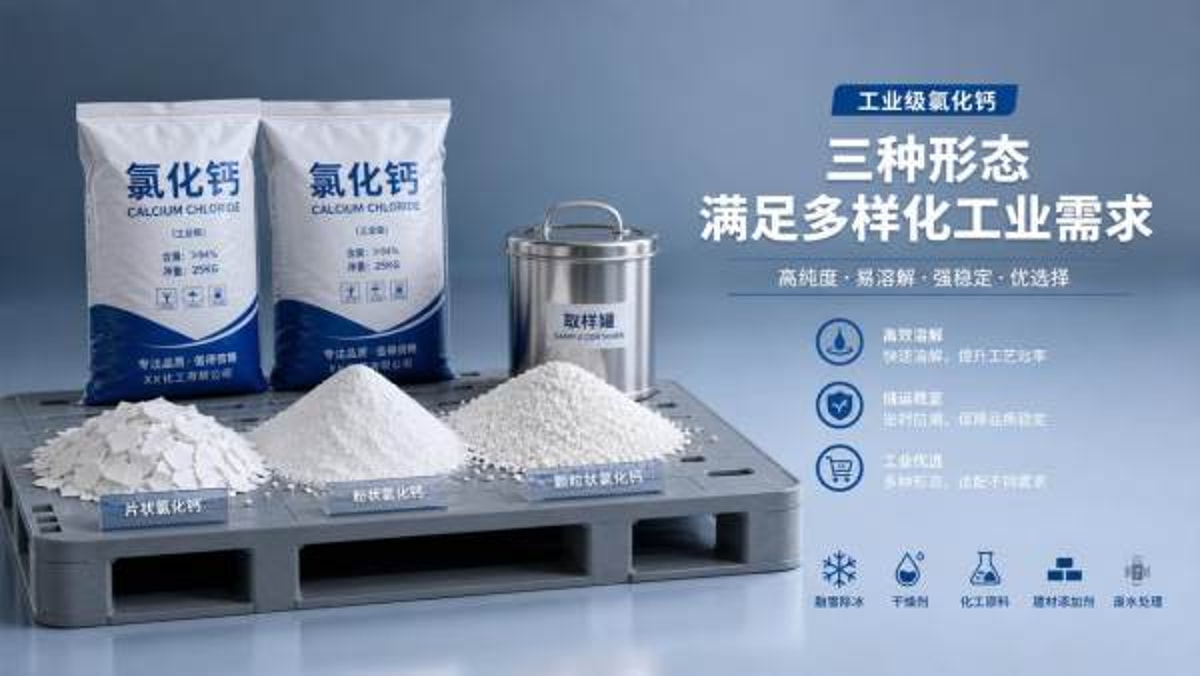
For procurement teams evaluating wholesale calcium chloride, choosing between flakes, powder, or pellets is more than a packaging decision—it affects handling efficiency, dissolution speed, storage stability, and total landed cost. This guide compares each form from a practical sourcing perspective, helping industrial buyers identify the right specification for their application, compliance needs, and supply chain priorities.
What procurement teams are really trying to decide
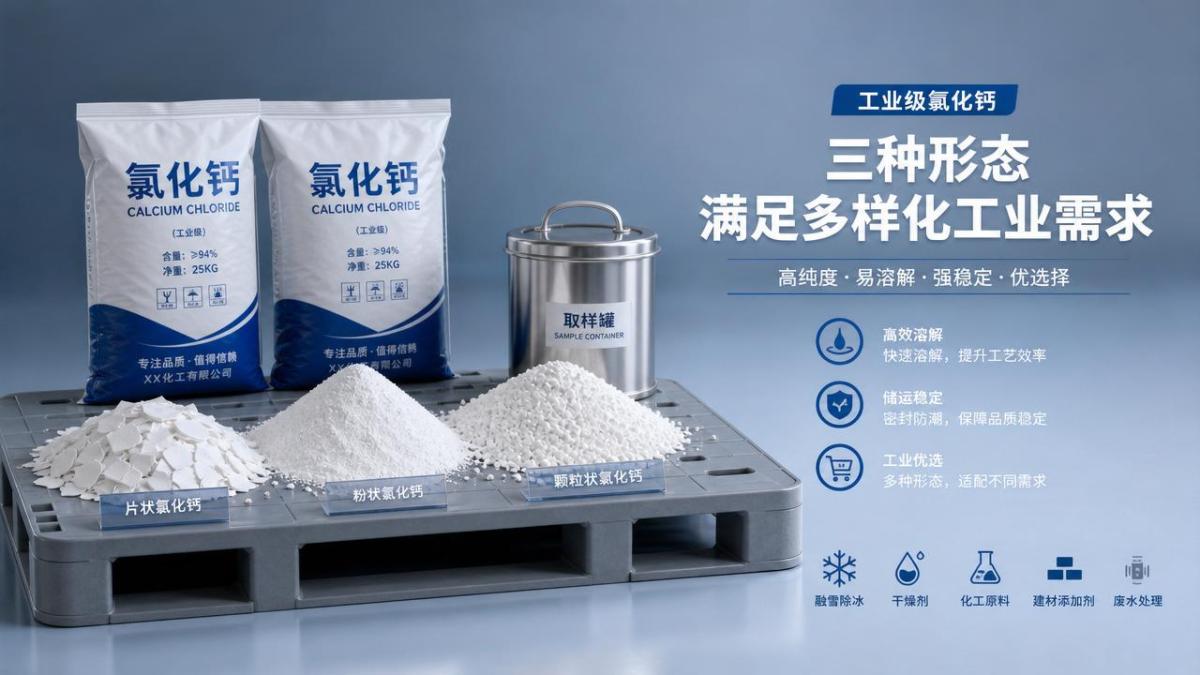
When buyers search for wholesale calcium chloride in flakes, powder, or pellets, the core intent is usually not academic. They want to know which form is best for a specific operational use, which specification reduces waste and handling issues, and which option delivers the most reliable value across storage, transport, dosing, and compliance.
For most procurement teams, the right answer depends on application conditions. Flakes are often preferred where fast dissolution and practical bulk handling matter. Powder can be useful when rapid blending or fine dispersion is required, but it may create dust-control and caking concerns. Pellets are typically the strongest option for controlled handling, lower dust, and stable storage, especially in industrial environments where cleanliness and metering consistency are priorities.
The decision should therefore be made less on appearance and more on use case. Buyers generally care about five things first: purity, moisture behavior, packaging integrity, logistics cost, and operational fit. If those points are clear, form selection becomes much easier and sourcing mistakes become less likely.
How search intent translates into a better buying framework
Procurement professionals evaluating calcium chloride are usually comparing suppliers under time pressure. They need a format that aligns with production requirements, but they also need to avoid downstream issues such as clumping in storage, inconsistent dissolution, packaging failures, and overpayment for a form that adds no practical advantage.
This is why a useful buying framework should answer practical questions. How quickly does the product dissolve? Does it create dust in enclosed facilities? Will it absorb moisture during ocean freight or warehouse storage? Can operators feed it easily into existing systems? Is the delivered concentration consistent enough for process control? These are the questions that matter more than generic product descriptions.
For institutional buyers, another key concern is supplier transparency. A calcium chloride supplier should be able to document concentration range, impurity profile, manufacturing origin, packaging options, and relevant compliance information. In many sectors, especially food-adjacent processing, water treatment, pharmaceuticals, feed, and industrial manufacturing, documentation quality is almost as important as the chemical itself.
Flakes: a practical choice for fast dissolution and broad industrial use
Calcium chloride flakes are one of the most widely traded forms in the global market. They are commonly selected because they offer a useful balance between handling convenience, dissolution speed, and cost efficiency. For buyers sourcing large volumes for de-icing, dust control, drilling fluids, concrete acceleration, or general industrial processing, flakes often represent the most versatile specification.
From a performance standpoint, flakes usually dissolve quickly enough for most field and plant applications without the extreme dust issues that can come with fine powder. They are also easier to inspect visually during receiving. If moisture ingress has occurred, caking or partial liquefaction tends to be noticeable early, which can help receiving teams catch packaging or storage problems before the material enters inventory.
Flakes are especially attractive when operations involve manual transfer, batch dissolution, or frequent inventory movement. They generally flow better than damp powder and can be less difficult to handle in bags or intermediate bulk packaging. In many cases, they also strike a good middle ground on price per usable ton.
That said, flakes are not automatically the best form for every buyer. Because calcium chloride is highly hygroscopic, flake material still requires strong moisture protection. In humid climates or poorly sealed warehouses, product can harden, cake, or lose free-flowing characteristics. Buyers should therefore review liner quality, pallet wrapping, and storage guidance before placing recurring orders.
Powder: best when dispersion matters, but handling risks rise
Powdered calcium chloride is often chosen for applications where rapid incorporation, precise blending, or fine particle distribution is required. In some chemical processing environments, this form can support faster contact with water or easier integration into dry formulations. For the right system, powder may improve process speed and reduce mixing time.
However, powder creates a different procurement risk profile. The most obvious issue is dust. Fine particles can escape during bag opening, conveying, and charging, creating housekeeping burdens and, in some plants, operator safety or contamination concerns. This can increase indirect cost even if the quoted purchase price looks attractive.
Powder is also more sensitive to moisture exposure because of its larger effective surface area. If packaging performance is weak or storage conditions are unstable, caking may occur faster than with larger particle forms. Once caked, a powdered product can become difficult to feed accurately, undermining one of the reasons it was purchased in the first place.
For procurement teams, powder should therefore be sourced only when its functional advantages clearly match the process. If the facility does not have proper dust management, dry storage discipline, and reliable handling equipment, the material may create more operational friction than value. Buyers should ask suppliers for particle size distribution, anti-caking handling recommendations, and packaging options designed for humid transport routes.
Pellets: the strongest option for clean handling and storage stability
Pelletized calcium chloride is often preferred in facilities that value clean handling, reduced dust, and better flow characteristics. Because pellets are denser and less friable than powder, they usually perform well in automated feeding systems, enclosed transfer points, and longer storage cycles. This makes them attractive for industrial buyers focused on operational consistency.
In practical terms, pellets can reduce product loss during loading and transfer. They are less likely to create airborne residue, which supports housekeeping control and may improve working conditions in indoor environments. For buyers with strict plant hygiene expectations, this is a meaningful advantage rather than a minor convenience.
Pellets also tend to ship and store well when packaging quality is high. While they are still hygroscopic and absolutely require moisture barriers, their physical form can remain easier to manage than powder after extended warehousing. This matters for importers, distributors, and plants that buy on longer replenishment cycles.
The main trade-off is that pellets are not always the fastest-dissolving choice in every operating condition. If the application depends on immediate dissolution in cold water or rapid field preparation, flakes may be more efficient. Pellets can also carry a modest premium depending on market conditions, packaging configuration, and supplier production capability. Buyers should only pay that premium when the handling and storage advantages produce measurable operating value.
Which form is best by application?
For de-icing and dust suppression, flakes are commonly the most practical choice because they dissolve quickly and are widely available in commercial grades. They offer a good balance between cost and field usability, especially when product will be dissolved in batches or spread in bulk operations.
For blending into dry systems or specialty formulations, powder may be appropriate where fine distribution is essential and the facility has the right dust-control infrastructure. In these cases, process performance may justify the additional handling discipline.
For automated industrial dosing, warehousing stability, and cleaner plant handling, pellets are often the better procurement decision. This is especially true in enclosed production environments where dust reduction has direct operating value.
For food-adjacent, pharmaceutical-related, or compliance-sensitive sectors, the form itself is only one variable. Buyers must also verify grade suitability, impurity thresholds, documentation support, and whether the material is manufactured under systems appropriate for the intended downstream use. A technically suitable form is still the wrong product if the supplier cannot meet documentation or audit expectations.
What matters more than form alone: concentration, grade, and packaging
One common sourcing mistake is comparing flakes, powder, and pellets without aligning actual chemical content. Calcium chloride products are sold in different concentration ranges, often around common commercial benchmarks such as 74 percent, 77 percent, 90 percent, or higher depending on form and process. A lower-priced product may not be the better deal if it delivers less active material per ton.
Buyers should calculate value on a delivered active-content basis, not simply by unit price. This is particularly important when freight is significant. Paying to move excess moisture or lower assay material can distort the economics of a purchase, especially in export markets.
Packaging is equally important. Because calcium chloride readily absorbs moisture, strong inner liners, sealed bags, pallet stretch wrap, and container loading discipline directly affect usable yield. For wholesale calcium chloride, packaging failure can turn an acceptable price into a costly claim. Request detailed packaging specifications, including bag material, liner thickness, pallet configuration, and whether desiccant or container dry measures are used on long-haul shipments.
Grade selection should also be explicit. Industrial grade may be entirely suitable for road maintenance or drilling, but not for food processing, pharmaceutical applications, or regulated production chains. Procurement teams should match grade to end use from the start rather than attempting to resolve suitability after samples arrive.
How to evaluate total landed cost instead of quoted price
Experienced buyers know that wholesale calcium chloride should never be awarded on ex-works or FOB price alone. The real comparison is total landed cost adjusted for usable performance. That includes concentration, packaging loss risk, freight efficiency, storage loss, internal handling cost, and any operational downtime created by poor form selection.
For example, powder may appear cost-competitive until the site factors in dust management, labor inefficiency, or product caking. Pellets may look more expensive on paper, but if they reduce spillage, improve feeding consistency, and extend storage usability, they may outperform cheaper alternatives over the contract period. Flakes may deliver the best overall value when a buyer needs broad usability without paying for pellet handling benefits that the operation does not actually need.
Procurement teams should also include supplier reliability in total cost calculations. Delayed shipments, inconsistent particle size, or weak packaging can create hidden costs far above the original price delta. This is why experienced sourcing managers often prefer a documented, consistent supplier over the absolute lowest bidder.
Supplier qualification questions buyers should ask before ordering
To reduce sourcing risk, buyers should ask suppliers a focused set of technical and commercial questions. What is the guaranteed calcium chloride content? What is the particle size range for flakes, powder, or pellets? What anti-moisture packaging is used? What is the expected shelf life under recommended storage conditions? Can the supplier provide a certificate of analysis for each lot?
It is also wise to ask about manufacturing route and origin. Different production methods can affect impurity profile and suitability for certain applications. For regulated or quality-sensitive sectors, ask whether the supplier can support audits, provide traceability documentation, and maintain specification consistency across contract shipments.
Commercially, buyers should confirm loading capacity, lead times, minimum order quantities, seasonal supply fluctuations, and claim-resolution procedures. Calcium chloride demand can shift with weather cycles, infrastructure demand, and industrial activity, so supply continuity matters.
Final verdict: how most buyers should choose
If your team needs the broadest combination of affordability, usability, and fast dissolution, flakes are often the most practical default choice. If your process requires very fine dispersion and your facility can control dust and moisture effectively, powder may be justified. If your priority is cleaner handling, better flow, and storage stability in automated or indoor industrial settings, pellets are frequently the strongest option.
The best procurement decision comes from matching form to operational reality, not from assuming one format is universally superior. In wholesale calcium chloride sourcing, the winning specification is the one that fits the application, arrives in protective packaging, meets the required grade and concentration, and performs consistently across the full supply chain.
For procurement professionals, that means evaluating calcium chloride as a total system purchase: chemical content, physical form, packaging quality, supplier reliability, and downstream handling cost. When those factors are reviewed together, the choice between flakes, powder, and pellets becomes clearer, more defensible, and far more likely to deliver value after the purchase order is issued.
Related Intelligence
- APIs & IntermediatesWholesale Zinc Oxide Prices Vary for Reasons Beyond PurityWholesale zinc oxide prices vary by more than purity alone. Explore how process, specs, compliance, and freight impact cost to source smarter and reduce supply risk.
- APIs & IntermediatesWholesale Iron Oxides: Shade Consistency Is Harder Than It LooksWholesale iron oxides shade consistency is harder than it looks. Learn the hidden causes of batch variation, key QC checks, and smarter sourcing steps to reduce risk and protect product quality.
- APIs & IntermediatesBulk Phosphoric Acid Buying Mistakes That Delay ProductionBulk phosphoric acid buying mistakes can trigger delays, rejects, and higher costs. Learn how to compare specs, suppliers, and documents to protect production.
The Morning Broadsheet
Daily chemical briefings, market shifts, and peer-reviewed summaries delivered to your terminal.
