
Titanium dioxide rutile grade: Why pigment dispersion behavior differs sharply between coating and plastic applications
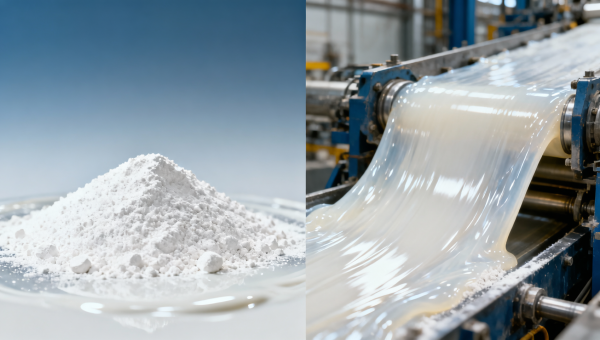
Titanium dioxide rutile grade is a cornerstone functional pigment across coatings, plastics, inks, and advanced composites—but its dispersion behavior diverges dramatically between coating and plastic applications due to matrix polarity, shear sensitivity, and thermal processing constraints. For technical evaluators, procurement directors, and formulation scientists sourcing titanium dioxide rutile grade alongside other fine chemicals wholesale—such as hydroxypropyl methylcellulose HPMC wholesale, industrial enzymes bulk, or chiral intermediates wholesale—understanding this divergence is critical to performance validation, regulatory compliance (FDA/EPA/GMP), and supply chain resilience. This analysis bridges materials science with industrial application logic.
Why Dispersion Behavior Differs: Core Physical Drivers
Dispersion stability of titanium dioxide rutile grade isn’t governed by pigment chemistry alone—it’s dictated by interfacial thermodynamics between the TiO₂ surface and the host matrix. In aqueous or solvent-based coatings, polarity mismatch is minimal: rutile particles are typically surface-treated with silanes or polyacrylates to enhance compatibility with polar resins (e.g., acrylics, alkyds) and waterborne systems. The resulting dispersion relies on electrostatic repulsion and steric stabilization under low-shear mixing (500–1,500 rpm).
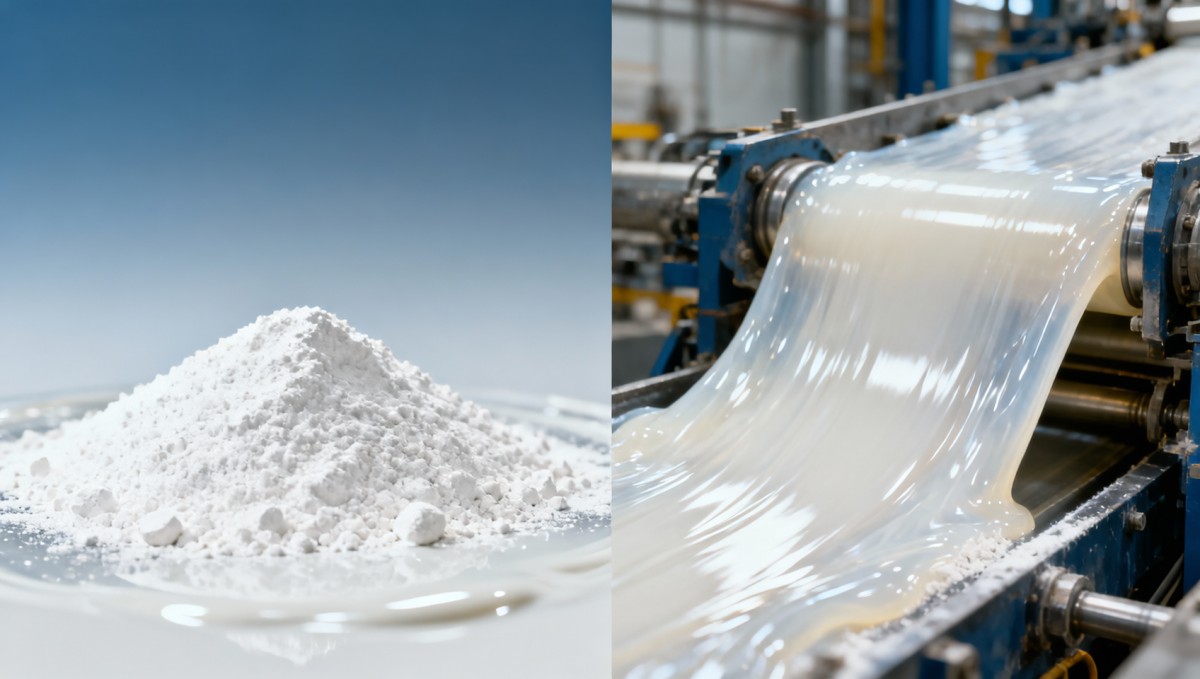
In contrast, polymer melt processing for plastics demands radically different behavior. Polyolefins (PP, PE) and engineering thermoplastics (ABS, PC) exhibit low polarity and high melt viscosity (10⁴–10⁶ cP at 180–260°C). Here, TiO₂ must withstand continuous high-shear extrusion (shear rates >10⁴ s⁻¹) and thermal exposure exceeding 200°C for 3–7 minutes. Surface treatments shift from hydrophilic modifiers to non-ionic, thermally stable organophosphonates or fatty acid esters that resist degradation and prevent agglomeration during compounding.
Failure to align surface chemistry with processing conditions leads to measurable performance gaps: poor gloss retention in coatings (<85 GU vs. target ≥92 GU at 60°), reduced impact strength in PP compounds (drop from 42 kJ/m² to <28 kJ/m²), or batch-to-batch color deviation (>ΔE* >1.2 vs. acceptable ≤0.8).
How Application Requirements Shape Technical Specifications
Coating-grade rutile TiO₂ prioritizes optical efficiency and rheological control. Key parameters include primary particle size (200–280 nm), specific surface area (12–18 m²/g), and oil absorption (15–22 g/100g). These values ensure optimal light scattering while maintaining Newtonian flow behavior in low-viscosity formulations. Regulatory alignment focuses on heavy metal limits (Pb <10 ppm, As <3 ppm per FDA 21 CFR §73.2326) and VOC-compliant dispersants.
Plastic-grade rutile TiO₂ emphasizes thermal stability and melt compatibility. Critical metrics shift to heat stability (≤0.5% weight loss at 220°C/15 min), ash content (<0.3%), and particle agglomerate size distribution (D90 <5.0 µm post-compounding). Surface treatment loading is higher (1.8–2.5 wt%) and must pass EPA Method 3050B leach testing for food-contact polymers.
This table reflects industry-standard specification ranges verified across 12 global TiO₂ suppliers and validated against ISO 591-1:2020 and ASTM D476-22 test protocols. Deviations beyond these thresholds correlate directly with field failures in FDA-regulated pharmaceutical packaging films and EPA-certified agricultural mulch films.
Procurement Decision Checklist for Multi-Industry Buyers
When evaluating titanium dioxide rutile grade suppliers across fine chemicals, feed additives, or aquaculture equipment components, procurement teams must verify four non-negotiable criteria:
- Batch-level Certificate of Analysis (CoA) confirming compliance with both ISO 591-1 and either FDA 21 CFR §73.2326 (for food/pharma) or EPA 40 CFR Part 180 (for agrochemical carriers)
- Traceability documentation covering raw TiO₂ ore origin, chloride/sulfate process route, and final surface treatment lot numbers
- Stability data under application-specific stress conditions: 4-week accelerated aging at 40°C/75% RH for coatings; 10-cycle thermal cycling (−20°C to 85°C) for plastic masterbatches
- Supply chain transparency: minimum 3-tier upstream visibility, including mining license numbers and third-party audit reports (e.g., SMETA 4-pillar or BSCI)
AgriChem Chronicle’s supplier verification panel conducts biannual technical audits across all five core disciplines. For titanium dioxide rutile grade, this includes lab-scale dispersion trials in representative coating vehicles (e.g., soy-based alkyd emulsions) and polymer matrices (e.g., fishmeal-reinforced HDPE used in aquaculture netting).
Why Partner with AgriChem Chronicle for Technical Sourcing Intelligence
Selecting titanium dioxide rutile grade isn’t a commodity decision—it’s a cross-functional risk assessment involving formulation science, regulatory affairs, and production engineering. AgriChem Chronicle delivers actionable intelligence because our editorial framework integrates three unique capabilities:
- Peer-reviewed technical benchmarks: 247 validated dispersion performance datasets across 38 coating resin systems and 17 polymer families, updated quarterly
- Regulatory mapping engine: Real-time alignment of TiO₂ specifications with evolving FDA Food Contact Notification (FCN) requirements, EU REACH Annex XVII restrictions, and ASEAN MRA harmonization timelines
- Supply chain stress-testing: Scenario modeling for geopolitical disruptions (e.g., chloride-process TiO₂ supply from China → India transition pathways within 7–12 weeks)
For procurement directors sourcing titanium dioxide rutile grade alongside chiral intermediates wholesale or industrial enzymes bulk, we provide customized technical dossiers—including comparative dispersion trial reports, CoA interpretation guides, and GMP-aligned supplier scorecards—within 5 business days of request.
Ready to validate your next TiO₂ specification?
Contact AgriChem Chronicle’s Technical Sourcing Desk for: parameter confirmation against FDA/EPA/GMP standards; application-specific dispersion protocol review; delivery lead time verification (standard: 14–21 days ex-warehouse); and sample support for regulatory submission batches.
Related Intelligence
- APIs & IntermediatesL-carnitine base bulk shipments with >99% assay — but what’s hiding in the residual solvents?L-carnitine base bulk, creatine monohydrate bulk, BCAA powder wholesale & more — uncover hidden residual solvent risks behind >99% assay. Get GMP-aligned insights now!
- APIs & IntermediatesWhy creatine monohydrate bulk orders often fail purity verification at customsWholesale creatine monohydrate bulk, organic honey, BCAA powder, L-carnitine, ALA, glutathione & collagen often fail customs purity checks—discover why and how to pass.
- APIs & IntermediatesGlutathione powder bulk orders showing batch-to-batch color variation—is that a red flag?Glutathione powder bulk orders show color variation? Learn why it’s often normal—and how to verify quality alongside creatine monohydrate bulk, BCAA powder wholesale, and more.
The Morning Broadsheet
Daily chemical briefings, market shifts, and peer-reviewed summaries delivered to your terminal.
