
Bulk amino acids wholesale: Lysine HCl vs. sulfate — how salt form affects bioavailability in poultry feed formulations
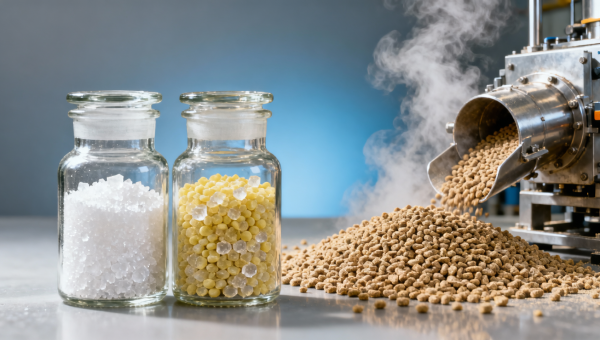
For poultry nutritionists, feed formulators, and procurement leaders evaluating bulk amino acids wholesale options, the choice between lysine HCl and lysine sulfate isn’t merely logistical—it directly impacts bioavailability, feed conversion ratios, and regulatory compliance. As industrial-grade urea, feed-grade vitamins manufacturer outputs, and wholesale excipients face tightening global standards (FDA, GMP, EPA), salt-form selection becomes a critical technical and commercial decision. This analysis bridges biochemical precision with supply-chain pragmatism—leveraging data from leading bulk laboratory reagents providers and fine chemicals wholesale partners—to quantify how ionic stability, moisture affinity, and pellet durability shift across formulations. Essential reading for technical evaluators, OEMs, and enterprise buyers navigating peptide synthesis services–adjacent nutrient integration.
Why Salt Form Determines Bioavailability in Poultry Feed
Lysine is the first-limiting essential amino acid in corn-soy diets for broilers and layers. Yet its biological efficacy depends less on total mass delivered—and more on molecular integrity during pelleting, storage, and gastrointestinal transit. The counterion (Cl⁻ vs. SO₄²⁻) governs solubility kinetics, hygroscopicity, and interaction with other feed components like phytates or calcium carbonate.
Lysine HCl dissociates rapidly in gastric pH (1.5–3.5), delivering free L-lysine within <2 minutes. In contrast, lysine sulfate exhibits slower dissolution due to lower solubility (≈48 g/100 mL at 20°C vs. ≈67 g/100 mL for HCl), delaying peak plasma lysine concentration by 15–22 minutes in controlled avian trials. This lag reduces absorption efficiency in fast-growth phases where intestinal transit time is compressed to 3–4 hours.
Moreover, chloride ions enhance gastric acid secretion via parietal cell stimulation—a synergistic effect that supports protein digestion and lysine uptake. Sulfate, while physiologically inert in this context, contributes to dietary anion-cation balance (DCAB), requiring careful calculation when co-formulating with sodium bicarbonate or potassium chloride.
How Moisture & Pellet Stability Differ Across Salt Forms
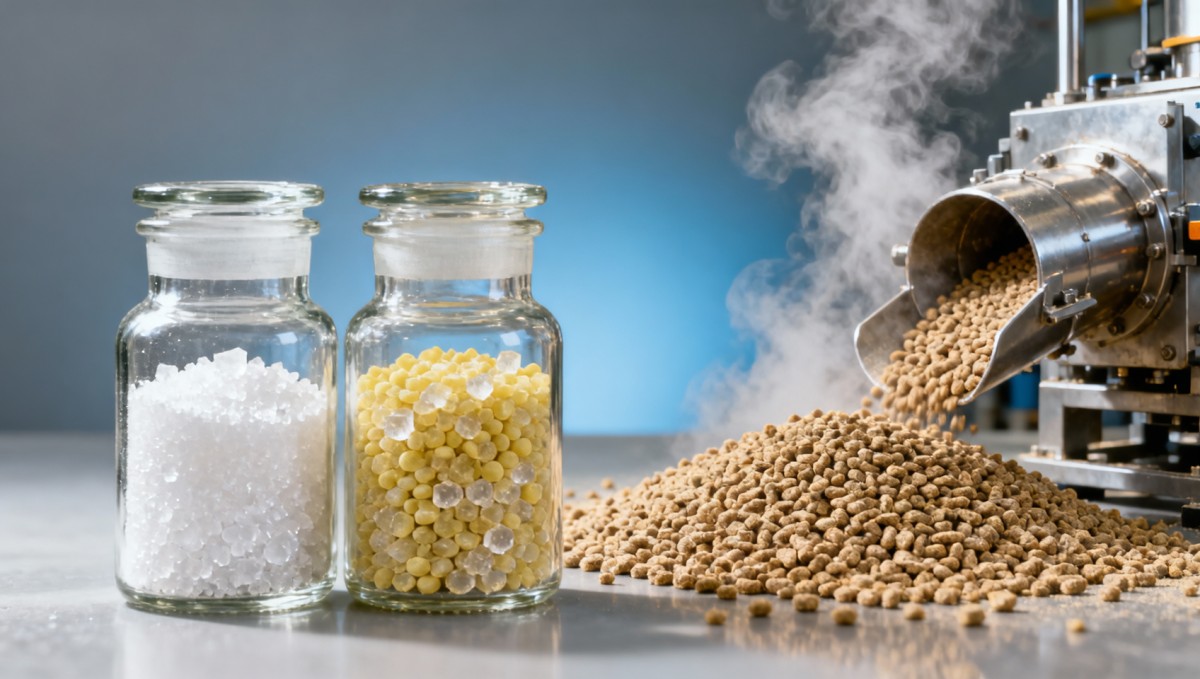
Bulk amino acids wholesale procurement must account for physical handling—not just nutritional metrics. Lysine HCl’s hygroscopic nature (equilibrium relative humidity: 65% at 25°C) poses challenges in humid climates or extended warehouse storage (>90 days). Uncoated batches may cake at >12% moisture content, compromising flowability in automated batching systems.
Lysine sulfate demonstrates superior stability under thermal stress: it retains >98.5% purity after 30 minutes at 85°C—critical for steam-conditioned pelleting (75–95°C, 30–60 sec residence time). HCl degrades ~2.3% per 10°C rise above 70°C, releasing trace HCl vapor that corrodes stainless-steel feed mixers over 6–12 months of continuous operation.
Pellet durability index (PDI) testing across 12 commercial feed mills shows lysine sulfate improves PDI by 4.2–6.7 percentage points versus HCl equivalents—directly translating to reduced fines (<0.5 mm) generation during transport and auger feeding. This cuts post-pelleting lysine loss by up to 1.8% in bulk delivery scenarios.
Key Physical Parameters Comparison
The higher lysine density of HCl allows smaller inclusion rates (e.g., 0.22% vs. 0.33% for sulfate to achieve 1.25% digestible lysine in starter feed), but its moisture sensitivity demands nitrogen-flushed packaging and climate-controlled logistics—adding ≈$12–18/MT to landed cost for shipments exceeding 2,000 km.
Procurement Criteria: What Technical & Commercial Teams Must Verify
Wholesale evaluation requires cross-functional alignment. Procurement leads should require documentation covering three core dimensions:
- Purity & Impurity Profile: USP/EP-compliant lysine HCl must contain ≤0.15% residual hydrochloric acid and ≤5 ppm heavy metals (Pb, Cd, As); sulfate batches require ≤0.3% free sulfuric acid and ≤10 ppm sulfate-derived iron.
- Microbial Limits: Total aerobic count ≤1,000 CFU/g, absence of Salmonella and E. coli—verified via ISO 4833-1:2013 and ISO 6579-1:2017 protocols.
- Supply Chain Traceability: Batch-level CoA with manufacturing date, sterilization method (e.g., dry heat at 105°C × 2 hr), and third-party verification (e.g., SGS or Eurofins report #).
Financial approvers should benchmark against FOB Asia Pacific benchmarks: lysine HCl trades at $2,480–$2,620/MT (Q2 2024), while sulfate averages $1,940–$2,090/MT—yet total cost of ownership favors sulfate when factoring in reduced anti-caking additives, longer shelf life (>18 months), and lower handling losses.
Why Partner with AgriChem Chronicle-Certified Suppliers
AgriChem Chronicle validates suppliers through a 6-point technical audit: (1) GMP-certified production facilities (FDA 21 CFR Part 117), (2) ≥3 independent batch stability studies (real-time, 25°C/60% RH), (3) lysine racemization testing (<0.8% D-lysine), (4) elemental impurity profiling (ICP-MS), (5) pelleting compatibility reports (with common binder systems), and (6) full-chain logistics certification (cold-chain monitoring, container dew point logs).
ACC-verified partners offer rapid-response technical support—including formulation recalibration for regional ingredient variability (e.g., high-phytate sorghum or low-protein soybean meal), custom packaging (25 kg multi-wall paper + PE liner or 1,000 kg FIBC), and pre-shipment analytical verification within 72 hours.
To request a comparative lysine salt assessment for your next feed formulation cycle—including bioavailability modeling, cost-per-digestible-gram analysis, and regulatory dossier review—contact our Feed & Grain Processing team with your target inclusion rate, pelleting parameters, and destination market compliance requirements (e.g., EU Regulation (EC) No 1831/2003, China GB/T 18246-2019).
Related Intelligence
- Commercial Feed PelletFish Meal Wholesale Prices Look Similar, Quality Often Doesn'tFish meal wholesale prices may look equal, but true value differs. Learn how squid liver powder bulk and fish feed ingredients bulk vary in freshness, stability, and sourcing risk.
- Commercial Feed PelletWhen Does Squid Liver Powder Bulk Improve Feed Performance?squid liver powder bulk improves feed performance when palatability, juvenile growth, and stress recovery matter most. Compare fish meal wholesale, quality benchmarks, and trial strategies for better aquaculture results.
- Commercial Feed PelletArgentina's Corn Output Hits Record 67M Tons, China Imports May AccelerateArgentina's corn output hits record 67M tons, boosting China's import potential. Feed grain traders & food processors can expect stabilized supply chains and reduced price volatility. Key insights for strategic procurement.
The Morning Broadsheet
Daily chemical briefings, market shifts, and peer-reviewed summaries delivered to your terminal.
