

The Authority in Global Agricultural Chemistry & Bio-Resources
Silica Gel Desiccant Wholesale: How Much Is Too Much in Packing?
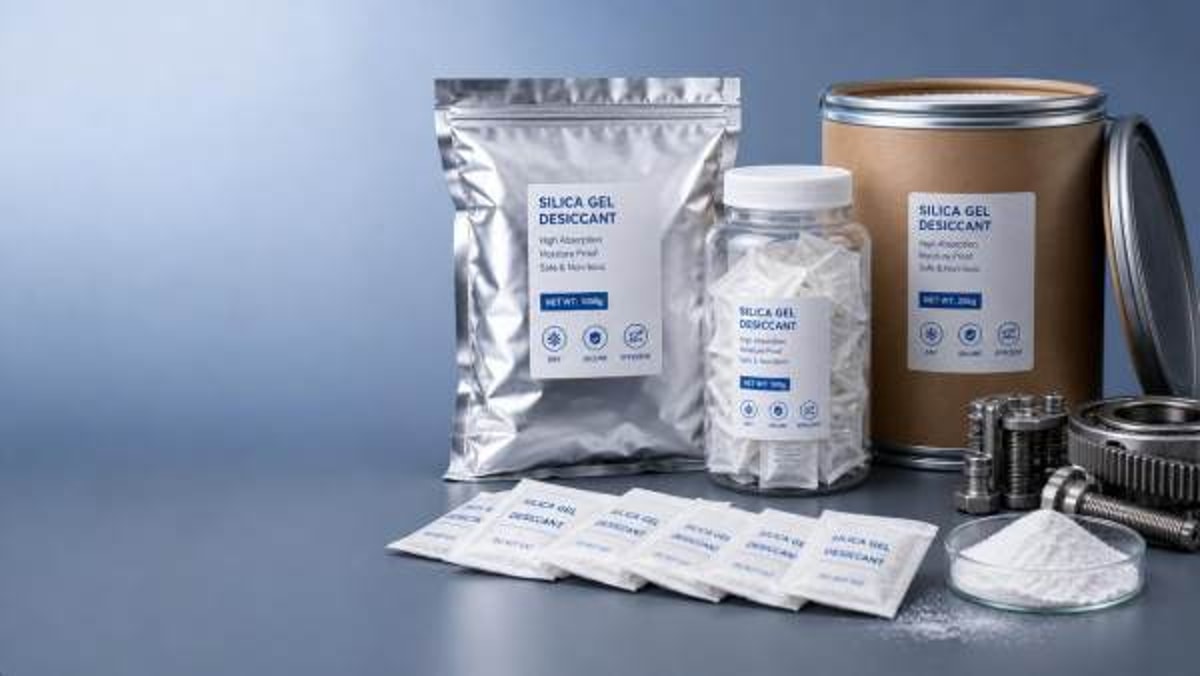
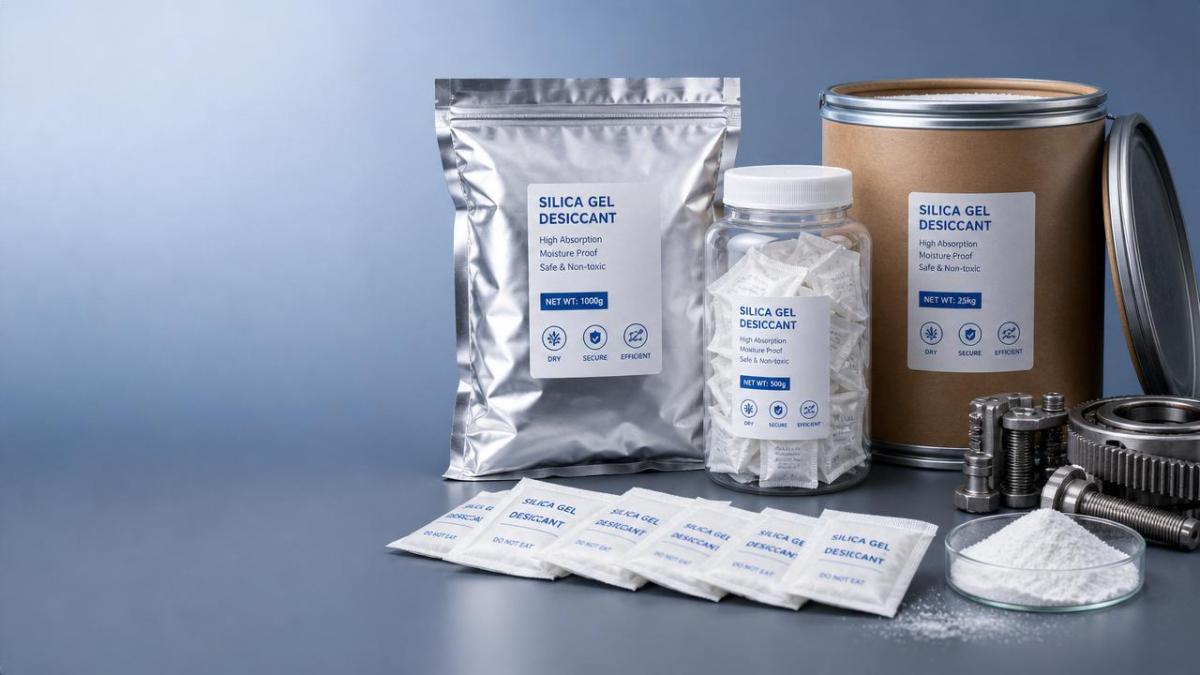
In industrial packing, choosing the right amount of desiccant is not just a cost issue—it directly affects product stability, compliance, and shipment quality. For buyers exploring silica gel desiccant wholesale, the real question is how much is enough without causing waste or compromising protection. This article examines the key factors that determine optimal desiccant loading for safer, more efficient packaging operations.
Understanding What “Enough” Means in Desiccant Packing
Silica gel is one of the most widely used moisture-control materials in industrial and commercial packaging. It works by adsorbing water vapor from the surrounding air, helping maintain a lower relative humidity inside a sealed pack. When companies search for silica gel desiccant wholesale, they are often comparing unit price, pouch sizes, or delivery capacity. Yet the more important technical question is dosage. Using too little desiccant can expose products to moisture damage, while using too much may add unnecessary cost, create pack congestion, and complicate validation.
“Too much” is not a fixed number. It depends on the moisture sensitivity of the product, the barrier properties of the packaging, the shipping route, climate exposure, storage duration, and regulatory expectations. For operators and packaging teams, the goal is not maximum desiccant loading. The goal is controlled humidity performance across the full logistics cycle.
This is especially relevant in sectors covered by technically demanding supply chains, including fine chemicals, APIs, feed additives, botanical extracts, agricultural inputs, and equipment components. In these environments, moisture can affect assay stability, flowability, corrosion risk, microbial potential, labeling legibility, or mechanical reliability. That is why silica gel desiccant wholesale decisions should be tied to packaging engineering rather than simple bulk purchasing.
Why the Industry Pays Close Attention to Desiccant Quantity
Industrial users are paying closer attention to desiccant quantity because packaging performance now sits at the intersection of quality control, sustainability, and supply chain resilience. A shipment may move through hot ports, humid warehouses, cold storage transitions, or long inland trucking routes. Each stage changes condensation risk. Even a well-manufactured product can fail at the destination if moisture control was calculated poorly.
In pharmaceutical intermediates and specialty chemicals, excessive humidity may trigger caking, hydrolysis, reduced shelf life, or specification drift. In agricultural processing and feed handling, moisture can affect texture, free-flow behavior, and contamination risk. In machinery and metal-linked components, trapped humidity can drive oxidation and packaging deterioration. For this reason, silica gel desiccant wholesale is not just a supply function; it supports operational quality assurance.
There is also a financial reason to avoid overloading. Every extra sachet increases material cost, packing time, and disposal volume. When multiplied across export cartons, drums, foil pouches, or containerized shipments, the impact becomes significant. Smart users therefore focus on validated sufficiency rather than instinctive overpacking.
The Main Factors That Determine Silica Gel Loading
Several variables determine how much silica gel should be placed inside a package. Operators should review them together, because a strong result in one area may reduce the requirement in another.
- Product moisture sensitivity: hygroscopic powders, granules, dried extracts, and corrosion-prone parts usually require tighter control.
- Initial moisture content: products packed with elevated residual moisture can overwhelm desiccants quickly.
- Package volume and headspace: larger air volume usually means more water vapor to manage.
- Packaging material barrier: foil laminates, HDPE, fiber drums with liners, and paper bags behave very differently.
- Transit and storage duration: longer exposure increases cumulative moisture ingress.
- Distribution climate: tropical export routes generally demand more conservative loading.
- Required final relative humidity: some products tolerate moderate humidity, while others need very dry conditions.
A common operational mistake is to base loading only on pack size. In practice, a small foil pouch holding a highly sensitive ingredient may need more carefully specified protection than a larger carton holding a moisture-tolerant item. That is why silica gel desiccant wholesale planning should start with product risk classification.
A Practical Industry Overview by Packaging Scenario
The table below provides a general overview of how different industrial scenarios influence desiccant strategy. It is not a substitute for validation testing, but it offers a useful framework for packaging teams evaluating silica gel desiccant wholesale options.
When Does Silica Gel Become “Too Much”?
In most cases, too much silica gel does not harm the product chemically, but it can become inefficient or operationally unsuitable. Excessive loading usually shows up in one of five ways.
First, the desiccant volume may displace useful pack space, interfere with filling lines, or create awkward presentation for end users. Second, it may signal that the packaging barrier is underperforming; teams are compensating with extra desiccant instead of correcting the root cause. Third, high loading can raise cost without extending meaningful protection if the pack is already moisture-tight enough. Fourth, it can introduce handling confusion when multiple sachets are used in small packs. Fifth, excessive use may conflict with sustainability goals and customer expectations around packaging waste reduction.
A more subtle issue is false confidence. If a package has poor seal quality or repeated opening events, adding more silica gel may not solve the actual moisture pathway. Operators should therefore ask not “How many sachets can fit?” but “What humidity outcome must this pack maintain, and for how long?”
Application Value Across Industrial User Groups
Different user groups gain different benefits from correctly specified silica gel. This is why silica gel desiccant wholesale programs should align with actual use conditions rather than generic purchasing categories.
How to Estimate a Reasonable Starting Point
For many operators, the best approach is to develop a practical starting point and then refine it through test data. Begin with the product’s moisture sensitivity and target shelf or transit duration. Next, review the packaging material’s water vapor transmission characteristics and the expected climate profile. Then estimate internal free air volume and identify whether the package will remain sealed or be opened repeatedly.
At this stage, wholesale buyers should work closely with suppliers that can provide adsorption data, packet capacity guidance, and support for packaging trials. A high-quality silica gel desiccant wholesale supplier should be able to discuss pouch material, adsorption performance at different humidity levels, and suitable pack formats for direct or indirect contact applications.
The starting point should then be verified with real-world checks such as humidity indicator cards, accelerated storage studies, route simulation, or retained sample monitoring. This validation step is where many packaging teams discover that either they can safely reduce desiccant use or they need a better barrier material instead of simply adding more silica gel.
Common Operational Mistakes to Avoid
Several avoidable mistakes lead to poor desiccant performance even when the nominal quantity seems adequate. One is inserting desiccant too early in a humid packing room, allowing the sachets to preload before sealing. Another is using silica gel in packaging with inconsistent seal integrity. A third is ignoring the moisture already present in the product or the packaging components themselves.
Teams should also avoid mixing purchasing logic with technical logic. Choosing silica gel desiccant wholesale only by lowest price can result in inconsistent pouch quality, dust release, weak sealing of sachets, or incomplete specifications. For regulated or quality-sensitive sectors, documentation, traceability, and stable manufacturing standards matter as much as adsorption media cost.
Finally, do not treat one successful application as universally transferable. A dosage that works for domestic warehouse storage may fail on ocean freight to humid regions. Environmental exposure remains one of the biggest variables in moisture-control packaging.
Practical Guidance for More Efficient Packaging Operations
For operators seeking a balanced strategy, a few practical principles are consistently useful. Standardize pack configurations by product family rather than by habit. Match desiccant loading to packaging barrier level. Use measurable acceptance criteria such as relative humidity limits, appearance retention, flow performance, or corrosion-free arrival. Train packing teams to store desiccants correctly before use. Review shipping lanes seasonally, especially for export programs exposed to monsoon or tropical conditions.
Where possible, document the reason behind each dosage choice. That record helps quality teams, procurement managers, and logistics coordinators speak from the same evidence base. In complex sectors, this discipline supports stronger supply chain transparency and reduces reactive packaging changes later.
Conclusion and Next Step
For industrial users, the right silica gel quantity is a performance decision, not just a packaging detail. Too little invites moisture risk; too much adds cost and can mask deeper packaging weaknesses. The most effective silica gel desiccant wholesale strategy combines product sensitivity, barrier packaging knowledge, shipping conditions, and validation data into one practical specification.
If your operation handles fine chemicals, agricultural ingredients, processed feed materials, or export-grade equipment components, review desiccant loading as part of a broader packaging control plan. A structured assessment today can reduce spoilage, improve shipment consistency, and make bulk desiccant purchasing more accurate and efficient over time.
Related Intelligence
- APIs & IntermediatesBulk Carbon Black Supply Risks That Show Up After Contract SigningBulk carbon black buyers face hidden risks after contract signing—from quality drift and logistics delays to compliance gaps and price shocks. Learn what to check first.
- APIs & IntermediatesWholesale Epoxy Resins: Which Properties Drive Processing Results?Wholesale epoxy resins affect viscosity, cure speed, adhesion, and production stability. Learn which resin properties improve processing results and help buyers choose with confidence.
- APIs & IntermediatesHow to Judge Wholesale UV Absorbers for Outdoor DurabilityWholesale UV absorbers for outdoor durability: learn how to assess UV coverage, thermal stability, migration resistance, and compliance with a practical checklist.
The Morning Broadsheet
Daily chemical briefings, market shifts, and peer-reviewed summaries delivered to your terminal.
