

The Authority in Global Agricultural Chemistry & Bio-Resources
How to Judge Wholesale UV Absorbers for Outdoor Durability
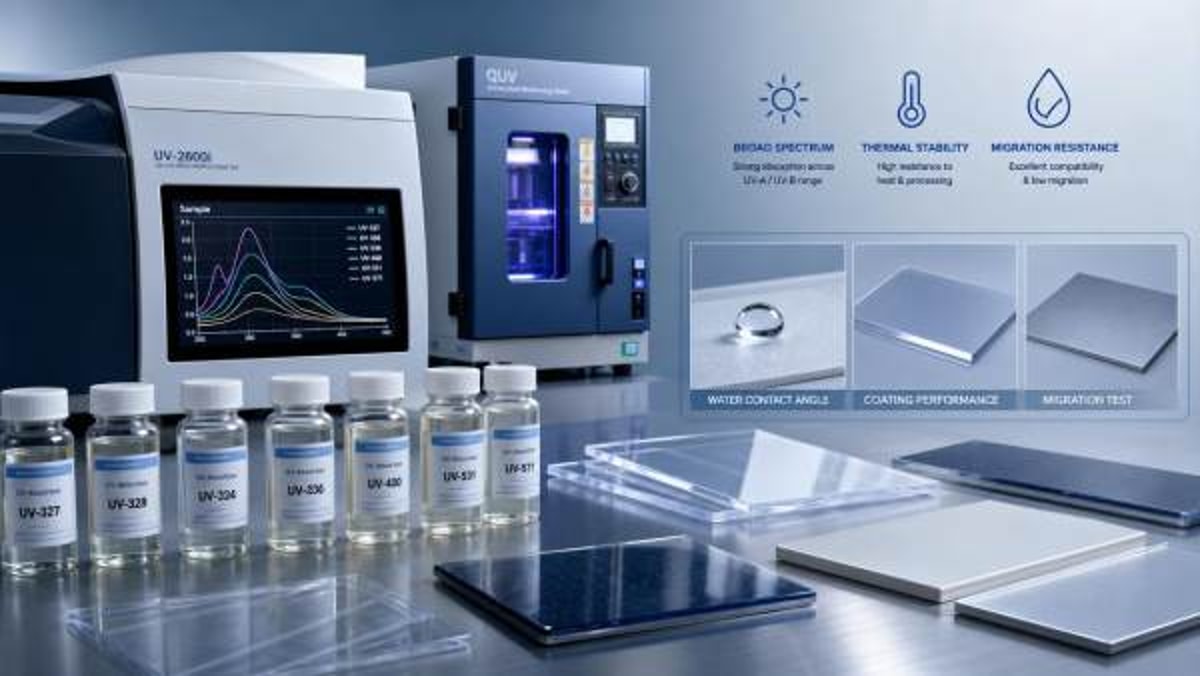
Selecting wholesale UV absorbers for outdoor applications demands more than a price comparison. Technical evaluators must verify UV spectrum coverage, migration resistance, thermal stability, and compatibility with polymers, coatings, or agricultural materials exposed to long-term weathering. This guide explains how to judge wholesale UV absorbers with a practical, standards-aware approach that supports durability, compliance, and procurement confidence.
Why a checklist-based evaluation works better for outdoor durability
For technical assessment teams, the fastest way to make a poor sourcing decision is to review wholesale UV absorbers as if they were generic additives. Outdoor durability depends on a chain of linked variables: sunlight intensity, polymer chemistry, coating thickness, service temperature, humidity, agrochemical exposure, and expected product life. A checklist-based approach forces evaluators to verify each variable before comparing suppliers, which reduces the risk of approving a material that performs well in a brochure but fails under field weathering.
This is especially relevant in cross-industry procurement, where the same wholesale UV absorbers may be proposed for films, containers, pipes, agricultural covers, engineering plastics, wood coatings, or marine-adjacent equipment housings. The chemistry may be similar, but the judgment criteria are not identical. A structured review helps distinguish between acceptable lab performance and real commercial suitability.
Start with the five priority checks before reviewing price
Before requesting quotations, technical evaluators should confirm whether the candidate wholesale UV absorbers meet the primary durability conditions of the target application. These are the first filters that should eliminate weak options early.
- UV absorption range: Verify that the absorber covers the most damaging part of the spectrum for the substrate, typically UV-B and part of UV-A. Different polymers degrade through different photo-oxidative pathways, so spectral fit matters more than a broad “UV protection” claim.
- Thermal stability during processing: Check whether the additive survives extrusion, molding, compounding, or coating cure temperatures without decomposition, discoloration, or volatility loss.
- Migration and extraction resistance: For outdoor parts exposed to rain, irrigation water, fertilizers, oils, or repeated washing, low migration is essential. Otherwise, the initial loading level may not translate into long-term protection.
- Compatibility with the matrix: Confirm dispersion, solubility, and influence on haze, gloss, color, viscosity, or mechanical properties. Incompatible wholesale UV absorbers can bloom, crystallize, or reduce surface quality.
- Weathering evidence: Ask for data from accelerated and, when available, natural exposure testing. A specification sheet without aging data is not enough for outdoor durability claims.
Core checklist for judging wholesale UV absorbers in technical review
1. Confirm the substrate and failure mode first
The same wholesale UV absorbers will behave differently in polyethylene film, polyurethane coating, acrylic sheet, polypropylene housing, or fiber-reinforced composite. Start by identifying how the target material typically fails outdoors: yellowing, embrittlement, gloss loss, cracking, tensile drop, chalking, or transparency reduction. This gives context to every later decision, including absorber type, loading level, and whether a UV absorber should be paired with a HALS package or antioxidant system.
2. Check spectral performance, not just additive family
Suppliers often classify wholesale UV absorbers by chemical family, such as benzotriazoles, benzophenones, or triazines. That is useful, but not sufficient. Request absorbance curves, peak absorption region, and any data showing retention of optical performance after heat exposure. For clear films or transparent engineering parts, technical evaluators should also review visible light interference to avoid excessive tint or reduced clarity.
3. Review processing window and additive survival
An outdoor stabilizer that degrades during compounding is a hidden failure risk. Verify processing temperature limits, residence time tolerance, and any known interaction with catalysts, pigments, fillers, or flame retardants. In rotational molding, film extrusion, or powder coating applications, ask whether the wholesale UV absorbers have been validated in similar heat histories rather than in idealized short-cycle lab conditions.
4. Test migration resistance under realistic exposure
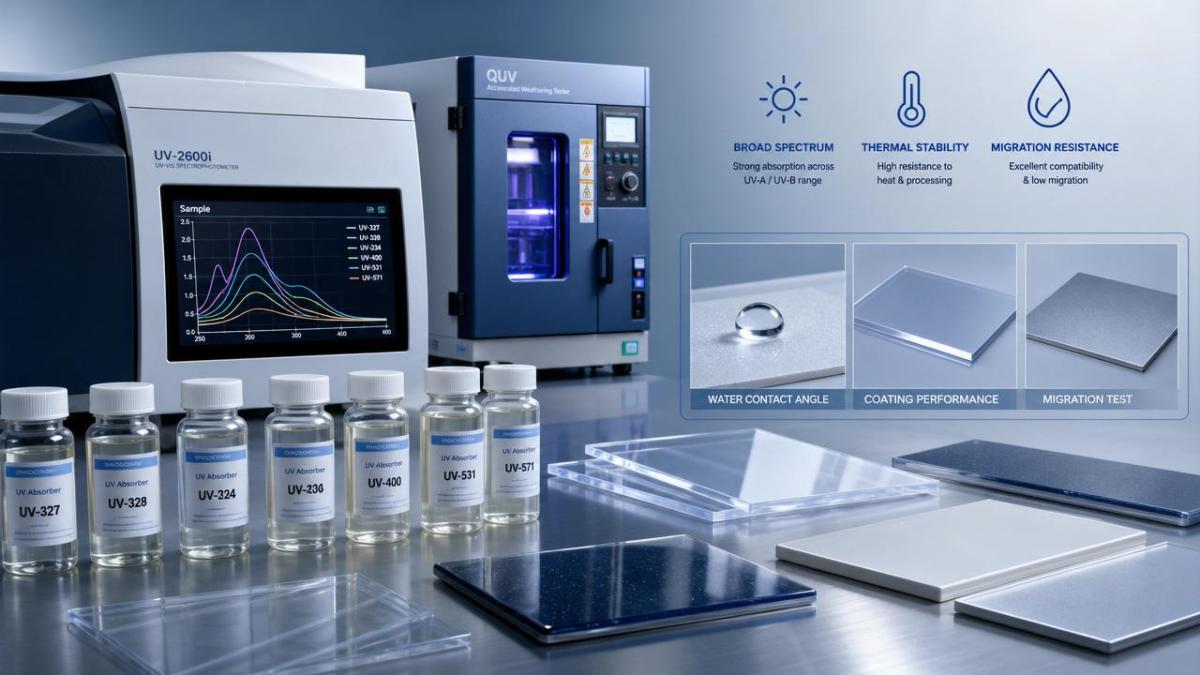
Low volatility alone does not guarantee durability. Outdoor products may face contact with water, surfactants, acidic or alkaline cleaners, fertilizers, or crop protection chemicals. Ask suppliers whether the wholesale UV absorbers have extraction data, fogging data where relevant, and post-weathering retention results. For agricultural films and outdoor storage materials, migration can directly affect both service life and regulatory acceptability.
5. Verify synergy with the full stabilization package
A common evaluation mistake is to judge wholesale UV absorbers in isolation. Outdoor durability usually depends on the additive system: UV absorber, HALS, antioxidant, processing stabilizer, pigment, and sometimes metal deactivator. Ask whether the supplier can show package-level performance, because a strong individual absorber may underperform in a poorly balanced formulation. Technical teams should also check whether the proposed package creates color drift, catalyst poisoning, or odor issues.
Use this quick comparison table during supplier screening
When comparing wholesale UV absorbers from multiple manufacturers, a concise scoring table helps standardize judgment across procurement, formulation, and quality teams.
Application-specific checks technical evaluators should not skip
For agricultural films and covers
Outdoor agricultural materials face intense UV, temperature cycling, agrochemical contact, and seasonal mechanical stress. In this case, wholesale UV absorbers should be checked for pesticide interaction, transparency retention, and expected service life under local climate. If the film must transmit selected wavelengths for crop performance, excessive absorption in the wrong region may create unintended agronomic effects.
For coatings on equipment, structures, and containers
Here the key concerns are gloss retention, color stability, surface degradation, and cure compatibility. The selected wholesale UV absorbers must not interfere with coating crosslinking or increase viscosity beyond process limits. Technical teams should ask for field data on cracking, chalking, and adhesion retention after cyclic weathering.
For molded plastics and housings
For rigid outdoor parts, evaluate retention of impact strength, elongation, and surface appearance. A supplier may offer wholesale UV absorbers with strong optical performance, but if they induce plate-out, color shift, or mechanical compromise, the overall solution is weak. Recycled resin content should also be reviewed, because contaminants can accelerate degradation and increase stabilizer demand.
Common blind spots when assessing wholesale UV absorbers
- Using dosage as a shortcut: Higher loading does not automatically mean better outdoor durability. Excess additive may affect appearance, cost, and processability without solving the actual failure mechanism.
- Accepting generic weathering data: QUV or Xenon results are only meaningful when test cycles, irradiance, black panel temperature, and endpoint criteria are disclosed.
- Ignoring formulation interactions: Carbon black, TiO2 grade, fillers, residual catalyst, and recycled content all influence stabilizer demand.
- Overlooking batch consistency: Wholesale UV absorbers should be backed by tight quality control on purity, moisture, ash, particle size, and color index where relevant.
- Checking compliance too late: Regulatory documentation should be screened during technical review, not after supplier nomination.
Execution plan: how to move from shortlist to approval
- Define the exact outdoor use case, target lifetime, climate zone, exposure intensity, and critical failure endpoint.
- Request technical data sheets, safety documentation, compliance statements, and weathering reports for each wholesale UV absorbers candidate.
- Screen out materials that do not match the processing window or that lack extraction and compatibility evidence.
- Run comparative lab trials in the actual formulation, not in a simplified benchmark recipe only.
- Validate with accelerated weathering and, for strategic programs, a limited natural exposure trial.
- Score total value, including additive efficiency, supply continuity, technical support, and change-control transparency.
Questions to ask suppliers before committing to wholesale UV absorbers
A strong supplier discussion should focus on evidence, not marketing language. Ask which polymers or coating chemistries the product has been proven in, what the recommended loading range is, how performance changes with HALS combinations, what accelerated weathering protocol was used, and whether the supplier can support formulation troubleshooting. Also ask about manufacturing site consistency, impurity control, lead time stability, and how specification changes are communicated. For technical evaluators, these answers often reveal more than a polished data sheet.
FAQ for technical teams evaluating outdoor stabilizer options
Are wholesale UV absorbers enough on their own for outdoor exposure?
Usually not. Many outdoor systems perform best when wholesale UV absorbers are combined with HALS and antioxidant packages tailored to the substrate and exposure profile.
What test data should be considered minimum evidence?
At minimum, request absorbance data, thermal stability information, compatibility notes, and accelerated weathering results in a comparable formulation. Natural exposure data is highly valuable for high-risk applications.
How should procurement compare two similar wholesale UV absorbers?
Compare retained performance after processing and weathering, not just initial assay, price per kilogram, or nominal additive family. Effective cost per service life is the more relevant measure.
Final judgment and next-step guidance
The best way to judge wholesale UV absorbers for outdoor durability is to treat them as formulation-critical performance tools, not commodity line items. Technical evaluators should prioritize spectral fit, processing survival, migration resistance, matrix compatibility, package synergy, weathering evidence, and compliance readiness. If your organization is moving toward supplier qualification, prepare the application profile, environmental exposure details, target lifetime, process conditions, and required certifications first. Then ask shortlisted suppliers to respond against the same technical checklist. That approach improves comparison quality, strengthens procurement confidence, and greatly reduces the risk of outdoor failure after commercialization.
Related Intelligence
- APIs & IntermediatesBulk Carbon Black Supply Risks That Show Up After Contract SigningBulk carbon black buyers face hidden risks after contract signing—from quality drift and logistics delays to compliance gaps and price shocks. Learn what to check first.
- APIs & IntermediatesWholesale Epoxy Resins: Which Properties Drive Processing Results?Wholesale epoxy resins affect viscosity, cure speed, adhesion, and production stability. Learn which resin properties improve processing results and help buyers choose with confidence.
- APIs & IntermediatesHow to Judge Wholesale UV Absorbers for Outdoor DurabilityWholesale UV absorbers for outdoor durability: learn how to assess UV coverage, thermal stability, migration resistance, and compliance with a practical checklist.
The Morning Broadsheet
Daily chemical briefings, market shifts, and peer-reviewed summaries delivered to your terminal.
