

The Authority in Global Agricultural Chemistry & Bio-Resources
Wholesale Plasticizers: Hidden Cost Gaps Beyond Unit Price
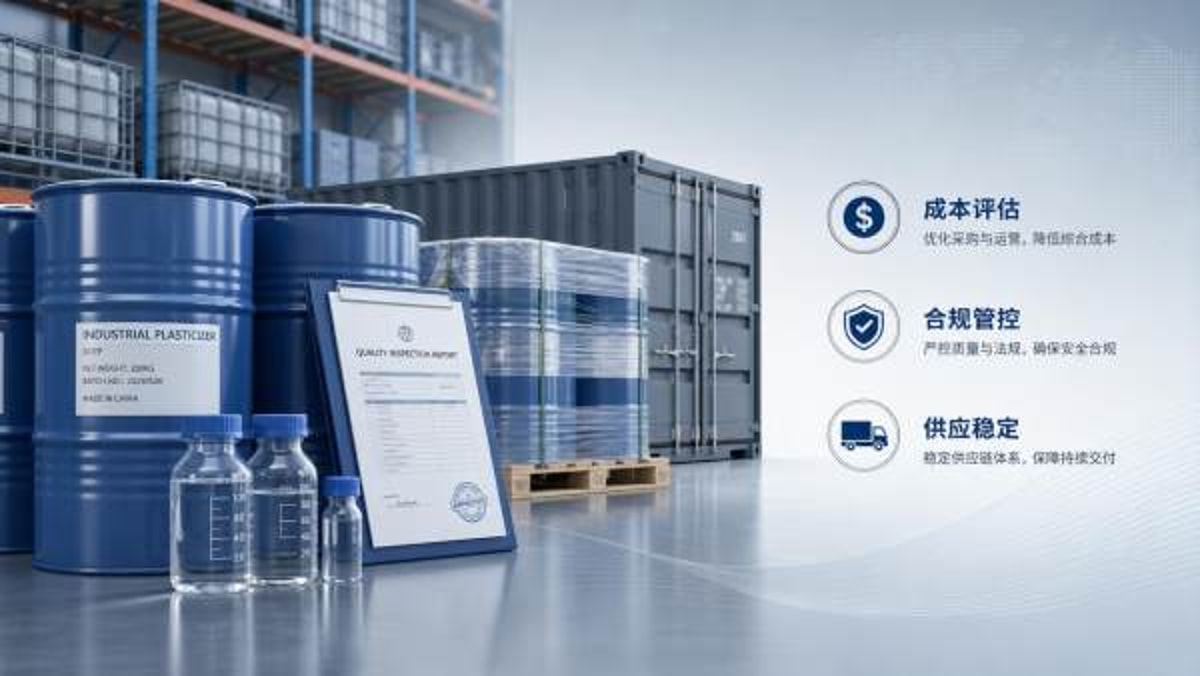
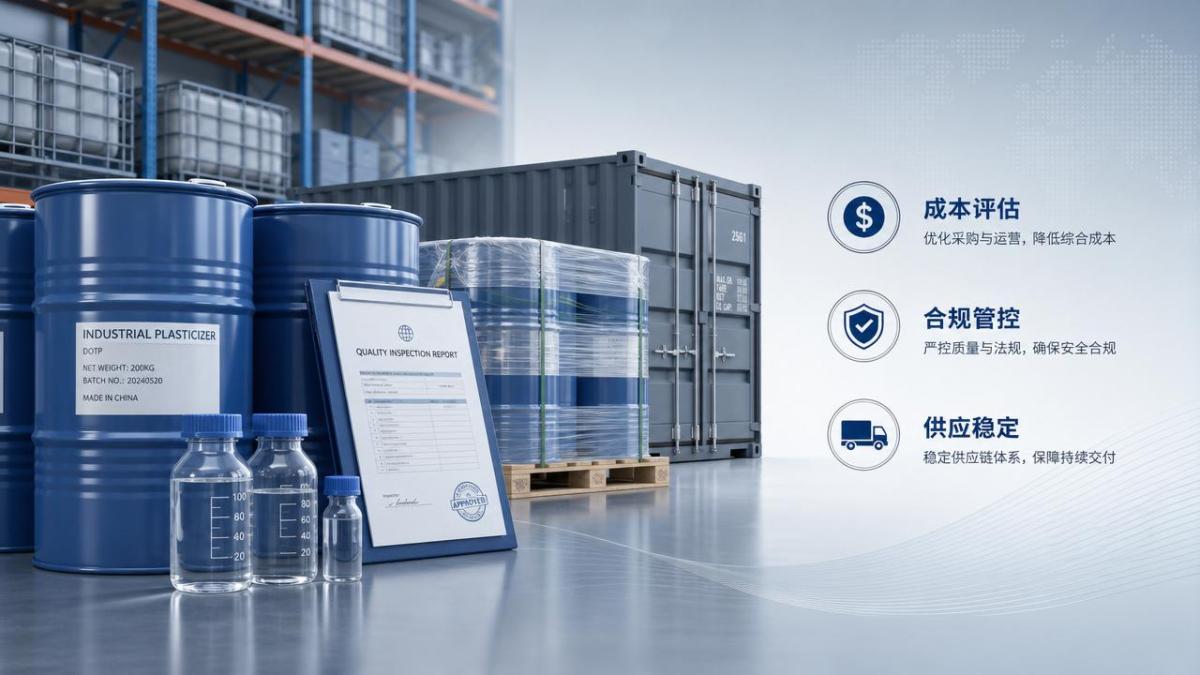
When evaluating wholesale plasticizers, unit price rarely tells the full procurement story. For finance approvers, the real cost gap often appears later through compliance risk, freight volatility, formulation performance, and supplier reliability. This article examines the hidden factors behind seemingly competitive quotes, helping decision-makers compare total cost exposure, protect margins, and approve purchases with greater confidence.
What wholesale plasticizers really represent in industrial purchasing
Wholesale plasticizers are functional chemical additives used to improve flexibility, processability, durability, and low-temperature performance in polymers and related formulations. They are widely used in PVC products, cables, flooring, films, coatings, sealants, synthetic leather, and numerous industrial compounds. In financial review, however, the purchase is not simply a commodity transaction. It is a cost-sensitive decision linked to regulatory obligations, product quality consistency, customer acceptance, logistics resilience, and downstream manufacturing efficiency.
That is why the market for wholesale plasticizers deserves a broader lens. Two suppliers may quote similar grades with a visible price gap of only a few percentage points, yet the total landed and usable cost may differ far more. For a finance approver, the relevant question is not only “Which quote is cheaper today?” but also “Which option minimizes total exposure over the full procurement cycle?” This distinction matters especially in industries where formulation drift, delayed delivery, or documentation gaps can trigger production stoppages or compliance reviews.
Why the market pays close attention to cost gaps beyond the invoice
In the broader chemicals ecosystem covered by industrial intelligence platforms such as AgriChem Chronicle, buyers increasingly operate under tighter audit standards, more complex cross-border trade rules, and higher expectations for traceability. This environment changes how wholesale plasticizers should be evaluated. A low quote may appear attractive in procurement software, but hidden costs often emerge in quality claims, certificate verification, reformulation work, excess inventory buffers, or delayed customer shipments.
Finance teams are also under pressure to explain why an approved source was selected, especially when raw material categories are tied to export compliance, environmental screening, restricted substance lists, or customer-specific material declarations. In that context, unit price becomes only one line in a much larger cost map. Total value depends on whether the supplier can consistently support documentation, technical service, lead time stability, and shipment quality at scale.
The hidden cost structure behind wholesale plasticizers
The most common mistake in evaluating wholesale plasticizers is to compare quotes as if the material were perfectly interchangeable. In practice, the hidden cost structure usually includes five major dimensions.
First, compliance cost. Documentation such as REACH status, RoHS declarations, SDS accuracy, food-contact suitability, or customer-specific substance disclosures may vary greatly. Missing or weak documentation can delay approval, trigger retesting, or block shipment to regulated markets.
Second, performance cost. If one plasticizer requires dosage adjustment, causes migration issues, alters viscosity, or reduces finished-product durability, the apparent savings can disappear quickly through scrap, rework, or customer complaints.
Third, logistics cost. Bulk liquid handling, packaging type, port congestion, demurrage, tank cleaning requirements, and seasonal freight swings all affect true landed cost. A lower FOB price can still result in a higher delivered cost.
Fourth, reliability cost. Supplier inconsistency often forces buyers to hold more safety stock, maintain backup suppliers, or interrupt production schedules. Those carrying and disruption costs are rarely visible in the first quote review.
Fifth, financial risk cost. Currency movement, payment terms, credit insurance requirements, and claim recovery difficulty all influence the final economic outcome of a wholesale plasticizers contract.
A practical overview table for finance approvers
To judge wholesale plasticizers more accurately, finance approvers should review both visible and hidden cost items together rather than isolating the quoted rate.
Where hidden cost gaps usually appear in real operating scenarios
The hidden economics of wholesale plasticizers become clearer when viewed through practical business situations. In flexible PVC production, a lower-priced input may require a higher loading rate to achieve equivalent softness or process behavior. That shifts the cost benchmark from “price per ton purchased” to “price per ton of acceptable finished product.” In coatings or sealants, compatibility issues may increase testing cycles and slow commercialization. In export-driven manufacturing, incomplete declarations can delay customs clearance or customer onboarding.
For finance approvers, each of these scenarios matters because they move cost from the purchasing ledger into operations, quality assurance, regulatory affairs, or customer service. The budget may still show a favorable purchase price variance, while the broader business absorbs the loss elsewhere. Strong approval discipline therefore requires cross-functional cost visibility rather than a narrow sourcing snapshot.
Which evaluation points matter most for different decision owners
Although this topic centers on finance approvers, wholesale plasticizers affect several internal stakeholders. Understanding their priorities helps explain why the cheapest quote may not be the best economic choice.
How supplier quality changes the economics of wholesale plasticizers
Supplier quality is often underestimated because it does not always appear in the first round of cost comparison. Yet with wholesale plasticizers, supplier maturity can materially influence commercial outcomes. A technically strong supplier usually offers tighter batch control, clearer specification boundaries, better storage guidance, and faster response when issues arise. That reduces the risk of ambiguous responsibility during claims and lowers the internal workload needed to manage the account.
By contrast, a weak supplier may create hidden costs through inconsistent packing, delayed certificates of analysis, poor lot traceability, or slow corrective action. Even if the initial price is lower, the buyer may need to increase incoming inspection, hold extra stock, or maintain emergency alternatives. Each of those actions consumes working capital and management time. From a financial governance perspective, those are real costs, even when they are not booked under the same purchase order.
Practical review methods for finance approvers
A disciplined review of wholesale plasticizers should combine quantitative and qualitative checks. Start with a landed-cost model that includes unit price, freight, duties, packaging format, handling losses, and payment-term impact. Then layer in operational variables such as effective dosage, batch acceptance rate, and average lead time variation. This creates a more realistic comparison than a headline quote alone.
Next, ask whether the supplier supports the intended market access path. If finished goods are sold into regulated or specification-driven sectors, material transparency becomes part of economic value. Finance should also request evidence of supply continuity: recent export history, production capacity, alternative feedstock coverage, and claim resolution process. In volatile conditions, resilience can justify a modest premium if it prevents larger losses later.
It is equally useful to approve wholesale plasticizers through scenario analysis rather than a single baseline assumption. Compare a best-case, expected-case, and disruption-case model. This method shows whether a cheaper supplier remains cheaper after plausible freight spikes, delayed arrivals, or nonconforming batches. For approval committees, scenario modeling often provides the clearest justification for decisions that may otherwise seem conservative.
Common signals that a low quote may carry higher downstream risk
Several signs deserve attention when reviewing wholesale plasticizers offers. These do not automatically disqualify a supplier, but they should trigger deeper diligence:
Unusually broad specification ranges, limited lot history, inconsistent regulatory documents, vague Incoterms treatment, dependence on a single shipping route, or unclear claim procedures can all expand cost uncertainty. So can aggressive pricing unsupported by production scale or feedstock logic. When the quote is significantly below market without a transparent explanation, the finance function should treat the gap as a risk question, not simply as a savings opportunity.
A balanced approval approach for long-term margin protection
The most effective approval framework for wholesale plasticizers is balanced rather than price-blind or risk-blind. It recognizes that purchasing discipline matters, but so do continuity, compliance, technical performance, and recoverability when something goes wrong. For finance approvers, this means evaluating the material as part of a total business system rather than as an isolated line item.
Organizations that consistently make better raw-material decisions usually share one trait: they translate supplier differences into measurable cost consequences. Instead of asking only which supplier is cheaper, they ask which source offers the most stable cost per acceptable output, the lowest exposure to regulatory friction, and the strongest protection against disruption. In the case of wholesale plasticizers, that broader view is often where the true savings are found.
If your team is reviewing wholesale plasticizers for current or future sourcing programs, build the decision around total cost visibility, documented compliance strength, and operational fit. That approach supports stronger approvals, more defensible budgets, and better long-term margin control in a market where hidden gaps often matter more than the quoted price itself.
Related Intelligence
- APIs & IntermediatesBulk Carbon Black Supply Risks That Show Up After Contract SigningBulk carbon black buyers face hidden risks after contract signing—from quality drift and logistics delays to compliance gaps and price shocks. Learn what to check first.
- APIs & IntermediatesWholesale Epoxy Resins: Which Properties Drive Processing Results?Wholesale epoxy resins affect viscosity, cure speed, adhesion, and production stability. Learn which resin properties improve processing results and help buyers choose with confidence.
- APIs & IntermediatesHow to Judge Wholesale UV Absorbers for Outdoor DurabilityWholesale UV absorbers for outdoor durability: learn how to assess UV coverage, thermal stability, migration resistance, and compliance with a practical checklist.
The Morning Broadsheet
Daily chemical briefings, market shifts, and peer-reviewed summaries delivered to your terminal.
