

The Authority in Global Agricultural Chemistry & Bio-Resources
Bulk Activated Carbon: Which Specs Matter for Water Treatment?
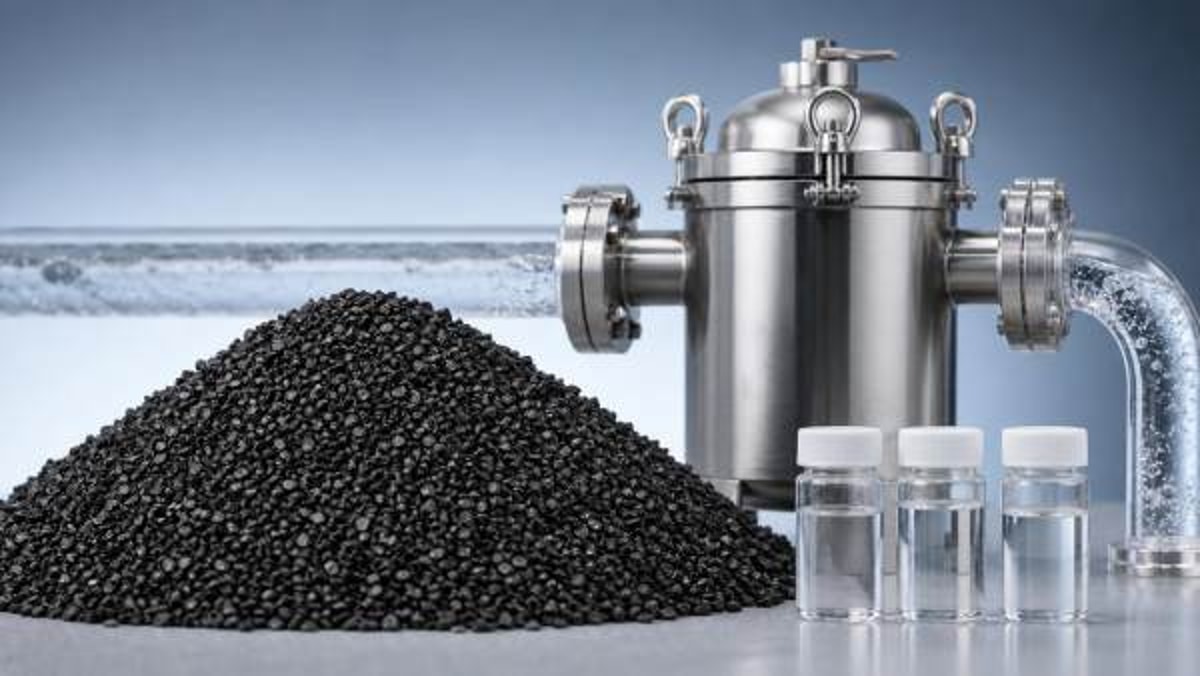
When sourcing bulk activated carbon for water treatment, not all specifications carry equal weight. For technical evaluators, performance depends on a careful balance of iodine value, particle size, ash content, moisture, hardness, and application fit. This guide outlines which metrics truly influence adsorption efficiency, operating cost, and compliance, helping buyers make more accurate and defensible procurement decisions.
What does “bulk activated carbon” really mean in water treatment procurement?
In technical purchasing, bulk activated carbon does not simply refer to buying a large quantity of carbon media. It implies a commercial-scale product selected for repeatable adsorption performance, hydraulic compatibility, low handling loss, and stable supply quality across multiple lots. For water treatment systems, this distinction matters because even small specification shifts can change pressure drop, bed life, contaminant breakthrough, reactivation value, and regulatory confidence.
Activated carbon used in water applications is typically supplied as powdered activated carbon (PAC), granular activated carbon (GAC), pelletized forms, or specialty catalytic grades. In municipal and industrial water treatment, GAC is often preferred for fixed-bed filtration, while PAC may be used for intermittent dosing or emergency contamination control. Technical evaluators therefore should not assess bulk activated carbon as a commodity alone; it is a process material whose value depends on feedstock, pore structure, particle distribution, and compatibility with the target contaminants.
A procurement file should also distinguish between “specification compliance” and “application suitability.” A product can meet a generic certificate yet still underperform in removing taste and odor compounds, PFAS precursors, pesticides, industrial organics, chlorine byproducts, or color bodies. That is why serious buyers move beyond headline numbers and ask how each specification affects real treatment outcomes.
Which specs matter most when evaluating bulk activated carbon for water treatment?
The short answer is that no single number tells the full story. However, some specifications consistently deserve more attention because they influence adsorption capacity, kinetics, mechanical durability, and operational cost. The most useful way to review bulk activated carbon is to connect each parameter to system performance rather than treating the data sheet as a checklist.
Among these, iodine value often gets the most attention, but technical teams should be cautious. A higher iodine value can suggest strong microporous capacity, yet it does not guarantee the best performance for every water treatment challenge. Large organic molecules, natural organic matter, and specific industrial pollutants may depend more on mesopore structure and diffusion behavior than on iodine value alone. In practice, the most meaningful specification is the one that predicts breakthrough performance under your operating conditions.
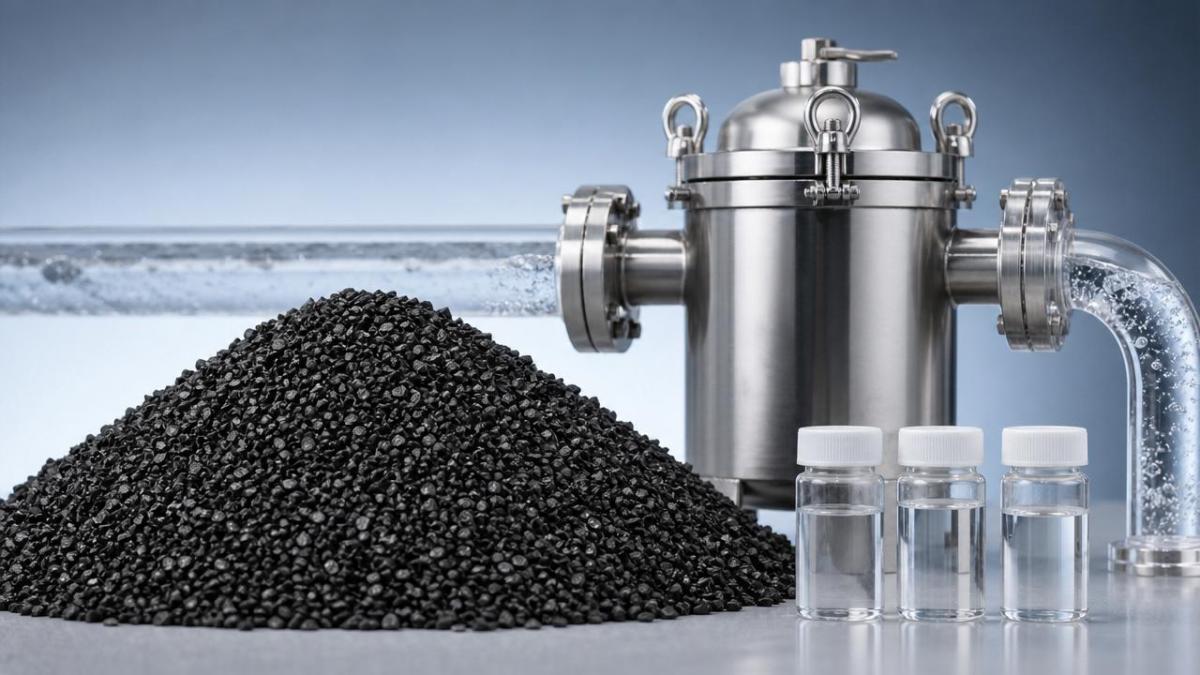
Is iodine value the best way to compare bulk activated carbon?
It is useful, but it is not enough. Iodine value is widely used because it is simple to compare and often correlates with total surface area in microporous carbon. For small dissolved organics, this can provide an initial screening tool. But many procurement mistakes happen when buyers assume that the highest iodine number is automatically the best choice.
For example, a bulk activated carbon grade with an impressive iodine value may still underperform if the particle size is too coarse for the available empty bed contact time, if the pore size distribution does not suit target compounds, or if ash blocks part of the accessible pore network. Likewise, in systems treating variable industrial influent, adsorption kinetics can matter as much as equilibrium capacity. A slightly lower iodine carbon with better transport properties may give longer effective run time before breakthrough.
A stronger comparison method is to review iodine value together with:
- apparent density, because it affects usable carbon mass per vessel volume,
- particle size distribution, because it affects adsorption rate and hydraulics,
- hardness, because mechanical loss changes lifecycle cost,
- application test data, because real water matrices behave differently from standard lab assumptions.
For technical evaluators, the better question is not “Which bulk activated carbon has the highest iodine value?” but “Which grade delivers the most reliable removal at our design flow, contaminant profile, and changeout interval?”
How do particle size, hardness, and moisture affect operating cost?
These three specs are often undervalued during sourcing because they look secondary next to adsorption capacity. In reality, they strongly influence total cost of ownership. Particle size controls the compromise between kinetics and pressure drop. Finer particles expose more external area and may improve adsorption speed, but they can also increase headloss, complicate backwashing, and elevate fines carryover. Coarser material may reduce pressure issues but can leave adsorption capacity underused if contact time is limited.
Hardness, abrasion number, or related durability metrics determine how well bulk activated carbon survives shipping, pneumatic conveying, bed loading, and backwash expansion. Low-hardness media can fracture into fines, reducing effective bed depth and causing carbon loss downstream. This affects not only replacement frequency but also filtration housekeeping, wash water burden, and consistency of treatment performance over time.
Moisture content is also more than a packaging detail. Since bulk activated carbon is frequently priced by weight, high moisture means a portion of the delivered tonnage is water rather than active adsorbent. If two products have similar performance but different moisture levels, the drier one may offer better real value. Moisture also affects storage stability and can influence how much dust or fines appear during handling.
This is why experienced evaluators convert commercial offers into effective dry-carbon cost, expected service life, and projected vessel performance. A lower quoted price may become more expensive after adjusting for moisture, attrition, and shorter runtime.
How should buyers match bulk activated carbon specs to different water treatment applications?
Application fit is where many otherwise sound evaluations break down. Bulk activated carbon for dechlorination, odor control, groundwater polishing, wastewater organics reduction, and high-purity process water are not always interchangeable. The right grade depends on contaminant chemistry, influent variability, pretreatment quality, contact time, and whether the carbon will be virgin, impregnated, catalytic, or reactivated.
For municipal drinking water, buyers often prioritize balanced pore structure, low extractables, and compliance support for potable use. For industrial wastewater, the focus may shift toward broader organic loading tolerance, resistance to fouling, and economics of more frequent replacement or reactivation. In food, beverage, aquaculture, biochemical, and fine chemical processing environments, consistency, trace contaminant control, and documentation may be especially important because treated water quality can affect downstream product quality and compliance pathways.
A practical screening approach is to group your needs into three questions: what must be removed, how fast must removal occur, and what operating penalties are acceptable? That framework usually clarifies whether a standard coconut-shell GAC, coal-based GAC, wood-based carbon, or specialty grade is the better fit. Feedstock matters because it influences pore architecture. Coconut-shell carbon often offers strong microporosity and hardness, while other feedstocks may provide advantages for larger molecules or broader adsorption profiles.
What common mistakes do technical evaluators make when sourcing bulk activated carbon?
The most common mistake is comparing data sheets without comparing use conditions. Bulk activated carbon is frequently evaluated line by line, but actual performance depends on the interaction between media and process design. A carbon grade that performs well in one site may fail in another because the influent load, pH, oxidant level, pretreatment condition, or bed depth is different.
Another mistake is treating all certificates as equal evidence. Technical buyers should verify whether reported values are typical, minimum guaranteed, or lot-specific. They should also ask whether test methods align with recognized standards and whether supplier quality systems can maintain consistency over long-term contracts. In regulated or highly sensitive sectors, traceability and production control can matter as much as nominal adsorption metrics.
A third error is ignoring operational side effects. Carbon with attractive lab numbers may create excess fines, unstable backwash behavior, or rapid pressure buildup. These issues can erode uptime and increase maintenance burden. Finally, some teams fail to request pilot data, isotherm information, or references from similar applications. That leaves too much uncertainty in a category where field behavior can vary significantly.
What should be confirmed before approving a supplier or moving to pilot trials?
Before final approval, technical evaluators should move from product specs to supply assurance and validation. A qualified bulk activated carbon source should demonstrate consistent raw material selection, process control, lot traceability, and clear documentation on moisture, ash, particle distribution, hardness, and relevant adsorption indicators. Where potable or process-critical water is involved, documentation supporting applicable regulatory expectations should be reviewed early rather than after commercial negotiation.
Pilot planning should confirm sampling protocol, influent characterization, target breakthrough criteria, expected bed life, and success metrics beyond simple removal percentage. It is also wise to ask how the supplier handles reactivation options, replacement lead times, packaging formats, and variability between production batches. In global sourcing, logistics reliability and contamination control during storage and transport can materially affect delivered quality.
For teams in agriculture-linked processing, aquaculture systems, biochemical manufacturing, or fine chemical operations, cross-functional review is especially useful. Water treatment media choices can affect not only utility cost but also product integrity, environmental discharge performance, and audit readiness. That makes bulk activated carbon a technical risk decision, not just a purchasing line item.
Which questions should you ask first if you need a defensible procurement decision?
If a project is moving toward specification, tendering, or supplier comparison, start with questions that reduce performance uncertainty. Ask which contaminants are priority removal targets, what concentration range and variability are expected, and what empty bed contact time the system can realistically provide. Confirm whether the decision should optimize for maximum capacity, faster kinetics, longer media life, lower pressure drop, cleaner handling, or easier compliance documentation.
Then ask suppliers to explain why their bulk activated carbon grade fits those conditions, not just to submit a generic data sheet. Request lot-to-lot ranges, not one idealized test report. Ask how moisture affects delivered value, how hardness affects fines generation, and whether application references exist for comparable water chemistry. If reactivation is part of the business case, confirm expected performance retention and logistics implications.
In many cases, the best next step is a structured pilot or side-by-side media comparison using actual feed water. That produces procurement evidence that can stand up to internal engineering review, quality assurance scrutiny, and budget approval. If you need to further confirm a specific solution, parameter set, timeline, quotation basis, or cooperation model, prioritize discussion around contaminant profile, vessel design, service life target, compliance requirements, and supplier quality consistency before negotiating price alone.
Related Intelligence
- Aeration & Water TechBulk Activated Carbon: Which Specs Matter for Water Treatment?Bulk activated carbon for water treatment: learn which specs truly matter—iodine value, particle size, ash, moisture, and hardness—to improve performance, control cost, and choose suppliers with confidence.
- Aeration & Water TechTHE Alliance Raises Aeration & Water Tech Freight Rates on Asia–Middle East RoutesAeration & Water Tech freight rates rise 22% on Asia–Middle East routes amid THE Alliance’s new BUC—key for aquaculture exporters, forwarders & importers. Act now.
- Aeration & Water TechOcean Alliance Raises Aeration & Water Tech Freight Rates by 18%Aeration & Water Tech freight rates surge 18% by Ocean Alliance—impacting aerators, pumps & smart monitoring gear. Act now to mitigate costs & delays.
The Morning Broadsheet
Daily chemical briefings, market shifts, and peer-reviewed summaries delivered to your terminal.
