

The Authority in Global Agricultural Chemistry & Bio-Resources
THE Alliance Raises Aeration & Water Tech Freight Rates on Asia–Middle East Routes
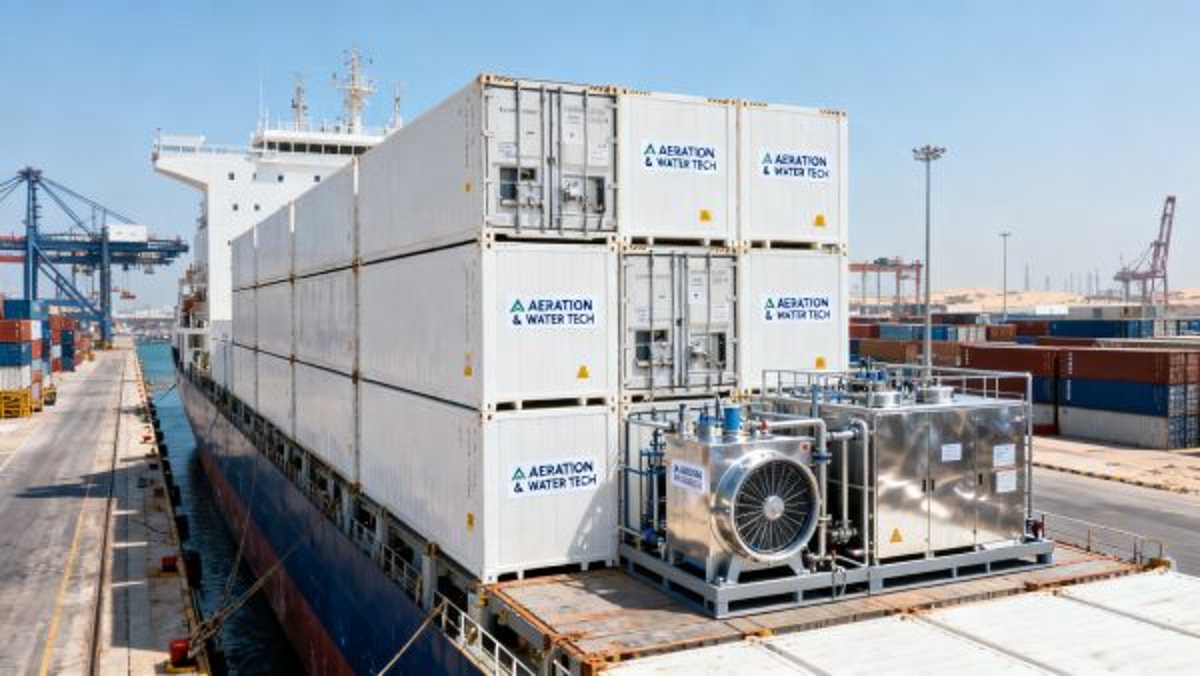
On May 3, 2026, THE Alliance — a global shipping consortium comprising Maersk, CMA CGM, Hapag-Lloyd, and nine other major carriers — announced a 22% temporary bunker surcharge (BUC) on specialized Reefer and High-Cube containers carrying Aeration & Water Tech equipment (e.g., aerators, oxygen pumps, water treatment modules) on Asia–Middle East routes. This adjustment directly affects exporters of aquaculture equipment from China to Saudi Arabia, the UAE, and Egypt, with implications for cost, lead time, and supply chain planning.
Event Overview
On May 3, 2026, THE Alliance issued an official notice confirming the implementation of a 22% temporary Bunker Adjustment Charge (BUC) on shipments of Aeration & Water Tech equipment in Reefer and High-Cube containers on the Asia–Middle East trade lane. The surcharge applies effective immediately and remains valid through August 31, 2026. It cites two stated drivers: the常态化 (normalization) of Red Sea route diversions and ongoing container yard congestion at key Middle Eastern ports.
Industries Affected by Segment
Direct Exporters (Aquaculture Equipment Manufacturers)
Manufacturers in China exporting曝气机, 增氧泵, and modular water treatment systems face immediate cost pressure. As these goods require temperature-controlled or high-cube units for safe transit, the 22% BUC applies directly to their ocean freight line item — increasing landed costs without corresponding pricing flexibility in competitive regional markets like Saudi Arabia and Egypt.
Supply Chain & Logistics Service Providers
Freight forwarders and NVOCCs handling Aeration & Water Tech cargo must revise rate quotations, update booking systems, and renegotiate contracts with shippers. Since the surcharge targets specific equipment types (not general cargo), accurate commodity classification becomes operationally critical — misclassification may trigger billing disputes or service delays.
Importers & Distributors in the Middle East
Local importers in the UAE, Saudi Arabia, and Egypt sourcing aquaculture infrastructure may experience delayed deliveries due to tighter slot availability and port congestion. The surcharge does not apply at origin only; it compounds existing inland transport and customs clearance bottlenecks, potentially extending total transit time beyond historical benchmarks.
What Stakeholders Should Monitor and Act On
Track Official Updates Beyond the Initial Notice
THE Alliance has not yet published a dedicated tariff bulletin or detailed application guidelines (e.g., HS code alignment, documentation requirements). Exporters and forwarders should monitor carrier-specific portals and alliance communications for clarifications — especially regarding retroactive application or exemptions for pre-booked shipments.
Verify Commodity Classification Against the Surcharge Scope
The BUC explicitly covers “Aeration & Water Tech equipment”, including aerators, oxygen pumps, and water treatment modules. Companies should cross-check product descriptions, technical specifications, and commercial invoices against this definition — not just packaging or container type — to confirm applicability before shipment.
Assess Impact on Key Trade Lanes and Delivery Windows
Since the surcharge is limited to Asia–Middle East services under THE Alliance (excluding non-member carriers), affected parties should evaluate alternative routing options — e.g., using non-alliance carriers or transshipment via Europe — while weighing trade-offs in transit time, reliability, and total landed cost.
Update Internal Costing Models and Customer Communications
Exporters should adjust unit freight cost assumptions for Q2–Q3 2026 shipments and review contract terms (e.g., Incoterms®) to determine whether the BUC falls under seller or buyer responsibility. Proactive communication with buyers about potential price adjustments or revised delivery timelines helps manage expectations.
Editorial Observation / Industry Perspective
Observably, this surcharge reflects structural shifts rather than a short-term volatility response. The formalization of Red Sea detours — now cited as a permanent operational factor — signals longer-term cost inflation in Asia–Middle East maritime logistics. From an industry perspective, the targeted nature of the charge (equipment-specific, container-type-specific, alliance-specific) suggests carriers are refining surcharge design to align more closely with actual cost drivers — a trend likely to continue across other niche trades. Analysis shows this is less a one-off fee and more an early indicator of how alliances may calibrate pricing for specialized, high-value industrial cargo amid persistent infrastructure constraints.
It is important to note that this measure is currently limited to THE Alliance members and does not represent a market-wide consensus. Its duration (through August 31, 2026) implies it is intended as a medium-term operational adjustment — not an emergency levy — and therefore warrants integration into near-term planning cycles.
Concluding, this announcement is best understood not as an isolated cost increase, but as a data point confirming the growing complexity of specialized equipment logistics across geopolitically sensitive corridors. For stakeholders, the priority lies in precise classification, transparent cost allocation, and scenario-based contingency planning — not broad assumptions about market-wide rate trends.
Information Source: Official notice issued by THE Alliance on May 3, 2026. Ongoing monitoring is recommended for updates on implementation details, scope clarifications, or extension announcements.
Related Intelligence
- Aeration & Water TechBulk Activated Carbon: Which Specs Matter for Water Treatment?Bulk activated carbon for water treatment: learn which specs truly matter—iodine value, particle size, ash, moisture, and hardness—to improve performance, control cost, and choose suppliers with confidence.
- Aeration & Water TechTHE Alliance Raises Aeration & Water Tech Freight Rates on Asia–Middle East RoutesAeration & Water Tech freight rates rise 22% on Asia–Middle East routes amid THE Alliance’s new BUC—key for aquaculture exporters, forwarders & importers. Act now.
- Aeration & Water TechOcean Alliance Raises Aeration & Water Tech Freight Rates by 18%Aeration & Water Tech freight rates surge 18% by Ocean Alliance—impacting aerators, pumps & smart monitoring gear. Act now to mitigate costs & delays.
The Morning Broadsheet
Daily chemical briefings, market shifts, and peer-reviewed summaries delivered to your terminal.
