

The Authority in Global Agricultural Chemistry & Bio-Resources
Indonesia BPOM Mandates Microbial Tolerance Statement for Natural Ingredients Imports
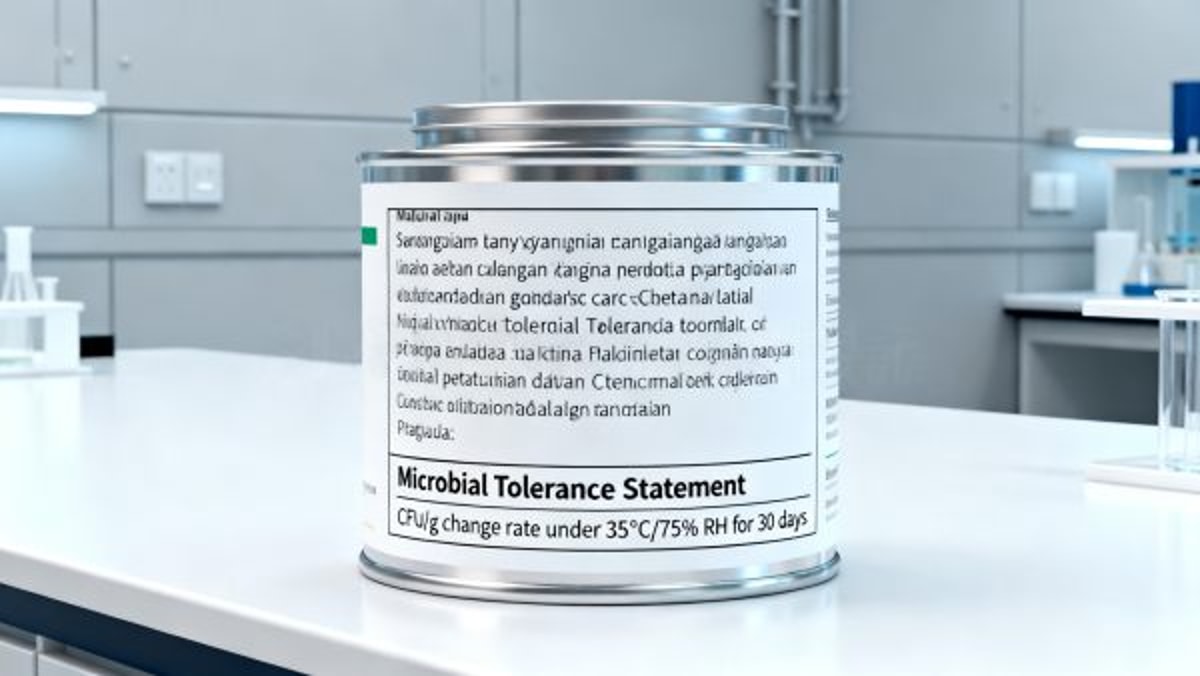
Indonesia’s National Agency of Drug and Food Control (BPOM) issued an urgent regulatory update on May 2, 2026, requiring mandatory microbial tolerance declarations on Indonesian-language labels for all imported natural ingredients—impacting exporters, labelers, testing labs, and importers in the health food, cosmetics, and functional food ingredient supply chains.
Event Overview
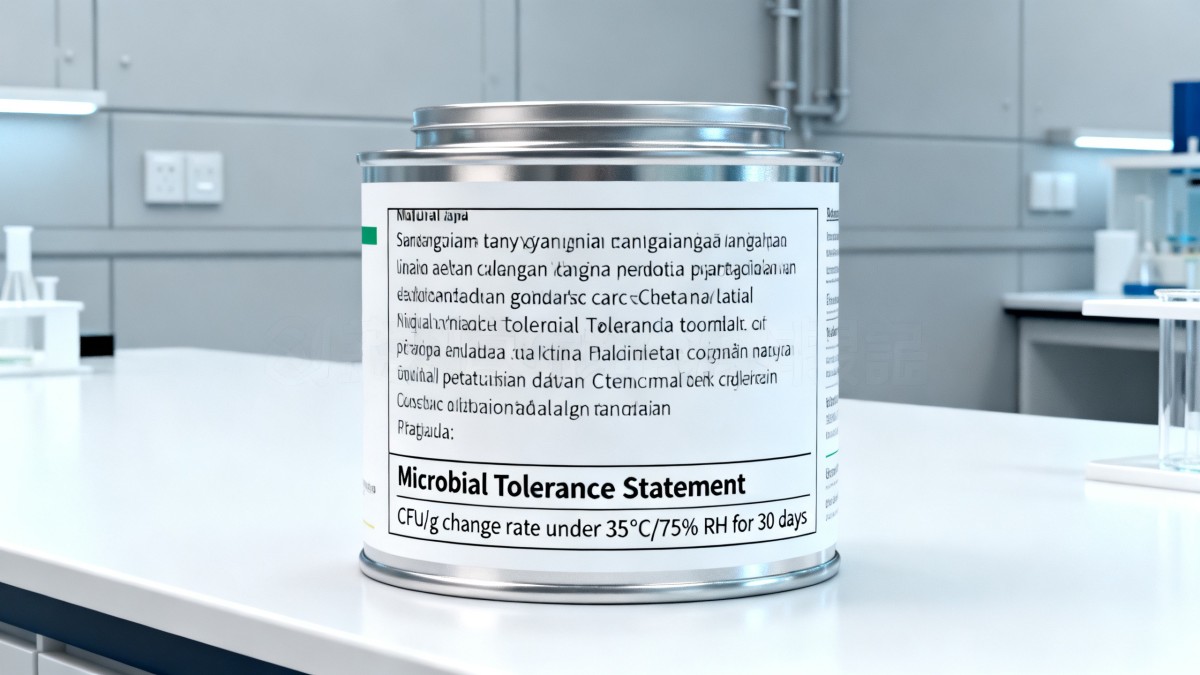
On May 2, 2026, BPOM released Emergency Notice No. HK.02.02.2.5.05.05126, mandating that all imported natural ingredients carry a new compulsory field titled ‘Microbial Tolerance Statement’ on their Indonesian-language product labels. Effective June 15, 2026, this statement must specify the change rate of total viable count (CFU/g) under accelerated stability conditions: 35°C and 75% relative humidity over 30 days. Chinese exporters—and by extension, all foreign suppliers—must submit test reports from BPOM-recognized laboratories; labels lacking such validated data will be rejected during BPOM labeling registration, resulting in customs clearance refusal.
Which Subsectors Are Affected
Direct Exporters (e.g., Chinese Natural Ingredient Suppliers)
These entities are directly responsible for label compliance and laboratory validation. Non-compliant labels cannot be registered with BPOM, halting market access. Impact manifests in delayed shipments, re-labeling costs, and potential contract penalties if delivery timelines are missed due to testing or documentation delays.
Ingredient Procurement & Sourcing Firms
Firms sourcing natural ingredients for downstream formulation (e.g., for dietary supplements or cosmetic actives) now face tighter upstream verification requirements. They must confirm supplier capacity to obtain BPOM-recognized microbial tolerance test reports—and may need to revise procurement contracts to allocate testing responsibility and cost.
Contract Manufacturers & Formulators (in Indonesia or exporting to Indonesia)
Manufacturers using imported natural ingredients as raw materials must verify label compliance before batch release. Incomplete or non-validated microbial statements risk rejection of finished products during BPOM pre-market notification or post-import inspection, affecting production continuity and inventory planning.
Label Design & Regulatory Affairs Service Providers
Service providers handling label submission and BPOM registration must integrate the new field into standard templates and validate its formatting against BPOM’s current guidance. Misplacement, incorrect units, or omission—even in draft labels—triggers automatic registration rejection, increasing revision cycles and timeline pressure.
What Relevant Companies or Practitioners Should Focus On and How to Respond Now
Monitor BPOM’s official implementation guidance and lab recognition list
BPOM has not yet published the full list of recognized laboratories or detailed technical specifications for the microbial tolerance test protocol (e.g., sampling method, acceptance criteria for CFU/g change rate). Companies should track BPOM’s official portal and registered notifications for updates prior to initiating testing.
Prioritize high-volume or high-risk natural ingredient categories for immediate testing
Given limited lab capacity and a tight window between May 2 and June 15, exporters should triage ingredients by export volume, shelf-life sensitivity, and microbial risk profile (e.g., botanical powders, fermented extracts, unsterilized plant-derived actives) to allocate testing resources efficiently.
Distinguish between regulatory signal and operational readiness
This notice is an enforcement mandate—not a proposal or consultation. However, the absence of published test methodology means companies must treat early test reports as provisional until BPOM confirms alignment. Avoid assuming internal or third-party lab data automatically qualifies without BPOM lab recognition.
Update internal labeling workflows and cross-functional handoffs
Integrate the ‘Microbial Tolerance Statement’ field into label generation SOPs, QA checklists, and interdepartmental briefings (regulatory, quality, logistics). Assign clear ownership for test report acquisition, label version control, and BPOM submission timing—especially where multiple SKUs share one master label file.
Editorial Perspective / Industry Observation
Observably, this requirement reflects BPOM’s intensified focus on post-import stability assurance—not just compositional authenticity—for natural ingredients, which historically faced lighter microbiological scrutiny than finished products. Analysis shows it functions less as an isolated labeling amendment and more as a structural shift toward harmonizing natural ingredient oversight with finished-product safety expectations. From an industry perspective, it signals growing convergence between regulatory approaches for raw materials and end-use formulations in ASEAN markets. Current attention should center on execution feasibility—not policy intent—as lab capacity, test turnaround time, and BPOM’s interpretation of ‘change rate’ remain unresolved.
Conclusion
This update marks a concrete escalation in regulatory due diligence for natural ingredient trade into Indonesia. It does not introduce new safety thresholds per se, but enforces traceable, lab-verified evidence of microbiological behavior under defined stress conditions—shifting accountability upstream. For stakeholders, the event is best understood not as a temporary compliance hurdle, but as an indicator of tightening raw-material governance in emerging regulatory jurisdictions where documentation rigor increasingly parallels that of finished goods.
Information Sources
Main source: BPOM Emergency Notice No. HK.02.02.2.5.05.05126, issued May 2, 2026.
Note: BPOM’s official list of recognized laboratories and detailed test protocol specifications remain pending and require ongoing monitoring.
Related Intelligence
- Natural IngredientsBulk Antioxidants: Why Oxidation Control Fails in StorageBulk antioxidants can still fail in storage due to moisture, heat, oxygen exposure, and poor handling. Learn the hidden risks and practical controls to protect stability.
- Natural IngredientsWholesale Essential Oils: Why GCMS Reports Don't Tell the Whole StoryWholesale essential oils buyers: learn why GCMS reports alone are not enough. Discover how to assess authenticity, consistency, traceability, and compliance before choosing a supplier.
- Natural IngredientsChlorella Powder Wholesale: How to Screen for Purity RisksChlorella powder wholesale: learn how to screen purity risks, verify COAs, spot heavy metal and microbial issues, and choose safer suppliers with confidence.
The Morning Broadsheet
Daily chemical briefings, market shifts, and peer-reviewed summaries delivered to your terminal.
