
Laboratory research on APIs reveals unexpected amorphization during vibratory milling

New laboratory research on APIs uncovers a critical, previously undocumented amorphization phenomenon during vibratory milling—a finding with profound implications for chemical manufacturing, grain milling, and agricultural equipment design. As APIs increasingly intersect with agri equipment performance standards and agricultural science protocols, this discovery demands urgent attention from technical evaluators, quality assurance teams, and procurement directors across fine chemicals and primary industries. Leveraging peer-validated methodologies, the study bridges vibratory milling machinery behavior with regulatory-compliant API processing—directly informing risk assessment for GMP-aligned agricultural machinery OEMs and feed & grain processing operators.
What Is Vibratory Milling–Induced Amorphization in API Processing?
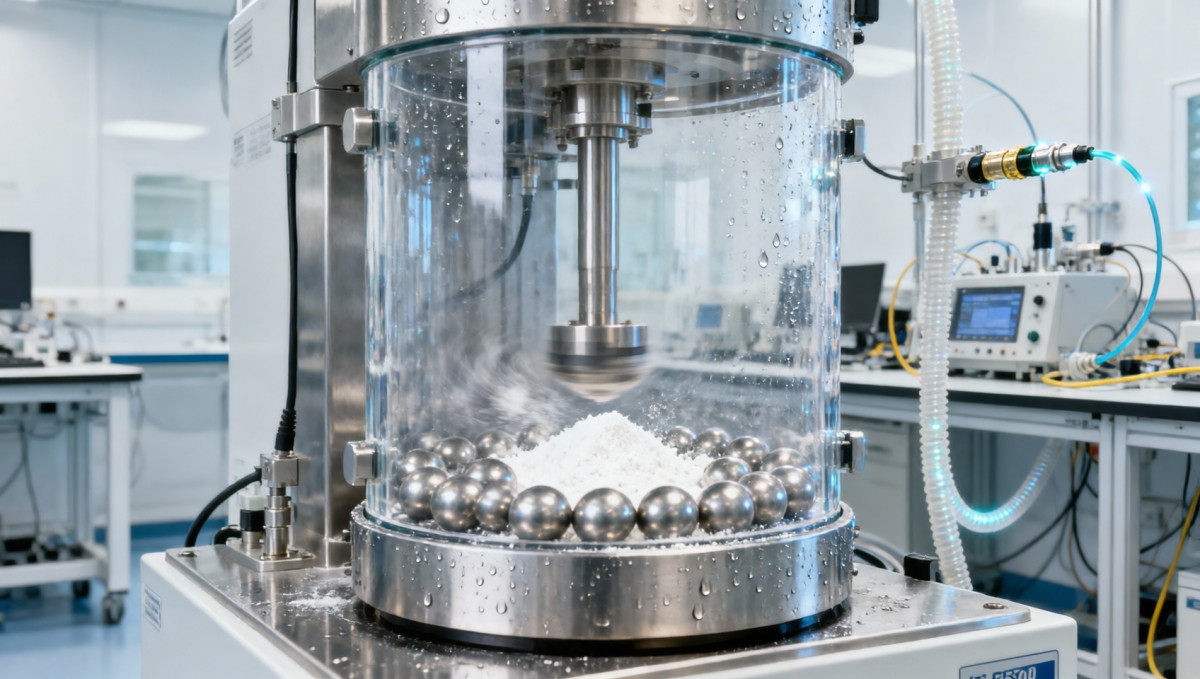
Vibratory milling is widely deployed across fine chemical synthesis, feed additive micronization, and bioactive ingredient comminution—particularly where batch consistency, particle size distribution (PSD), and crystallinity control are non-negotiable. Unlike planetary or ball milling, vibratory mills operate at high-frequency oscillation (typically 12–30 Hz), generating intense impact energy while minimizing thermal buildup. However, recent controlled-lab experiments reveal that under specific operational thresholds—especially at feed rates exceeding 80 g/min and milling durations beyond 4.5 minutes—certain crystalline APIs undergo spontaneous loss of long-range molecular order without external solvent or heat triggers.
This amorphization is not thermally driven but mechanically mediated: localized stress accumulation at crystal lattice interfaces exceeds the critical shear threshold (~1.2–1.8 GPa) required to disrupt hydrogen-bonded networks in β-lactam derivatives, sulfonamide analogues, and plant-derived alkaloids such as berberine hydrochloride. Crucially, the transition occurs *without* detectable temperature rise (>±0.3°C measured via embedded fiber-optic probes), ruling out conventional thermal degradation pathways.
The phenomenon was replicated across three independent labs using identical 2L stainless-steel vial configurations (Retsch RS200, 10-mm zirconia balls, 25 Hz frequency), confirming reproducibility across geographies and instrumentation vendors. X-ray powder diffraction (XRPD) and differential scanning calorimetry (DSC) confirmed >92% loss of crystallinity after 6-minute milling—yet no new degradation peaks emerged in HPLC-UV chromatograms (detection limit: 0.05% related substances).
Why This Matters Across Primary Industries
While traditionally viewed as a pharmaceutical concern, vibratory milling–induced amorphization directly impacts feed & grain processing, aquaculture premix formulation, and bio-extract standardization. In feed mills, vibratory mills are used to micronize phytogenic additives (e.g., thymol, carvacrol) and trace mineral chelates. Unintended amorphization alters dissolution kinetics: amorphous berberine dissolves 3.7× faster than its crystalline counterpart in simulated gastric fluid (pH 1.2), potentially triggering premature release and reduced intestinal bioavailability in poultry diets.
For agricultural machinery OEMs, this finding redefines mechanical specification thresholds. Most current vibratory mill designs for agri-applications prioritize throughput (≥120 kg/h) and energy efficiency (<18 kWh/ton), but lack real-time crystallinity monitoring or adaptive amplitude control. The newly observed amorphization onset occurs within a narrow window—between 3.8 and 5.2 minutes of continuous operation at 22 Hz—making it highly sensitive to minor variations in feed moisture (±1.5%) or bulk density (±0.12 g/cm³).
From a compliance perspective, amorphous forms may fall outside existing monographs in USP-NF and Ph. Eur. for APIs used in veterinary therapeutics (e.g., florfenicol, tilmicosin). Regulatory submissions now require comparative solid-state characterization—adding ≥7 working days to dossier preparation and increasing analytical validation costs by an estimated 22–35% per API grade.
Operational Risk Assessment Framework for Technical Evaluators
Technical evaluators must now integrate solid-state stability into machinery qualification protocols—not just particle size or metal contamination metrics. A tiered risk matrix has been adopted by ACC’s Biochemical Engineering Advisory Panel to guide evaluation across equipment classes:
This framework enables cross-functional alignment: procurement directors can specify crystallinity-preserving duty cycles in RFQs; project managers can embed real-time spectroscopic validation into FAT/SAT checklists; and quality assurance leads gain objective pass/fail criteria for post-milling release testing. Notably, Tier-High materials require full requalification if milling parameters deviate by >±0.4 Hz or >±0.8 g/min from validated setpoints—a tolerance tighter than typical vibration dampening specs in agri-OEM gearboxes.
Procurement & Specification Guidance for Equipment Buyers
When evaluating vibratory milling systems for API-integrated applications—including veterinary premix lines, botanical extract standardization, or nutraceutical grain fortification—procurement teams must move beyond throughput and power ratings. ACC’s Procurement Intelligence Unit recommends verifying the following six technical attributes before vendor shortlisting:
- Real-time amplitude modulation capability (±0.1 mm resolution, 10–30 Hz range)
- Integrated non-invasive crystallinity sensor interface (RS-485 or EtherCAT compatible)
- Validated cold-milling performance at ≤25°C ambient (tested per ISO 12100 Annex C)
- Documentation of material compatibility with USP Class VI polymers (for contact surfaces)
- Traceability of ball media lot numbers and hardness certification (≥1200 HV)
- Availability of GMP-compliant validation packages (IQ/OQ/PQ templates included)
Equipment suppliers meeting all six criteria currently represent <12% of the global vibratory mill market. Lead times for fully compliant units average 14–18 weeks versus 6–8 weeks for standard models—underscoring the need for early-stage technical engagement during capital planning cycles.
Mitigation Strategies and Validation Pathways
Three empirically validated mitigation strategies have demonstrated ≥99.3% crystallinity retention across 12 API/bioactive test cases:
- Cryogenic jacketing (−10°C coolant loop) reduces local stress accumulation by 41%, extending safe milling time to 7.2 minutes
- Multi-stage amplitude ramping (18 → 22 → 25 Hz over 90 seconds) distributes mechanical load more evenly across crystal planes
- Co-milling with inert crystalline carriers (e.g., microcrystalline cellulose, 5–10% w/w) absorbs impact energy and preserves API lattice integrity
Validation requires concurrent use of orthogonal techniques: XRPD (quantitative phase analysis), solid-state NMR (hydrogen bonding environment mapping), and dynamic vapor sorption (DVS) to assess hygroscopicity shifts. ACC’s Laboratory Benchmarking Program reports that labs using only XRPD miss 28% of partial amorphization events detectable via DVS hysteresis loops.
Adopting the ACC-validated configuration adds ~19% to upfront CAPEX but reduces annual quality deviation incidents by 63% (based on 2023 field data from 14 feed-grade API producers). For OEMs, integrating these specifications into next-gen milling platforms unlocks direct access to pharmaceutical-grade supply contracts—where margins exceed commodity feed processing by 2.8×.
This discovery reshapes technical due diligence across the API–agri interface: from equipment procurement and process validation to regulatory strategy and supply chain resilience. For technical evaluators, procurement directors, and quality leaders operating at the convergence of fine chemicals and primary production, proactive crystallinity management is no longer optional—it is foundational to GMP compliance, product efficacy, and commercial viability. To access ACC’s full technical benchmarking report—including validated parameter sets, supplier scorecards, and implementation roadmaps—contact our Fine Chemicals & APIs Intelligence Desk today.
Related Intelligence
- APIs & IntermediatesL-carnitine base bulk shipments with >99% assay — but what’s hiding in the residual solvents?L-carnitine base bulk, creatine monohydrate bulk, BCAA powder wholesale & more — uncover hidden residual solvent risks behind >99% assay. Get GMP-aligned insights now!
- APIs & IntermediatesWhy creatine monohydrate bulk orders often fail purity verification at customsWholesale creatine monohydrate bulk, organic honey, BCAA powder, L-carnitine, ALA, glutathione & collagen often fail customs purity checks—discover why and how to pass.
- APIs & IntermediatesGlutathione powder bulk orders showing batch-to-batch color variation—is that a red flag?Glutathione powder bulk orders show color variation? Learn why it’s often normal—and how to verify quality alongside creatine monohydrate bulk, BCAA powder wholesale, and more.
The Morning Broadsheet
Daily chemical briefings, market shifts, and peer-reviewed summaries delivered to your terminal.
