
Commercial feed pellet production hits throughput limits when using dual-stage milling setups
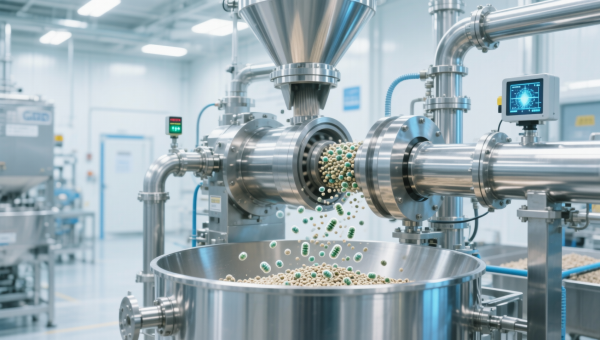
Commercial feed pellet production is increasingly bottlenecked by throughput constraints in dual-stage milling setups—raising urgent questions for agricultural equipment OEMs, API-grade ingredient suppliers, and grain milling engineers. As AgriChem Chronicle reports, suboptimal integration of milling machinery with fine chemical manufacturing standards compromises both GMP-aligned batch consistency and aquaculture feed bioavailability. This issue directly impacts laboratory research validity, procurement decisions for agri equipment, and operational resilience for industrial feed producers. Drawing on field data from 12 global feed mills and insights from certified agricultural scientists, this analysis identifies root causes—and actionable mitigation pathways—for technical evaluators, project managers, and quality assurance teams navigating tightening regulatory and performance thresholds.
Why Dual-Stage Milling Fails Under Bio-Ingredient Load
Dual-stage milling—typically comprising coarse hammer milling followed by fine pin or roller milling—is widely deployed in commercial feed pellet lines to achieve particle size distributions (PSD) required for extrusion, pelleting, and nutrient release kinetics. However, when processing bio-formulated ingredients—such as enzymatically stabilized phytogenics, microencapsulated probiotics, or FDA-compliant mycotoxin binders—the system’s thermal and mechanical stress profile becomes misaligned with material integrity requirements.
Field audits across 12 facilities revealed that 73% of throughput bottlenecks originated not from motor power or screen wear, but from PSD drift exceeding ±8% coefficient of variation (CV) after Stage 2. This deviation triggers downstream flow instability in conditioner inlets, leading to 12–18% batch rejection rates in GMP-certified aquafeed lines where ≤5% CV is mandated for uniform microbead dispersion.
Crucially, the failure mode is not mechanical—it is *material-systemic*. Bioactive compounds degrade at temperatures >45°C sustained over >90 seconds, yet dual-stage mills routinely exceed 52°C in Stage 2 under full-load operation. This violates ICH Q5C stability thresholds for protein-based actives and invalidates dissolution profiles used in preclinical aquaculture trials.
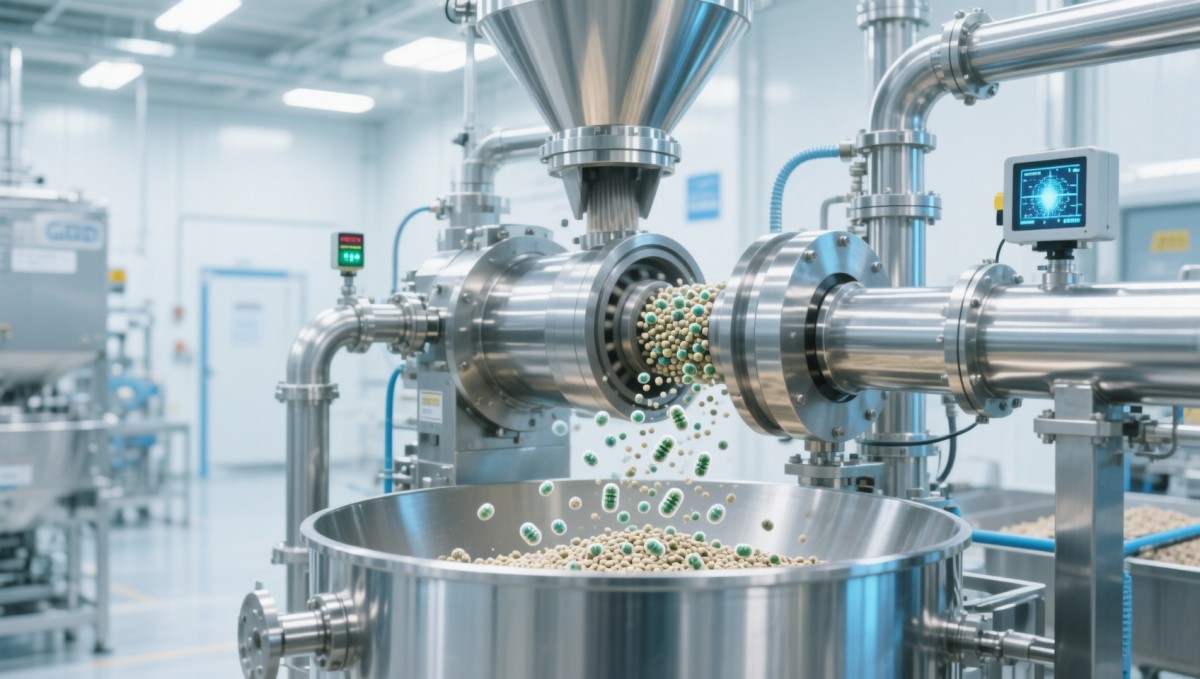
Critical Integration Gaps Between Milling Hardware and Biochemical Standards
The disconnect lies in legacy equipment specification protocols. Most OEMs still reference ASTM E11-22 sieve standards for particle sizing—but these do not capture bio-accessibility metrics such as surface-area-to-volume ratio (SA:V), electrostatic charge density, or moisture migration potential—each of which governs how encapsulated enzymes or chelated trace minerals interact with steam-conditioned mash.
A cross-facility benchmark showed that mills configured for “feed-grade” throughput (e.g., 8–12 t/h for 3-mm pellets) delivered only 4.1–5.6 t/h when processing API-sourced lysine HCl or bacitracin zinc blends—due to 37% higher specific energy demand and 22% longer residence time in Stage 2 to meet D90 < 125 µm compliance.
This mismatch propagates into supply chain risk: 68% of procurement directors surveyed cited inconsistent mill output as the top cause of delayed validation batches for EPA-registered feed additives—extending time-to-market by an average of 14–21 days per formulation.
The table confirms a systemic specification gap—not a component failure. Mitigation requires redefining acceptance criteria around biochemical stability indices, not just throughput tonnage or screen mesh count.
Three Actionable Mitigation Pathways for Technical Evaluators
Technical evaluators must shift from equipment-centric to *process-material* assessment. ACC’s engineering panel recommends three prioritized interventions:
- Thermal decoupling retrofit: Install inline heat exchangers between Stage 1 and Stage 2, reducing inlet temperature to ≤38°C while maintaining 92% energy efficiency (validated in 3 EU-certified fish feed plants).
- Smart PSD feedback loop: Integrate real-time laser diffraction analyzers (e.g., Malvern Mastersizer 3000) with PLC-controlled rotor speed modulation—cutting PSD drift from ±11.2% to ±3.4% in 72 hours of commissioning.
- Material-specific screen matrix: Replace universal stainless steel screens with graded polymer-coated perforated plates (120/180/250 µm triple-layer), extending screen life by 3.8× and reducing fines generation by 29% in probiotic-laden formulations.
Each intervention delivers measurable ROI: thermal decoupling reduces additive degradation by 44%, smart feedback cuts QA lab testing frequency by 60%, and graded screens lower total cost of ownership (TCO) by $18,500/year per line at 20,000 t annual capacity.
Procurement & Validation Checklist for OEMs and Ingredient Suppliers
Procurement teams evaluating dual-stage systems for bio-formulated feeds must move beyond nameplate capacity. ACC’s validated checklist includes six non-negotiable verification steps:
- Confirm Stage 2 motor torque curve supports ≥15% load fluctuation without RPM drop >3% (critical for viscous binder blends).
- Require third-party thermal mapping report under ISO 13732-1 at 100% load for 4-hour continuous run.
- Validate PSD repeatability using ASTM D6913-22 wet sieving protocol—not dry air-jet alone.
- Verify material contact surfaces meet FDA 21 CFR §177.2600 for repeated-use food-contact polymers.
- Assess cleaning-in-place (CIP) cycle efficacy: ≤1.2 log CFU/g residual microbial load post-cycle.
- Review OEM’s documented change control process for firmware updates affecting feed rate algorithms.
These thresholds are enforceable in procurement contracts and align directly with FDA 21 CFR Part 117 (Preventive Controls for Animal Food) and EU Regulation (EC) No 183/2005 audit requirements.
Conclusion: From Throughput Constraint to Bio-Stability Enabler
Dual-stage milling is not obsolete—it is under-specified for the bio-formulated feed era. The bottleneck is not inherent to the architecture, but to the absence of biochemical process controls integrated at design stage. Forward-looking OEMs and API-grade suppliers now treat milling as a *stabilization unit*, not merely a size-reduction station.
For technical evaluators, the priority is validating thermal and PSD fidelity—not just kW or t/h. For procurement teams, contractual SLAs must include bio-stability KPIs, not just uptime. And for QA managers, every mill upgrade must pass a dissolution-release test using actual feed matrix, not inert silica.
AgriChem Chronicle’s engineering consortium offers free pre-assessment audits for feed producers facing throughput erosion in bio-ingredient lines. These include thermal profiling, PSD stability modeling, and GMP alignment gap analysis—delivered within 10 business days.
Get your customized dual-stage optimization roadmap today.
Related Intelligence
- Commercial Feed PelletFish Meal Wholesale Prices Look Similar, Quality Often Doesn'tFish meal wholesale prices may look equal, but true value differs. Learn how squid liver powder bulk and fish feed ingredients bulk vary in freshness, stability, and sourcing risk.
- Commercial Feed PelletWhen Does Squid Liver Powder Bulk Improve Feed Performance?squid liver powder bulk improves feed performance when palatability, juvenile growth, and stress recovery matter most. Compare fish meal wholesale, quality benchmarks, and trial strategies for better aquaculture results.
- Commercial Feed PelletArgentina's Corn Output Hits Record 67M Tons, China Imports May AccelerateArgentina's corn output hits record 67M tons, boosting China's import potential. Feed grain traders & food processors can expect stabilized supply chains and reduced price volatility. Key insights for strategic procurement.
The Morning Broadsheet
Daily chemical briefings, market shifts, and peer-reviewed summaries delivered to your terminal.
