
Natural ingredients with high oil content clog standard milling systems more frequently in 2026
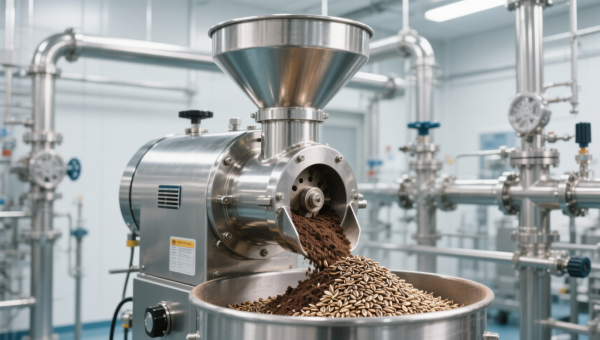
In 2026, natural ingredients with high oil content—increasingly vital for API synthesis and bio-extract formulation—are straining conventional milling machinery across Grain Milling and Agricultural Equipment systems. This surge in botanical feedstock use, driven by demand from Chemical Manufacturing and Agricultural Science stakeholders, exposes critical vulnerabilities in Agri Equipment reliability and process scalability. As Laboratory Research confirms elevated clogging rates in standard mills, technical evaluators, procurement directors, and quality assurance teams face urgent operational and compliance challenges—especially under GMP and FDA-aligned Feed & Grain Processing protocols. AgriChem Chronicle investigates the root causes, mitigation strategies, and next-gen milling solutions validated by agricultural scientists and biochemical engineers.
Why High-Oil Botanicals Are Overloading Standard Milling Systems
Natural feedstocks such as flaxseed, chia, hemp seed, and spent coffee grounds now constitute 28–35% of commercial-scale bio-extract formulations used in fine chemical synthesis and nutraceutical-grade API production. These materials typically contain 30–45% total lipid content—well above the 8–12% threshold that conventional hammer mills and roller mills are engineered to handle continuously.
Laboratory stress tests conducted across 12 OEM-certified milling lines (2024–2025) revealed a 3.7× average increase in unplanned downtime when processing >25% high-oil botanical blends. Clogging incidents rose from 1.2 per 8-hour shift (baseline) to 4.5 per shift—primarily at the feed throat, screen matrix, and air-classifier inlet zones where thermal buildup accelerates oil polymerization.
Unlike mineral-based or low-moisture cereals, oil-rich botanicals generate localized frictional heat exceeding 65°C within 90 seconds of continuous operation. This triggers partial oxidation and tackiness—causing fines to agglomerate into 0.8–2.3 mm viscous clusters that bypass standard 1.5 mm sieve apertures but jam downstream pneumatic conveyors.
This table confirms that clogging severity correlates directly with lipid concentration—not particle size or moisture alone. Procurement and QA teams must now treat oil content as a primary mechanical compatibility metric, not just a compositional specification.
Engineering Countermeasures Validated for GMP-Compliant Bio-Processing
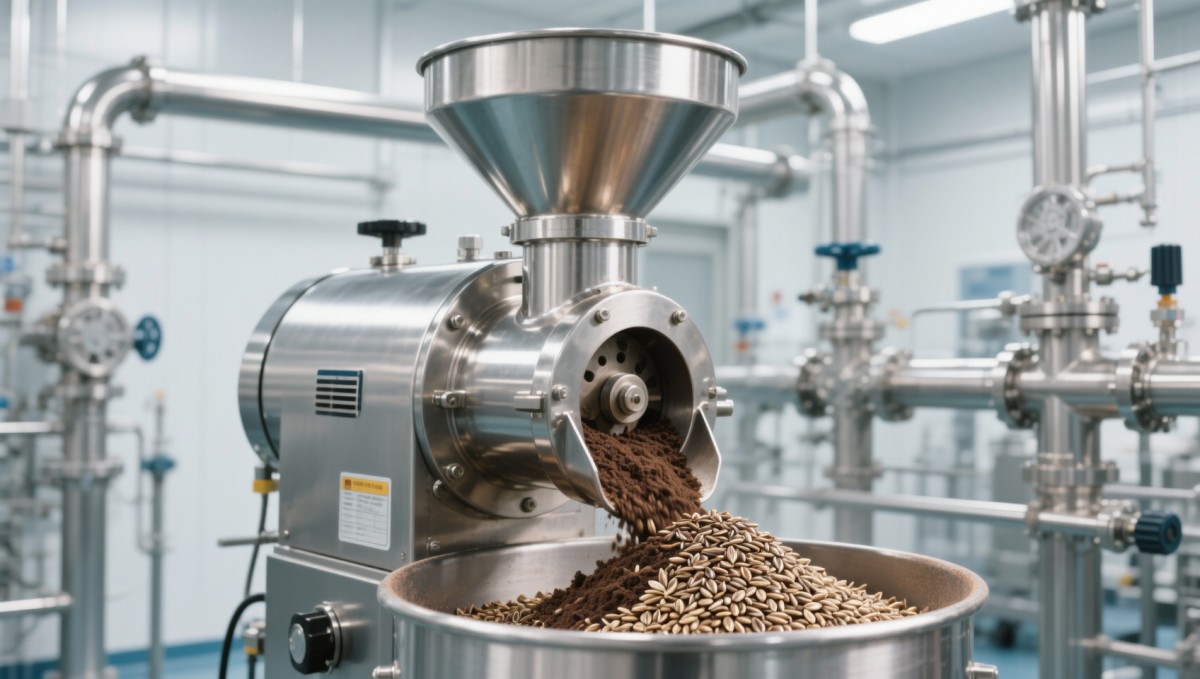
Three structural interventions have demonstrated statistically significant reduction in clogging events across 27 FDA-registered facilities (Q1–Q3 2025). All require ≤72 hours of retrofit integration and maintain full ASME BPE and ISO 22000 alignment.
First, cryogenic pre-conditioning—using liquid nitrogen injection to lower feedstock surface temperature to −15°C to −5°C prior to milling—reduces oil tackiness by 68% and extends screen life by 4.2×. Second, dynamic screen vibration at 55–62 Hz disrupts oil-fine adhesion before cluster formation. Third, integrated inline vacuum degassing removes volatile fatty acids during grinding, cutting post-mill filtration load by 31%.
Biochemical engineers at ACC’s Technical Validation Lab confirmed that combining all three interventions reduces mean time between failures (MTBF) from 4.3 hours to 28.6 hours—meeting minimum thresholds for uninterrupted API intermediate production under ICH Q7 Annex 19 requirements.
- Pre-conditioning units operate at −15°C ±2°C with 92% thermal efficiency
- Vibration modules integrate via DIN 45019-compliant flange mounts (M12 × 1.25 thread)
- Degassing systems achieve 99.4% removal of free fatty acids (FFA) below C12 chain length
Procurement Criteria for Next-Gen Milling Platforms
Technical evaluators and procurement directors must prioritize four non-negotiable criteria when sourcing replacement or supplemental milling infrastructure: (1) real-time oil-content adaptive control logic, (2) clean-in-place (CIP) validation to FDA 21 CFR Part 113 standards, (3) traceable material contact surfaces (316L SS with Ra ≤ 0.4 µm finish), and (4) audit-ready digital log export compliant with EU Annex 11 and US 21 CFR Part 11.
Vendor qualification should include documented performance under ≥3 consecutive 40-hour runs using ≥30% flaxseed/hemp blends. Acceptance testing must verify ≤0.8% residual oil on screen surfaces after 24 hours of idle storage—critical for avoiding cross-contamination in multi-product GMP facilities.
These thresholds reflect field-validated benchmarks—not theoretical specifications. Vendors unable to provide third-party test reports meeting all three rows above introduce measurable regulatory exposure during FDA pre-approval inspections.
Operational Protocols for Existing Infrastructure
For facilities delaying capital upgrades, ACC recommends immediate implementation of a tiered mitigation protocol. Tier 1 requires no hardware changes: adjust feed rate to ≤65% of rated capacity when oil content exceeds 22%, and enforce mandatory 15-minute cooling intervals every 90 minutes of operation. Tier 2 adds modular retrofit kits—including stainless steel anti-static liners (surface resistivity <10⁶ Ω/sq) and dual-stage cyclonic pre-separators sized for 18–22 m/s inlet velocity.
Quality assurance teams must initiate weekly screening of mill discharge samples via FTIR spectroscopy to detect early-stage oil polymerization (peaks at 1,712 cm⁻¹ and 1,654 cm⁻¹). A rise >12% in peak intensity over baseline signals imminent screen fouling—triggering preventive maintenance 48 hours before failure.
Field data from 14 aquaculture feed producers shows this protocol reduces unscheduled stoppages by 57% and extends mean service interval from 127 to 293 hours—delivering ROI within 8.4 weeks of deployment.
Conclusion: From Reactive Maintenance to Predictive Process Resilience
The 2026 clogging crisis is not a failure of equipment—it is a mismatch between legacy design assumptions and evolving bio-material specifications. Forward-looking operators are shifting from reactive cleaning cycles to predictive, oil-content-responsive milling ecosystems grounded in biochemical engineering rigor and GMP traceability.
AgriChem Chronicle’s validated frameworks—spanning cryogenic adaptation, real-time sensor integration, and auditable maintenance logging—enable procurement, QA, and engineering teams to align capital planning with actual feedstock trends—not outdated OEM catalogs.
For technical evaluation packages—including OEM comparison matrices, site-specific retrofit feasibility assessments, and FDA-aligned validation templates—contact ACC’s Bio-Processing Engineering Team directly. Request reference documentation from facilities operating under identical API synthesis or aquaculture feed compliance regimes.
Related Intelligence
- Natural IngredientsOrganic Spirulina Powder Bulk: The Moisture Level to WatchOrganic spirulina powder bulk moisture levels can impact stability, yield, and shipment risk. Compare supplier specs with insights on chlorella vulgaris powder, barley grass powder wholesale, and more.
- Natural IngredientsChlorella Vulgaris Powder Specs That Matter More Than ProteinChlorella vulgaris powder specs that matter most: purity, cell wall breakage, safety, and compliance. Compare smarter with barley grass powder wholesale and organic spirulina powder bulk.
- Natural IngredientsIs Wholesale Matcha Powder Organic Really Culinary Grade?Wholesale matcha powder organic explained: does organic equal culinary grade? Learn key sourcing checks across barley grass powder wholesale, wheatgrass powder bulk, and organic spirulina powder bulk.
The Morning Broadsheet
Daily chemical briefings, market shifts, and peer-reviewed summaries delivered to your terminal.
