
Industrial agriculture trends reshaping input costs in 2026
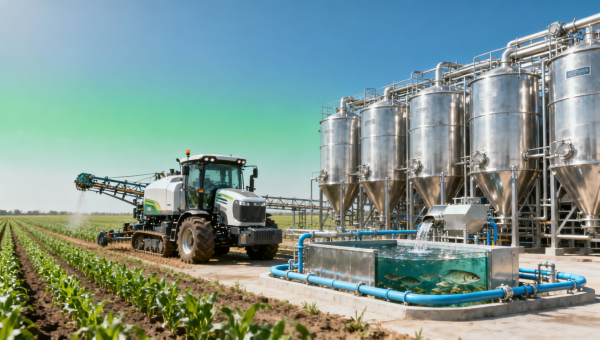
Industrial agriculture is entering 2026 under pressure from volatile energy prices, tighter compliance rules, and rapid adoption of agricultural tech. From Agrochemicals and agri machinery to Feed Formulation, Aqua Tech, and Aquaculture Systems, input costs are being reshaped across global supply chains. This analysis helps Industrial Buyers and technical stakeholders understand how Biochemical Engineering, Fishery Supplies, and industrial agriculture trends will influence procurement, budgeting, and operational risk.
Why are industrial agriculture input costs changing so quickly in 2026?
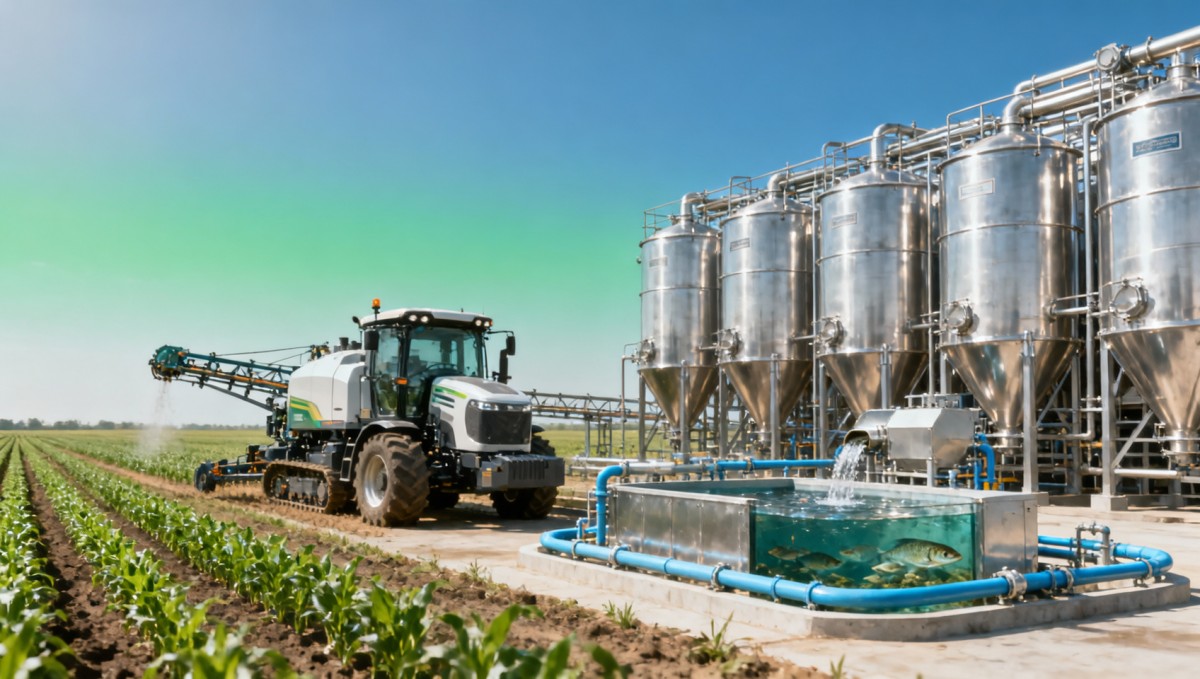
For industrial agriculture operators, 2026 is not defined by one single price shock. It is shaped by overlapping pressures across fuel, electricity, fertilizers, crop protection chemistry, machinery components, feed ingredients, water treatment inputs, and compliance documentation. In practice, most buyers are no longer asking whether costs will rise or fall. They are asking which cost categories are becoming structurally harder to control over the next 2–4 quarters.
Energy remains a primary transmission factor. Diesel affects field operations, marine harvesting, pumping, drying, and inland transport. Power prices influence cold chain performance, blending systems, extrusion, aeration, greenhouse control, and industrial processing lines. When energy volatility persists for even 30–90 days, procurement teams often see secondary increases in packaging, toll manufacturing, logistics surcharges, and maintenance billing.
A second driver is regulation. Tighter traceability expectations, environmental thresholds, residue monitoring, emissions reporting, and validation steps add time and administrative cost. That does not always mean direct material inflation. Often the cost appears in longer release cycles, additional testing, supplier qualification rounds, or restricted substitution options. For quality managers and safety teams, the real issue is not only price; it is the shrinking room for operational improvisation.
A third driver is technology adoption. Precision application systems, smart feed dosing, sensor-enabled aquaculture systems, and data-linked machinery can improve output per unit input. Yet in the first 6–18 months, these systems may increase capital spending, software integration needs, operator training hours, and spare parts planning. Decision-makers therefore need to separate short-term procurement inflation from medium-term cost normalization.
The cost categories most exposed to disruption
Across ACC’s core sectors, the most exposed categories usually share one trait: they depend on multiple regulated or energy-sensitive steps before delivery. Fine chemicals and APIs face raw material qualification demands. Agricultural and forestry machinery depends on metals, electronics, and shipping reliability. Aquaculture systems combine pumps, filtration, oxygenation, control modules, and biosecurity requirements. Feed and grain processing adds moisture control, throughput efficiency, and contamination prevention.
- Agrochemical inputs are sensitive to precursor availability, hazardous handling rules, and batch-level documentation.
- Agri machinery costs are influenced by steel, cast components, electronics lead times, and seasonal service demand.
- Feed formulation budgets shift with protein, oilseed, grain, additive, and freight variability across monthly or quarterly contracts.
- Aqua Tech and Fishery Supplies face added costs from corrosion-resistant materials, water quality controls, and uptime requirements.
This is why broad inflation narratives are not enough. Industrial buyers need category-level cost mapping tied to technical risk, operating continuity, and supplier resilience. That is also why a specialist intelligence source matters more in 2026 than generic market commentary.
Which sectors are absorbing the most pressure across supply chains?
Input cost pressure is uneven. Some sectors absorb increases through efficiency gains, while others pass them directly into procurement budgets because substitution is limited. Buyers comparing quotations across countries or product families should evaluate not only unit price but also process intensity, maintenance burden, and compliance drag. The table below highlights where cost pressure commonly concentrates in industrial agriculture.
The table shows a practical pattern: sectors with high process complexity or tight compliance gates tend to experience not just price movement but slower procurement execution. For project managers, this means a 7–15 day delay in one qualified component can interrupt installation schedules much more than a moderate unit price increase.
Feed formulation is a strong example. A buyer may see acceptable pricing on a core grain input, yet total formulation cost still rises because amino acids, binders, enzymes, preservatives, transport, and quality testing shift at different speeds. The same applies to aquaculture systems, where the visible hardware price is only one layer of the total delivered cost.
For technical evaluators, the useful question is this: which inputs have low substitution tolerance? If the answer includes active ingredients, validated process chemicals, water quality control agents, or system-critical machine components, then cost stability must be assessed together with approval status and service continuity.
How market pressure appears in day-to-day operations
Operators usually notice cost pressure through smaller signals first. Maintenance intervals shorten. Packaging changes. Delivery windows move from 2 weeks to 4–6 weeks. Batch documentation becomes heavier. Spare inventory targets increase from one month to one quarter. Each change may look manageable on its own, but together they reshape plant economics and field planning.
This is where ACC’s industry coverage becomes useful. Because the journal tracks fine chemicals, machinery, aquaculture technology, bio-extracts, and feed processing together, it can identify cross-sector signals earlier than a single-vertical source. That helps research teams and finance approvers compare upstream changes before they become procurement emergencies.
How should buyers evaluate procurement options when budgets are tight?
In a constrained budget cycle, lowest quoted price is rarely the safest choice. Industrial agriculture procurement in 2026 requires a wider screening model that combines technical fit, compliance burden, replacement risk, operator usability, and total cost over 12–36 months. This matters for farm groups, feed plants, fisheries, API-linked production environments, and OEM buyers alike.
A practical approach is to evaluate each purchase across 5 core dimensions: technical compatibility, quality assurance, supply continuity, installation or onboarding effort, and cost transparency. If one dimension is weak, apparent savings can disappear quickly through downtime, revalidation, operator retraining, or emergency sourcing.
A procurement scorecard for industrial agriculture trends
The following table can be used by procurement teams, quality managers, engineers, and finance approvers when comparing vendors or solutions. It is especially useful when multiple departments need to sign off within a 2-stage or 3-stage approval process.
Using this scorecard helps teams avoid a common 2026 mistake: replacing a visible cost with a hidden one. A cheaper water treatment component may create higher energy draw. A lower-cost feed additive may require tighter storage conditions. A lower-price machine may need more frequent servicing every 250–500 operating hours.
A 4-step procurement workflow that reduces rework
- Define the operating envelope: temperature, throughput, corrosion exposure, sanitation needs, and duty cycle.
- Verify the documentation stack: test records, batch traceability, safety sheets, and applicable regulatory declarations.
- Model total cost for 12, 24, and 36 months, not just initial purchase price.
- Confirm contingency planning: spare parts window, alternate sourcing path, and field support timing.
This workflow is especially relevant for technical evaluation personnel and project leads who must defend procurement choices to finance teams. It turns an abstract industrial agriculture trend into a practical approval framework.
What compliance and technical checks should not be overlooked?
In 2026, compliance is no longer a final checkpoint. It is a cost driver and a selection filter from the start. Buyers dealing with biochemical engineering materials, APIs, aquaculture systems, fishery supplies, feed additives, or process equipment must account for documentation depth as part of commercial evaluation. Missing or inconsistent records can delay use approval by 1–3 weeks or more, depending on internal review structure.
For chemicals and sensitive biological inputs, quality teams typically review COA consistency, traceability, storage handling, lot segregation, contamination control, and change management. For machinery and system purchases, technical teams focus on materials of construction, sanitation design, safety protection, environmental suitability, and service access. These checkpoints vary by application, but they all affect cost predictability.
Key compliance areas by application type
The correct compliance lens depends on the purchase category. A process chemical, a feed ingredient, a filtration skid, and a pond aeration system do not carry identical review demands. However, buyers can still use a common screening structure to shorten coordination between procurement, quality, engineering, and operations.
- For fine chemicals and APIs, assess batch documentation discipline, impurity control logic, handling procedures, and applicable GMP-related expectations.
- For aquaculture systems and Aqua Tech, verify water-contact materials, maintenance access points, electrical protection, and environmental operating range.
- For feed and grain processing, check sanitation, dust management, screening, cross-contamination controls, and cleaning intervals.
- For agricultural machinery, review parts availability, operator safety features, field service intervals, and suitability for local climate and terrain.
Standards such as GMP, EPA, and FDA may be directly applicable in some categories and indirectly influential in others. The important point is not to overstate certification claims but to align procurement records with the regulatory environment that governs use, import, storage, or downstream processing.
Three frequent blind spots in cost forecasting
First, buyers often underestimate the cost of documentation gaps. If a material or machine arrives on time but cannot clear internal approval, the delay becomes an operational cost. Second, teams may ignore operator training. Even a modest 4–8 hour training requirement per shift group matters when new digital controls are introduced. Third, maintenance consumables are frequently omitted from year-one budgeting.
ACC’s editorial advantage is that it interprets these issues across interconnected sectors instead of isolating them. A machinery purchase can influence feed efficiency. A chemical qualification issue can affect water system continuity. A compliance update can alter sourcing options. For industrial decision-makers, that cross-functional view reduces expensive surprises.
Where can companies control costs without increasing operational risk?
Cost control in industrial agriculture is not the same as aggressive cost cutting. The goal is to reduce waste, volatility exposure, and procurement friction while preserving technical performance and compliance confidence. In 2026, the most effective savings usually come from specification discipline, better ordering cadence, and lifecycle planning rather than indiscriminate supplier switching.
One practical method is category segmentation. Divide purchases into three groups: critical validated inputs, operationally important but substitutable items, and service or consumable categories. Critical inputs require stable qualification and often justify safety stock of 4–8 weeks. Substitutable items can be exposed to competitive bidding. Service items should be reviewed for frequency, not just price.
Cost-control actions with realistic impact
The actions below are commonly achievable without weakening quality systems or operational continuity, provided teams validate them properly before implementation.
- Standardize specifications where possible so that equivalent materials or components can be compared on the same basis across sites.
- Bundle procurement windows for related inputs to reduce fragmented freight and administrative review cycles.
- Use maintenance data to shift from reactive replacement to planned replacement, especially for pumps, seals, filters, and dosing assemblies.
- Review energy-intensive steps such as drying, aeration, pumping, and cooling to identify whether process tuning can reduce cost per ton or cost per cycle.
These measures work best when supported by reliable industry intelligence. If buyers do not understand whether a price movement is temporary, seasonal, or structural, they may lock into the wrong contract pattern. ACC helps readers interpret market signals in context, especially where biochemical engineering, machinery procurement, aquaculture operations, and feed processing overlap.
Trend outlook for the next 12 months
Looking ahead, three trends are likely to define industrial agriculture trends through 2026. First, buyers will demand more transparent supplier documentation and earlier disclosure of lead-time risk. Second, digital and semi-automated systems will continue to expand, but adoption will favor projects with measurable payback windows of roughly 12–36 months. Third, cost management will shift from pure sourcing tactics toward integrated operating efficiency.
That means successful organizations will not treat procurement, compliance, and operations as separate discussions. They will build a shared decision model that links price, uptime, qualification, and field performance. This is especially important for enterprise decision-makers, finance approvers, and engineering project leaders managing multi-site or multi-product operations.
FAQ and next steps for industrial buyers
The most common questions in 2026 are not theoretical. Buyers want to know what can be approved faster, what can be substituted safely, and what lead times should be built into a realistic procurement plan. The answers depend on product category, validation depth, and operational criticality, but several practical rules apply across industrial agriculture.
How long should buyers allow for technical and compliance review?
For repeat purchases with stable documentation, internal review may be relatively short. For new suppliers, modified specifications, regulated materials, or system-critical equipment, buyers should often allow 1–3 weeks for technical and quality review before final release. Complex projects involving installation, validation, and operator training may require longer planning windows.
What is the biggest mistake when comparing quotations?
The biggest mistake is comparing line-item price without comparing scope. A quotation may exclude testing records, commissioning support, replacement parts, software setup, or documentation updates. In industrial agriculture, an incomplete quotation can appear cheaper while creating higher total cost over the first 6–12 months of operation.
When is substitution a valid cost strategy?
Substitution is most realistic when the item is not tied to a tightly controlled validation path and when operating conditions are clearly defined. It is far less suitable for critical active inputs, safety-related components, water-quality-sensitive systems, or machinery parts that affect reliability. Every substitution should be checked against documentation, compatibility, and maintenance implications.
Why choose AgriChem Chronicle as an intelligence partner?
AgriChem Chronicle supports industrial buyers with a rare cross-sector view that connects fine chemicals, APIs, agricultural and forestry machinery, aquaculture and fishery technology, bio-extracts, and feed processing. That matters because input costs are increasingly linked across these disciplines. ACC’s peer-level analysis helps research teams, technical evaluators, procurement managers, and finance stakeholders assess not just what is changing, but how those changes affect specification, compliance, lead time, and operational exposure.
If your team is reviewing industrial agriculture trends for 2026, ACC can support deeper decision-making around parameter confirmation, supplier comparison logic, product selection, expected delivery windows, documentation requirements, certification-related questions, technical whitepaper placement, and market positioning to reach institutional buyers. This is particularly valuable when you need to clarify whether a cost shift is temporary, whether a substitute is practical, or whether a project should be phased over 2–3 procurement stages.
For organizations preparing sourcing plans, capital requests, or compliance-sensitive procurement, the next useful step is a focused discussion around your application: operating conditions, approval requirements, budget constraints, and expected lead time. That gives your team a clearer basis for quotation review, vendor shortlisting, and risk-controlled implementation.
Related Intelligence
- APIs & IntermediatesBiochemical Processing Costs: Where Do Projects Overspend?Biochemical processing costs often spiral due to hidden scope and compliance gaps. Learn how Chemical Synthesizers, aquaculture accessories, aquaculture utilities, and related equipment avoid overspend.
- APIs & IntermediatesAre Technical Whitepapers Useful for Vendor Shortlisting?Technical Whitepapers help shortlist vendors across GMP Chemicals, Feed & Grain, biochemical equipment, and Pharma Raw Materials by revealing compliance, fit, and supply-chain risk.
- APIs & IntermediatesBiochemical Materials: Which Specs Matter Most First?Biochemical Materials buying starts with the right specs. Learn how GMP Chemicals, Pharma Raw Materials, Bioactive Ingredients, and biochemical equipment should be screened first for compliance, process fit, and supply stability.
The Morning Broadsheet
Daily chemical briefings, market shifts, and peer-reviewed summaries delivered to your terminal.
