
Why Grain Storage Losses Stay High Even With Modern Silos
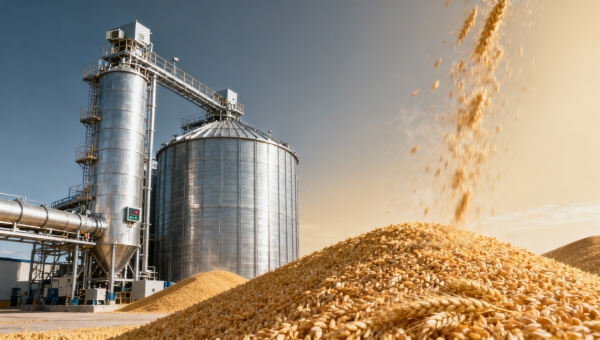
Despite major investments in grain storage infrastructure and modern handling equipment, grain storage losses remain high because the root causes are rarely limited to the silo itself. In most industrial farming systems, losses come from a chain of technical and operational failures: grain enters storage in uneven condition, moisture migrates after filling, aeration is poorly matched to climate, monitoring is too shallow, sanitation is inconsistent, and storage decisions are disconnected from downstream processing and commercial timelines. For operators, engineers, and decision-makers, the practical conclusion is clear: modern silos reduce risk, but they do not eliminate loss unless storage is managed as a controlled system rather than a static asset.
For procurement teams, project leaders, quality managers, and finance approvers, the key question is not whether a facility has steel silos, sensors, or conveyors. The more useful question is whether the site can consistently control moisture, temperature, residence time, contamination risk, and stock turnover under real operating conditions. That is where preventable losses still accumulate.
Why modern silos alone do not solve grain storage losses
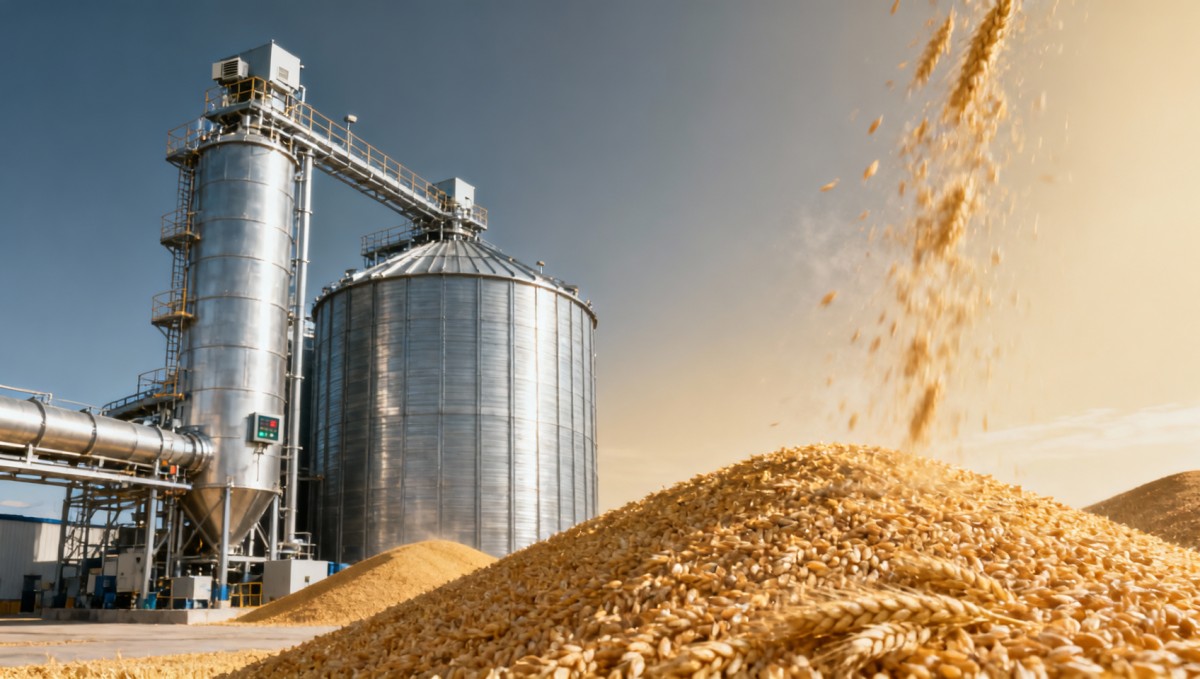
Many buyers assume that upgrading from traditional storage to modern silos should sharply reduce post-harvest loss. In theory, that is true. In practice, loss rates stay high because a silo is only one component in a larger grain storage and agricultural processing workflow.
Grain quality begins to decline before it even reaches the bin if harvesting is mistimed, field drying is incomplete, transport is delayed, or intake segregation is weak. Once grain is loaded, the biological and physical processes inside the bulk mass continue. Respiration, fungal growth, insect activity, and moisture movement can all continue in a modern structure if conditions are favorable. A new silo can improve containment, handling efficiency, and environmental control, but it cannot compensate for poor grain condition, weak operating discipline, or lack of system integration.
This is why industrial farming operators often see a gap between capital expenditure and real storage performance. The infrastructure is modern, but the operating model remains reactive.
Where losses actually come from in high-capacity storage systems
For most facilities, grain storage losses are a combination of visible losses and hidden losses. Visible losses include spillage, breakage during conveying, mold-damaged lots, insect infestation, and rejected cargo. Hidden losses are often more expensive over time because they appear as shrink, quality downgrades, blending penalties, lower extraction yield, or shortened shelf life in downstream feed and grain processing.
The most common loss drivers include:
- Moisture variability at intake: Even if average moisture looks acceptable, local pockets of wetter grain create hotspots and spoilage risk.
- Temperature gradients inside the grain mass: Day-night and seasonal shifts drive convection currents that redistribute moisture.
- Inadequate aeration design or use: Fans may be undersized, badly controlled, or operated at the wrong ambient conditions.
- Poor sanitation: Residual fines, dust, insects, and old grain in ducts or transfer points can quickly recontaminate fresh lots.
- Mechanical damage: Cracked kernels from aggressive handling become more vulnerable to spoilage and insect attack.
- Weak stock rotation: Grain held beyond its safe storage window accumulates quality and financial risk.
- Insufficient monitoring depth: Surface readings alone miss developing problems deeper in the bin.
- Limited supply chain transparency: If upstream quality data is incomplete, storage teams inherit unmanaged risk.
In large operations, these factors often overlap. A site may have high-quality steel silos but still lose value because grain arrives too wet, is conveyed too aggressively, and then remains in storage longer than originally planned due to logistics bottlenecks or delayed market movement.
Moisture migration is still one of the most underestimated causes of spoilage
Among all technical causes, moisture migration remains one of the least understood by non-specialists and one of the most damaging in real storage environments. Grain masses do not remain uniform after filling. Temperature differences between the silo wall, roof space, and core of the grain bulk create airflow within the stored grain. That internal movement redistributes moisture, often concentrating it in zones where condensation, crusting, caking, and mold development can begin.
This means grain that tested within safe moisture limits at intake may still deteriorate in storage if thermal conditions are not managed. The risk becomes more severe when:
- Grain is stored through large seasonal temperature swings
- Bins are filled with mixed lots of uneven moisture
- Fine material accumulates in the center during filling
- Aeration is delayed or run without reference to equilibrium moisture principles
- Headspace ventilation is poor
For operators and technical evaluators, this is a critical point: storage loss is often a dynamic condition problem, not a simple equipment age problem. A modern silo with weak moisture management can perform worse than a simpler system operated with strong conditioning discipline.
Why monitoring systems often fail to deliver the control operators expect
Many sites have installed digital temperature cables, automation dashboards, and alarm systems, yet still struggle with storage losses. The issue is not always a lack of technology. It is often a mismatch between what is measured, how often it is interpreted, and what action follows.
Typical monitoring gaps include:
- Too few sensing points: Large bins can develop local spoilage zones that remain undetected between sensor lines.
- Temperature-only visibility: Temperature is useful, but on its own it may not fully explain moisture-driven risk.
- Delayed response protocols: Teams receive alarms but do not have clear escalation steps for aeration, turning, unloading, or segregation.
- Poor data integration: Intake quality data, storage data, and processing data are not connected into one decision framework.
- Calibration and maintenance issues: Sensors, fan controls, and automation systems require verification to remain reliable.
For enterprise decision-makers, this has a direct business implication. Buying monitoring hardware without changing response processes rarely delivers the full return on investment. The value comes from turning data into operating decisions fast enough to prevent deterioration, not just record it.
Storage losses often reflect process design problems beyond the silo farm
One of the biggest strategic mistakes is treating storage as an isolated function. In reality, grain storage losses are heavily influenced by how storage connects to receiving, drying, cleaning, handling, blending, dispatch, and downstream agricultural processing.
Examples are common across integrated facilities:
- If drying capacity is insufficient during peak harvest, wetter grain enters storage under schedule pressure.
- If pre-cleaning is weak, fine material increases airflow resistance and spoilage risk.
- If conveyors are misconfigured, breakage and dust generation rise.
- If processing schedules shift, grain may sit in storage longer than the original design basis assumed.
- If outbound logistics are unreliable, stock turnover deteriorates and high-risk lots remain in place.
This is where project managers and engineering leads should focus. A silo project should not be evaluated only on nominal capacity, steel quality, or automation features. It should be assessed on whether the full material flow system can preserve grain quality under peak seasonal load, variable grain condition, and commercial delays.
What quality, safety, and compliance teams should be watching more closely
For quality control personnel and safety managers, high storage losses are not only a volume problem. They can quickly become a compliance, feed safety, food safety, and occupational risk issue. Mold growth may lead to mycotoxin concerns. Insect activity can trigger treatment costs and shipment rejection. Excess dust and poor housekeeping elevate explosion risk. Fumigation errors create worker safety exposure and potential regulatory non-compliance.
The most relevant control points typically include:
- Moisture and temperature acceptance standards by grain type
- Lot segregation protocols for uneven or suspect loads
- Documented sanitation schedules for bins, pits, ducts, and conveyors
- Inspection frequency for insects, hotspots, condensation, and odor changes
- Fumigation governance, contractor oversight, and residue compliance
- Traceability from intake through storage to dispatch
Better supply chain transparency also matters here. When incoming lots lack dependable condition data, storage teams are forced to make assumptions. That increases both spoilage risk and commercial uncertainty. Facilities with stronger traceability and intake verification generally make better storage decisions and reduce avoidable quality claims.
How to judge whether losses are caused by equipment limits or operational gaps
This is one of the most important questions for financial approvers and enterprise leaders. Before authorizing another round of capital spending, they need to know whether the site has an asset problem, a process problem, or both.
A practical diagnosis usually starts with five questions:
- What condition is the grain in at intake? If incoming moisture variability and contamination are high, storage losses may begin upstream.
- How long is grain actually held versus planned? Extended residence time often explains hidden deterioration.
- How effective is the aeration strategy? Fan capacity, airflow distribution, and operating logic should be tested against local climate conditions.
- Where do quality downgrades appear? If losses only emerge at dispatch or processing, the storage team may be missing early warning signals.
- What percentage of loss is operational versus structural? If sanitation, segregation, and stock rotation are weak, new hardware alone may not fix the issue.
When facilities perform this kind of root-cause assessment, they often find that relatively modest improvements in intake control, airflow management, cleaning, and operating discipline can unlock more value than another major storage expansion project.
Data-backed strategies that reduce grain storage losses in practice
The most effective loss-reduction programs combine engineering control, process discipline, and commercial planning. The strongest facilities do not rely on one intervention. They build a storage management system.
Priority actions often include:
- Tighten intake standards: Separate lots by moisture, damage level, and impurity load before storage.
- Increase pre-cleaning effectiveness: Removing fines improves airflow and lowers spoilage risk.
- Align drying and storage capacity: Peak harvest planning should prevent wet grain from being parked in bins.
- Refine aeration logic: Use local climate data and commodity-specific targets rather than fixed fan schedules.
- Improve sensor coverage and response protocols: Monitoring should trigger clear actions, not passive observation.
- Enforce sanitation and insect management: Preventive control is cheaper than rescue treatment.
- Track residence time by lot: Inventory age should be managed as a quality risk metric.
- Connect storage data to processing outcomes: If certain bins consistently produce poorer milling or feed results, investigate the storage history.
For organizations using market forecasting to guide storage and sales decisions, this is especially important. Holding grain longer to capture better pricing can be commercially rational only if storage conditions preserve quality. Otherwise, expected margin gains are lost through shrink, quality discounts, treatment costs, or rejected contracts.
What decision-makers should ask before investing in another storage upgrade
When grain storage losses remain high despite modern assets, the correct response is not automatically more equipment. A better response is a sharper investment test.
Before approving new expenditure, decision-makers should ask:
- Is the current loss profile measured in physical shrink, quality downgrade, claim rates, or processing inefficiency?
- What proportion of loss occurs before storage, during storage, and at discharge?
- Do we have enough traceable data to identify high-risk grain lots and recurring storage zones?
- Are we solving a true design constraint, or compensating for poor operating routines?
- Will this investment improve control, or simply add capacity?
- How will success be measured 6 to 12 months after implementation?
This approach helps technical evaluators, project sponsors, and finance teams focus on outcomes that matter: lower spoilage, better stock turnover, higher process yield, fewer compliance risks, and stronger return on capital.
Conclusion: reducing losses requires system control, not just modern infrastructure
Grain storage losses stay high even with modern silos because loss is rarely caused by storage structures alone. The real drivers are uneven grain condition at intake, moisture migration, incomplete monitoring, weak sanitation, poor stock rotation, and limited integration across storage, drying, handling, and processing. In other words, the industry often modernizes equipment faster than it modernizes storage management.
For operators, quality teams, engineers, and enterprise leaders, the practical lesson is straightforward: treat grain storage as a live, data-driven control system. Facilities that combine sound silo design with disciplined intake standards, effective aeration, deeper monitoring, traceability, and realistic commercial planning are far more likely to reduce post-harvest losses. The competitive edge does not come from owning modern silos alone. It comes from operating them with technical precision and supply chain awareness.
Related Intelligence
- Grain Silos & StorageHow to pick a grain pre cleaner machine?Grain pre cleaner machine selection guide for better grain and feed processing. Compare gravity separator grain, grain destoner machine, feed grading sieve, and more to boost efficiency.
- Grain Silos & StorageFeed & Grain Storage: What Actually Cuts Loss in 2026?Feed & Grain storage in 2026: learn how GMP Chemicals, GMP equipment, and Agri Supply Chain visibility cut loss, protect Bioactive Ingredients and Pharma Raw Materials, and improve ROI.
- Grain Silos & StorageWhy Grain Storage Losses Stay High Even With Modern SilosGrain Storage losses remain high even with modern silos. Learn how Agricultural Processing, Industrial Farming, and Supply Chain Transparency improve control, cut spoilage, and support smarter Market Forecasting.
The Morning Broadsheet
Daily chemical briefings, market shifts, and peer-reviewed summaries delivered to your terminal.
