
Feed Additives That Improve FCR Without Hurting Pellet Quality
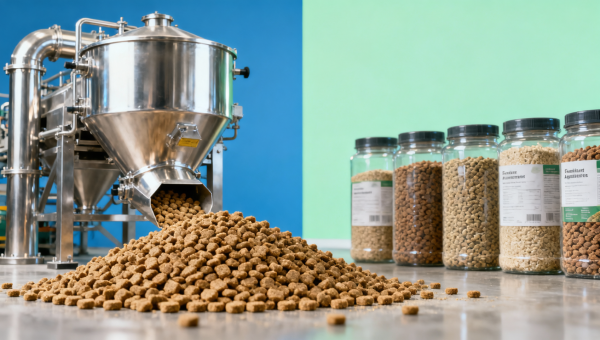
In modern Industrial Farming and Agricultural Processing, producers are under pressure to improve FCR without compromising pellet durability, flowability, or downstream handling. The right Feed Additives—often supported by advances in Fine Chemicals, processing machinery, and Supply Chain Transparency—can help operations cut waste, protect quality, and strengthen margins. This article explores practical solutions, technical trade-offs, and Market Forecasting insights relevant to feed, Grain Storage, and allied sectors.
For nutrition teams, mill managers, procurement specialists, quality controllers, and financial approvers, the challenge is rarely about finding an additive that works in isolation. The real task is selecting a formulation that improves feed conversion ratio under commercial conditions while preserving pellet integrity through conditioning, pelleting, cooling, storage, and transport.
That means evaluating additives not only by expected biological response, but also by moisture behavior, thermal stability, die friction, fines generation, compatibility with binders, and cost per ton. In integrated operations, even a 1–3% shift in pellet durability or a 20–40 g change in FCR can materially affect margin, throughput, and customer satisfaction.
Why FCR Gains Often Clash with Pellet Quality
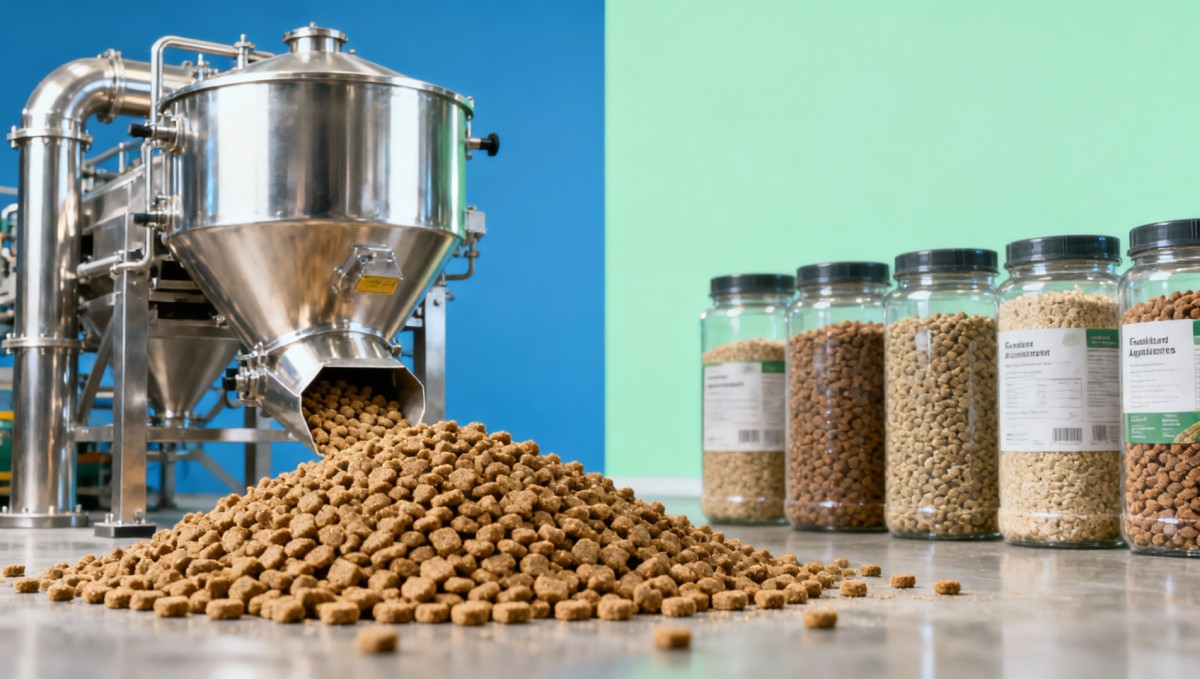
Feed conversion ratio is influenced by digestibility, gut health, palatability, feed hygiene, and nutrient availability. Pellet quality, by contrast, depends on mechanical factors such as particle size distribution, starch gelatinization, die compression, conditioning time, steam quality, and post-pellet handling. Problems emerge when an additive improves one side of the equation but destabilizes the other.
For example, high oil inclusion may support energy density and intake, yet excessive free fat can reduce die friction and produce softer pellets. Some organic acid systems improve microbial control and nutrient use, but hygroscopic carriers may raise moisture sensitivity during storage. Enzymes can unlock nutrients effectively, but their response depends on conditioning temperatures that commonly range from 75°C to 90°C in commercial pelleting.
In broiler, layer, swine, ruminant, and aquafeed applications, acceptable pellet quality thresholds vary. Many mills target pellet durability index values above 88–92% for standard poultry feed, while premium aquafeed often demands stricter physical stability. Once fines exceed roughly 5–8% at dispatch, the biological value of a well-formulated feed can be diluted by sorting, wastage, and inconsistent intake.
This is why additive selection should be framed as a systems decision rather than a nutritional shortcut. The most successful programs align additive chemistry, raw material variability, processing conditions, and storage realities. They also account for downstream logistics, especially where feed may spend 7–30 days in silos, bags, or bulk transport before final use.
Where the Main Trade-Offs Appear
In practical feed manufacturing, the most common conflict points usually fall into four areas:
- Thermal stress versus additive efficacy, especially for enzymes, probiotics, and volatile compounds.
- Moisture balance versus shelf stability, particularly with acids, liquid additives, and hygroscopic ingredients.
- Lubrication versus pellet hardness, often seen when fats or liquid actives are overdosed before pelleting.
- Cost per ton versus net return, because low-dose specialty additives may outperform cheaper bulk inclusions when FCR and fines are measured together.
Operations that track only feed formula cost often miss hidden losses in rework, energy consumption, rejected loads, or live performance inconsistency. A more accurate assessment combines biological performance, process efficiency, and physical quality indicators in one review cycle.
Feed Additive Categories That Can Improve FCR with Lower Pellet Risk
Not all feed additives interact with pellet quality in the same way. Some are relatively neutral at standard inclusion rates, while others require formulation or process adjustments. The best candidates for improving FCR without hurting pellet durability are usually those with proven digestibility or gut-function benefits and manageable physical behavior during pelleting.
Exogenous enzymes are often first-line tools. Xylanase, phytase, protease, and multi-enzyme systems can improve nutrient release and reduce feed cost pressure. Their success depends on dose accuracy, substrate availability, and heat protection. In many mills, coated or thermostable formats are preferred where conditioning exceeds 80°C and retention time runs 30–90 seconds.
Organic acids and their salts can support gut health, hygiene, and nutrient use, especially in young animals or high-risk raw material programs. Buffered systems and microencapsulated formats are frequently easier to manage than highly corrosive or strongly hygroscopic versions. Depending on the acid profile, inclusion may range from 1 to 8 kg/ton, with higher levels requiring closer review of moisture pickup and equipment compatibility.
Functional emulsifiers, lecithin derivatives, and selected surfactants can improve fat utilization and energy efficiency, particularly in broiler and pig diets with variable oil quality. These products are useful where formulators want to reduce total fat addition before pelleting. Lower front-end oil load can help maintain die performance and pellet firmness while still supporting metabolizable energy delivery.
Comparing Additive Groups by FCR and Pellet Impact
The table below summarizes how common additive groups are typically assessed in commercial feed and grain processing environments.
A key conclusion is that “best additive” is context-specific. Enzymes and emulsifiers often offer strong FCR value with limited pellet disruption if process settings are aligned. Organic acids and biologically active products can also be effective, but they need tighter control of carrier type, application point, and mill environment.
Additives that usually require extra caution
- High free-oil liquid systems added ahead of the die at levels that materially change mash lubrication.
- Unprotected heat-sensitive bioactives exposed to long retention at 85–90°C.
- Acid blends with strong odor, corrosive handling profiles, or water-attracting carriers in humid climates above 65–70% relative humidity.
How to Evaluate Additives in the Mill, Not Just on Paper
Laboratory efficacy claims are useful, but mill validation is where risk is reduced. A proper evaluation should link live-performance expectations with measurable plant outcomes. At minimum, teams should review FCR trend, pellet durability, fines after cooling, amperage or energy draw, die throughput, bulk density, moisture after cooler, and storage stability across a 2–6 week observation period.
A practical screening protocol often starts with a single formula and one production line. Keep raw material variation as low as possible, run 2–3 baseline batches, then compare the additive treatment under the same steam pressure, die specification, and target throughput. If more than one variable changes at the same time, the results lose procurement value.
For technical evaluators and project managers, it is helpful to separate additive effects into three checkpoints: before pelleting, immediately after pelleting, and after logistics simulation. Some additives look acceptable at cooler discharge but fail after 24–72 hours of handling, vibration, or silo residence. That is especially relevant where feed moves long distances or serves automated feeding systems.
Quality and safety teams should also verify documentation for handling, compatibility, and traceability. In regulated supply chains, certificates of analysis, batch consistency, recommended inclusion windows, and storage conditions are not administrative extras. They are core risk controls that support reliable implementation and audit readiness.
Recommended Pilot Evaluation Framework
The following matrix helps multidisciplinary teams assess whether an additive improves FCR without hidden process penalties.
This approach gives finance and operations a common language. Instead of debating additive price alone, stakeholders can review a full cost-to-value picture that includes yield, rework, throughput consistency, and live-performance outcomes.
A 5-step validation sequence
- Define one target species, one formula, and one measurable FCR objective.
- Record baseline mill data for at least 2–3 production runs.
- Run the additive at the supplier’s practical inclusion range, not an arbitrary midpoint.
- Check physical quality at discharge, after transfer, and after short-term storage.
- Review economics over one flock, one grow-out cycle, or another relevant commercial period.
Selection Criteria for Procurement, Quality, and Technical Teams
In B2B feed and grain processing, purchasing decisions are rarely made by nutrition staff alone. Procurement looks at continuity, finance examines payback, quality teams focus on consistency and handling risk, and plant operators want a product that does not disrupt the line. A suitable additive therefore needs to satisfy multiple decision filters at once.
The first filter is technical fit. Ask whether the additive is designed for mash, pellets, or post-pellet application. Review inclusion rate in kg/ton or g/ton, carrier type, bulk density, dust behavior, corrosiveness, shelf life, and thermal tolerance. A product that performs in mash but destabilizes pellets during cooling may create more cost than it saves.
The second filter is supply chain reliability. For mills operating at high throughput, even a 7–10 day delay in additive replenishment can force emergency reformulation. Teams should check lead time, batch traceability, packaging integrity, storage instructions, and whether the supplier can support multiple regions or only one market. This matters more as additive portfolios become specialized and fine-chemical input streams more regulated.
The third filter is implementation support. A supplier that provides dosing guidance, trial design, compatibility notes, and troubleshooting support usually reduces commissioning risk. This is particularly important when adding new liquids, microencapsulated ingredients, or post-pellet systems that may require nozzle calibration, mixing checks, or line sanitation procedures.
Procurement Checklist for Lower-Risk Adoption
- Confirm the additive’s intended application point: mixer, conditioner, pre-die, post-pellet coater, or top-dress system.
- Request practical inclusion guidance across at least 2 feed types or life stages rather than a single headline recommendation.
- Verify shelf-life expectations, commonly 6–24 months depending on formulation and packaging.
- Check whether the supplier can provide handling and safety documentation for operators and quality teams.
- Review the likely effect on pellet durability, cooler moisture, and fines, not only animal-performance claims.
Common buying mistakes
A frequent mistake is approving an additive solely on price per kilogram. In practice, the better metric is cost per ton of feed treated and cost per unit of performance gain. Another mistake is evaluating a product under ideal plant conditions but scaling it into a line with different die geometry, steam quality, or storage humidity. These gaps often explain why a trial succeeds yet commercial use disappoints.
A third mistake is ignoring operator feedback. If an additive causes bridging in bins, sticky residues in conveyors, or inconsistent micro-dosing, the hidden labor burden can erode the expected FCR benefit. Operational fit should be treated as a measurable part of return on investment.
Implementation, Risk Control, and Market Direction
Once an additive is selected, implementation discipline determines whether projected FCR gains are realized. Successful plants usually introduce new additives through controlled change management: documented standard operating procedures, operator training, dosing verification, and a review window of at least 14–28 days. This prevents formulation changes from being blamed for problems caused by poor execution.
Risk control should cover both product and process. On the product side, monitor storage temperature, humidity exposure, and batch rotation. On the process side, verify mixer uniformity, liquid distribution, thermal exposure, and pellet cooling profile. In many facilities, a simple pre-launch checklist can prevent most avoidable failures, especially with sensitive enzyme, acid, or probiotic systems.
Market direction also matters. Feed manufacturers are increasingly interested in additives that deliver multiple functions at once: digestibility support, pathogen pressure management, and better fat utilization without forcing major equipment changes. There is also growing interest in traceable supply chains, cleaner label positioning, and technical documentation that supports audits, export programs, and customer assurance requirements.
For industrial buyers, the strongest long-term value often comes from additives that fit existing machinery, remain stable in realistic conditions, and can be backed by transparent technical data. In a market where raw material volatility and regulatory scrutiny remain high, additives that reduce both nutritional waste and process uncertainty are likely to gain share over the next 12–36 months.
FAQ
How much FCR improvement is usually worth pursuing?
That depends on species, feed cost, and production scale, but even a 0.02–0.05 improvement in FCR can be commercially meaningful in large operations. The key is to confirm that the gain is not offset by more fines, lower pellet durability, or slower throughput.
Are post-pellet additives safer for pellet quality?
Often yes, especially for heat-sensitive actives. However, post-pellet systems add equipment and calibration requirements. Coverage uniformity, nozzle performance, and line sanitation should be checked carefully, particularly when application rates are low.
Which teams should be involved in additive approval?
At minimum, involve nutrition, feed mill operations, procurement, quality assurance, and finance. For larger sites, engineering and project management should also review dosing equipment, compatibility, and implementation timing.
What is the safest way to start?
Begin with one formula, one line, and one short evaluation window. Measure both biological and physical outcomes, then scale only after confirming stable results across production and storage. This approach reduces technical and financial risk while creating better internal confidence.
Feed additives that improve FCR without hurting pellet quality do exist, but the best results come from disciplined selection and mill-level validation. Enzymes, organic acids, emulsifiers, and selected biological solutions can all create value when matched to the right process conditions, storage realities, and commercial targets.
For AgriChem Chronicle readers across feed, grain processing, aquaculture, and primary industries, the practical takeaway is clear: evaluate additives as part of an integrated production system, not as isolated ingredients. If you are comparing options, planning a pilot, or building a procurement framework for technically demanding feed operations, contact us to discuss a tailored solution, review product details, or explore broader market intelligence for your next decision.
Related Intelligence
- Commercial Feed PelletChina to Upgrade Mandatory Standard for Commercial Feed Pellets in 2026China's 2026 Commercial Feed Pellets mandatory standard upgrade introduces mycotoxin controls, microplastic limits & durability grading—key for exporters, manufacturers & QA teams. Act now to align.
- Commercial Feed PelletU.S.-Iran Strait of Hormuz Tensions Push Feed Pellet Freight Rates Up 8.3%U.S.-Iran Strait of Hormuz tensions spike feed pellet freight rates by 8.3%. Discover how exporters, importers & logistics providers can mitigate risk and adapt fast.
- Commercial Feed PelletVertical Feed Mixer Machine: What Size Do You Need?Vertical feed mixer machine sizing guide: compare batch capacity, daily output, and formula needs. Ideal for horizontal ribbon blender feed buyers, cattle feed processing plant planners, and animal feed mixers wholesale sourcing.
The Morning Broadsheet
Daily chemical briefings, market shifts, and peer-reviewed summaries delivered to your terminal.
