
Feed & Grain Storage: What Actually Cuts Loss in 2026?
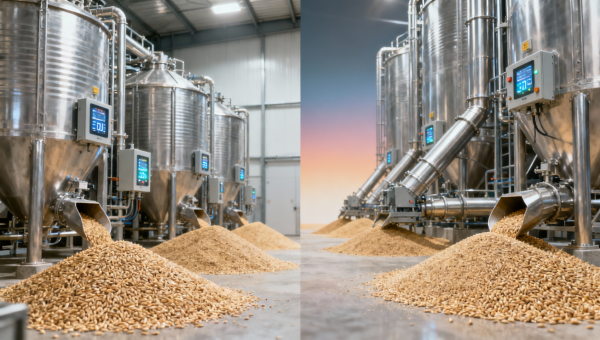
In 2026, cutting loss in feed and grain storage is no longer mainly a question of adding more steel, bigger bins, or higher airflow. The biggest loss reductions now come from controlling moisture migration, shortening detection time, improving lot traceability, and choosing equipment and handling systems that meet both operational and compliance requirements. For operators, procurement teams, quality managers, and business decision-makers, the practical question is simple: which investments actually preserve product value, reduce spoilage, and stand up to audit and supply chain risk? The short answer is that the highest-performing storage programs combine disciplined storage fundamentals with sensor-driven monitoring, GMP-aligned equipment choices, and clearer supplier accountability.
For industrial buyers and site teams, that matters well beyond grain quality alone. Feed & grain storage now connects directly to broader Agri Supply Chain performance, contamination prevention, product consistency, export readiness, and downstream sectors that depend on stable raw material handling standards, including biochemical processing, bioactive ingredients, and even certain aquaculture and animal nutrition applications. What follows is a practical analysis of what actually cuts loss in 2026, where companies still waste money, and how to evaluate storage upgrades with real business value in mind.
What actually reduces feed and grain storage loss in 2026?
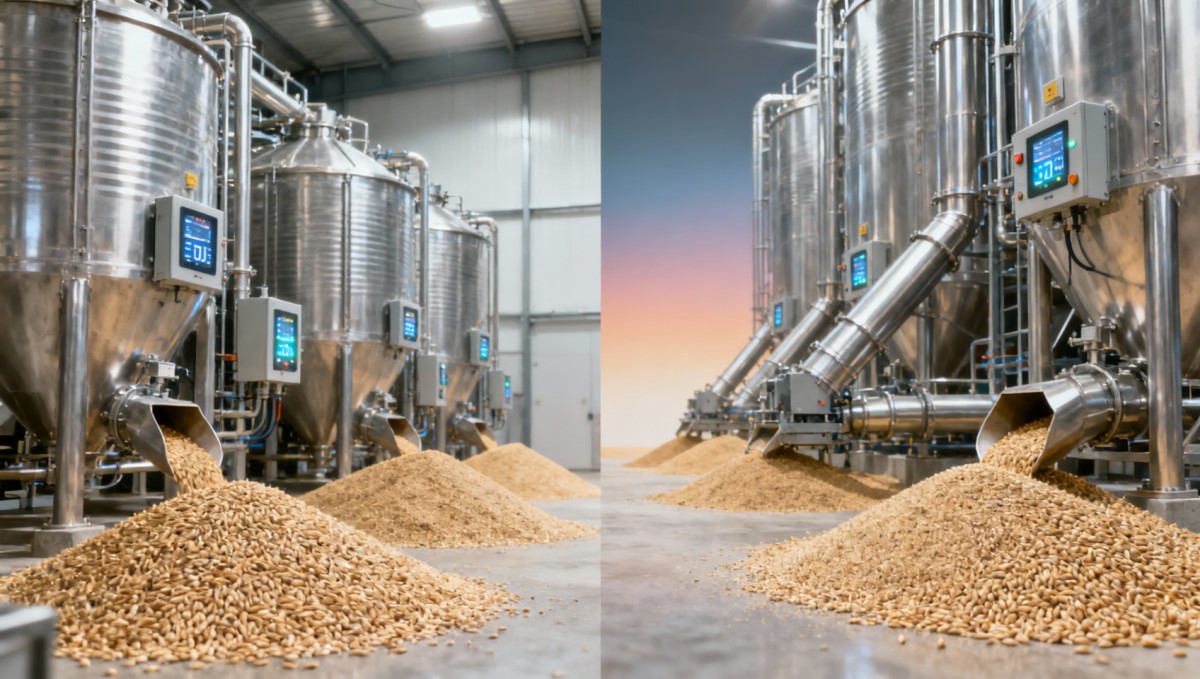
If the goal is to reduce measurable loss rather than simply modernize a facility, the most effective actions in 2026 usually fall into five areas:
- Moisture control before storage: Product entering storage at the wrong moisture content still causes more downstream loss than most equipment failures.
- Continuous condition monitoring: Temperature cables, moisture sensing, CO2 detection, and exception alerts reduce the time between problem formation and corrective action.
- Better aeration and airflow management: Not just more airflow, but targeted control based on weather, grain depth, product type, and storage duration.
- Traceability and lot segregation: Mixed-quality lots, weak intake records, and poor turnover discipline create hidden commercial loss and audit exposure.
- Sanitation and compliant equipment design: Cleanability, sealed transfer points, dust control, and inspection-friendly layouts matter more as quality, GMP, and safety expectations rise.
The key shift is that companies are no longer judged only by whether product remains physically stored. They are judged by whether it remains commercially usable, nutritionally stable, contamination-free, and documentable. That is why the most effective storage strategies are now operational and informational at the same time.
Which losses matter most to operators, buyers, and quality teams?
Many companies still think about storage loss too narrowly, focusing only on visible spoilage or shrink. In reality, the losses that hurt margins and decision quality most often include:
- Dry matter loss: Biological activity from insects, fungi, and respiration steadily reduces recoverable mass and value.
- Quality degradation: Nutritional decline, rancidity in certain feed materials, odor issues, caking, and pellet breakdown can reduce saleability or usability.
- Contamination events: Mold, mycotoxins, foreign material, pest activity, lubricant contamination, and residue carryover can trigger rejection or reprocessing.
- Blending and inventory loss: Poor lot visibility leads to incorrect blending, over-aged stock, and avoidable downgrades.
- Compliance and audit exposure: Weak records, unclear cleaning validation, and undocumented handling steps become expensive when serving regulated or export-sensitive markets.
- Energy and labor inefficiency: Poorly controlled aeration and reactive maintenance inflate operating cost without improving storage outcomes.
For business evaluators and enterprise decision-makers, this distinction matters. The cheapest storage setup is rarely the lowest-cost system over time. Once rejected loads, customer claims, quality drift, and emergency interventions are included, under-designed storage often becomes the more expensive option.
Why old assumptions about bins and airflow are no longer enough
Traditional storage logic assumed that if a bin was structurally sound and airflow was available, the main risk was covered. That assumption is weaker in 2026 for several reasons.
First, supply chains are more variable. Raw materials are coming from wider origin networks, with less uniformity in moisture, kernel integrity, contamination pressure, and time-to-storage. Second, climate volatility has made storage conditions less predictable, increasing the risk of condensation, hot spots, and seasonal instability. Third, customers and regulators increasingly expect evidence, not just assurance. A team may believe a storage program is controlled, but without logged data, traceability, and equipment validation, that confidence has limited value.
This is particularly important for organizations supplying compound feed, specialty feed inputs, grain ingredients, fermentation substrates, or linked industries where raw material integrity affects downstream processing. In such settings, poor storage is not only a warehouse issue; it becomes a process quality issue.
What should procurement teams evaluate before buying storage equipment or upgrading a site?
Procurement decisions often focus too heavily on upfront capex and rated specifications. A better evaluation framework asks how the system performs under real operating conditions and whether it supports quality assurance, maintenance, and supply chain transparency.
Key evaluation points include:
- Material compatibility: Is the equipment suited to the actual feed or grain types being stored, including hygroscopic, oily, dusty, or fragile materials?
- Cleanability and access: Can teams inspect, clean, and verify sanitation without excessive downtime or unsafe entry procedures?
- Monitoring integration: Does the system connect to condition monitoring, alarms, batch records, or plant-wide control systems?
- Sealing and contamination control: Are transfer points, conveyors, valves, and loading zones designed to limit dust ingress, pest access, and cross-contact?
- Aeration control logic: Is airflow managed intelligently, or does the site rely on manual routines that waste energy or miss risk windows?
- Maintenance burden: Are parts standardized, support available, and wear points accessible enough to avoid delayed repairs?
- Traceability support: Can the storage system support lot-level tracking, retention policies, and quality event investigation?
For facilities operating under stricter internal quality systems or supplying sectors adjacent to GMP-sensitive industries, storage and handling equipment should also be judged by how well it supports documentation, cleaning control, and process discipline. Even when grain itself is not under pharmaceutical GMP, procurement logic is increasingly influenced by the same expectations: documented control, contamination prevention, and supplier accountability.
How do traceability and digital monitoring directly cut loss?
Traceability and digital monitoring are sometimes presented as compliance features, but in strong operations they are loss-reduction tools.
When intake data, storage conditions, movement history, and quality checks are linked by lot, teams can isolate problems early. Instead of discovering a quality issue after shipment or during broad inventory review, they can identify which bin, zone, supplier lot, or transfer step is responsible. That shortens response time and reduces how much material gets caught in the problem.
Digital monitoring helps in several practical ways:
- Early warning: Temperature rise, CO2 changes, or unusual moisture trends can reveal biological activity before visible spoilage occurs.
- Targeted intervention: Teams can aerate, turn, sample, or unload specific bins rather than applying blanket actions across the site.
- Better stock rotation: Inventory systems linked to condition data support first-expire or first-risk handling, not just first-in-first-out.
- Audit readiness: Logged records improve confidence during customer reviews, export checks, and internal quality audits.
- Supplier management: Repeated problems can be connected to specific origin patterns, harvest conditions, or transportation failures.
This is where Agri Supply Chain decisions begin to influence storage loss in a broader sense. A site with average hardware but strong intake discipline, digital visibility, and supplier performance tracking can outperform a better-equipped site that stores mixed-quality material without clear records.
What operational practices still deliver the fastest returns?
Not every site needs a full rebuild to cut loss. In many operations, the fastest returns come from correcting repeatable process weaknesses:
- Tighten intake standards. Measure moisture, temperature, contamination, and damage consistently before acceptance or bin assignment.
- Segregate by risk, not just by product name. Separate lots by moisture range, condition, origin, and intended storage duration.
- Standardize aeration triggers. Use data-based thresholds instead of operator habit alone.
- Increase inspection frequency for high-risk bins. Long-duration storage, borderline moisture, or high ambient humidity deserve tighter review.
- Improve housekeeping around transfer systems. Dust, residue, and spillage often indicate larger sanitation and pest vulnerabilities.
- Validate cleaning and changeover routines. Especially important where different feed materials, additives, or sensitive ingredients move through shared equipment.
- Use exception reporting. Teams should not manually search for every issue; systems should highlight deviations automatically.
These measures are especially valuable for plant managers, operators, and quality personnel because they reduce loss without depending entirely on major capital approval. They also create the procedural foundation needed before more advanced monitoring technology can deliver full value.
How should decision-makers judge ROI in storage modernization?
For enterprise leaders and project owners, ROI should be based on avoided loss and reduced risk, not only throughput gains. A storage modernization project can create value through:
- Lower spoilage and shrink
- Reduced rework, blending correction, and disposal cost
- Fewer customer complaints and rejected shipments
- Better usable inventory accuracy
- Lower labor spent on emergency intervention
- Improved energy efficiency from smarter aeration control
- Reduced audit, safety, and contamination exposure
- Stronger procurement leverage through performance data
A practical ROI model should include both direct savings and strategic protection. For example, if a storage system supports access to more quality-sensitive buyers, lowers the probability of mycotoxin-related rejection, or strengthens readiness for stricter documentation requirements, that benefit may be commercially larger than the visible reduction in spoilage alone.
For this reason, the strongest business case in 2026 is usually not “we need newer bins.” It is “we need a storage system that protects inventory value, supports quality verification, and reduces preventable supply chain risk.”
What does best practice look like for 2026 and beyond?
The operations that are cutting storage loss most effectively in 2026 tend to share the same pattern. They do not rely on a single technology or a single equipment vendor claim. Instead, they combine:
- Strict intake and grading discipline
- Lot-level traceability
- Risk-based segregation
- Sensor-supported monitoring and alerts
- GMP-aligned equipment design principles where applicable
- Documented sanitation and maintenance routines
- Clear escalation rules when condition trends shift
- Procurement choices based on lifecycle performance, not purchase price alone
This model is increasingly relevant across the wider industrial landscape represented by AgriChem Chronicle. Whether the facility handles feed grains, specialty ingredients, biochemical intermediates, or raw materials feeding into more regulated downstream processes, the same principle holds: storage is no longer a passive holding stage. It is an active control point for value preservation, compliance confidence, and operational resilience.
In summary, what actually cuts loss in feed and grain storage in 2026 is not a single bin design or airflow upgrade by itself. It is the combination of correct pre-storage condition, intelligent monitoring, traceable handling, sanitary equipment choices, and disciplined operating decisions. Companies that treat storage as a measurable quality system rather than a static utility function are the ones most likely to reduce spoilage, protect margin, and stay credible with customers, auditors, and procurement stakeholders alike.
Related Intelligence
- Grain Silos & StorageHow to pick a grain pre cleaner machine?Grain pre cleaner machine selection guide for better grain and feed processing. Compare gravity separator grain, grain destoner machine, feed grading sieve, and more to boost efficiency.
- Grain Silos & StorageFeed & Grain Storage: What Actually Cuts Loss in 2026?Feed & Grain storage in 2026: learn how GMP Chemicals, GMP equipment, and Agri Supply Chain visibility cut loss, protect Bioactive Ingredients and Pharma Raw Materials, and improve ROI.
- Grain Silos & StorageWhy Grain Storage Losses Stay High Even With Modern SilosGrain Storage losses remain high even with modern silos. Learn how Agricultural Processing, Industrial Farming, and Supply Chain Transparency improve control, cut spoilage, and support smarter Market Forecasting.
The Morning Broadsheet
Daily chemical briefings, market shifts, and peer-reviewed summaries delivered to your terminal.
