
Which Biochemical Equipment Fits Scale-Up Best?
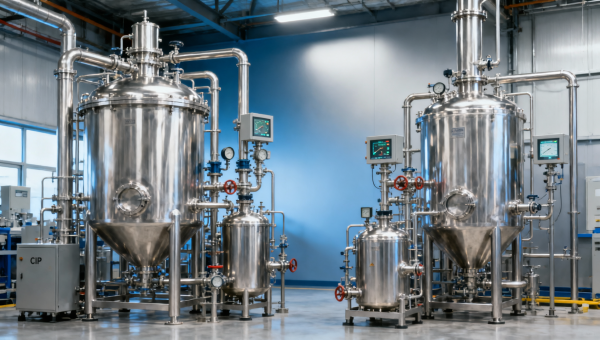
Choosing the right biochemical equipment for scale-up is critical when GMP Chemicals, Bioactive Ingredients, and Pharma Raw Materials must move from lab validation to commercial output. For buyers and project leaders across Feed & Grain, aquaculture kits, and the wider Agri Supply Chain, the best GMP equipment balances compliance, throughput, material compatibility, and documented performance backed by Technical Whitepapers on Biochemical Materials.
In practice, scale-up is rarely a simple matter of buying a larger vessel or increasing batch volume from 20 L to 2,000 L. Operators must maintain reaction control, cleaning performance, utility stability, and product integrity while procurement teams compare capital cost, lead time, validation burden, and supplier transparency. For regulated sectors such as APIs, fermentation-derived ingredients, and sensitive agricultural biochemicals, the wrong equipment choice can delay commissioning by 8–16 weeks and increase deviation risk during the first production campaigns.
This article is written for users, purchasing specialists, commercial evaluators, business leaders, quality and safety managers, and engineering project owners who need a practical framework for selecting biochemical equipment that scales reliably. The focus is not only on process performance, but also on documentation, compliance readiness, maintenance planning, and long-term operational fit across industrial biochemical and primary processing environments.
What “Best for Scale-Up” Really Means in Biochemical Processing
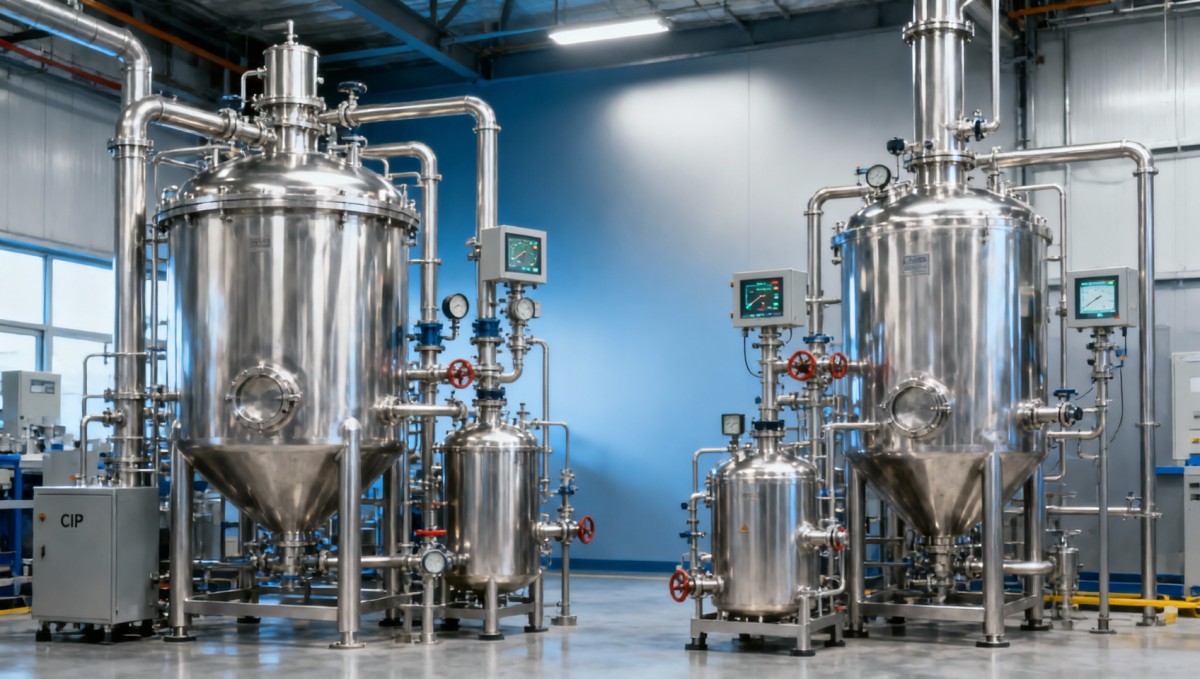
The best biochemical equipment for scale-up is not always the highest-capacity option. In most GMP and industrial biochemical settings, the better choice is the one that preserves process similarity between development, pilot, and production stages. That means agitation, heat transfer, dosing precision, residence time, filtration behavior, and cleanability must remain predictable as output rises from bench scale to batches that may be 50, 100, or even 500 times larger.
For example, a glass reactor that performs well at 10–50 L may not translate directly to stainless steel at 1,000–5,000 L if viscosity changes, foaming intensifies, or solvent recovery becomes more complex. In fermentation and enzyme extraction, oxygen transfer and shear sensitivity often become the limiting factors before nominal vessel size does. In feed additives or bio-extract processing, solids loading and CIP access may create more risk than the reactor itself.
A practical scale-up decision should therefore combine four layers of evaluation: process fit, compliance fit, utility fit, and business fit. Process fit determines whether the equipment can maintain yield and quality targets. Compliance fit addresses GMP, FDA-facing documentation, EPA-related handling controls, and cleaning validation. Utility fit checks steam, chilled water, compressed air, vacuum, and electrical loads. Business fit looks at total ownership cost over 3–7 years, not just the purchase price.
The matrix below helps decision-makers separate “large equipment” from “scale-up-ready equipment.” This distinction matters because many first-time expansion projects underestimate documentation burden, line integration, and operator training needs during the first 90 days of operation.
The key conclusion is straightforward: scale-up-ready biochemical equipment must support controlled growth, not just larger throughput. In most projects, the winning platform is the one that reduces variability and accelerates qualification, even if its initial CAPEX is 8%–15% higher than a less documented alternative.
Where scale-up failures usually begin
Most failures emerge from one of three gaps. First, lab data may not include mixing power, fouling behavior, or CIP recovery assumptions at production scale. Second, procurement teams may compare quotations without normalizing scope, so one supplier includes IQ/OQ support while another does not. Third, operations may receive equipment without enough training on setpoint windows, preventive maintenance, or alarm logic.
A simple screening list
- Can the equipment maintain process-critical parameters within defined ranges, such as temperature control within ±1°C or dosing accuracy within ±0.5%?
- Does the vendor provide material traceability, calibration records, and validation support documents?
- Can the system be cleaned within a practical cycle, often 45–120 minutes depending on product class and fouling load?
- Are spare parts and service response available within 48–72 hours for critical components?
Which Equipment Categories Fit Different Scale-Up Paths
Different biochemical processes scale in different ways, so equipment selection should begin with the dominant process challenge. For synthesis-heavy operations, jacketed reactors, dosing systems, condensers, and solvent recovery modules often define performance. For fermentation or bioactive extraction, bioreactors, separation skids, centrifuges, membrane systems, and low-shear transfer lines become more important. In feed and grain processing with biochemical additives, blending uniformity and contamination control may dominate the design.
As a general rule, stainless steel systems are preferred for commercial scale when repeatable cleaning, pressure handling, and GMP documentation are required. Glass-lined or specialty-lined equipment may still be appropriate where corrosion or solvent compatibility outweighs mechanical simplicity. For high-value pharma raw materials, automated PLC or SCADA integration is often justified once batch records, trend logs, and alarm history become part of release and audit review.
A useful way to shortlist equipment is to match process type with the likely scale-up stress points. This reduces the common mistake of selecting by vessel size alone while overlooking separation efficiency, filter area, hold-up volume, or transfer loss. In many plants, losses of 1%–3% across transfers and filtration can materially affect batch economics when raw materials are costly.
The comparison below summarizes typical equipment fit across common biochemical scale-up paths in integrated agricultural and fine chemical operations.
The table shows there is no single universal answer. For synthesis-led scale-up, reactor-centered systems usually fit best. For biologically sensitive products, bioreactors and low-shear downstream separation are often the right choice. For ingredients and feed applications, line integration and contamination control can matter as much as core vessel design.
Shortlisting by process behavior
- If exotherm control is critical, prioritize jacket efficiency, dosing automation, and condenser capacity.
- If sterility is critical, prioritize SIP capability, dead-leg control, sanitary valves, and validated seals.
- If solvent recovery is material to cost, evaluate recovery rate, vacuum stability, and condenser sizing.
- If solids handling is difficult, review agitator design, transfer pump selection, and filter fouling behavior.
Selection Criteria Procurement and Engineering Teams Should Prioritize
Procurement teams often begin with budget and lead time, while engineering teams start with process demands. A stronger scale-up decision combines both views into a single scoring model. In many industrial projects, a 5-factor model works well: technical suitability, documentation quality, compliance readiness, delivery risk, and lifecycle support. Weightings can vary, but many buyers assign 25%–30% to technical fit and 15%–20% each to the other categories.
Documentation quality is especially important in GMP chemicals and pharma raw material handling. Buyers should request general arrangement drawings, P&IDs, utility consumption estimates, material certificates for wetted parts, instrument lists, FAT protocols, recommended spare parts lists, and cleaning or passivation guidance. Missing documents often look minor during purchasing but can slow SAT, IQ, or operator handover by several weeks.
Material compatibility must also be checked against the real process envelope, not only the nominal product. This includes solvents, acids, alkalis, cleaning agents, temperatures, and expected pressure cycles. A system that handles routine production at 25°C may degrade faster under 70°C CIP conditions or under repeated exposure to aggressive extraction solvents. Seal type, gasket material, surface finish, and weld quality all affect long-term reliability.
The following decision table is useful for comparing suppliers and equipment packages during the RFQ and technical clarification stages.
The strongest suppliers usually answer these questions with specific ranges and document lists rather than broad claims. That matters to procurement because it improves quote comparability and reduces hidden cost after PO placement.
Five points that should appear in every RFQ
- Required batch or hourly throughput, including minimum and maximum operating modes.
- Product and cleaning chemistry details, including pH, solvent exposure, and expected fouling profile.
- Utility availability such as steam pressure, chilled water temperature, compressed air quality, and electrical standards.
- Documentation and validation expectations, including FAT, SAT, IQ/OQ assistance, or audit package needs.
- Site constraints such as ceiling height, floor loading, hazardous zoning, and integration with existing lines.
Implementation, Qualification, and Ramp-Up Without Avoidable Delays
Even well-selected biochemical equipment can underperform if implementation is rushed. A realistic industrial scale-up plan usually has 5 stages: design freeze, fabrication review, FAT, site installation and SAT, then process qualification. Depending on complexity, this may take 10–24 weeks. Smaller skids may move faster, while integrated reactor or fermentation lines with automation, utilities, and validation layers often require more time.
For project managers, the most common schedule risk is incomplete information transfer between process development, procurement, and site engineering. If control philosophy, alarm hierarchy, or CIP recipes are finalized too late, the project can stall at FAT or during on-site commissioning. A second risk is poor operator readiness. In the first 30 days after startup, deviations often relate to sequence errors, setpoint adjustments, or cleaning transitions rather than hardware defects.
Quality and safety teams should be involved early, especially when the system handles flammables, biologically active ingredients, or regulated residues. Review points should include drainability, sample point design, calibration access, surface finish expectations, and segregation controls. In some facilities, a one-day FAT check is not enough; a 2–3 day structured review may be more effective when automation and batch records are involved.
A disciplined ramp-up plan reduces the risk of spending the first 3 production lots correcting avoidable issues. The checklist below reflects a practical implementation sequence for industrial biochemical operations.
Recommended 5-step rollout
- Confirm design basis: lock process parameters, utility loads, material of construction, and instrumentation list before fabrication begins.
- Execute FAT with real scenarios: include alarm testing, recipe logic, transfer simulation, and document pack review.
- Prepare site and utilities: verify clean water, drainage, exhaust, steam, chilled water, and electrical interfaces at least 2 weeks before arrival.
- Train by role: operators, maintenance technicians, QC staff, and supervisors should each have targeted training modules of 2–6 hours.
- Run qualification lots: start with engineering batches, then controlled process lots with defined acceptance criteria for yield, cleaning, and critical quality attributes.
Ramp-up metrics worth tracking
During the first 60–90 days, track batch cycle time, unplanned downtime, CIP duration, deviation count, utility consumption per batch, and changeover losses. These indicators provide a faster picture of equipment suitability than nominal nameplate capacity alone. If a system meets throughput but requires 2 extra cleaning cycles per week, the commercial case may still be weak.
Common Mistakes, Maintenance Priorities, and Final Buying Guidance
One frequent mistake is choosing equipment based only on current batch size. A line designed for today’s 800 L requirement may struggle when output must reach 1,500 L equivalent in 12 months. Another mistake is underestimating cleaning and changeover time. In multi-product biochemical plants, a 20% loss in available runtime often comes from cleaning, verification, and material movement rather than the core process cycle.
Maintenance planning should begin before startup. Critical spare parts normally include seals, gaskets, sensors, valve kits, pump wear parts, and selected control components. Preventive maintenance intervals vary by duty, but many facilities inspect sensors monthly, review valve performance every 3 months, and perform larger shutdown service every 6–12 months. Systems with aggressive solvents, abrasive solids, or frequent thermal cycling may require shorter intervals.
Buyers should also avoid vague promises around “easy validation” or “fully GMP-ready” unless the supplier defines exactly what documents, tests, and support are included. A better purchasing approach is to ask for a line-by-line deliverables list: drawings, certificates, manuals, calibration records, software backup, FAT documents, spare parts lists, and training scope. This reduces ambiguity and supports cleaner handover to operations and QA.
For most commercial scale-up projects in biochemical processing, the best-fit equipment is the platform that can hold process consistency while reducing qualification risk and service burden. That may be a stainless steel reactor train, a controlled bioreactor system, or an integrated extraction and separation skid. The correct answer depends on process behavior, compliance demands, and lifecycle support—not capacity alone.
FAQ: questions buyers ask before committing
How long does delivery usually take?
For standard skids or moderate-complexity units, 8–14 weeks is common. More customized GMP or automation-heavy systems may require 16–24 weeks, especially if long-lead instruments, polished vessels, or validation packages are included.
What capacity margin should buyers plan for?
Many plants target a practical margin of 15%–30% above current forecast demand, provided utilities and downstream steps can support it. Oversizing beyond that can reduce control efficiency, increase cleaning cost, and weaken batch economics.
Which documents matter most during procurement?
At minimum, request GA drawings, P&IDs, utility data, wetted material certificates, instrument list, FAT scope, operation and maintenance manuals, spare parts list, and defined training support. For regulated operations, calibration and traceability records are also highly relevant.
What is the safest way to compare two suppliers?
Normalize the comparison across 5 areas: process fit, documentation scope, compliance support, delivery risk, and lifecycle service. If one quote is 10% cheaper but excludes FAT, spare parts, and commissioning support, it may become more expensive after installation.
For readers evaluating biochemical equipment for scale-up across fine chemicals, bio-extracts, aquaculture inputs, and feed-linked processing, the strongest decisions come from aligning process science with procurement discipline. If you need a more tailored equipment assessment, supplier comparison framework, or editorial-grade technical positioning for your manufacturing capabilities, contact AgriChem Chronicle to discuss your project, request a customized evaluation approach, or explore more scale-up solutions.
Related Intelligence
- Custom SynthesisANVISA Extends Custom Synthesis API Traceability to 3-Tier Upstream SuppliersANVISA extends Custom Synthesis API traceability to 3-tier upstream suppliers—key for pharma importers, CMOs & supply chain teams. Act now to avoid suspensions.
- Custom SynthesisANVISA Expands Custom Synthesis Review to 3-Tier Starting Material TraceabilityANVISA's new 3-tier traceability rule for custom synthesis imports demands full upstream documentation—act now to avoid delays, rejections, and compliance risks in Brazil.
- Custom SynthesisANVISA Extends Custom Synthesis Oversight to Tier-3 SuppliersANVISA Extends Custom Synthesis Oversight to Tier-3 Suppliers: New July 2026 rule mandates full traceability & English GMP docs for Chinese CMOs exporting to Brazil—act now to avoid delays.
The Morning Broadsheet
Daily chemical briefings, market shifts, and peer-reviewed summaries delivered to your terminal.
